


READY TO SELL car alarms ONLINE?
Get a store built for you in 5 days, plus training and support to help you start, run, and grow your Alternative business.

Learn how to sell car alarms online with a focused vehicle range, verified supplier evidence and clear fitment details. Plan product checks, pricing, fulfilment and a measured launch.

A car alarm looks like a small product until a buyer asks the questions that decide whether it is safe to order: will this system work with my exact vehicle, what does the kit include, who should fit it, and what evidence supports the claims? Those questions shape the product range, supplier checks, product page, customer service and cost model. A seller who can answer them clearly has a more useful offer than a shop listing a box of electronics with broad claims.
Car alarms are a specialist category. A remote fob, siren, control module, wiring loom, immobiliser function or connected tracking feature can each change the product’s fit, installation and regulatory position. Start with a narrow buyer and a small verified range. Check samples and paperwork before taking orders, then build the listing around vehicle compatibility, kit contents and professional installation where needed.
This article sets out a practical route from product idea to first launch: choose an audience, test demand, compare systems, check suppliers, build a costed range, prepare accurate listings, plan fulfilment and use customer questions to improve the offer. The cost figures are illustrative. Rules can vary by product design and UK nation, so confirm the current requirements for the exact system and sales territory before placing it on the market.
A specialist alarm range needs clear fitment details, payment choices, delivery information and a support route. If you are mapping the online store before ordering stock, review MLFG’s store setup options.
“Drivers who want more vehicle security” is too broad to guide buying decisions. It gives little direction on product fit, price, installation or support. A clearer starting point could be owners of older cars without a factory alarm, owners of a particular type of light commercial vehicle, classic-car owners looking for an alarm upgrade, or installers who want a reliable kit for a specific customer group.
Each audience has a distinct job to solve. Someone with a work van may care about cab access, tool storage, battery drain and repeatable fitment across a small fleet. A classic-car owner may care about discreet installation, period appearance and avoiding harm to original wiring. A professional installer may value complete technical documents, stable supply, compatible wiring looms and access to product support.
Pick one initial customer and write down the purchase situation. What vehicle do they own? What problem did they describe in their own words? Do they expect an audible alarm, an immobiliser, a remote notification, or help locating a stolen vehicle? Those are distinct functions. Do not present one as a substitute for another. A remote notification feature relies on the product’s actual connectivity and supporting service. A siren gives an audible warning. The buyer needs to know what the kit does and what it does not do.
Speak to people who fit or maintain vehicles before selecting stock. Ask an independent auto electrician, vehicle security installer, fleet operator or car club member what buyers ask before purchase. Keep a note of the vehicle models and years mentioned, the terms people use, installation concerns and reasons a proposed system would not suit them. These conversations do not prove a large market, yet they can reveal whether your product idea is specific enough to test.
Do not assume every buyer wants a DIY installation. Many people will want an alarm fitted by a qualified professional, and some products are intended for trained installers. Your store can sell a kit and state clearly which installation route applies, or it can focus on trade buyers and supply technical information before the sale. Avoid encouraging a novice to splice vehicle wiring from a short product description.
Alarm products can overlap with immobilisers, remote keyless entry and vehicle trackers, yet the terms describe different functions. An alarm is intended to signal an intrusion or interference event. An immobiliser is intended to prevent the vehicle being driven on its own without an authorised method. A tracker or location device sends location information through its own network or service. Some systems combine functions; others do not.
Thatcham Research currently describes certification criteria for combined electronic alarm and immobiliser products, immobilisers, alarm upgrades and vehicle tracking or asset location systems. Its certification page states that certification does not guarantee insurer recognition: that is negotiated individually between manufacturers and insurance partners. Use the exact product’s current certification record and insurer wording before making a claim. Do not copy an old “Category 1” badge from a supplier catalogue and treat it as proof that every model or vehicle qualifies.
| Product type | What the buyer should verify | Listing detail to show |
|---|---|---|
| Audible alarm kit | Detection inputs, siren, backup behaviour and vehicle fit | Included parts, intended installation and documented functions |
| Immobiliser | Vehicle compatibility, operating method and installation requirements | What is immobilised and who should install it |
| Alarm upgrade | Whether an existing system or immobiliser is required | Known compatible system and excluded vehicles |
| Connected alarm or tracker | Network coverage, app/service terms, data handling and recurring fees | Connectivity method, service period, subscription and support |
This table is a sales-planning aid. Follow the product’s technical documentation and certification record.
Thatcham’s security certification information lists current product criteria. Check the exact make, model and certificate status rather than treating “Thatcham approved” as a generic feature. For a system not listed there, describe only the functions you can substantiate. If an insurer discount is part of your sales message, tell the buyer to confirm their own policy terms with their insurer before purchase.
Marketplaces can help you learn the questions buyers ask, but a page of competing listings is not evidence that your chosen stock will sell. Start with a customer interview sheet and a small set of search phrases. Examples include “aftermarket alarm for [vehicle model]”, “car alarm upgrade for [year range]”, “van alarm installer kit” and “Thatcham certified alarm [model]”. Search language is a research clue, not proof of sales volume or a recommendation to use a certification term without evidence.
Compare live listings and note product type, fitment detail, included components, warranty terms, dispatch location, installation notes and unanswered questions. Look for repeating uncertainty: buyers asking whether a wiring loom is included, whether the alarm works with a particular factory system, or whether a professional must fit it. That unanswered question can become a useful product page section or supplier request. Record the date, site and exact model when collecting observations, since listings and prices change.
Test interest without taking payment for stock you do not yet have. Publish an educational landing page or send a short survey to a relevant car club or installer group. Ask a specific question: which vehicle do they need to cover, what type of system are they considering, and what would stop them ordering? If you run an advert, use a modest cap that you can afford to lose. Measure qualified enquiries and fitment questions, not just impressions or likes.
Keep an evidence table. Give each insight a source, date, buyer type, vehicle, question and strength. A direct conversation with an installer who fits the systems weekly is different from one anonymous forum comment. Mark unverified assumptions separately. If several likely buyers ask for different vehicle families, you may need to narrow further or test one segment at a time rather than ordering an assortment that creates a support problem.
Choose a simple go/no-go test before research begins. For example, decide that you will request three supplier quotations, inspect two physical samples and obtain five fitment conversations before deciding whether to commit to a first stock order. The figures are a planning example, not a universal threshold. What matters is deciding in advance what evidence would change your mind, then respecting it if interest is weak or documentation is incomplete.
A first range should be small enough to explain and support. One route is a single alarm kit for a clearly defined group of vehicles, plus a second option for a different installation context only after compatibility is confirmed. A third product might be an alarm upgrade that requires a specific existing immobiliser. Do not create “basic, pro and ultimate” tiers by changing names alone. Each version needs a documented feature that a buyer can understand.
For every product, map the relationship between the vehicle and the kit. Record make, model, body style, year range, engine or trim distinctions only where the supplier provides reliable fitment data. Some vehicles change wiring or factory equipment within a model year. If the fitment list has gaps, publish those gaps and invite the buyer to ask before ordering. Do not infer compatibility from a similar-looking remote or connector.
A range matrix helps keep product choices clear. Columns can include product function, vehicle coverage, installation level, included parts, evidence available, warranty, supplier lead time and landed cost. A row with missing evidence is not ready for sale. This matrix can live in a spreadsheet and feed the product page, customer support scripts and reorder decision.
Consider who needs the stock. A consumer buyer might want a complete kit with plain English instructions and a clear installer recommendation. A trade buyer might want multiple units, a stable supply window, technical documents and a direct route to supplier support. If you serve both, separate trade and consumer information rather than assuming a retail listing will answer a technician’s questions.
Bundles can help when components are designed to work together and the supplier documents the combination. A compatible alarm and fitting accessory bundle might reduce the chance of a buyer missing a required part. Do not bundle unrelated cable, sensors or sirens to raise the basket total. Any bundle should have one clear contents list, a compatibility boundary and a clear explanation of who performs the installation.
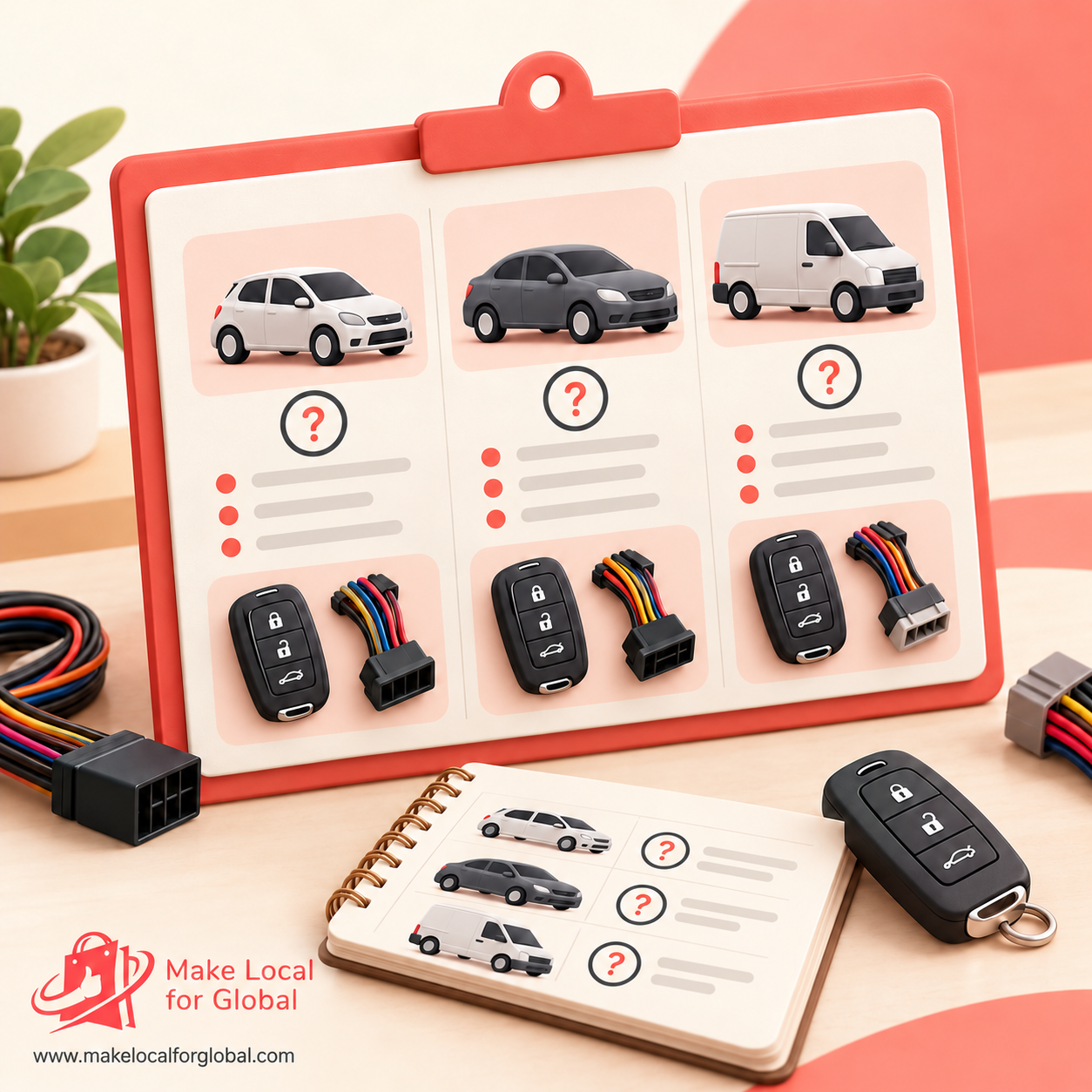
You can buy from a UK wholesaler, become an authorised reseller of a specialist security brand, import from an overseas manufacturer or develop a product under your own brand. Each route changes the documents you need and the work you take on. A UK wholesaler may make a small test order easier. Direct importing can bring minimum order quantities, customs, currency risk and importer duties. Own-brand sales can make you a manufacturer for some rules even when another company built the hardware.
Ask every supplier to identify the legal manufacturer, product model and intended markets. Request a complete technical specification, current declaration of conformity where relevant, applicable test reports, user instructions, packaging artwork, traceability details and warranty process. If the product is said to carry Thatcham certification, request the certificate or listing for the exact model and vehicle/application. Do not accept a cropped badge image as documentary evidence.
Ask what the box contains and whether the items can change between batches. Confirm if the remote fobs, siren, battery back-up, sensors, wiring, installation guide and any subscription are included. For a connected product, ask who operates the app service, whether a recurring charge applies, which mobile network or connectivity option it uses, what happens if the service ends and how the buyer gets help with account access.
Ask how fitment information is maintained. Is there a downloadable vehicle list, a technical support contact, an update date and a process for checking vehicles not listed? Ask which models have been tested, which may require an installer assessment and which are excluded. A supplier should not answer every fitment question with “universal”. That word often hides the work the buyer must still do.
Check payment and service terms before ordering. Confirm minimum order quantity, sample pricing, lead time, warranty return route, spare parts availability, discontinued-product notice and how the supplier handles a safety concern. Ask how many days or months of stock they hold and whether any component has a different lead time. A low unit price is not useful if fobs or wiring looms disappear from supply and customers face delays.
For imports, calculate the cost after shipping, customs duty where due, import VAT cash flow, brokerage and any inspection or storage charge. Use the correct product classification and check current import rules before placing the purchase order. Keep commercial invoices and product identifiers. An importer has duties beyond forwarding a parcel to a customer, so get a qualified compliance view before committing to an unfamiliar electronic device.
A sample lets you compare the item in the box with the supplier’s promise. Photograph the packaging on arrival, record the model and batch identifier, and list every component. Check whether instructions match the supplied product, whether the model number agrees across the item and paperwork, and whether any cable, connector or accessory is absent. Keep the sample and records together so a later customer query can be compared with the original batch.
Ask a competent automotive electronics professional to review fitment, installation steps and product behaviour. Do not use a live vehicle as an improvised test bench if you lack the training or safe setup. The sample process can check that remotes respond as described, the siren and sensors operate in a controlled demonstration, backup behaviour matches the documentation and the control module remains stable under the supplier’s stated test procedure. Log unexpected behaviour and pause the purchase if instructions and observed function disagree.
Keep the test plan proportional and safe. Your role as a seller is to verify supplier claims and ask for qualified assessment, not to reverse-engineer a vehicle security system. Do not publish instructions that encourage bypassing factory security, defeating an immobiliser or exposing wiring in a way that could damage a car. A technical installer can identify when a product needs specialist handling.
Check sound and light notifications in the sample against the description and local use case. An alarm that is hard to distinguish from other alerts, produces nuisance activations or has unclear controls can create complaints. Ask how the sensitivity is adjusted, how the user silences or resets the system and what happens after a supply interruption. Use the manufacturer’s stated process; do not invent numerical performance claims based on an informal test.
Inspect the remote control and packaging for clear button labels and accessible instructions. If a fob uses a button or coin battery, check the product paperwork and official safety advice for the battery type and battery access design. The Office for Product Safety and Standards button and coin battery guidance describes business practices for these cells. Check the battery and the finished alarm kit as a complete product.
Keep dated sample records: supplier, model, batch, date received, condition, tests requested, result, open questions and decision. If the supplier changes a key component, repeat the relevant check. A polished product photo is not proof of fitment, reliability or regulatory compliance. The record is useful when you compare a second supplier, answer a complaint or decide whether to reorder.
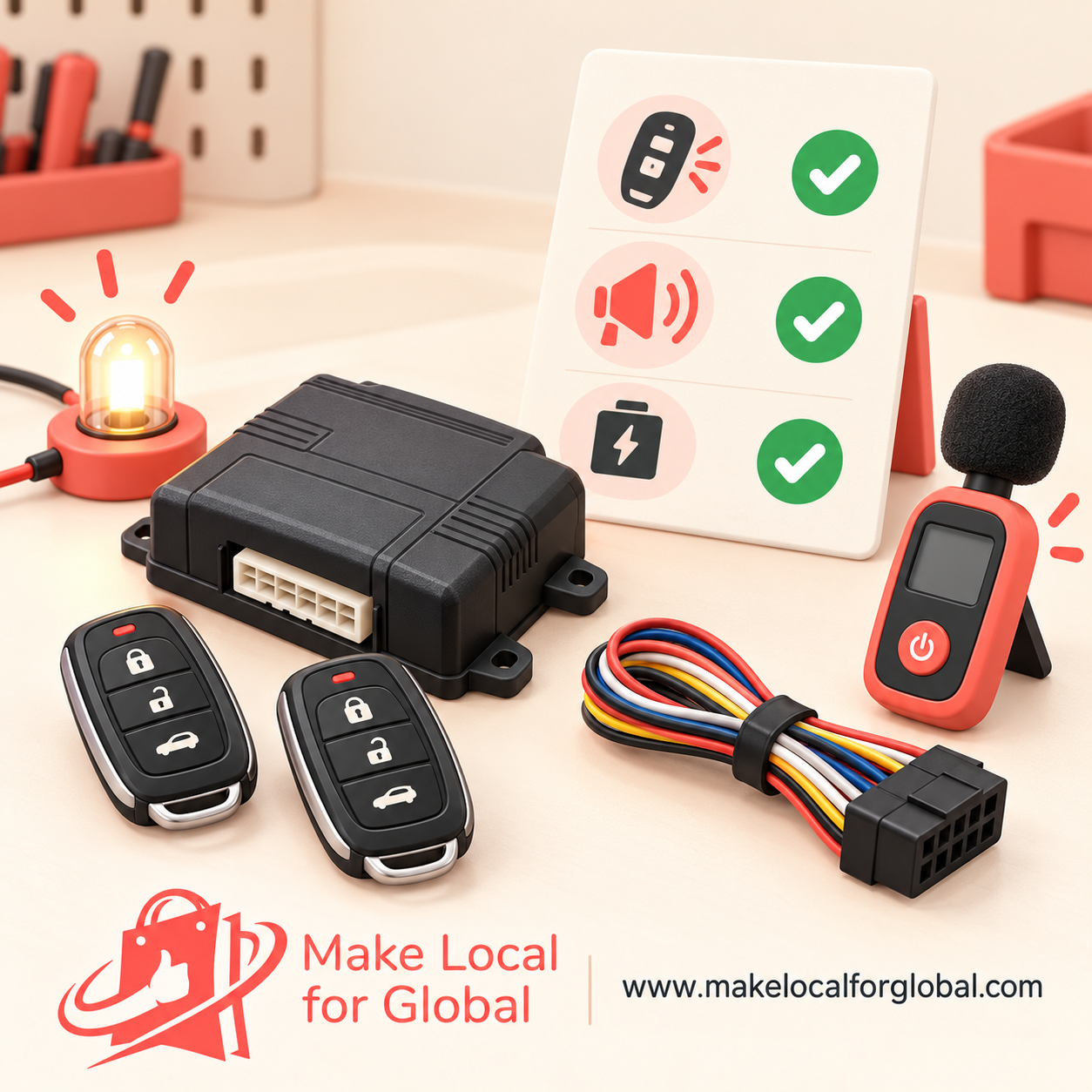
Regulatory duties depend on how the alarm works, where it is sold, who imports it, whether you put your own name on it and whether it is sold as a vehicle component or a separate electronic product. A wired siren kit, a radio remote, an internet-connected tracker and a private-label system may not sit under the same set of rules. Make a product-by-product compliance file and have a competent specialist check any uncertain classification. This section is a starting checklist, not legal advice.
A remote fob that transmits radio signals can bring the product within the Radio Equipment Regulations 2017. The Office for Product Safety and Standards Radio Equipment Regulations guidance sets out current requirements for conformity assessment, documentation, markings, manufacturer and importer information, English instructions and records. Northern Ireland has separate provisions and amendments, so check the guidance for the exact radio product and destination before importing, rebranding or listing it.
Do not assume a supplier’s CE or UKCA image settles the question. Ask for the declaration and relevant test evidence that names the exact model and radio configuration. Check that the instructions cover intended use and safety. Keep the supplier’s name, the product identifier, the shipment or batch and your own sales records so products can be traced through the supply chain.
Electromagnetic compatibility is another issue for electronic equipment. An alarm can sit near vehicle electronics and send or receive signals. Ask for the manufacturer’s conformity assessment and professional installation guidance. Never claim that your kit is compatible with every vehicle electrical system based only on a supplier’s general marketing page.
UK product safety law requires products supplied to consumers to be safe in normal and reasonably foreseeable use. Manufacturers and importers have monitoring and traceability duties, and distributors need to act with due care. Read the Office for Product Safety and Standards advice for manufacturers and importers and the specific rules that apply to the item. Make clear where a trained installer is required, what the customer should not do, and which vehicle modifications or warranty questions need advice from a vehicle professional.
Do not tell customers that fitting an aftermarket alarm automatically keeps a vehicle warranty, insurance cover or type approval unchanged. Vehicle approval rules focus on particular vehicle builds and changes. Insurers set policy terms. The safe sales practice is to tell the buyer to check with the vehicle manufacturer, installer and insurer before fitting a system that changes the vehicle’s electrical setup. If the product is supplied as part of a vehicle approval or conversion project, ask the Vehicle Certification Agency or a specialist approval professional what documentation applies.
If the alarm connects to the internet or a network, investigate the Product Security and Telecommunications Infrastructure regime. The government’s consumer connectable product guidance explains the scope, exceptions and duties for manufacturers, importers and distributors. Connected product suppliers need to explain their security support, update process, support period, user account setup, password rules and vulnerability contact. Do not say “hack-proof”. State what is documented and when the product’s software or service support ends.
Thatcham certification is a separate product assessment, not a universal synonym for an alarm or an insurer discount. Confirm the exact product listing and current status, and avoid copying category labels from another system. The certification organisation itself notes that insurer recognition is negotiated with insurance partners. A responsible product page can say a buyer should check recognition with their insurer, instead of implying a guaranteed premium reduction.
Ask whether the alarm kit, remote fobs or bundled charger count as electrical and electronic equipment in the relevant market. The UK RoHS guidance notes that means of transport have exclusions, so the classification of a separate aftermarket component should not be guessed from the fact that it is installed in a car. The supplier or compliance specialist should document the scope decision and the rules that still apply to the separate product.
Where the item is in scope of WEEE rules, producer and retailer duties can include annual registration, reporting, financing treatment of waste equipment and customer take-back information. The exact obligation depends on your role, where your business is established, the amount placed on the market and the sales route. Read the current EEE producer responsibilities and retailer and distributor requirements before building the product page or importing stock.
If you supply a battery with the kit, find out whether you are the first professional supplier placing that battery on the UK market and which battery category it belongs to. Rules for portable, vehicle and industrial batteries differ. Check the current waste battery producer responsibilities and battery shipping conditions that apply to your carrier. Keep a supplier declaration and shipment record rather than guessing based on the small size of a fob cell.
For distance sales, present the product, total price, delivery terms, business contact details and cancellation information before checkout. The GOV.UK distance-selling guidance explains consumer information and cancellation requirements. Build a return policy that covers normal online cancellation rights, faulty goods and goods that have been installed or altered. Do not write “no returns once opened” as a blanket rule without checking the law and the product’s circumstances.
Do a jurisdiction check before selling outside Great Britain. Northern Ireland and the European Union can require separate conformity and producer-responsibility steps. A global checkout does not make one set of UK documents valid everywhere. Start by limiting the store to the territories you can serve with verified paperwork, shipping rules, support hours and returns handling.
The point of purchase is only one stage in the customer’s experience. The buyer must know whether the product is compatible, whether a qualified installer is needed, what the installer will need to see and what happens if the vehicle is not on the list. Put the fitment route beside the purchase button, not in a supplier PDF the customer may never open.
Build a compatibility question form with fields for registration year or model year, make, model, body type, existing security system and whether the vehicle has factory keyless entry. Avoid collecting more personal information than the fitment check needs. If a registration number is requested, explain why and how it will be used, and do not keep it longer than needed for the enquiry.
Set a clear service promise that your team can actually meet. For example, “We check the vehicle details against the current supplier fitment list before dispatch” is a measurable process if you do it each time. It is safer than a broad guarantee that every alarm will fit every vehicle. Tell the customer how long a compatibility answer may take and pause dispatch when important details are missing.
For an installer-facing store, create a trade enquiry route that asks for business details, the product models they fit and their preferred contact method. An installer may need a technical pack before committing. A private buyer may need a plain summary and a referral to a trained professional. Keep those routes distinct so a consumer does not mistake trade terminology for simple self-installation steps.
If you are organising product pages, contact routes and store structure for a specialist range, MLFG’s online selling service explains how the store setup process works.
Use a per-order contribution calculation before buying stock. Start with the money retained from the sale and subtract the product, inbound freight, packaging, payment or marketplace charges, delivery, a returns allowance and the average cost of winning that order. Then account for business overheads, staff time, tax and unsold stock separately. Contribution is not the same as net profit, salary or cash in the bank.
The following example assumes a UK seller that is not VAT registered, a consumer price of £78 including the delivery offer, and actual cash costs paid for each order. It uses made-up figures for teaching only. Replace every amount with a supplier quote, carrier price and current channel fee before committing money.
| Per-order item | Illustrative amount | What to include |
|---|---|---|
| Customer payment | £78.00 | Product price with standard delivery included |
| Alarm kit and included components | −£30.00 | Cash purchase cost of one complete kit |
| Inbound freight and import costs | −£3.50 | Allocated supplier shipping, duty or brokerage where applicable |
| Packaging and protection | −£1.20 | Mailer or carton, filler, tape and insert |
| Customer delivery | −£4.80 | Tracked service appropriate to the item and destination |
| Payment or marketplace fees | −£5.50 | Example allowance only; calculate from your actual channel |
| Returns and support allowance | −£3.00 | Average cost across orders for returns, replacements and handling |
| Customer acquisition | −£8.00 | Average paid promotion cost per completed order |
| Contribution before overheads and tax | £22.00 | £78 − £30 − £3.50 − £1.20 − £4.80 − £5.50 − £3 − £8 |
Illustration only, not a forecast. This example treats every listed amount as cash spent and does not deduct recoverable input VAT. A VAT-registered seller must calculate VAT correctly; a seller not registered must use actual cash purchase costs. Replace fees and delivery with your own written quotes.
Now stress-test the example. If an installer referral or a longer support call adds £6 of labour, contribution falls to £16. If a buyer in a remote postcode costs £8.20 to ship instead of £4.80, contribution falls by another £3.40. If the supplier’s minimum order creates several slow-moving vehicle-specific variants, cash can remain tied up in stock even when the contribution on each sale looks positive. A spreadsheet should include a low-demand case, a normal case and a supplier-cost increase case.
Separate fixed costs from per-order costs. Website hosting, insurance, accounting, photography, test samples and compliance advice may not belong in the row for one sale, but they must be covered by total contribution over time. Add owner labour for compatibility enquiries. If one order needs half an hour of manual fitment research, a price that works only when support is free is not a stable price.
If a buyer pays for delivery separately, include the delivery income and delivery expense in the same calculation. If the product is subject to VAT, model output VAT, recoverable input VAT and the displayed consumer price correctly. Do not copy another store’s price and assume its fulfilment, returns, tax or warranty costs match yours. For more worked pricing steps, see how to price a physical product in the UK and how to calculate the break-even point for a one-product store.
Begin the page with a plain answer: what type of alarm is this, who is it for and which vehicle application does the manufacturer document? Put the model number and product type in the title. A search-friendly product title might read “Aftermarket alarm and immobiliser kit for [documented vehicle group], model [part number]”. Do not add “Thatcham approved”, “universal” or an insurer-saving statement when the exact evidence does not support the claim.
Follow the title with a short fitment warning. List supported vehicle make, model, body type and year range when the supplier can verify them. Name known exclusions. Tell buyers with a modified vehicle or a missing trim detail to contact you before ordering. If the manufacturer advises professional installation, say so near the top and repeat it in the installation section.
Use original photos that show the real kit from several angles. Include the control module, remote, siren, wiring loom, sensor, instruction booklet, packaging and any supplied battery. A scale or a connector close-up can help a buyer compare what they own with the listing. Label images for function, not persuasion. Never place a certification symbol over the product photo if it applies to that precise model and you have permission to use the mark.
Use a facts table for the information a customer needs to compare products: manufacturer, model code, stated function, compatible vehicles, included components, connectivity, battery details, installation level, subscription, warranty, dispatch time and support contact. Mark an item “not stated by manufacturer” or leave it out if you cannot confirm it. Do not fill blanks with guesses.
Write the product description in the order a buyer will make a decision: use case, compatibility, what the system does, box contents, fitting requirements, limits, service charges, delivery and returns. A technical PDF can sit alongside the plain text, but it should not be the only place where an important compatibility or subscription condition appears. Keep the file name and link clear enough that buyers know what they are opening.
Set up search phrases around real questions, not repeated variations of one keyword. A page may answer “does this alarm fit a 2018 [model]?”, “what is included in the aftermarket alarm kit?” and “does the alarm require a monthly subscription?” Use each phrase only where the answer is accurate. Your title, headings and image descriptions should match the specific product page rather than repeat a template for every item.
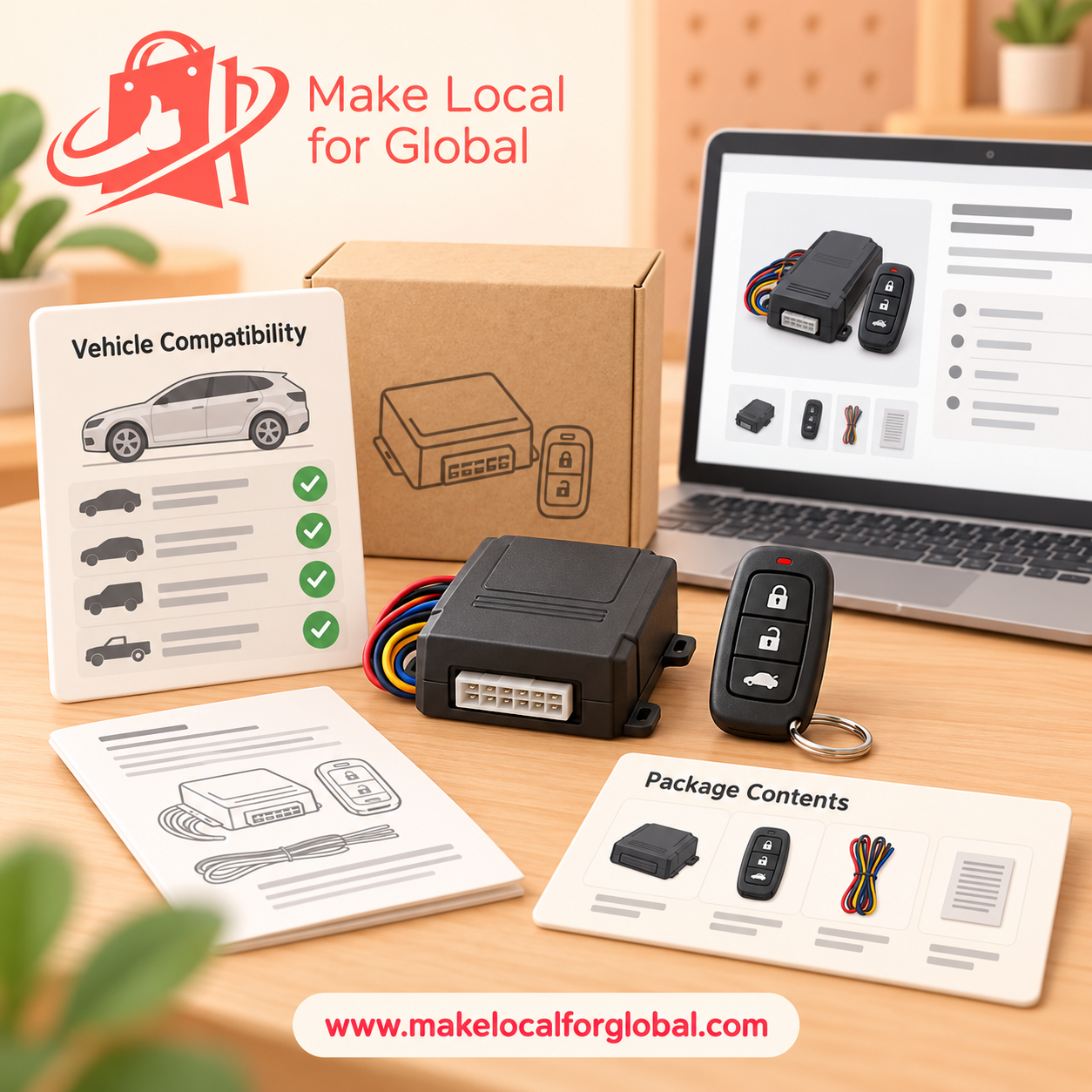
Your own ecommerce store can host fitment tables, technical files, support information and product comparisons in one place. It gives you control over how a buyer moves from a question to a purchase, though you must bring visitors to the store and handle support yourself. A product page should make it easy to ask a fitment question before checkout.
A marketplace can expose the listing to shoppers who are already searching, but the platform may restrict vehicle-security claims or require particular documentation. Review its current rules for electronics, tracking devices, safety claims, returns and warranty. A marketplace’s listing template may not offer enough room for nuanced fitment details, so decide how you will provide the missing information before you pay for a listing or buy stock.
Trade relationships may suit a small specialist range better than broad consumer advertising. Contact installers with a clear trade sheet and sample policy. Ask what documents they need, how they decide whether to test a new supplier and what would make them recommend an alarm to a vehicle owner. Do not offer a discount that leaves no room for fulfilment and technical support.
Use social posts and search content to answer focused questions: choosing between an alarm and immobiliser, what a buyer should ask before booking an installer, reading a compatibility table, or learning how the functions differ between alarm notification and location tracking. Avoid dramatic theft stories or messages that imply a product can prevent every theft. A calm explanation attracts buyers who are trying to make a considered decision.
Explore adjacent MLFG Product To Sell articles only where they help with the same buying or business decision. For example, the car seat product planning article discusses fitment and safe product claims in another automotive category, as selling car care products online covers a related specialist retail path. Keep the alarm product page focused on its own evidence and audience.
Electronic kits need packaging that protects the control unit, connectors and fobs from impact, moisture and loose parts. Use packaging suited to the carrier and keep accessories from rubbing against the module. A small printed checklist can show the contents without making claims about vehicle fit. Photograph the packed parcel for high-value orders and retain the batch reference with the order record.
Before selecting a carrier, check current rules for batteries and electronic devices, destination coverage, tracking, insurance and delivery proof. If a battery is included, classify it correctly and follow the carrier’s packing and declaration requirements. Do not assume that the postal method used for an empty control unit is suitable for a package containing a battery. Check any international restrictions before opening shipping to another country.
Set realistic dispatch times that include order review. For a specialist product, checking vehicle details may take longer than picking a common accessory. Explain whether the dispatch clock begins after compatibility confirmation, when the item is in stock and what happens if the requested vehicle is missing from the supplier list. Send a clear order confirmation that repeats the product model and the buyer’s fitment details.
Returns need a calm process. Ask the customer whether the kit is unopened, opened, tested, installed or altered; keep the conversation respectful and do not decide that opening the box removes all consumer rights. The rules for online cancellation, faulty products, damage, installation and diminished value can differ by situation. Refer to current consumer guidance or a qualified adviser when a case is unclear. Give buyers the return address, expected response time and refund method before they need them.
Some returns reveal a product-page defect rather than a careless buyer. A wrong wiring loom, missing installer note or unclear vehicle range can affect more than one order. Tag return reasons using a small list: incompatible vehicle, missing component, unclear instructions, fault, changed mind, delivery damage or other. Review the list monthly and fix the largest avoidable cause.
Keep a basic incident route for a suspected safety issue. Stop dispatch of the affected batch, keep records, notify the supplier and follow instructions from the relevant authority or compliance specialist. If customers need a warning or replacement, use contact information gathered for the order and document what you did. This is a product business responsibility, not merely a customer service detail.
Security language can create an expectation that no alarm can meet. Avoid absolute claims such as “stops theft”, “guarantees your car is safe”, “works with all cars” or “cuts insurance by 20%”. Use the manufacturer’s measured description, certificate and test evidence. Explain that an alarm is one part of a vehicle security plan and cannot guarantee a particular outcome.
Set up a support page with model lookup instructions, installation guidance from the manufacturer, known exclusions, service and subscription terms, warranty details, returns contact and a route for reporting a suspected fault. Give the team a short answer template that asks for the product model, vehicle and year, installation status and batch code. Do not ask the customer to remove trim or expose wires during a support call. If the manufacturer’s approved process requires that step, have an installer handle it.
For a connected product, make data use visible. State which information is sent, whether location is collected, who operates the service, what account the user needs and how the customer can close it. Link to the supplier’s privacy and security documentation. If you cannot find a clear answer, stop treating connectivity as a headline feature until the supplier answers.
Warranty wording should match the manufacturer agreement and applicable consumer law. Explain who handles a warranty claim, which information is needed, the expected response time and whether the buyer may need to speak with an installer. Do not imply that “manufacturer warranty” means your business has no responsibilities as a seller.
Reviews can help new buyers assess service, yet they should be genuine and linked to verified orders where possible. Ask customers for feedback after a reasonable interval, without paying for a positive rating or suppressing a negative one. A useful request could ask whether fitment information was clear, whether the kit contents matched the listing and whether support helped. Do not invite a customer to post details that reveal their vehicle security setup publicly.
Start with one acquisition test at a time. A small article, a fitment checker, an installer email or a targeted search campaign can show what questions produce qualified visits. Record the audience, message, spend, period, clicks, enquiries, orders and return reasons. Compare one clear test with another rather than changing the product page, price and advert at once.
Create educational content that helps a driver prepare for a professional installation. A checklist might cover the vehicle details to collect, questions to ask an installer, what to check in an alarm certificate and how to read the product box contents. The content should not provide instructions for bypassing vehicle security or an unsafe self-installation. Link to the exact product page only where the vehicle application matches.
For search, organise one product page around one alarm model and its verified compatibility, then create supporting pages for real buyer questions. Do not publish many near-identical pages that swap only the vehicle name if each page lacks distinct evidence. A useful page might compare the role of an audible alarm, immobiliser and tracking service, with clear notes about which stock you actually carry.
For installer outreach, offer an accurate technical pack and ask for a short product review after the installer has examined the sample. Do not ask for an endorsement before they have used the product. A trade contact can tell you whether packaging, instructions or lead times make the kit practical to fit. Record objections as carefully as positive feedback.
Use email only when the person has agreed to receive it and follow applicable marketing and privacy rules. A simple sequence could send a product-fit checklist after an enquiry, a dispatch update after an order and a request for service feedback after the expected fitting window. Do not add a customer to promotional messages just as they bought a car alarm.
Track a small set of measures: qualified compatibility enquiries, the share of enquiries that match the documented range, product-page conversion, gross contribution per order, dispatch time, delivery issues, returns by reason, support minutes per sale and supplier response time. Add the number of buyers who abandon after a fitment warning. It may mean the product range is wrong, or that the page needs a clearer compatibility check.
Read each measure alongside customer notes. Ten visits and zero orders do not mean the product is a failure if the page had no fitment table. A sale does not prove a supplier is dependable if the first parcel arrived quickly by chance. Look for repeated evidence over a chosen period and keep the original observation date.
Set a threshold for changing the offer. For instance, if most enquiries are outside your documented vehicle range, pause further promotion and decide whether a different audience makes sense. If support time is higher than planned, improve the fitment page, supplier documents or installer pathway before increasing adverts. If a sample issue repeats in two batches, stop and investigate instead of treating it as an isolated complaint.
Do not measure success by stock ordered or content published. Measure whether the business has learned enough to make the next stock decision. A deliberate pause can save money and customer trust when compliance documents are missing, fitment questions remain unanswered or the actual contribution is too low.
Use this month to test the business case rather than force a launch date. The sequence assumes you are starting with one customer group and a small number of products. If the supplier or compliance check raises an unresolved concern, stop the purchase order and use the remaining time to resolve it.
At the end of the first week, you should be able to name the buyer, describe the vehicle application and explain what evidence would make the range credible. If those answers are still broad, keep researching instead of building several listings.
By day 14, write a decision note for each supplier: what is supported, what remains open, what the sample showed and whether the product is ready for a small order. Save the product’s batch reference and the name of the person who answered each technical question.
Use this week to spot information gaps, not hide them. If a customer cannot tell whether the system works with their car, the checkout is not ready. If the contribution disappears after realistic support costs, revisit the range, order quantity, price or sales route.
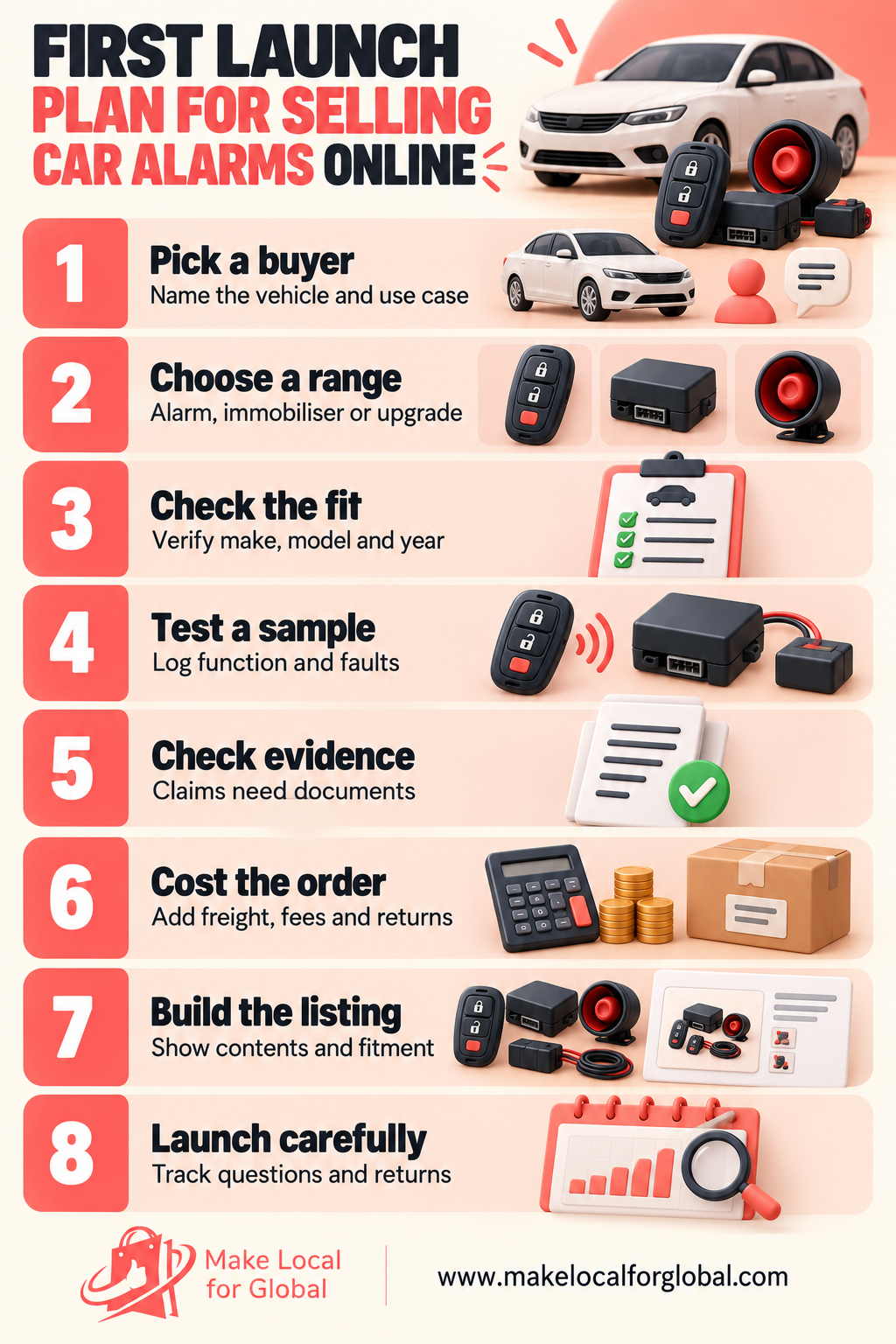
Keep your launch scorecard to one page. Record what you expected, what happened, what buyers asked and what you will change next. If the evidence does not support a larger order, that is a useful result. It means the next decision can be based on the product and customer facts you collected, instead of a supplier’s forecast.
You can sell a product without providing installation, subject to the rules that apply to your role and the product. The customer still needs clear compatibility information and an honest explanation of who should fit it. Follow the manufacturer’s installation instructions and refer buyers to a competent professional where required. Do not market a technical kit as simple DIY equipment when its design and documents do not support that use.
Certification is not a generic sales licence for every alarm. Buyers may look for a certified product for a particular vehicle or policy, so confirm the exact model’s current status and intended application. Thatcham Research notes that certification does not guarantee insurer recognition. If the product is not certified, describe its verified functions without implying that it has a certification or insurer approval.
Avoid stating or implying a guaranteed discount. Insurance terms depend on the insurer, vehicle, product and policy. You can tell customers to ask their insurer whether a named product meets the policy’s requirements, then link to the exact certificate or current product record if one applies. Do not invent a percentage saving or rely on an old comparison site statement.
Show the product model, actual functions, supported vehicle applications, excluded vehicles, package contents, installation level, service or subscription terms, warranty, dispatch details, contact route and returns information. Use original photos of the actual kit and clear technical documents. If fitment is uncertain, ask the customer to enquire before checkout rather than suggesting the kit will fit.
A product with a transmitting wireless remote may fall under radio equipment rules. The exact classification depends on the design and intended use. Check the current Office for Product Safety and Standards guidance for Great Britain and the separate Northern Ireland guidance, then ask the supplier for documents tied to the exact model. Do not use an online listing or a logo as a substitute for the declaration and technical evidence.
Importing is possible, but it can make your business the importer with duties to verify conformity, documents, labels, instructions, traceability and corrective action. Add freight, duty, import VAT, broker fees, compliance review and return handling to the cost model. Check the destination’s requirements before the order, and do not place products on the market when key evidence is missing.
Only after you understand the account, network, service, data and security terms. Tell the customer whether there is a subscription, when the service begins and ends, which network the unit uses and what happens if coverage or the supplier’s service changes. Check whether product-security duties apply to the exact connected product and your role in its supply chain.
Start with the smallest number you can document, test and support. One well-verified product for a clear vehicle group can teach more than several poorly defined kits. Add another model when you have evidence of buyer need, supplier reliability, compatibility and workable contribution. Set the next-stock decision before placing the first order.
Do not guess. Ask for only the details needed for a fitment check, then confirm with the current supplier documentation or a qualified installer. If no reliable answer is available, explain that the product is not confirmed for that vehicle and do not dispatch it as a match. Add repeated enquiries to your demand notes before deciding whether to extend the range.
Review qualified enquiries, orders, contribution, support time, dispatch and return reasons against the targets you wrote before launch. Look for evidence that the product fits the audience and that buyers understand its limits. A month with few orders can still be useful if it revealed a fitment issue before you bought a large quantity. Make the next step from documented results, not from a single positive comment.
Use your fitment evidence, cost sheet and product photos to shape a store that answers buyer questions before checkout. Read how MLFG works with new sellers, then decide whether the service fits your next step.
Selling car alarms online calls for clear product evidence, careful fitment checks and support that respects the customer’s vehicle and safety. Start with one buyer, one documented range and a cost model that includes the work around the sale. Expand only when sample results, supplier records and real customer questions show that the next product belongs in the store.
PREFERRED SOURCE
Like what you’re reading? Add Make Local for Global as a preferred source on Google to see more of our articles when you search.

Build your online presence without having to figure out everything yourself.