

READY TO SELL Slipcovers ONLINE?
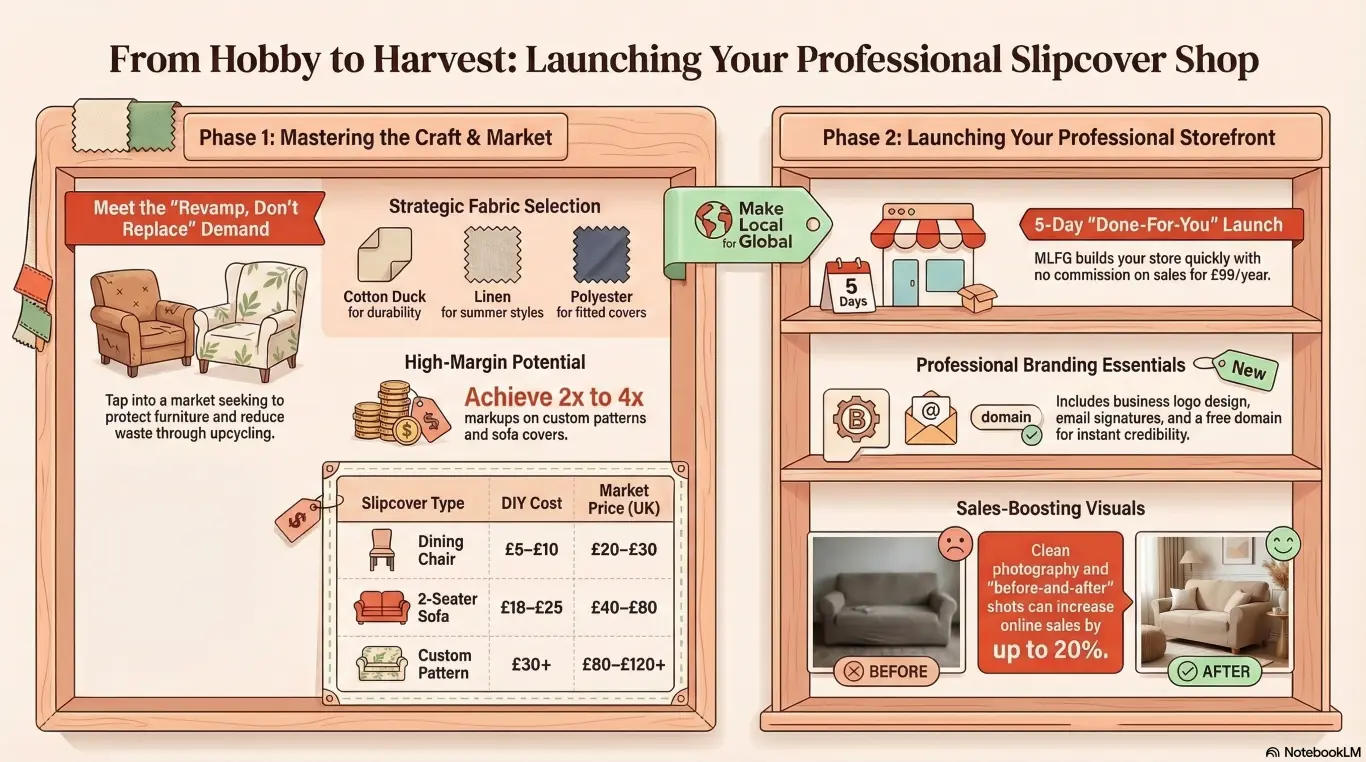
Get a store built for you in 5 days, plus training and support to help you start, run, and grow your Alternative business.

Discover how to create, market, and sell slipcovers online, turning a simple home update into a profitable business with sustainable appeal and creative flair.

Slipcovers are one of those products people don’t think about until they really need them.
A new puppy. A red wine incident. A sofa that’s still comfy but looks a bit tired. A rental where you can’t replace furniture.
That “need” is why slipcovers sell – but only if you make choosing them feel simple, because sizing and fit can scare buyers off.
This guide shows you how to sell slipcovers online, whether you make them, customise them, or resell curated options, with practical advice on product range, pricing, photos, marketing, and setting up a shop that converts.
Slipcovers can mean everything from stretchy universal covers to tailored fitted covers that look like new upholstery.
Those are totally different products with totally different buyers.
Pick one main lane first. Your shop will feel more believable if it looks curated rather than like a random warehouse.
Most slipcover buyers fall into a few groups:
Choose one main audience. It’ll make your product choices and marketing much clearer.
The biggest barrier to slipcover sales is fear of “Will it fit?”
So the products that sell best are the ones that make fit easy to understand.
Slipcover buyers care about two things: feel and washability.
Be clear and plain about both.
Avoid vague claims like “premium fabric” unless you explain what makes it premium.
Most people don’t mind a slipcover… until it slides off the sofa every time they sit down.
If your product has any of these features, shout about them:
Slipcovers sell when you remove uncertainty.
That means a proper sizing system and clear guidance.
Give buyers a simple checklist rather than a confusing chart.
This is one of the highest-leverage things you can do.
Include:
Customers don’t want textile jargon. They want reassurance.
Slipcovers sit in a funny pricing zone.
Customers want them to be cheaper than buying a new sofa, but they still expect quality and easy washing.
Price ladders help you convert more customers without discounting everything.
| Offer | Best for | Why customers buy it | Why it helps you |
|---|---|---|---|
| Basic stretch slipcover | Budget refresh | Fast makeover, easy washing | Simple fulfilment, broad demand |
| Anti-slip cover | Pets and kids | Stays put, less daily hassle | Higher perceived value supports pricing |
| Textured premium look | Interior-led buyers | Looks like new upholstery | Premium margin opportunity |
| Sofa + cushion bundle | People who want a full refresh | Matching look, better value | Higher order value, easier upsell |
Slipcovers are a “confidence” purchase.
Your shop needs to answer fit questions quickly, or buyers will leave and keep living with the stained sofa.
Slipcovers have lots of variation: sizes, fabrics, colours, and fit notes.
That’s exactly the kind of thing that can turn into a website rabbit hole.
Make Local for Global sets up your ecommerce shop for you so you can start selling without getting stuck in tech and templates.
If you want help structuring your shop and measurement guide, you can book a free consultation.
Or if you want the quick option, you can Get your website for £99/year.
Slipcover photos need to show fit, texture, and how much it changes the room.
If you’re targeting pet owners, show it with a dog on the sofa.
If you’re targeting renters, show it in a smaller flat living room.
People want to picture their life, not a showroom.
Slipcovers are perfect for “problem – solution” marketing.
Your content should help people feel hope about their furniture.
Offer these as simple add-ons rather than a confusing menu.
Slipcovers are bulky but not fragile, which is nice.
However, sizing returns are common, so your customer experience needs to be calm and fair.
People will judge quality the moment they open it.
Neat packaging matters more than fancy packaging:
Slipcovers sell when people see a transformation and trust the fit.
Don’t launch with 20 colours. Start with neutrals and one trend colour.
Keep fulfilment simple while you learn what sells.
Choose your best cover and market it hard with before-and-after content.
Optimise the product page instead of constantly adding new products.
Ask buyers to mention:
Those reviews reduce hesitation for future buyers.
People often buy slipcovers when they’re fed up and want an instant fix.
If checkout is clunky, you’ll lose them.
If you want a professional shop without building it yourself, you can Get your website for £99/year.
Or if you want help structuring sizes, variations, and measurement guides, book a free consultation.
Once you have sales, your customers will tell you what to add:
Expand with demand, not guesses.
These mistakes cause most returns and slow sales.
If you don’t give measurements, buyers won’t buy – or they’ll return it.
One photo on one sofa isn’t enough. Show boxy, rounded, loose-cushion styles if you can.
Universal covers have limits. Be honest about what they suit.
You need margin for returns and customer support. Build it in.
Sizes and colours multiply fast. Keep it simple until sales are steady.
Yes, because they’re a cheaper alternative to replacing furniture and they solve practical problems like pets, spills, and worn fabric. They sell best when you provide clear measurement guidance and show real-life before-and-after results.
Use clear size charts with measurements, provide a measuring guide, add fit notes for sofa shapes, and show multiple photos of fit around arms and cushions. Reviews that mention fit also help future buyers choose correctly.
Stretch jersey is popular for easy fitting, textured weaves can hide wear and hair better, and blends that wash well are essential. The “best” fabric depends on your niche: pet owners care about durability and anti-slip, while interior buyers care about texture and appearance.
Universal covers sell in higher volume and are easier to scale, while tailored covers can command higher prices but often need more customer support and clearer measurement processes. Many sellers start with universal then add premium options later.
You can start on marketplaces, but a website helps you present sizing guidance clearly and build trust. If you don’t want to build one yourself, a done-for-you ecommerce setup can get you selling faster.
To sell slipcovers online, focus on confidence: clear measurements, honest fit notes, and photos that show the transformation.
Start with a small range, build reviews, then expand based on what customers ask for.
If you want a professional ecommerce shop without the tech headache, you can Get your website for £99/year.
Or if you want help setting up variations, size guides, and a measurement page, book a free consultation.
A good slipcover doesn’t just protect a sofa. It makes someone feel like their home is back under control.
PREFERRED SOURCE
Like what you’re reading? Add Make Local for Global as a preferred source on Google to see more of our articles when you search.

Build your online presence without having to figure out everything yourself.