

Make Local for Global Logo

READY TO SELL Orthopedic shoes ONLINE?

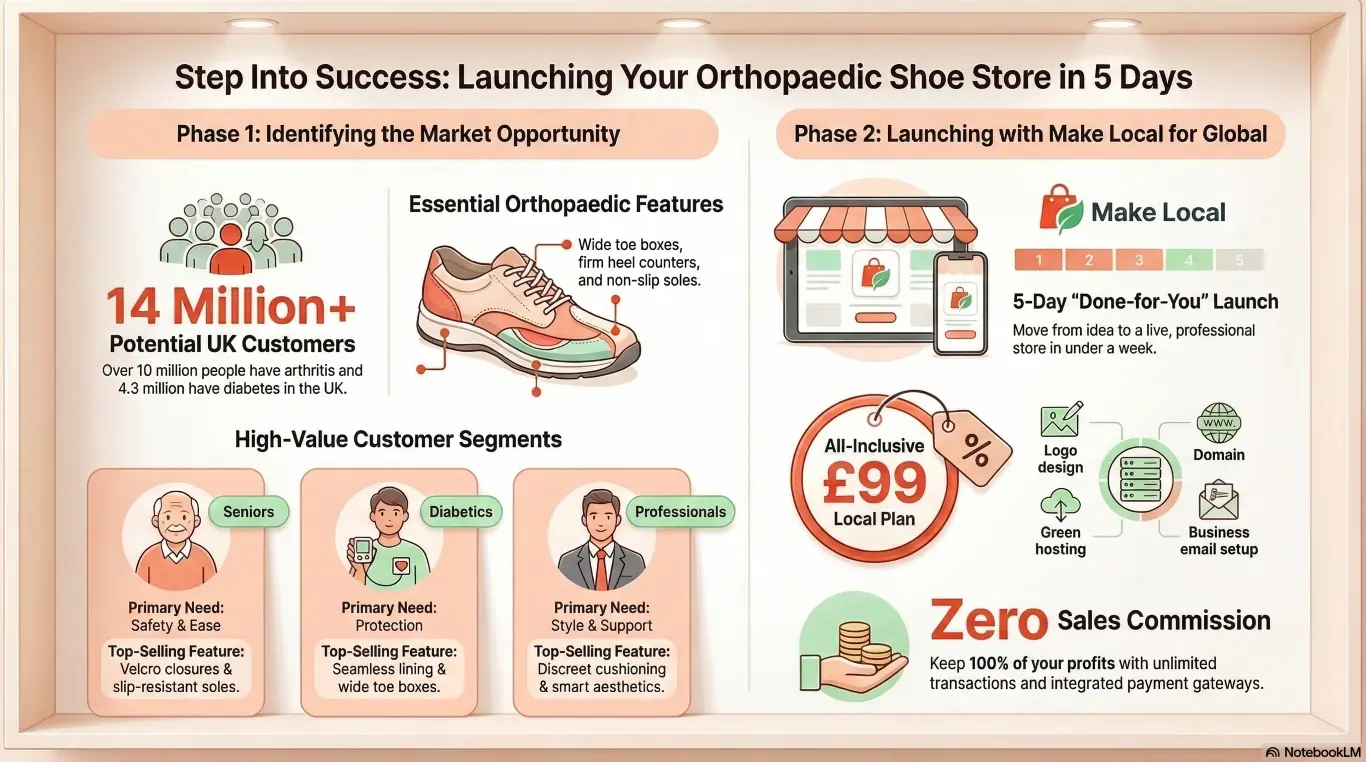
Get a store built for you in 5 days, plus training and support to help you start, run, and grow your Alternative business.

How to Successfully Sell Orthopaedic Shoes and Reach Your Customers

Discover how to sell orthopaedic shoes online, serve vital customer needs, and build a meaningful business in this growing market.

Make Local for Global
How to Successfully Sell Orthopaedic Shoes

Table of content

Orthopaedic shoes aren’t an impulse buy.

People buy them because something hurts, something doesn’t fit, or they’re tired of “normal” shoes making daily life harder than it should be.

If you want to sell orthopaedic shoes online, you can do very well – but only if your shop feels trustworthy, clear, and genuinely helpful.

Start with the real customer problem, not the product label

Lots of sellers lead with the phrase “orthopaedic shoes” and then list features.

Buyers don’t start there.

They start with pain, mobility issues, swelling, or frustration.

Common reasons people look for orthopaedic shoes

  • Foot pain that gets worse with everyday walking
  • Bunions or toe crowding
  • Plantar fasciitis symptoms (heel pain, especially first thing)
  • Flat feet or overpronation
  • High arches needing better support
  • Swollen feet and ankles (sometimes needing adjustable fits)
  • Arthritis and reduced flexibility
  • Diabetic foot care needs (often about protection and fit)
  • Post-surgery or recovery needs
  • Different sized feet or need for extra depth

These aren’t just “features”. They’re lives.

When your product pages speak to these problems in plain English, people feel understood – and they buy with more confidence.

Decide who you serve first

“Everyone with sore feet” is too broad.

Start with one core customer group, then expand.

  • Everyday comfort seekers who need support and better fit.
  • Older customers who want stability, easy fastening, and safe walking.
  • Workers on their feet needing cushioning and long-wear comfort.
  • Wide or swollen feet needing extra depth and adjustable closures.
  • Foot condition support buyers looking for specific fit and protection.

Your niche becomes your message.

Your message becomes your sales engine.

Tip: Write your product copy using the phrase “This helps if you…” rather than “Features include…”. The first one is about the customer. The second one is about you.

Build an orthopaedic shoe range that’s easy to choose

Footwear shoppers get overwhelmed quickly.

Orthopaedic shoe shoppers get overwhelmed even faster, because they’re worried about pain, fit, and returns.

Your range needs to feel structured.

Stock by use case, not just style

Style matters, but people searching for orthopaedic shoes usually care about function first.

Create categories like:

  • Everyday walking shoes
  • Work shoes for long shifts
  • Lightweight trainers with support
  • Extra wide and extra depth shoes
  • Adjustable shoes for swelling
  • Slip-on shoes with secure support
  • Sandals with orthopaedic support
  • Winter boots with stability
  • House shoes and supportive slippers

Then let shoppers filter by width, fastening, and cushioning level.

That turns browsing into selecting.

Offer three clear fit tiers

This works well because fit is the number one anxiety.

  • Standard comfort fit: supportive but similar to mainstream sizing.
  • Wide fit: more room across the forefoot and toe box.
  • Extra depth / adjustable: for swelling, orthotics, or higher-volume feet.

Use plain labels and repeat them everywhere.

Consistency reduces returns.

Choose fastenings that solve real daily problems

Fastenings aren’t just a style detail.

They’re about independence and ease.

  • Velcro straps for quick adjustment and reduced bending.
  • Elastic laces for slip-on convenience with a secure feel.
  • Zips plus laces for stability without daily re-lacing.
  • Buckles for sandals and adjustable fit.

Make fastening type a filter and a headline.

Don’t overstock styles before you’ve proven demand

Footwear ties up cash and storage quickly.

Start with a tight core range and expand based on what actually sells.

A sensible starter range might be:

  • 2 – 3 everyday walking shoes
  • 2 supportive trainers
  • 1 extra depth option
  • 1 wide-fit best seller
  • 1 supportive sandal
  • 1 winter option
  • 1 supportive slipper

Then add colours and styles once you know what customers prefer.

Make trust your main selling point

People buying orthopaedic shoes online are nervous.

They worry about wasting money.

They worry the shoes won’t help.

They worry returns will be a nightmare.

Your shop should calm those worries.

Write product pages that answer the scary questions

Every product page should clearly cover:

  • Who the shoe is for in one sentence
  • Fit guidance including width, depth, and how it compares to standard sizing
  • Support details explained plainly: arch support, cushioning, heel stability
  • Toe box shape and whether it’s roomy
  • Insole details including whether it’s removable for orthotics
  • Fastening type and why it helps
  • Weight and flexibility (stiff vs flexible matters for comfort)
  • Delivery and returns in plain English

If you skip these, people leave to find answers elsewhere.

Use honest, careful language around health

Orthopaedic shoes can improve comfort and support, but you shouldn’t promise medical outcomes.

Keep it responsible:

  • Say “designed to support”, “may help reduce discomfort”, “built for stability”.
  • Avoid “cures”, “treats”, or guaranteed pain relief claims.
  • Encourage professional advice for medical conditions where appropriate.

Being careful doesn’t reduce sales.

It increases trust.

Tip: Add a “fit and support guide” page that explains widths, removable insoles, and how to measure feet at home. It reduces returns and gives shoppers a reason to choose your shop.

Price orthopaedic shoes for profit (and for the service you’ll provide)

Orthopaedic shoes aren’t just a product sale.

They come with customer support: fit questions, exchanges, and sometimes long emails from people who are fed up with discomfort.

Your pricing needs to reflect that reality.

Build pricing around total cost, not just wholesale

Include:

  • Wholesale cost and shipping to you
  • Payment processing and platform fees
  • Packaging
  • Returns and exchange allowance
  • Customer service time
  • Profit margin that keeps the business sustainable

Footwear returns are part of the game.

Plan for them rather than being shocked by them.

Offer a simple three-tier structure

This makes your shop feel more navigable.

  • Everyday support: solid comfort, good value, broad appeal.
  • Enhanced support: better cushioning, more stability, more adjustability.
  • Specialist fit: extra depth, wider options, orthotic-friendly designs.

Then the customer can choose based on needs, not just price.

Comparison table: common orthopaedic shoe features

FeatureWhy it mattersBest forHow to describe it clearly
Wide toe boxReduces pressure and rubbingBunions, toe crowding, sensitive feet“More room at the front so toes aren’t squeezed”
Removable insoleAllows orthotics and custom insertsOrthotic users, comfort seekers“Swap the insole for your own inserts”
Extra depthMore volume inside the shoeSwelling, orthotics, higher-volume feet“More space inside for comfort and inserts”
Cushioned midsoleReduces impact when walkingHeel discomfort, long days standing“Softer underfoot to reduce jolting”
Stable heel counterHelps keep the foot alignedOverpronation, unsteady walking“Supports the heel so it feels steadier”

Reduce returns with better sizing, better photos, and better guidance

Returns aren’t a sign you’ve failed.

They’re normal in footwear.

But you can reduce them with clarity.

Make sizing feel less risky

Do these consistently:

  • Provide a simple “how to measure at home” guide
  • Show fit notes: “true to size”, “runs small”, “roomier than standard”
  • Use width labels clearly and consistently
  • Explain if the shoe suits orthotics or swelling

If you can add a printable measurement guide, even better.

Use photos that show shape and structure

Pretty photos are fine.

Helpful photos sell.

  • Side profile showing the sole shape
  • Top-down photo showing toe box width
  • Heel photo showing stability
  • Insole removed photo if it’s removable
  • Fastening close-up showing adjustability

If you sell wide or extra depth shoes, show it visually.

Buyers shouldn’t have to imagine it.

Write a simple exchange process

Many buyers will buy only if they feel exchanges won’t be stressful.

Explain:

  • How to start an exchange
  • How long it takes
  • What condition shoes must be in
  • Whether you offer size swaps

Plain English. No drama.

Market orthopaedic shoes in a way that feels respectful

Marketing orthopaedic shoes isn’t about hype.

It’s about empathy and practical help.

People buying these often feel frustrated, sometimes embarrassed, and usually tired of wasting money.

So your marketing should feel like support, not pressure.

Content ideas that attract the right buyers

  • “How to choose orthopaedic shoes for walking”
  • “Wide fit vs extra depth: what’s the difference?”
  • “Shoes for swollen feet: what to look for”
  • “Are orthopaedic shoes worth it?”
  • “Best fastening types if you struggle to bend or tie laces”
  • “How to measure your feet at home for better fit”

These are calm, search-friendly topics that build trust.

Use search terms people really use

Many buyers don’t search the word “orthopaedic”.

They search their problem.

Use related phrases naturally:

  • Shoes for bunions
  • Shoes for plantar fasciitis
  • Extra wide shoes
  • Shoes for swollen feet
  • Supportive walking shoes
  • Orthotic friendly shoes

When your site answers those searches, you bring in buyers who already need what you sell.

Tip: Add one “help me choose” quiz-style page with three questions: pain area, foot width, and how they’ll use the shoes. Then point to 3 suitable options. It doesn’t need to be fancy – it just needs to be clear.

Build your online shop without getting stuck in tech

Orthopaedic shoes are a trust product.

Your online shop needs to feel reliable, not thrown together.

That means clear categories, good product pages, and a checkout that feels safe.

What your shop needs to do well

  • Let shoppers filter by width, depth, fastening, and use case
  • Show clear sizing guidance and fit notes
  • Explain delivery and returns in plain English
  • Make customer support easy to access
  • Handle stock properly so popular sizes don’t oversell

Done-for-you ecommerce can be the fastest, calmest route

If you’re trying to source products, manage sizes, answer customer questions, and run marketing, building a full ecommerce site from scratch can slow everything down.

Make Local for Global offers a done-for-you online shop setup that’s simple, affordable, and designed for small sellers who don’t want to wrestle with tech.

If you want to talk through how to structure your product range and build trust online, you can book a free consultation.

If you’re ready to get your site live with a clean setup, you can Get your website for £99/year.

What to prepare before you launch

  • Your product list with sizes, widths, and colours
  • Fit notes for each style (runs small, roomy toe box, suits orthotics)
  • Clear product photos showing toe box, fastening, heel, and insole
  • Your delivery times and exchange process
  • A simple sizing guide page

Once those are ready, getting online becomes much less painful than the shoes you’re trying to replace.

FAQ: selling orthopaedic shoes online

Is it worth selling orthopaedic shoes online?

Yes, because there’s steady demand from people who need better comfort and support, but it works best when your shop builds trust with clear sizing guidance, honest fit notes, and a simple exchange process.

What orthopaedic shoes sell best?

Supportive walking shoes and trainers tend to sell well because they suit everyday use, while wide-fit and extra depth options are strong performers when you clearly explain who they’re for and show the shape in photos.

How do I reduce returns when selling orthopaedic shoes?

Use clear width and depth labels, provide a simple measuring guide, add fit notes based on real feedback, and show helpful photos like toe box width and removable insoles, because most returns come from fit uncertainty.

Can I claim orthopaedic shoes will fix foot pain?

It’s safer and more trustworthy to avoid guaranteed medical claims and instead describe support and comfort benefits, while encouraging customers with medical conditions to seek professional advice where appropriate.

Should I offer wide fit and extra depth options?

Usually yes, because many shoppers looking for orthopaedic shoes need more room and adjustability, but keep the range structured and clearly labelled so buyers can choose without confusion.

What’s the easiest way to set up an online shop for orthopaedic shoes?

A done-for-you ecommerce setup can be the quickest route if you want a professional shop without handling all the technical work, especially for size-heavy products like footwear where filters, stock control, and clear pages matter.

A practical 30-day plan to start selling orthopaedic shoes

If you want to start properly, keep it focused.

Week 1: niche and range

  • Choose your main buyer group and top use case (walking, work, swelling, wide fit)
  • Pick a starter range of 8 – 12 styles with clear size availability
  • Define your fit tiers (standard, wide, extra depth)
  • Write plain-language fit notes for each style

Week 2: product pages and guidance

  • Create a sizing guide and “how to measure” page
  • Photograph shoes from angles that show shape and support
  • Write product pages using the trust checklist
  • Draft an exchange process that’s simple and calm

Week 3: shipping and returns setup

  • Set shipping and packaging standards
  • Decide how you’ll handle exchanges and size swaps
  • Prepare customer service templates for common questions

Week 4: marketing rhythm

  • Publish two helpful articles based on real searches
  • Post one “how to choose” guide per week on your main platform
  • Collect early fit feedback and update your product pages

If you want this business to work, don’t compete on hype.

Compete on clarity, trust, and support.

That’s what orthopaedic shoe buyers are looking for – and it’s exactly how you build repeat customers.

If you want a done-for-you shop setup so you can focus on sourcing and customer support, you can book a free consultation or Get your website for £99/year.

PREFERRED SOURCE

Keep finding us on Google

Like what you’re reading? Add Make Local for Global as a preferred source on Google to see more of our articles when you search.

Newsletter Form in Blog

Sign up for our
FREE ecommerce newsletters!


By providing your email, you agree to our Privacy and Cookie Policy, as well as our Terms and Conditions.


DOWNLOAD FREE GUIDE
ebookmockup 1

How to sell Orthopedic shoes Online

Join 5,000+ others who downloaded
Blog to PDF Form
No spam, Unsubscribe any time.

Ready to Start Your Online Business?

Build your online presence without having to figure out everything yourself.

DOWNLOAD FREE GUIDE

How to sell Orthopedic shoes online

A simple plan to get your first steady online orders
ebookmockup 1
  • What to do first (so you don't waste time)
  • How to price and present your Orthopedic shoes
  • How to get traffic and turn it into orders
  • Join 5,000+ others who downloaded this
Blog to PDF Form
No spam, Unsubscribe any time.

Start Selling

Orthopedic shoes

Withing 5 days

You’ve read the guide. Now see if you qualify for a done-for-you online store for Orthopedic shoes sellers.
Find out if this is right for you in under 60 seconds.
  • No tech skills neeed
  • Store ready in 5 days
Qualifying / Questionnaire Form
  • Step 1
  • Step 2
  • Step 3
  • Step 4
  • Step 5

Answer a few quick questions and I’ll point you in the right direction.