

READY TO SELL Activity trackers ONLINE?
Get a store built for you in 5 days, plus training and support to help you start, run, and grow your Alternative business.

Learn how to sell fitness trackers online: choose a buyer, check phone and app fit, test samples, calculate the full order cost and plan a focused launch.

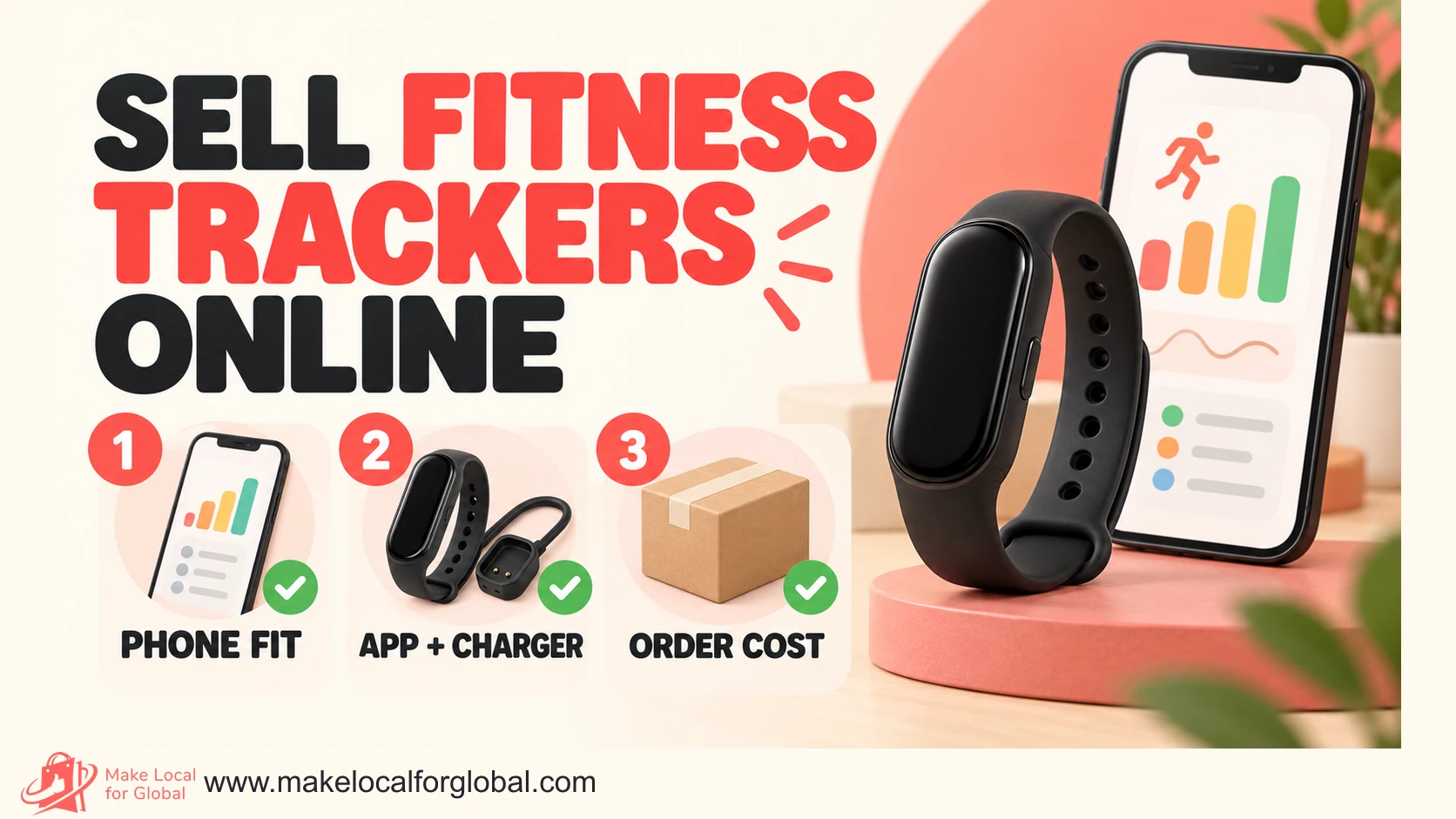
Fitness trackers can look simple on a product grid, yet buyers compare the details that affect everyday use: phone compatibility, sensor claims, charging, battery life, comfort, app access and support after purchase. A seller who lists only a step count and a bright product photo leaves key questions unanswered.
To sell fitness trackers online, choose a clearly defined buyer and device type, verify the exact model and its documentation, test the app and charging workflow, cost the full delivered order, and explain what the tracker can and cannot measure. Start with a narrow, well-supported range. Add models only when sales questions and returns show that buyers need them.
Match the device, phone, app and support offer to a clear customer need before you commit to stock.
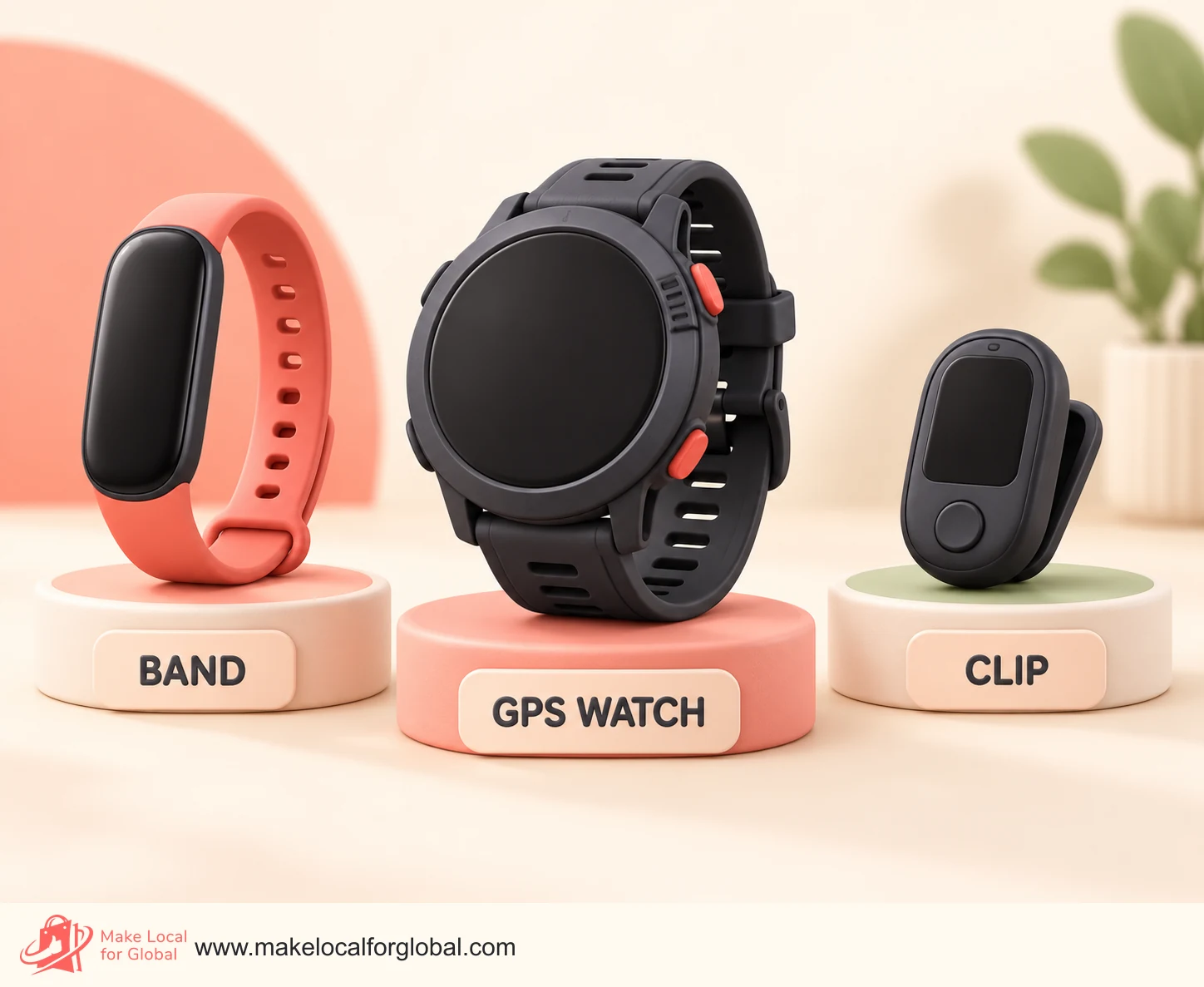
The category includes simple step counters, screen-free bands, wrist trackers with displays, GPS sports watches and connected devices that depend on a phone. These are not interchangeable offers. A person buying a basic activity band may prioritise long time between charges and a light strap. A runner may ask about GPS recording and workout controls. A gift buyer may care about wrist size, colour, clear setup instructions and whether the recipient needs a compatible phone. If your range includes adjacent wearables, compare positioning with our guide to selling digital watches online and keep each product page clear about its actual functions.
Describe the buyer by the job they need the device to do, rather than by an age group alone. For example, a first range could serve people who want a simple daily activity record and an easy-to-read display. Another could serve outdoor runners who need on-device GPS. The narrower offer makes it easier to compare compatible models and write a useful listing.
Talk with people who match the proposed audience. Ask about the last tracker they bought, the phone they use, what they wanted to measure, how they charge it, which app they installed and what confused them. Ask what they checked before paying. Do not ask only whether they like a sample; interest is not proof that someone will buy.
Show a shortlist with real model names and verified specifications. Ask each person to choose one for a stated situation and explain the choice. Note whether they compare price, display size, phone compatibility, app subscriptions, strap fit, GPS, water guidance, return terms or battery claims. Those answers can inform the range and the product-page order.
You can test demand before committing to a full carton. Publish a small landing page or marketplace draft that clearly identifies the model, expected availability, price and limitations. Invite interested buyers to join a mailing list or request a notification. If taking pre-orders, use clear dates and refund terms and do not imply that an unapproved or unavailable model is ready to ship.
Track useful actions: model comparison views, compatibility questions, email sign-ups, checkout starts, paid orders and reasons for abandonment. Likes or views are weak signals on their own. Compare similar audiences and offers, and record what changed between tests.
The form factor affects fit, usability, price, app support and return rates. Build a short comparison sheet before contacting suppliers. Record the actual model number and evidence source for each specification. Do not combine features from different versions under one generic product name.
| Format | Who may prefer it | What to verify | Useful listing details |
|---|---|---|---|
| Basic wrist band | A buyer looking for daily movement records and simple reminders | Display or no display, charging method, strap sizes, phone and app requirements | Device dimensions, supplied strap range, app setup and included charger |
| Display fitness band | A buyer who wants figures and notifications on the wrist | Screen type, controls, sensor functions, phone compatibility and app permissions | Screen dimensions, supported phones, notification limits and charging time |
| GPS sports watch | A buyer who records outdoor routes or structured workouts | Built-in GPS versus connected GPS, supported satellite systems, mapping and battery use by mode | Whether a phone is needed for route recording, workout modes and tested battery conditions |
| Clip-on activity counter | A buyer who does not want a wrist-worn device | Attachment security, what the device counts and how data syncs | Clip dimensions, where it can be worn and what activity it can record |
| Smart ring or other wearable | A buyer comparing less visible tracking formats | Sizing kit, replacement policy, app plan, sensor claims and charging case | How to measure, what sizes are in stock and which functions need a subscription |
A fitness tracker is a complete system, not only a wearable. The device may need a smartphone, a specific operating-system version, Bluetooth, an account, an app, location access or an ongoing paid plan. Confirm the current requirements for each model before buying stock. Save screenshots or supplier documents with a date, since software and plan terms can change. For a broader look at supplying charging stations for connected products, see our guide to selling charging stations online; the right charger and connector still depend on the exact tracker model.
Three close alternatives can be more useful than a dozen unrelated models. A seller might compare an entry tracker with phone-assisted GPS, a mid-range model with a screen, and a sports option with built-in GPS. The range should share a customer and a clear comparison. If you add a smart ring, subscription-based device or medical-purpose product, treat it as a separate proposition with its own sizing, support and compliance work.
Before placing an order, decide which variations matter. Colour can be a simple option if every version uses the same software and dimensions. Wrist circumference, ring size, case size, phone compatibility and included charging cable may affect whether the product works for the buyer. Avoid merging distinct versions into one listing where the images and specifications cannot map to the selected option.
| Offer level | Possible purpose | What the buyer should know |
|---|---|---|
| Entry | Lower-cost activity band with basic app connection | Exact activity functions, charging method, compatibility and return route |
| Core | Display model with common workout records and notifications | Which functions run on the device and which rely on a phone or app |
| Specialist | GPS-focused or training-oriented device | GPS mode battery conditions, supported data export, app or plan charges and limitations |
Names such as entry, core and specialist are your merchandising choices, not universal technical grades. State exact model numbers and specifications. A higher price must come with a specific reason that the buyer can verify.
Supplier catalogues often group several generations together. Product photos can show a different colour, strap, sensor arrangement or charger from the item that will arrive. Match the label, SKU, manual, specification sheet, app requirements and packaging to the stock. Ask the supplier for a written explanation when any detail conflicts.
Record the supported phone operating systems and minimum versions. Check whether setup needs an app-store account, a manufacturer account, an email address, Bluetooth, Wi-Fi or a phone nearby. Confirm whether the tracker can show its basic functions without a subscription and what happens if the app is discontinued or the account is closed.
Do not claim compatibility with every Android phone or iPhone. State the exact published requirements and tell the buyer to check their phone version before ordering. If the manufacturer changes app support, update the listing and any setup guide.
A tracker may advertise step counts, heart-rate estimates, sleep summaries, blood oxygen readings, skin temperature, cycle tracking or workout recognition. The presence of a sensor does not prove that every function is available in each country, on each phone or without a subscription. Check whether the measurement is a general wellness estimate, whether the customer needs to start a workout, and how data is displayed.
Avoid claiming that a tracker diagnoses, prevents or treats a condition without the manufacturer having the required regulatory basis for that specific purpose. Do not turn an estimated reading into a guarantee. Explain that wrist-based measurements can vary with fit, movement, skin contact, temperature, device settings and the activity being performed. Direct customers with health concerns to a qualified professional rather than suggesting that a consumer wearable is a substitute for care.
The MHRA states that monitoring general fitness, general health and wellbeing is not usually a medical purpose, but a product with a medical intended purpose may fall within medical-device regulation. The wording used in your advertising and the manufacturer's intended purpose matter. Read the current MHRA guidance on medical devices and software before making health-related claims.
Identify whether location recording uses a receiver built into the tracker or GPS from a connected phone. These have different setup and battery effects. Check the manual for battery estimates by use mode, such as ordinary use, always-on display, GPS recording, music, notifications or continuous sensors. Reproduce the conditions beside any battery figure.
Do not turn a maker's maximum estimate into a guaranteed number of days. Battery performance can vary with settings, signal quality, age, temperature and usage. A helpful listing says which mode the quoted estimate refers to and where the manufacturer's test conditions can be read.
Use “waterproof” only when the exact product's claim supports that word and the intended use. Water resistance ratings, swim modes, shower advice and cleaning instructions differ by device. A rating does not automatically mean a tracker suits hot water, full submersion, salt water, soaps or high-pressure jets. Link to the model's own care guidance and state the limits in plain terms.
If the supplier says a tracker is suitable for swimming, check whether that applies to the device, strap, charging contacts and every model variation. Do not assume that a replacement strap has the same water guidance as the original.
Check whether premium insights, route maps, coaching, cloud history or family features require payment. Name the plan, trial length and renewal terms only from current official material. Avoid saying “free app” if a useful function is subscription-only. Explain that an app may collect personal activity or health-related information and point buyers to the manufacturer's privacy information.
Avoid collecting a buyer's health information through your shop unless it is necessary, lawful and handled securely. Customer support can usually resolve compatibility or setup questions with a model number and phone operating system, without asking for a heart-rate history or health record.
Potential supply routes include an authorised UK distributor, an established wholesaler, a manufacturer, a private-label supplier or a marketplace fulfilment service. The lower unit price is not the only buying decision. A traceable source, valid documentation, replacement parts, firmware support and a practical returns route can matter more than a small saving.
Ask for proof that the supplier can sell the named model in the UK and any territory you plan to serve. Confirm the product is genuine, the warranty is valid for your customer, and the app and firmware support are current. Ask how the distributor handles safety notices, product recalls and end-of-life models.
Check the invoice includes the exact SKU, quantity, batch or serial references where available, unit price, VAT treatment, delivery charge and warranty terms. Keep the original supplier documents and a copy of the product information used in your listing.
Importing from outside the UK can make you an importer with additional duties. Rebranding a device may make your business responsible for manufacturer obligations. Before ordering, obtain the conformity documents, risk information, product traceability details, instructions, charging information, manufacturer contact and the relevant importer details. A generic “CE certificate” from an unknown source is not proof that the exact product complies with every applicable rule.
For a white-label product, ask which factory and hardware revision made the device, who controls the app, who owns the firmware, what happens when cloud service ends, and whether the supplier will notify you before changing a component. Agree how faulty units, battery issues, app outages and support escalations will be handled. Claim long-term service only where the supplier has confirmed support in writing.
Order a sample from the same source and revision as the proposed stock. Keep its packaging intact until you have photographed the labels and checked the documentation.
A short inspection can catch mismatched packaging, poor charging contacts or confusing setup before buyers receive the product. It does not replace formal conformity assessment or laboratory testing. Record what you checked and which sample and app versions you used.
Compare the sample with the supplier's packing list. Record the tracker, strap, charger or cable, adapter, instruction leaflet, warranty information, packaging labels and any included accessories. Confirm the serial or model number on the device, box and manual agree. Photograph each side of the packaging and save clear images of regulatory markings and importer details.
Check the strap range against the manufacturer's published wrist measurement method. If a model uses multiple case sizes, note the correct strap and box contents for each one. Check that a buyer can identify the selected colour or size from the packaging label.
Use a compatible phone to install the official app and follow the manufacturer's process. Note each permission request and whether it is needed for the function being offered. Check pairing, syncing, firmware updates, notifications, account creation, data export, cancellation of any trial and account removal instructions. Do not use a buyer's private account for testing.
If the app requires a manufacturer account, test whether the device can be returned to factory settings and paired with another account. Some connected devices bind to a first account or have region restrictions. Confirm how customer support can release a device if a buyer returns it.
Inspect pins, contacts, magnets and charging alignment. Try attaching and removing the cable several times. Confirm the included charger specification and do not advise buyers to use an unapproved higher-output adapter. Check that the strap fastens, sits without sharp edges and is available in a compatible replacement size.
Run a sample for the period necessary to understand ordinary setup and charging. Record starting and ending charge, app settings, screen mode, notifications and GPS use. This is an observation on one sample, not evidence of expected battery life. Use the manufacturer's official range and its stated test conditions in the listing.
Test touch controls and physical buttons with dry hands and during a normal walk. If the screen is difficult to read in sunlight or small text is hard to use, record that as a buying consideration. Describe accessibility functions only when they are available and tested for the specific device.
Compare the device's own readings with the app display and check that dates and time zones sync correctly. A short test cannot establish medical accuracy. Do not use personal health data or make a clinical comparison without a proper approved protocol and regulatory review.
Use everyday observations to test the product experience: does it sync after a walk, can the buyer find the workout record, can the buyer understand the app's labels, and does the device give a clear low-battery warning? These checks help a seller write accurate setup notes, not to certify sensor performance.
For each sample, save supplier, SKU, hardware revision, serial, date, phone model, phone operating system, app version, firmware version, setup steps, charging results, strap measurements, packaging photos, support contact and unresolved questions. Mark each item pass, fail or not tested. Do not market a claim as verified if the relevant test is not recorded.
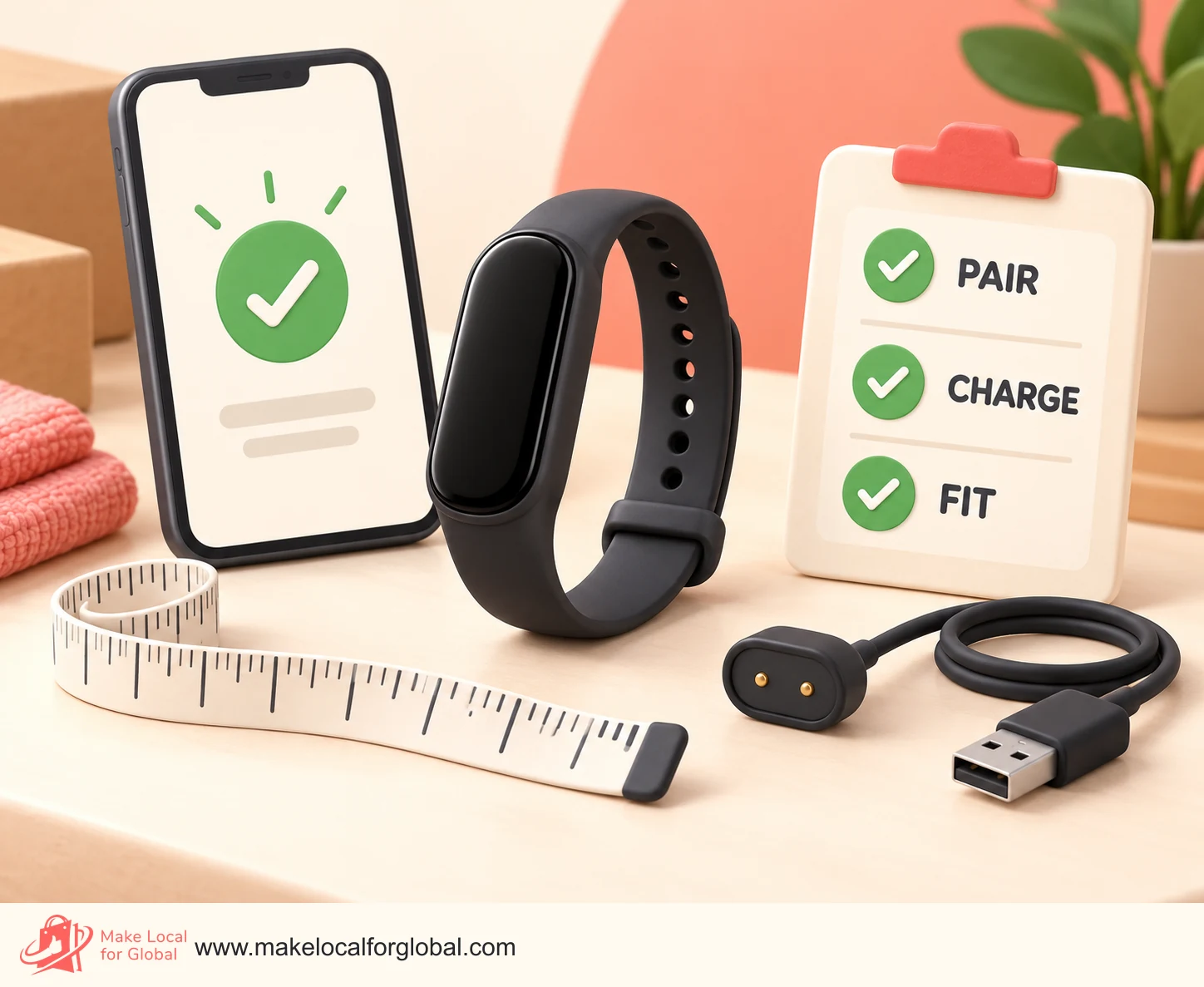
A buyer should be able to identify the exact tracker, check phone fit, understand what is included and see which functions need an app or subscription before paying. Put model and compatibility details near the top instead of burying them in a long description.
Example title: “Display Fitness Band, Model AB120, Built-in GPS, Black, Small/Medium Strap”.
Use this only if each detail matches the device and the selected variation. Do not add “built-in GPS” when the tracker only borrows GPS from a phone.
Example opening: “The AB120 is a wrist-worn fitness band with a colour display and built-in route recording. It pairs with the maker’s app on supported iOS and Android phones. Check the compatibility list and your wrist measurement before ordering. The package includes the tracker, black small/medium strap and USB charging cable; no mains adapter is included.”
This wording names the model, main distinction, compatibility condition and included items. Add a link to the official compatibility page and manual where permitted.
Show the device face, side buttons, back sensors, strap clasp, charger, box contents and a size reference. Use a genuine sample. Do not retouch the screen into a different interface or add features that the model does not have. Photograph each colour variation that is actually in stock.
A simple comparison table can help customers choose between versions:
| Detail | Model AB120 | Model CD240 |
|---|---|---|
| GPS | Built in; check mode battery estimate | Uses connected phone GPS |
| Display | Colour touch screen | Monochrome screen |
| Setup | Maker app and supported phone required | Maker app and supported phone required |
| Strap | Small/medium supplied; larger strap sold separately | One adjustable strap, published wrist range applies |
| Subscription | Core activity history available without premium plan | Advanced coaching requires a paid plan |
These are illustrative placeholders, not specifications for real products. Replace every entry with information from the exact manufacturer documentation before publishing. If a feature is unknown, say so and ask the supplier.
Explain pairing and initial charge using the maker's instructions. Give the customer a route to check compatibility, register a warranty, request a replacement charger and contact your shop. State dispatch time, return address, warranty terms, how your returns policy relates to the manufacturer's warranty, and what happens if an app or service is unavailable.
Use plain language for a device's limitations. If the tracker does not include a mains adapter, say that beside the box contents. If phone GPS must stay nearby, explain it before the feature table. If advanced app functions cost extra, link to the plan details and avoid positioning the base purchase as a complete substitute.
Calculate contribution after all variable order costs. Do not set a price from the wholesale figure alone. The worked example below is hypothetical and is not a quote or current market price.
| Illustrative cost per order | Amount |
|---|---|
| Fitness tracker from UK distributor | £24.00 |
| Inbound freight allocation | £1.20 |
| Protective packing and dispatch materials | £1.10 |
| Payment and marketplace fees | £2.55 |
| Outbound delivery paid by the seller | £3.25 |
| Customer acquisition allowance | £2.80 |
| Return, defect and replacement allowance | £2.10 |
| Illustrative variable cost | £37.00 |
| Delivered selling price | £54.99 |
| Contribution before fixed costs and tax | £17.99 |
Arithmetic: £54.99 selling price minus £37.00 variable cost equals £17.99 contribution. The example assumes a single standard tracker, delivery included in the price and a seller not registered for VAT. It excludes fixed costs, staff time and tax. A VAT-registered seller must model VAT and recoverable input tax correctly for their own transaction.
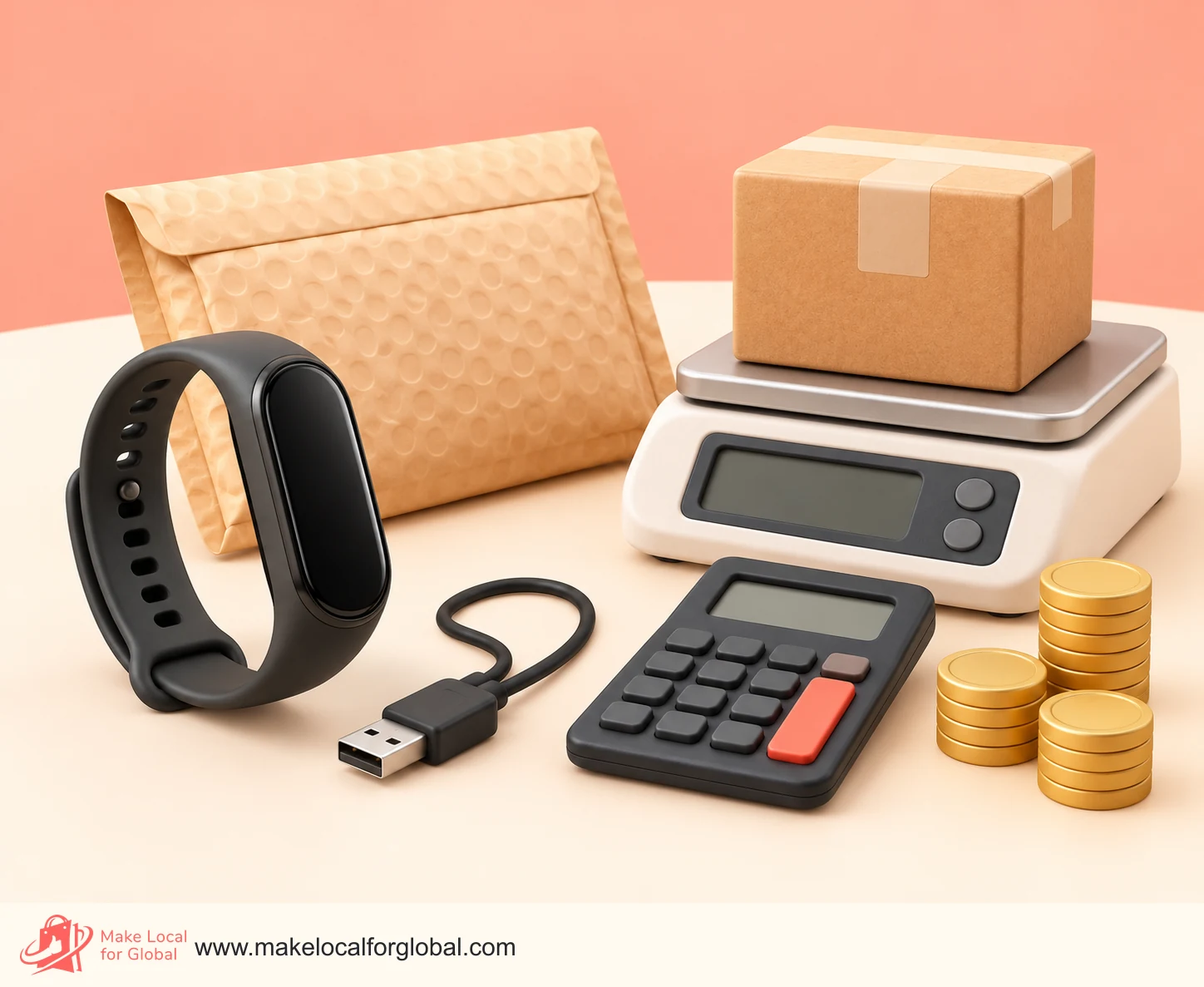
The £2.10 returns and replacement allowance is an example, not an expected failure rate. Use your own return history and supplier terms as they become available. A tracker can create additional costs if the customer needs a different strap, a replacement charger, help with pairing or a return after opening the packaging. Check current legal rules and marketplace policies before deciding how opened or used products are handled.
Add labour to the model. If support takes 12 minutes per order and your internal labour assumption is £12 per hour, support costs £2.40. This reduces the contribution to £15.59 before fixed costs and tax. If one in ten orders needs a 30-minute setup call, add that expected time as a separate allowance rather than hiding it in “miscellaneous”.
A tracker bundle could include an extra strap or screen protector. Add the true cost of each item, assembly, packaging weight, dispatch time and any platform fee change. A bundle price of £64.99 with £42.50 variable cost gives £22.49 contribution before fixed costs and tax. These amounts are illustrative. Compare contribution per order and support time, not just the higher checkout value.
Do not describe a seller-provided service plan as a manufacturer warranty. If you sell an extra warranty or care plan, check the relevant consumer and insurance rules before offering it. State its length, coverage, claim route and exclusions in a clear summary.
Track model, hardware revision, strap size, colour, landed unit cost, supplier lead time, warranty route, app version and batch. A low unit price can tie up cash in slow-moving colours or devices with discontinued app support. Set a reorder point from actual sales and supplier lead time, not from an optimistic forecast.
Keep some cash for customer issues and returns. Do not use a higher selling price to conceal an uncertain defect rate. If a sample fails pairing or charging, resolve it before ordering stock. If the manufacturer announces an end-of-support date, remove the model or make that date visible before purchase.
Include product cost, freight, fees, packing, delivery, returns and support time in your contribution calculation.
The rules depend on what your business does, where the product is made, who first places it on the market and where the customer lives. A retailer buying from a UK wholesaler may have different responsibilities from a business importing or selling a tracker under its own brand. Get advice for the exact model and role where the obligations are not clear.
Fitness trackers contain electrical and radio components and commonly include a rechargeable battery. Before making stock available, verify the relevant product rules, conformity evidence, markings, instructions and traceability. Keep the manufacturer and importer details, model or batch identifier, technical documents, supplier invoice, complaints and corrective actions.
The UK government's product safety advice for businesses explains that sellers have responsibilities for products they make, import, distribute or sell. The electrical equipment safety guidance for Great Britain describes importer checks and information duties. Radio-connected models may fall under the Radio Equipment Regulations 2017 for Great Britain. Northern Ireland and EU supply can follow different arrangements; check the current rules before cross-border listings.
Do not assume a seller can rely on a logo photographed on a carton. Match the declaration and documentation to the model and hardware revision. If you import or use your brand, ask a competent conformity specialist what records and markings apply before placing the device on the market.
The GOV.UK EEE producer guidance identifies who may count as a producer, including businesses importing equipment commercially or selling equipment under their own brand. Small producers may still have registration and record-keeping duties. A tracker containing a battery can involve separate reporting for the device and battery.
Retailers have take-back responsibilities for old electrical products. The WEEE retailer guidance says that sellers must offer free take-back for like-for-like products, or join the Distributor Takeback Scheme if eligible. State how customers can use the service on your website and retain the required records.
Battery rules have their own thresholds and routes. The waste batteries producer guidance explains producer registration and responsibilities for products containing batteries. Do not assume that a tiny wearable is exempt just on the basis that its battery is built in. Check your tonnage, supply route and regulator before selling at scale.
Give clear product details, total price, delivery terms, seller identity and a working returns process. Online buyers may have cancellation rights. Read the current GOV.UK rules for online and distance selling and state how to contact you. Do not claim “no returns” without checking the applicable exceptions and legal rights for the exact order.
A tracker app can handle personal data. Link to the maker's privacy notice and identify any account or data-sharing requirement. Collect only support information you need. If you receive a safety complaint, record the model and batch, stop dispatching affected stock where appropriate and contact the supplier or relevant authority for advice.
Do not market a general fitness tracker as a diagnostic or treatment device. Use the manufacturer’s intended claims and approved wording. Make claims about identifying a heart condition, preventing illness, measuring clinical oxygen levels or replacing a medical appointment only where the device has the required UK regulatory status and the claim is supported.
An online marketplace can help you test a small range with shoppers who are already comparing devices. Read its current electronics listing rules, fee schedule, warranty policy, battery shipping requirements and return process. Include marketplace fees and paid advertising in your cost model.
Your own shop can host a model comparison page, compatibility list, setup instructions and support contact. It leaves you responsible for attracting visitors, protecting customer data, processing orders and keeping policies current. A local electronics shop, running club or fitness studio may be useful for gathering questions, but do not imply that an organisation endorses a device without permission.
Use one test to answer one question. For example, compare interest in a basic band with connected GPS and a model with built-in GPS among people who already run outdoors. Keep price, audience, images and offer similar enough to interpret the result. Track qualified product views, compatibility checks, email sign-ups, paid orders, cancellations, support time and returns.
Useful educational content includes:
Write each answer from manufacturer documentation and your own sample observations. Link the answer to the exact model. Do not publish a generic health recommendation to attract traffic.
A shared product photo or name may hide different sensors, phone requirements and chargers. Split versions when features or box contents differ. Make the selected model obvious in the listing, checkout and dispatch label.
Battery estimates depend on settings and usage. Explain the conditions and distinguish normal activity from GPS or always-on display use. Do not state an exact number of days without evidence from the exact product.
Use the manufacturer's exact resistance language. State the rated conditions and care limits. Only suggest use in hot showers, sea water or underwater when the model documentation explicitly supports it.
A heart-rate sensor does not establish a medical benefit. Describe recorded features neutrally and keep health claims within the manufacturer's approved intended purpose. Do not imply that the customer can diagnose a condition.
A buyer may return a tracker that cannot pair or whose main feature requires a paid plan. Put compatibility and account needs beside the main features. Explain trials, renewal and cancellation using current plan terms.
Pairing questions take time. Make an accurate setup page, link to official instructions, and include average support time in the cost model. Decide which issues your shop can answer and which must go to the manufacturer.
Missing cables, awkward charging contacts or a broken strap can turn a functional unit into an unhappy order. Confirm what's included and whether replacements are available. Photograph the box contents and state what is not supplied.
Importers and own-brand sellers can have additional compliance duties. Confirm records, technical files, labelling, producer-responsibility registration and recall contacts before ordering. Do not rely on the supplier's statement that “all approvals are handled” without matching evidence.
The wearable may depend on an external service to show trends or sync data. Ask the supplier what happens if the app changes or shuts down. Explain this dependence and keep a customer-support route that does not claim services you cannot control.
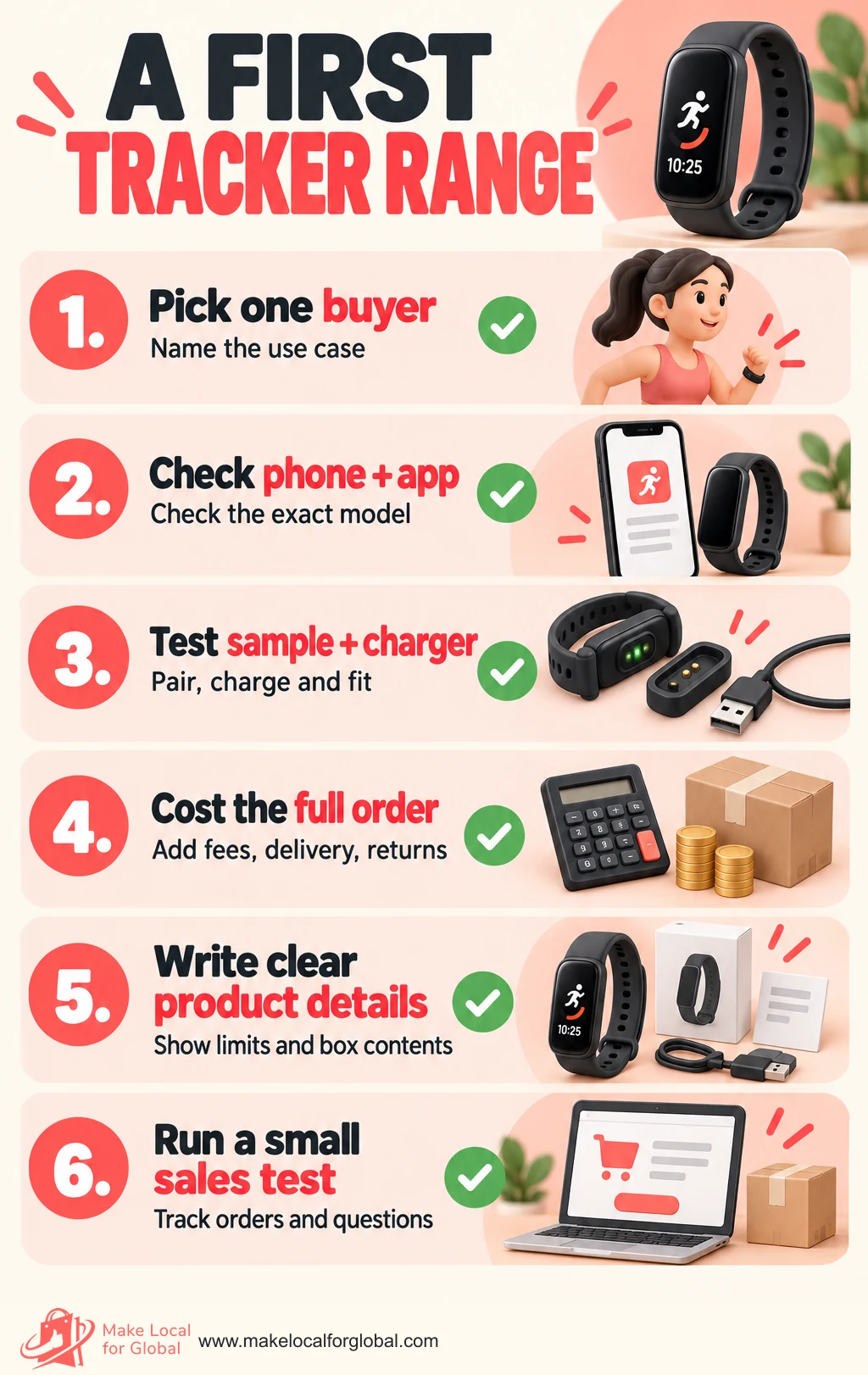
Choose one use case, such as people who want a simple daily activity record or runners who need route recording. Interview several likely buyers. Record their phone types, key features, budget, charging habits and questions about subscriptions or returns.
Build a comparison sheet for three actual models. Include model number, supported phones, app version, GPS method, charging, strap range, water guidance, warranty, supplier, order minimum and evidence link. Remove any model with unclear sourcing or unsupported claims.
Order samples from the intended supplier. Photograph the packaging, inspect labels, confirm the model and read the manual. Install the official app on a compatible test phone and go through pairing, syncing, firmware update and account reset.
Check strap fit, charging alignment, screen readability and box contents. Record battery observations by mode without treating a single sample as proof of a guaranteed runtime. Ask the supplier about unresolved documentation, replacements and app support.
Record the product cost, inbound freight, fees, packing, delivery, marketing, returns, defects and labour. Calculate contribution for a single sale and any bundle. Add likely support time for compatibility and setup questions.
Write the listing from the exact documentation. Include the model number, supported phone versions, GPS method, what is in the box, battery conditions, water guidance, plan requirements, warranty contact and returns information. Ask someone unfamiliar with the tracker to find the compatibility answer using only the listing.
Prepare a short setup page and an issue checklist for pairing, charger fit, account reset and returns. Identify which issues your store can handle and which need manufacturer support.
Publish a limited number of units from a batch you can trace. Use one product page and one educational post that answers a real buyer question. Set a spending limit and decide in advance which result would justify reordering.
Track product views from the intended audience, compatibility-page clicks, orders, customer questions, support minutes, cancellations, returns and defects. Review patterns by model rather than averaging the whole range. If buyers choose the cheaper model but ask for GPS, improve the comparison or test a different product. If pairing problems appear, pause stock and investigate before promoting more.
At day 30, choose one action: reorder the model with reliable evidence and viable contribution, revise the page to answer repeated questions, change suppliers, or stop the test. Record why. A small, documented result is more useful than a wide range bought on assumption.
Start with a model that serves one clear buyer and has verified phone compatibility, written documentation, traceable supply and a practical returns route. Keep the range small until you know which features people ask about and which units you can support.
Test at least a sample of each model, hardware revision and key variation you plan to list. Check the box contents, pairing, charging, strap, controls and published requirements. Sample checks are not a formal conformity assessment or proof that sensor data is clinically accurate.
You can describe a feature only when it matches the exact model and the manufacturer’s permitted claims. A sensor feature alone does not make the device a medical diagnostic tool. Avoid diagnosis or treatment claims and check MHRA guidance if the product is presented for a medical purpose.
No. Requirements vary by maker and model. Check which basic records work without payment and which insights, history, coaching or cloud functions require a paid plan. Explain trials and renewal terms accurately.
Use the manufacturer's estimate for the exact model and state the operating conditions. GPS, screen settings, notifications, sensors, signal and device age can change battery use. Do not turn a maximum estimate into a guaranteed number.
Use the maker's exact water-resistance claim and explain its limits. Different models and straps can have different guidance. Suggest use in a pool, shower or sea only when the manufacturer’s instructions support it.
Your business may take on importer responsibilities, including checking the applicable conformity process, documentation, labelling, traceability and instructions. Electrical equipment, radio equipment, batteries and WEEE can each involve relevant duties. Confirm the exact role, product and market with current official guidance before placing stock on sale.
Revenue is the amount paid for the order. Contribution is revenue less variable costs such as the tracker, freight, payment fees, packing, delivery, advertising and expected returns. Contribution still has to cover fixed costs, wages, tax and other overheads, so it is not net profit.
There is no fixed number. A small range of two or three compatible models can make comparisons easier and limit cash tied up in stock. Add more when questions and paid orders show a specific unmet need.
Show the display, side controls, strap and clasp, sensor back, charging cable, packaging and each in-stock colour. Use an actual sample and do not edit the interface to add features. Include a size reference and a clear image of all items included in the box.
Choose the buyer first, compare exact models, verify the app and phone requirements, and test a sample before committing to stock. Use a full order-cost model and write feature details from current documentation. A clear, traceable range with honest limits gives a small seller a better basis for learning from the first orders.
Use a small pilot to test real buyer interest, setup questions, return reasons and cash exposure before a larger order.
PREFERRED SOURCE
Like what you’re reading? Add Make Local for Global as a preferred source on Google to see more of our articles when you search.

Build your online presence without having to figure out everything yourself.