

READY TO SELL business suits ONLINE?
Get a store built for you in 5 days, plus training and support to help you start, run, and grow your Alternative business.

Learn how to choose a business-suit range, check fit and quality, price each order, write useful product pages and plan a practical 30-day launch.

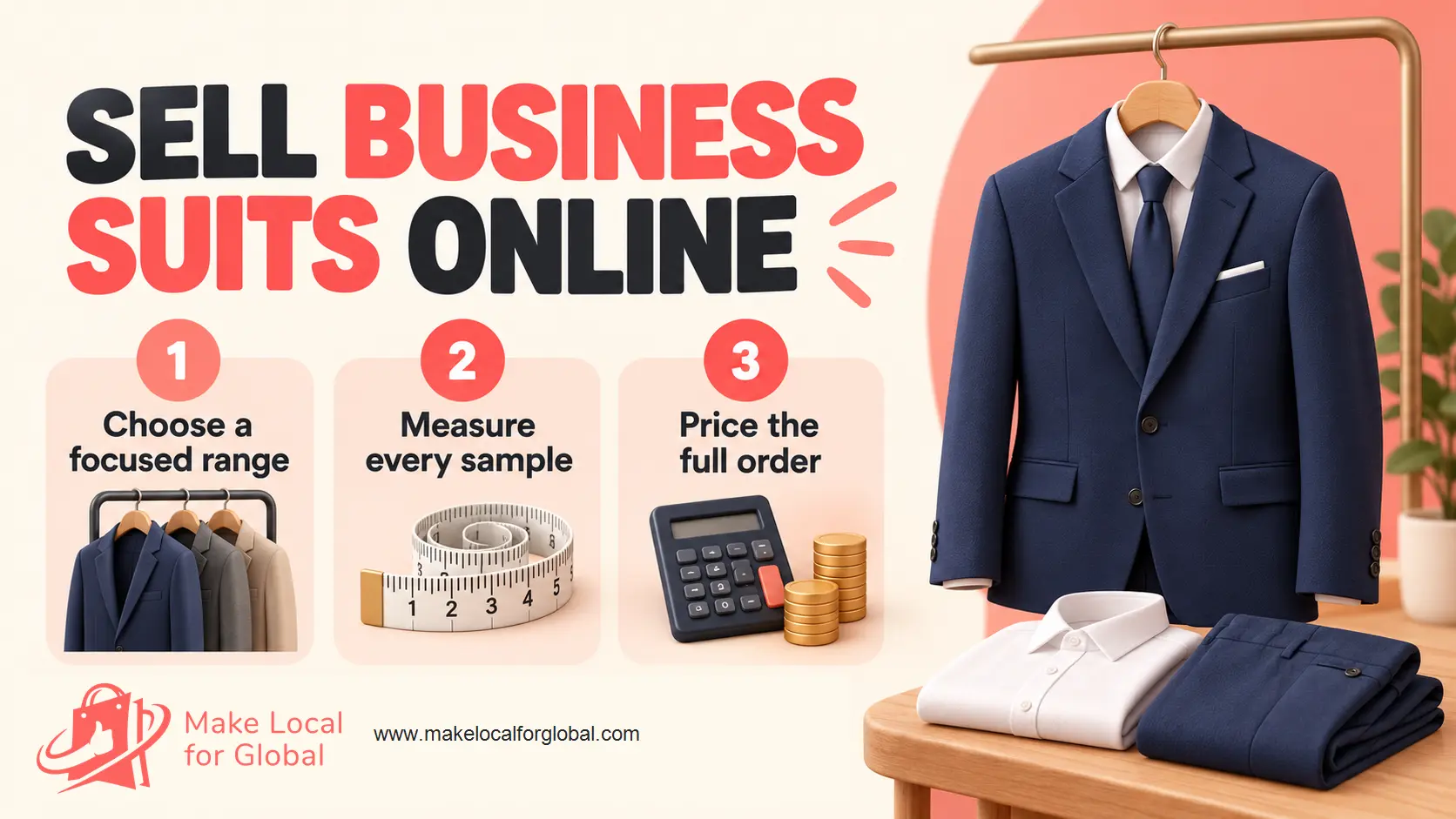
A business suit is a high-consideration purchase. Buyers want to see how the jacket and trousers fit, what the cloth is made from, and what happens if the size is wrong. A focused shop can answer those questions before the customer adds a suit to the basket.
This article sets out a practical route to selling business suits online: choose a buyer, check samples, build a size system, price the full order and plan fulfilment. Start with a small range and use real customer questions to decide what deserves more stock.
Make Local for Global works with small businesses on websites and online stores. See the business suits service page or ask about your plans.
“Business suit” covers several jobs. A new graduate buying interview clothes may need a first complete outfit at a clear price. A small accountancy firm may need repeatable sizes for staff. A wedding guest may care more about colour and delivery date than office wear.
Pick one first customer and speak with five to ten people who match that profile. Ask what they struggle to find, which fit terms confuse them, and what would make them confident enough to order without trying the suit on. Record the words they use. Those phrases can guide category names, product titles and a first buying test.
Before placing a bulk order, test a landing page, collect expressions of interest or run a small appointment event with samples. Count qualified enquiries, requested sizes and acceptable price points. Likes alone do not tell you whether people will buy.
A wide size and colour grid ties up cash. Start with a small set that makes buying choices easy to compare. Two-piece suits in navy and charcoal can test demand across common use cases; add a third colour or three-piece option only when enquiries and sales support it.
| Offer | Useful first test | Stock risk |
|---|---|---|
| Entry two-piece | Navy, one fit, selected sizes | Lower, but limited choice |
| Core two-piece | Navy and charcoal in two fits | More size-colour combinations |
| Three-piece or separates | Offer after customers ask for waistcoats or separate trouser sizing | Extra components and matching checks |
Keep the first order small enough to inspect every fit and colour. Confirm the supplier’s size chart before committing.
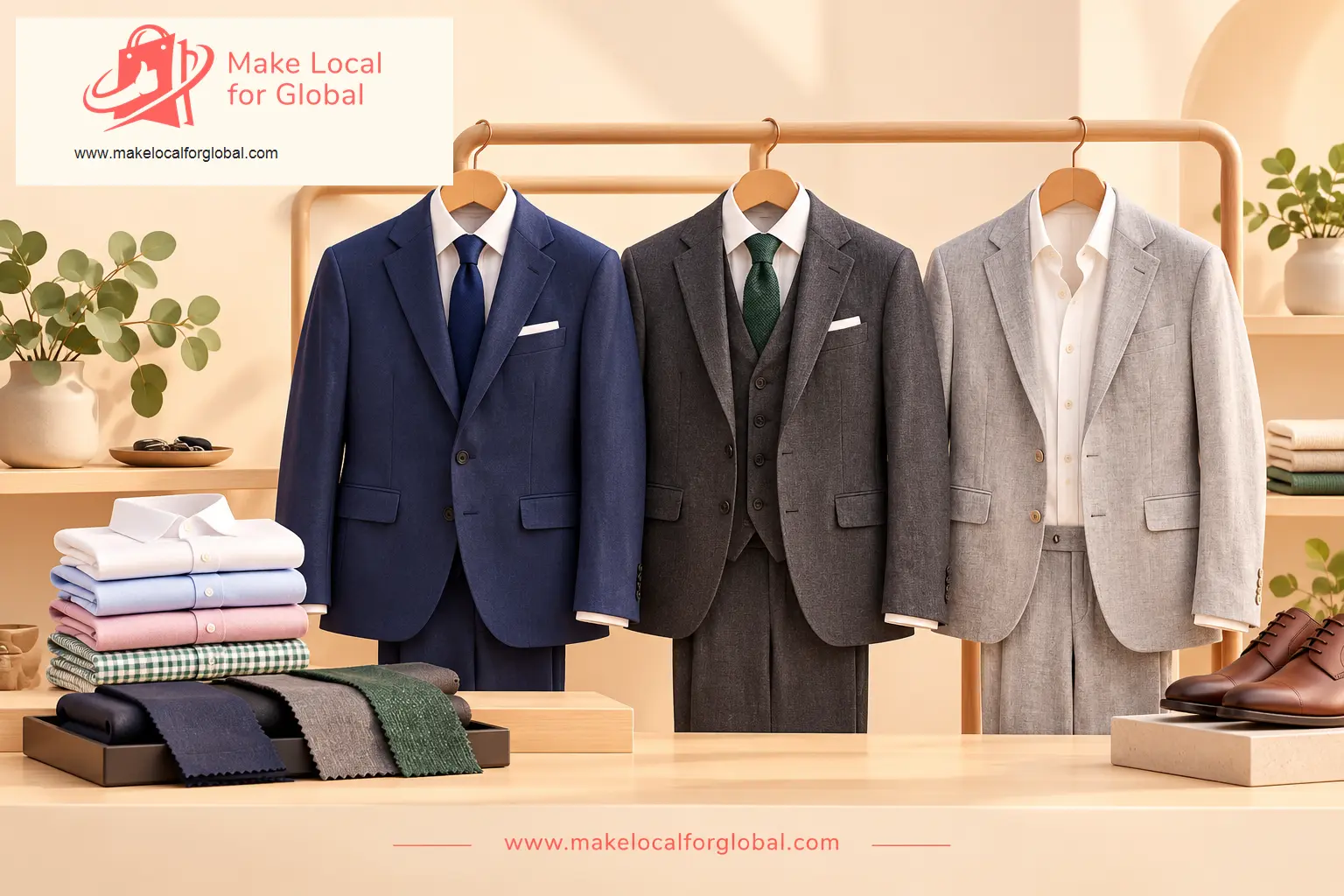
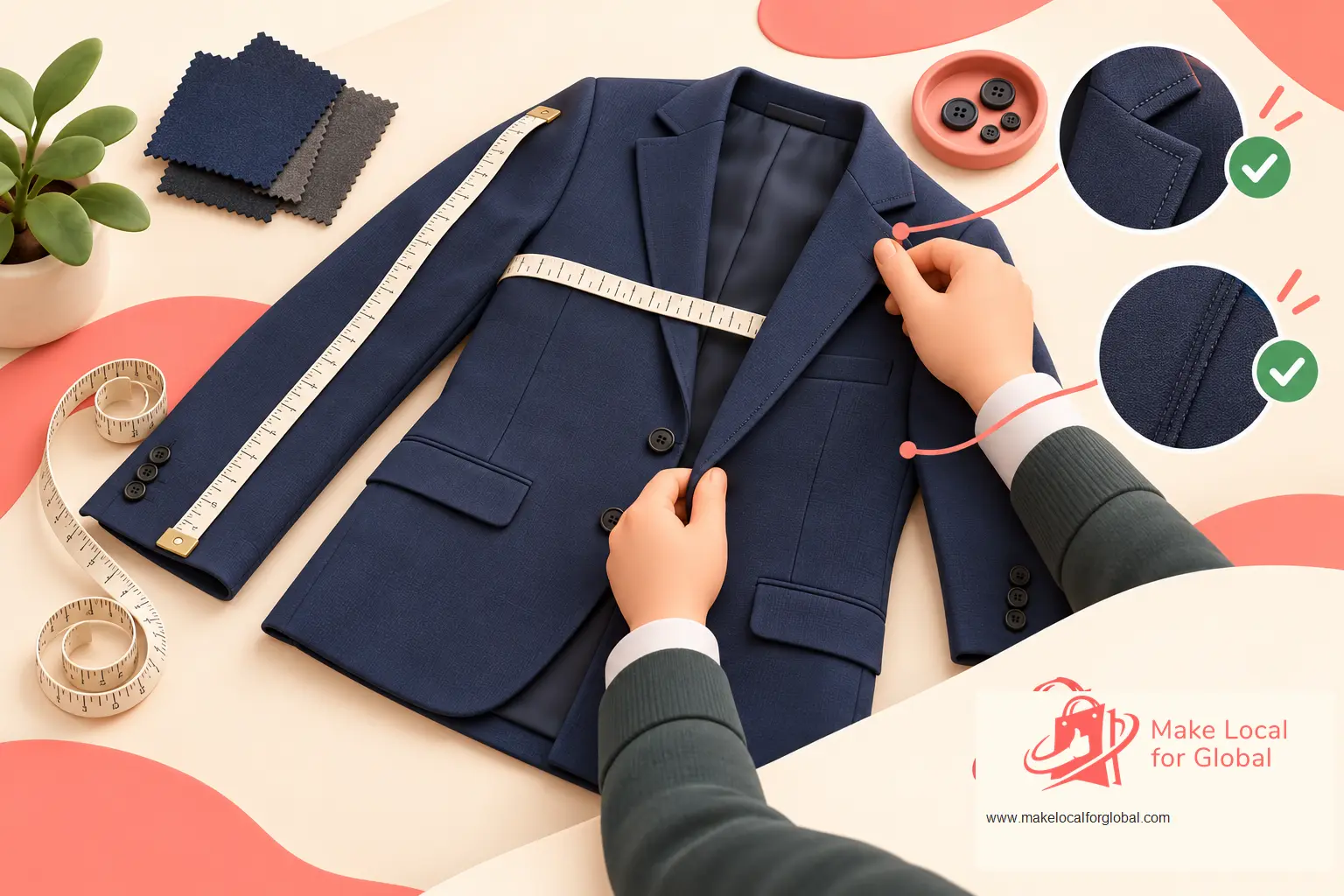
Ask suppliers for a sample from the same production route as the stock order. Check the jacket on more than one body shape. Look at shoulder line, collar gap, chest ease, sleeve length, back length and how the jacket sits when the wearer moves.
Check trousers for waist comfort, rise, thigh room, leg line and inside-leg options. Inspect seams, button attachment, lining, pocket construction and pressing. Photograph any fault beside a ruler and send the supplier a written record before approving production.
Choose stock wholesale, private label or made-to-measure only after comparing cash tied in stock, control over fit, lead times and the work needed to handle exchanges. Made-to-measure needs a reliable measurement and alteration process; it is not just a longer product page.
Put the size chart close to the size selector. State whether each number describes a body measurement or the garment laid flat. Show centimetres and inches, and explain where the tape should sit. Include jacket chest, shoulder, sleeve and back length, plus trouser waist, rise and inside leg.
Explain the shop’s fit labels in plain terms. If a jacket comes with trousers in a fixed pairing, say so before purchase. Where customers can choose separate sizes, show the steps and any price change. A model’s height and the size worn can help, but do not substitute for garment measurements.
For a reference on how a retailer explains suit fit and measurements, see Charles Tyrwhitt’s suit sizing information. For related product merchandising ideas, our article on selling belts online covers how a complementary accessory can sit beside a core clothing offer without crowding the main choice.
Use a descriptive title such as “Navy two-piece business suit, regular fit”. The first screen should show the full suit, price, available sizes, dispatch estimate and the route to fit help.
Use the same names for fits and measurements in photos, product pages, packing slips and customer service replies. That consistency helps a buyer compare options and helps you identify which size descriptions cause repeated questions.
A useful product page can connect fit information, stock choices and enquiry capture in one place. Explore MLFG’s online suit selling service and decide whether it fits your next step.
Here is an illustration for a VAT-registered seller offering a suit for £240 including 20% VAT. The net sale is £200 before costs. The table assumes the listed costs are net of recoverable VAT where relevant; actual fees and VAT treatment vary by seller and transaction.
| Cost item | Illustrative amount |
|---|---|
| Net sale after VAT | £200.00 |
| Suit purchase | −£82.00 |
| Inbound freight allocation | −£6.00 |
| Protective packaging | −£5.00 |
| Outbound delivery | −£7.00 |
| Payment fee estimate | −£4.50 |
| Returns allowance | −£8.00 |
| Customer acquisition allowance | −£15.00 |
| Contribution before fixed costs | £72.50 |
£200 − (£82 + £6 + £5 + £7 + £4.50 + £8 + £15) = £72.50. This is contribution, not net profit. It excludes fixed overheads, unsold stock, staff time and tax.
Most goods use the UK standard VAT rate of 20%, but check HMRC’s current VAT rates and your own registration and accounting position. A seller who is not VAT registered must model prices and input costs differently. Ask an accountant to review your assumptions before ordering stock.
For England, Scotland and Wales, GOV.UK says textile labels must state fibre content, including animal parts, and different components may need their fibre content shown separately. Retailers share responsibility for compliance, so check supplier labels and product-page details before listing a suit. Review the current GOV.UK textile labelling guidance; get advice on rules for Northern Ireland or sales to other markets.
Online customers usually have 14 days from receiving goods to notify the seller that they wish to cancel, then a further 14 days to return them. They may handle a suit as they would in a shop. Read GOV.UK returns and refunds guidance and present your policy before checkout. A garment made to order from standard size, colour or cloth options is not automatically exempt; the exception relates to goods made to the customer’s specifications or clearly personalised. Check the Consumer Contracts Regulations and seek legal advice on your offer.
Use specific, evidenced fabric claims. If a product contains a stated proportion of recycled fibre, keep supplier records that support the percentage and show what the claim covers. The CMA’s 2026 guidance on green claims across the supply chain explains that businesses remain responsible for claims they repeat about products they sell.
Test the parcel route before opening sales. A suit can crease, shift or absorb moisture in transit. Use a garment cover or clean inner wrap, protect buttons and sharp hanger points, and choose an outer carton that does not crush the shoulders. Add a simple return instruction and keep the dispatch record with the order.
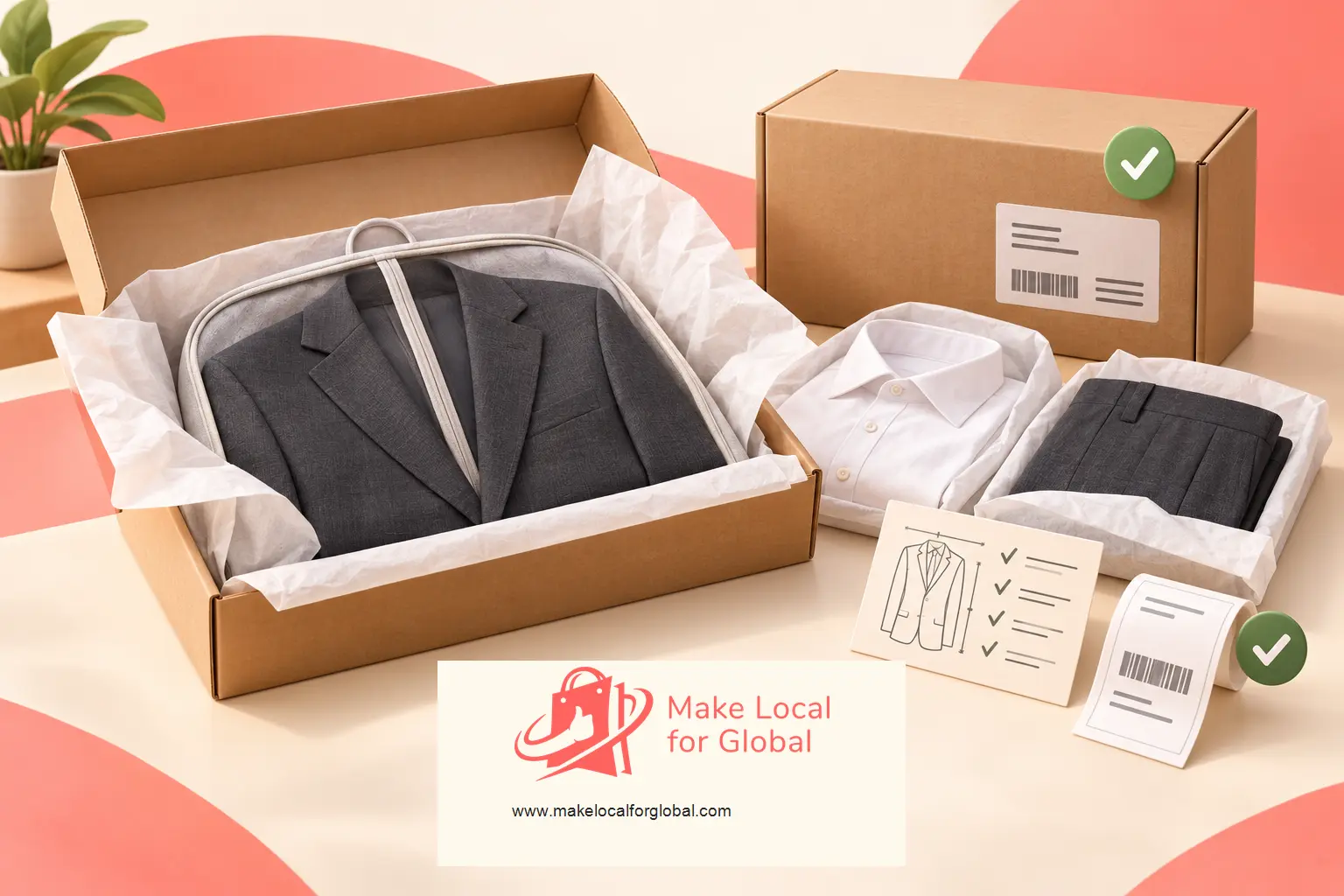
For returns, inspect the garment soon, record missing or damaged components and update stock only after a quality check. Keep saleable returns separate from items needing cleaning, repair or supplier review.
Build useful pages around real questions such as “regular fit navy suit”, “how to measure suit sleeve length” and “two-piece suit with separate trouser size”. Check the words customers use in enquiries and search-console reports. Write a size explainer and link it from each relevant product page.
For paid tests, choose one audience and one offer at a time. Track product-page visits, size-chart use, add-to-basket actions, completed orders, returns and questions by size. If visits are healthy but buyers stop at the size selector, improve fit support before increasing ad spend.
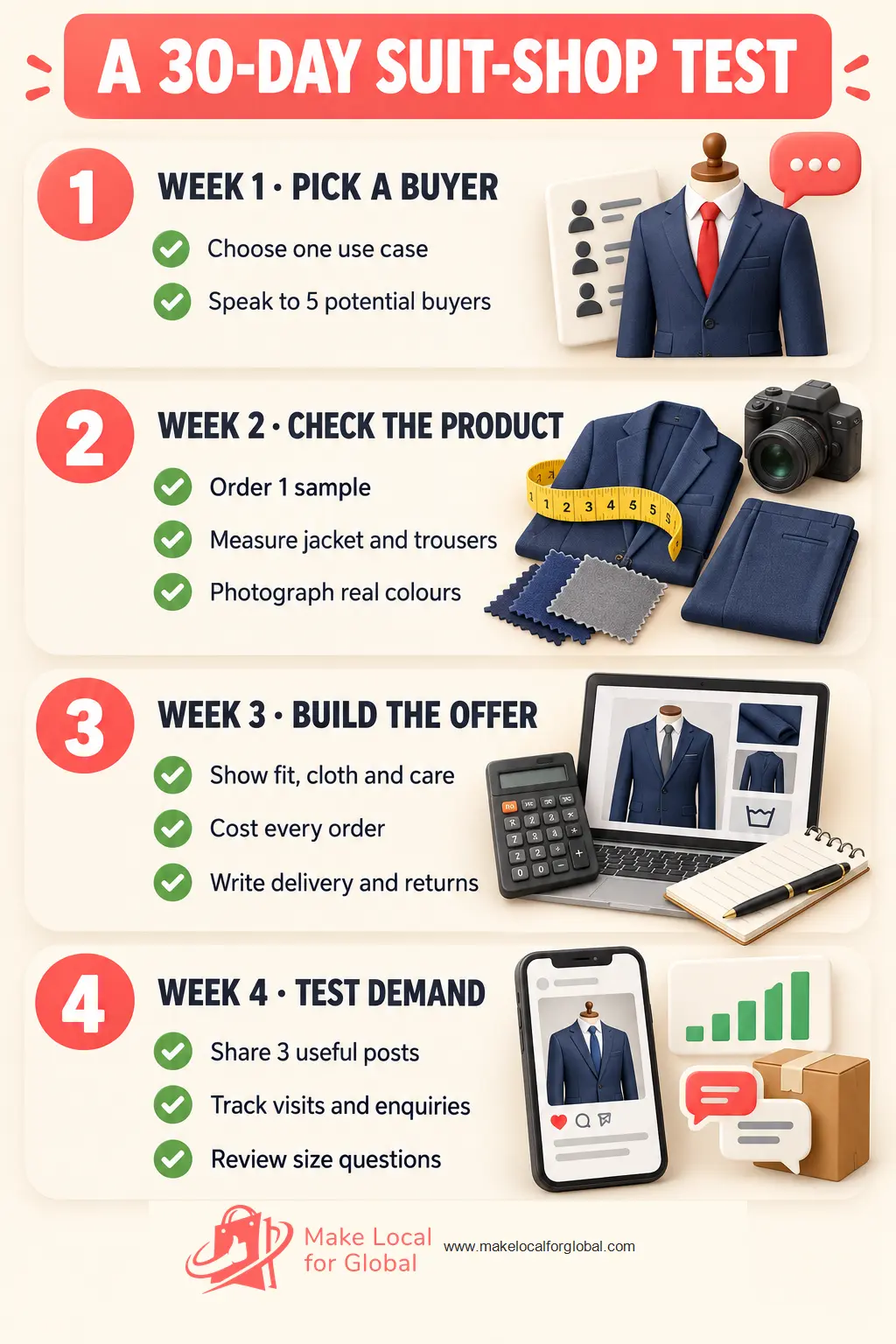
Start with a small number of fits and colours that you can sample and measure properly. Let customer requests and completed orders guide each expansion.
A fixed set is simpler to stock and explain. Separate sizing can solve a fit problem for buyers whose jacket and trouser sizes do not match, but it adds stock combinations and fulfilment checks. Test demand before adding it.
Give garment measurements, explain how to take them, show fit on more than one model where possible, and state what pieces come in the order. Review return reasons by product and size, then correct the size chart or photography where a pattern appears.
Do not assume so. The legal exception concerns goods made to the customer’s specifications or clearly personalised. Standard options from a stock range may not qualify. Get advice on the exact ordering process and wording.
Show the complete outfit, garment measurements, fit, fabric composition, care, included pieces, dispatch timing, delivery charges and returns information. Put size help near the size selector.
See how Make Local for Global supports businesses selling suits online, then decide which next step suits your range.
PREFERRED SOURCE
Like what you’re reading? Add Make Local for Global as a preferred source on Google to see more of our articles when you search.

Build your online presence without having to figure out everything yourself.