

READY TO SELL crystal vases ONLINE?
Get a store built for you in 5 days, plus training and support to help you start, run, and grow your Alternative business.

Plan a crystal vase shop with a focused range, verified material details, sample checks, protective packing and a worked order-cost example.

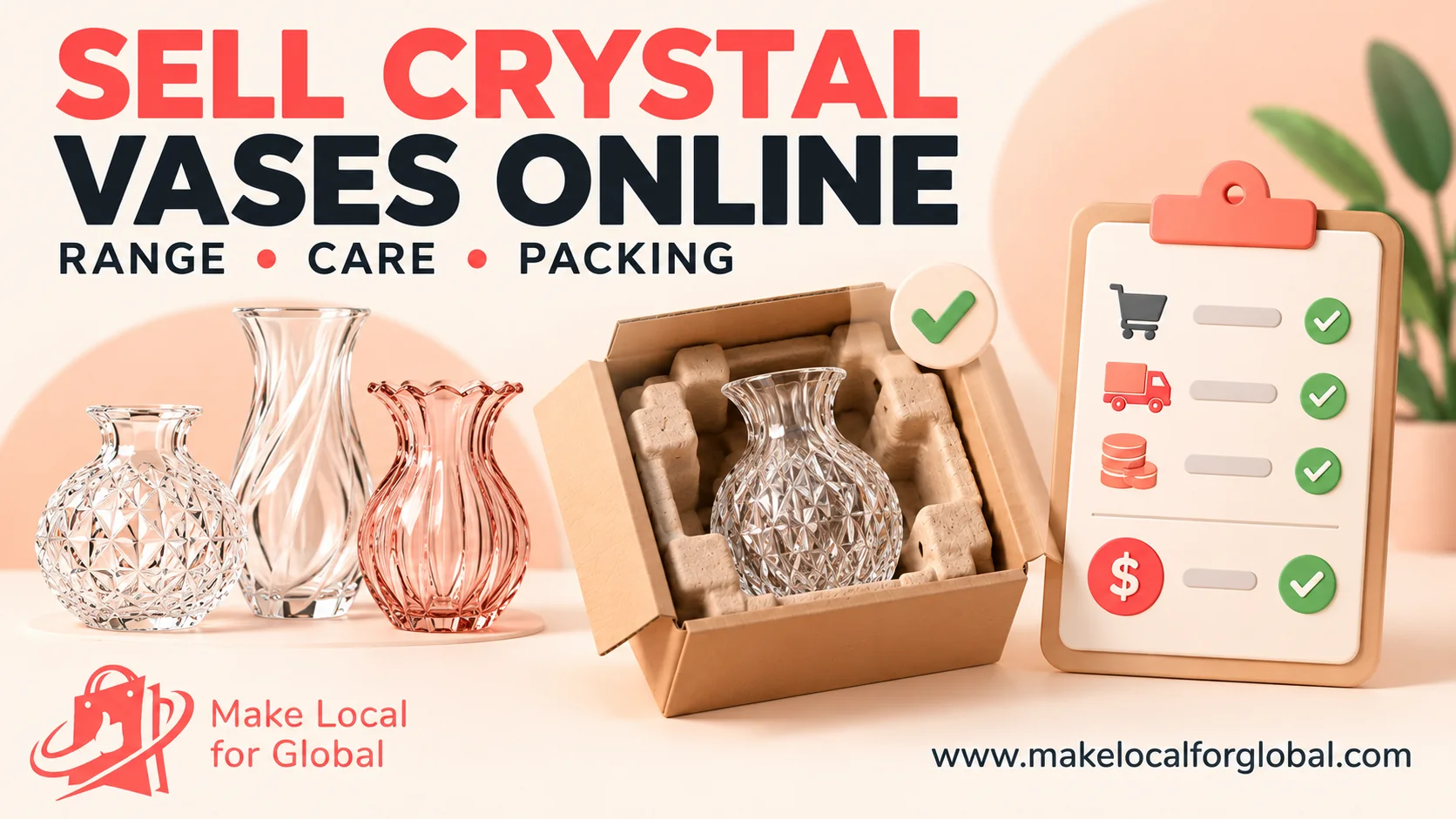
Crystal vases can work as gifts, wedding centrepieces and statement home décor. Selling them online takes careful product descriptions and parcel planning: buyers need to see the cut, size, colour and finish, and each vase needs protection in transit.
Start with a small range for one clear buyer. Check supplier claims, inspect samples and price the finished parcel before placing a larger order.
Give buyers clear product details, polished photography and a checkout that makes delivery costs easy to understand.
A vase shopper may be furnishing a room, choosing a wedding gift or styling a dining table. These buyers compare different details. A gift buyer may care about presentation and delivery dates; a home décor buyer may compare height, shape and how the glass looks in daylight.
Before buying stock, ask five likely customers to compare three product cards. Record which photo they choose, what price they expect and which missing details stop them from deciding. Treat those answers as ideas for a small test, not a sales forecast.
Crystal-style glass vases vary by shape, cut pattern, colour, weight and maker. A new shop can begin with three roles: a compact bud vase, a mid-size everyday design and one larger statement piece. Keep each option distinct so buyers can see why it belongs in the range.
| Range role | Example | Buyer detail | First stock test |
|---|---|---|---|
| Starter | Small clear bud vase | Height, opening width, weight | One finish and a small quantity |
| Core | Faceted mid-size vase | Cut pattern, base width, care | Main shape for your chosen buyer |
| Premium | Large coloured or maker-attributed vase | Verified maker, dimensions, condition | Order only after sample approval |
| Set | Two or three matching pieces | Exact items, sizes and presentation | Check that each piece packs safely |

For ideas on protecting fragile home décor, see MLFG’s guide to selling ceramic vases online. If your range includes hand-formed or decorative glass pieces, the article on selling art glass gives a related product angle.
Potential sources include glassware makers, wholesalers, importers, craft studios and reputable vintage dealers. Compare the full landed cost, minimum order, replenishment time, packaging method and process for reporting breakages. Ask how stock is checked before dispatch and whether replacements can be supplied from the same pattern or batch.
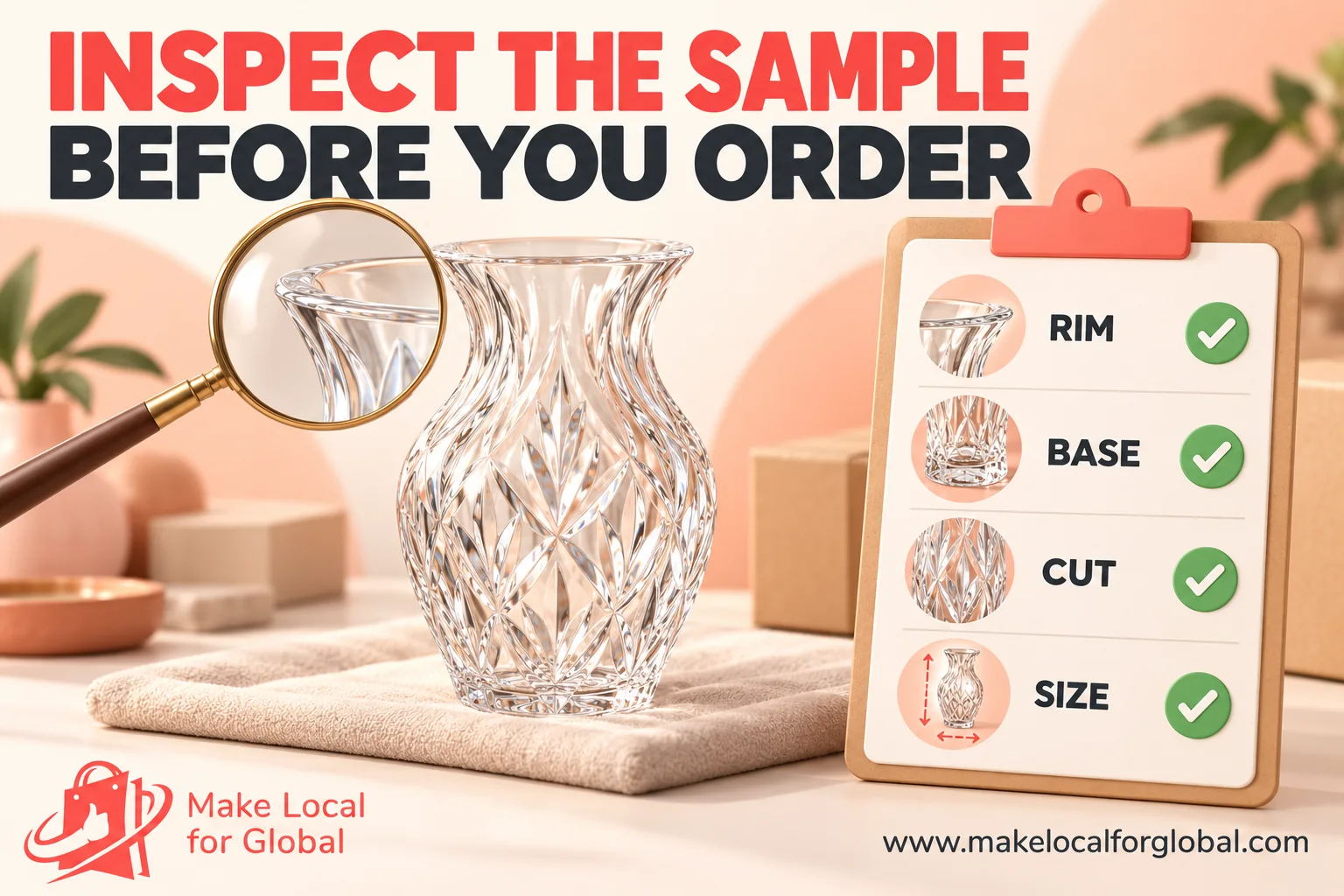
Inspect the rim under good light for chips, sharp spots and uneven finishing. Check that the base sits flat on a level surface, the vase stands without rocking and the pattern is consistent with the supplier sample. Measure the height, widest point and opening; record the weight and photograph the piece from the angles you plan to use online.
Do not rely on sparkle, weight or a supplier’s casual wording to identify glass composition. For glassware within scope, the UK Crystal Glass (Descriptions) Regulations 1973 restrict which crystal descriptions may be applied, with composition and physical properties tied to the relevant standard. Ask the supplier for evidence before using “crystal glass”, “lead crystal”, “crystallin” or a similar claim. Use a plain, verified material description if evidence is missing.
Product safety duties depend on your role and the destination market. Read the Office for Product Safety and Standards guidance for Great Britain; separate rules apply in Northern Ireland. Check any claims about food contact or other uses with a suitable adviser before listing. Describe decorative vases for their intended use and publish care details supplied for that product.
Use a simple order-costing worksheet to include the vase, protective packing, delivery and payment charges.
Fragile stock can have a low unit price and a costly parcel. Add the inbound freight share, protective insert, outer carton, postage paid by your shop, payment processing, expected damage or return cost and the customer-acquisition spend for the order.
| Illustrative UK order | Amount | How to check it |
|---|---|---|
| Customer price received | £95.00 | Example price; confirm the price shown to buyers includes any tax you must charge |
| Vase and inbound freight allocation | −£27.00 | £24 item plus £3 allocated freight |
| Protective insert and carton | −£4.50 | Use a packed sample and supplier quote |
| Postage paid by the shop | −£6.00 | Weigh and measure the closed parcel |
| Card fee estimate | −£1.63 | Stripe standard UK card rate: 1.5% + 20p on £95 |
| Damage and returns allowance | −£4.00 | Replace this estimate with your own order data |
| Customer-acquisition test | −£8.00 | Set a fixed test budget and track completed orders |
| Contribution before overheads, labour and tax | £43.87 | £95 less the listed costs |
Illustration only, not a supplier quote or profit forecast. It assumes the seller is not VAT-registered and has no VAT adjustment in this example. Payment rates can change; check Stripe’s UK fees. Contribution is not net profit.
Compare this result with your real overheads, time, storage, refunds, advertising and tax position. If buyers pay the full delivery charge separately, add that amount to the order income and record the carrier cost in full. MLFG’s guide to pricing a product for online retail covers the wider pricing calculation.
Choose an insert that holds the base and neck in place, then add protective space around the glass. A box should resist ordinary parcel handling without the vase shifting. Avoid packing several pieces together until you have checked that they cannot touch or knock against each other.

Use a product title that names the verified material, style and size. For example: “Cut glass vase, 18 cm, clear”. Add the maker or pattern only when the supplier record supports that claim.
For made-to-order pieces, show the finish and size choices before checkout and state the expected production time. For vintage stock, photograph the exact item and record any marks in close-up. Link matching pieces together by colour or pattern to help a buyer find a coordinated set.
A marketplace can put a small range in front of active shoppers, subject to its fees and listing rules. Your own shop gives you more room for detailed product pages and related décor content, but you need a plan to bring visitors. Start with one main channel and a fixed spending limit.
Test specific phrases that fit your actual stock, such as “cut glass bud vase”, “clear vase 18 cm” or “crystal vase gift”. Use the wording naturally in product titles, image descriptions and helpful page copy. Use claims about lead content, maker, origin or hand-cut process only when your records support them.
Publish one useful comparison page, such as choosing a vase for a small dining table, and link it to the matching products. Track product-page visits, add-to-basket events, checkout starts, paid orders, breakages and return reasons. A handful of visits gives limited evidence, so change one item at a time and keep testing.
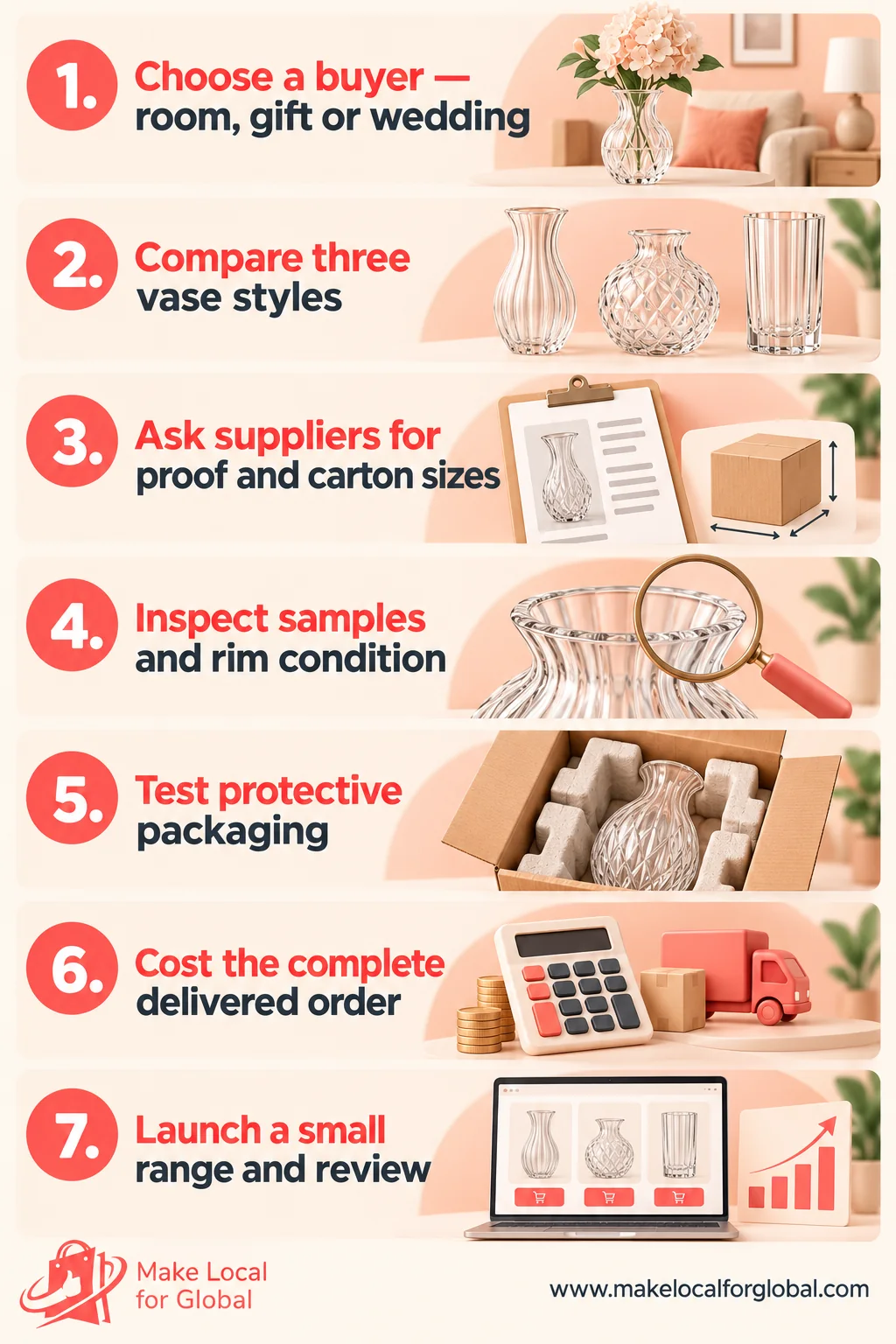
At day 30, choose whether to reorder, adjust one style or run another test. Use the results from the actual parcel and buyer questions to guide that choice.
Choose one buyer group, compare a few suppliers, inspect samples and calculate the full delivered-order cost. Launch a small range with measured dimensions, clear photos and product claims backed by records.
No. The UK crystal-glass description rules set requirements for covered glassware. Confirm the exact material and evidence with the maker or importer before publishing a crystal descriptor.
Use a fitted insert that holds the base and neck, protective space around the item and a sturdy outer carton. Pack and send a test parcel, then check for movement or damage before choosing your fulfilment method.
List verified material, height, width, opening diameter, weight, colour, finish, care, included packaging, dispatch timing and returns information. Add photos of the base, rim and surface detail.
Start with the full product and order costs, then compare prices for genuinely similar sizes, makers and finishes. Include payment fees, packaging, delivery support, returns and promotion before deciding what price to test.
Choose a focused range, verify each product claim and test a safely packed parcel before you commit to a larger order.
PREFERRED SOURCE
Like what you’re reading? Add Make Local for Global as a preferred source on Google to see more of our articles when you search.



Build your online presence without having to figure out everything yourself.

