

READY TO SELL Dog Treats ONLINE?
Get a store built for you in 5 days, plus training and support to help you start, run, and grow your Alternative business.

Choose a dog treat format, check supplier records and feed rules, cost each parcel, write accurate product information and run a controlled first launch.

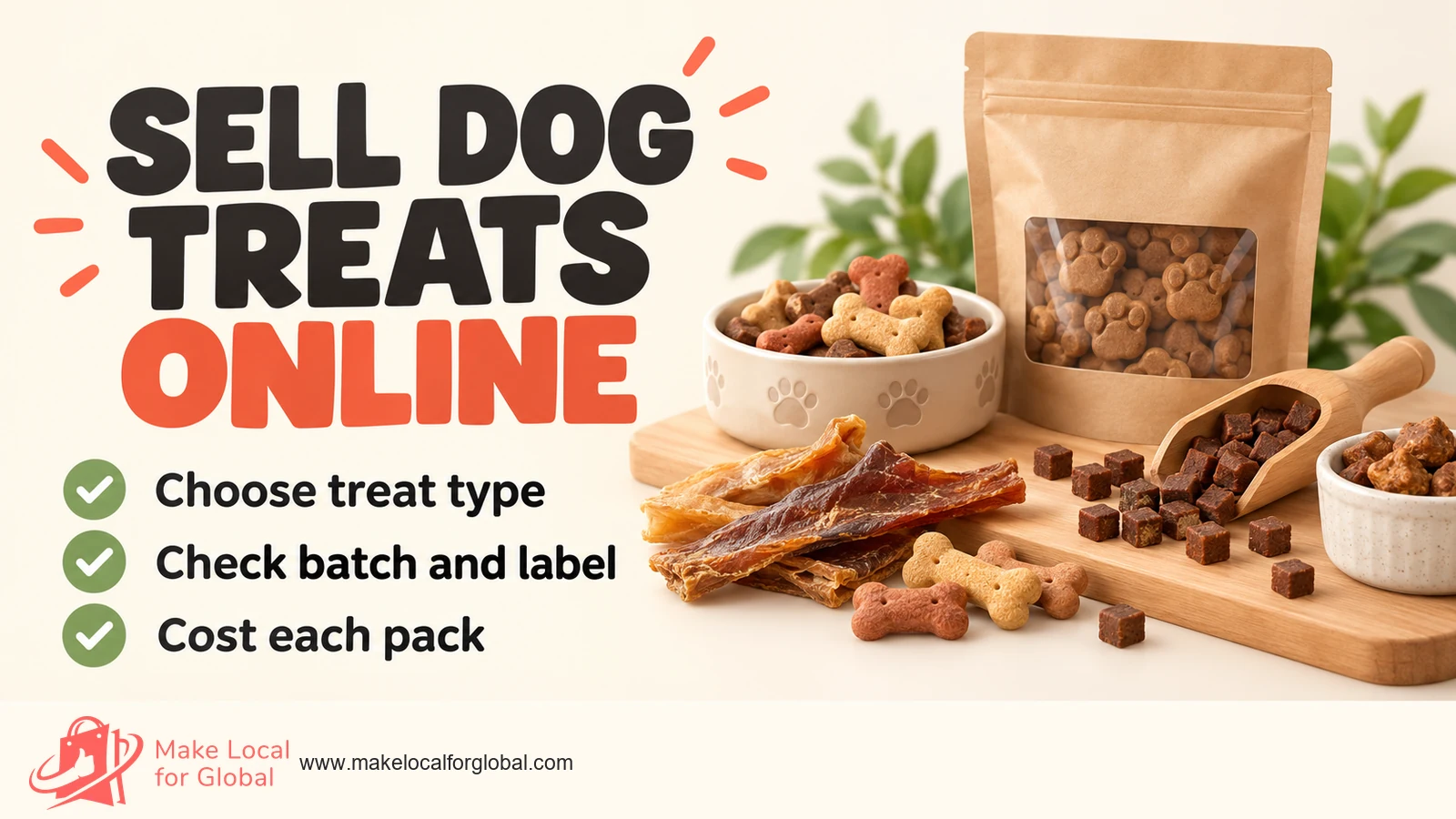
Dog treats look simple to list: choose a flavour, show a pouch and offer delivery. A dependable shop has to answer more. Buyers need to know what kind of treat they are ordering, what is in the pack, how it should be stored, who made it and whether the product is suitable for the dog they have in mind. The seller needs the same answers before taking money.
To sell dog treats online, start with one buyer and a narrow treat type, then verify the supplier, check the classification and label, test packaging and delivery, calculate the complete order cost, and publish only claims you can support. Retailing sealed finished treats can involve different obligations from making, importing, storing or packing them. Confirm your exact activities with the relevant authority before launch.
This is a business-planning article, not veterinary, feed-law or product-compliance advice. Requirements depend on the product, business activity and part of the UK. Use the official guidance linked in the relevant sections and ask Trading Standards, your local authority, APHA or DAERA for a decision on your specific operation.
Test the buyer and product fit before placing an order
Use a short, structured exercise to compare buyer needs, product evidence and the questions you still need to resolve.
“Dog owners” is too broad to guide product selection. A person who needs small pieces for reward-based training buys for a different routine from someone choosing a long-lasting chew, a birthday gift or a locally made biscuit for a dog’s occasional treat. Each group looks for different pack sizes, ingredients, texture, storage details and delivery options.
Write a short first-customer description before contacting suppliers. For example: “A city dog owner who rewards training in short sessions and wants small, easy-to-carry treats with a clear ingredient list and resealable packaging.” The sentence should identify a real buying situation. It should not promise that a treat changes behaviour or improves health.
Speak to five to ten people who match the customer you have in mind. Ask them to describe the last treat they bought, what the dog accepted, what made them compare another product and which pack detail they checked first. Ask what they dislike about current options. Keep the questions about the purchase rather than inviting medical advice about a dog’s diet.
Show a few product formats and ask people to compare them. A small training bite, a crunchy biscuit and a dried chew create more useful discussion than three nearly identical flavours. Ask what a buyer would need to see on a product page before paying. Record the words people use for texture, pack size, ingredients, storage and delivery; use those words when they accurately describe the item.
Compliments are not proof of demand. Stronger signals include a person asking for a launch date, returning to check the pack size, joining a product-specific waitlist or accepting a clearly stated price. If you take pre-orders, state the expected dispatch date and cancellation terms before payment. Do not describe planned stock as available.
Possible occasions include training rewards, occasional snacks, walks, gifts, subscription refills and seasonal hampers. Each occasion suggests a different product format. Training buyers may prefer small pieces and a pouch that fits a coat pocket. A gift buyer may care more about presentation, delivery timing and a clear outer-pack description.
Do not assume every dog can have every treat. A buyer may be managing allergies, a medical diet, age-related needs or a vet’s feeding instructions. Your role as a seller is to provide precise product information and direct health or suitability questions to the manufacturer or a veterinary professional. Do not diagnose a dog or imply that a general-purpose treat is appropriate for a medical condition.
Dog treats cover several formats and manufacturing routes. A new seller can get trapped by a supplier catalogue with many flavours, shapes, pack weights and claims. Each additional stock-keeping unit creates another product record, label to check, supplier document to retain and chance that a customer selects the wrong item.
Start with one core format and one or two clear variations. A narrow range is easier to photograph, explain, cost and replenish. Expand when orders and customer questions show a genuine gap.
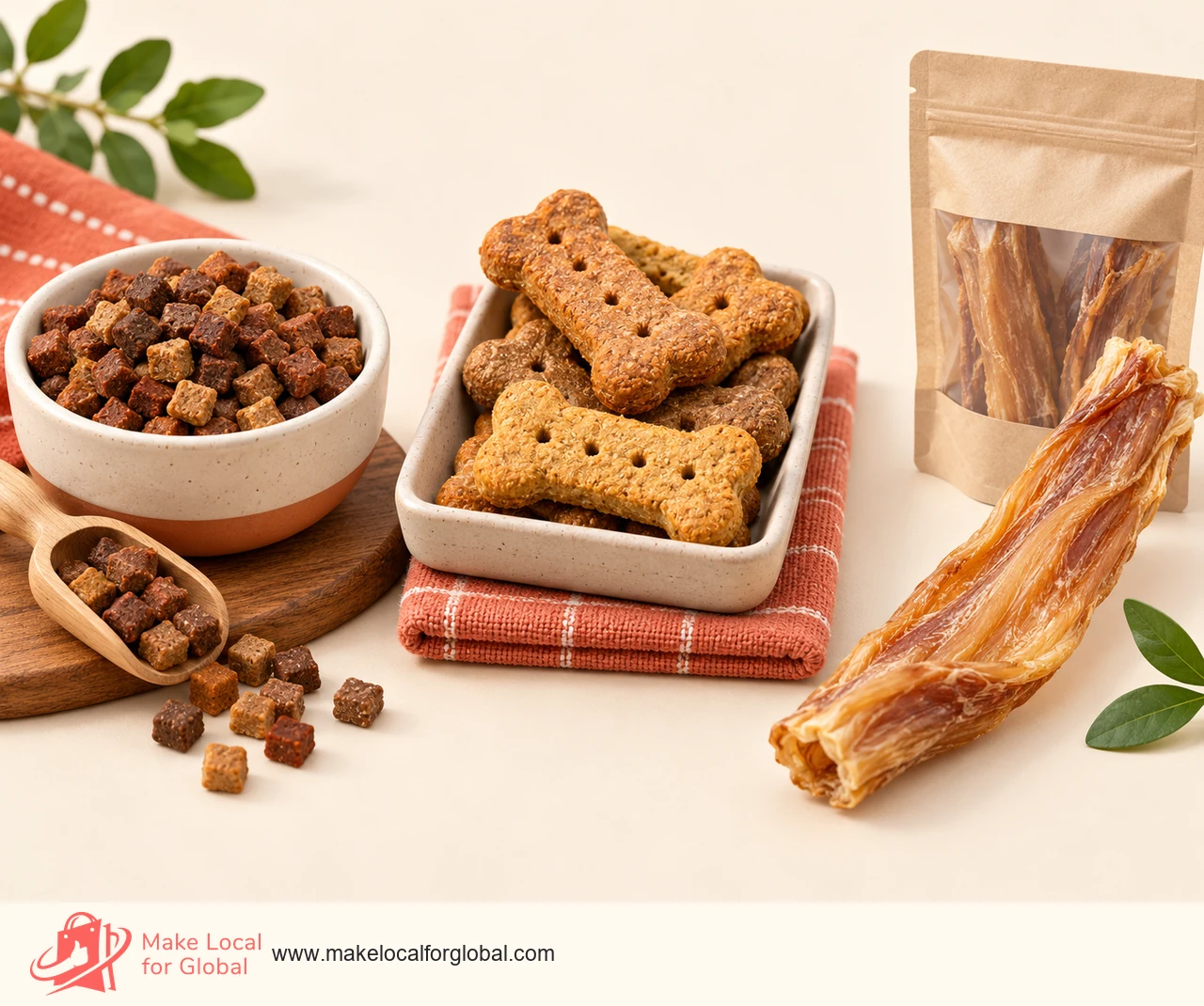
| Format | A purchase job it may serve | Checks before listing |
|---|---|---|
| Small training pieces | Frequent rewards in short sessions | Piece size, texture, ingredient declaration, pack seal and handling guidance |
| Baked biscuits | Occasional crunchy treat or gift | Recipe specification, breakage, moisture control, pack weight and best-before information |
| Soft bites | Dogs or buyers who prefer a softer texture | Storage conditions, shelf-life evidence, pack integrity and clear use guidance |
| Dried animal-origin chews | Longer chew activity | Species and material identity, sourcing records, size variation, storage and applicable animal by-product controls |
| Single-ingredient treats | Buyers who want a short, clear product description | Exact material identity, origin claims, manufacturing process and substantiation for any “single ingredient” statement |
| Mixed sampler | Trial of several products | Each constituent’s label, portion size, allergen or cross-contact information, traceability and a coherent outer-pack description |
This comparison is a planning aid, not a promise of suitability for a particular animal. Verify every description against the product specification and current law. A sampler can become complex if the component packs have different storage instructions, batch codes or expiry dates. Define how those details will reach the buyer before designing the bundle.
An entry pack can reduce the initial spend for a first-time buyer. A core pack can represent the main repeat purchase. A larger pack may suit a multi-dog household or a frequent user, provided that it can be stored safely before use. A sampler may help a buyer compare formats, but only when the contents and quantities remain easy to understand.
Avoid creating a premium tier by adding unsupported words such as “clean”, “natural”, “hypoallergenic” or “vet approved”. Those phrases may carry a meaning a customer interprets as a health or safety guarantee. If a label uses a claim, request evidence and have the exact wording reviewed before publication.
Write a short exclusions list. You might defer raw products, chilled or frozen items, products with unclear animal-origin sourcing, supplements, medicinal claims, unverified “dental” claims, products requiring special storage, or items with no traceable batch code. These choices reduce operational complexity for a first test.
A product range copied from another shop is weak demand evidence. A broad range is not useful if the evidence, pack details or order economics are uncertain. The first offer should be one you can explain accurately and support after the parcel arrives.
There are four common routes: resell a finished branded treat, buy a white-label product, commission a private-label range, or manufacture treats yourself. Each route changes the records you need, the work you perform and the role you take in the supply chain.
| Route | What you control | Questions to resolve before spending |
|---|---|---|
| Resell finished sealed packs | Store choice, product page, customer service and fulfilment | Is the supplier authorised? Are the packs sealed, correctly labelled and traceable? Who handles defects and withdrawals? |
| White label | Brand presentation and often pack options | Who is the feed business operator responsible for the label? Who approves copy, ingredients, claims and batch controls? |
| Private label | Brand and some product specifications | Which party manufactures, imports, labels and releases batches? What evidence and recall support are written into the contract? |
| Own manufacture | Recipe, process, site and packing decisions | Which feed registrations, animal by-product approvals, hygiene controls, testing, traceability and environmental records apply? |
Private label does not move responsibility away from the seller automatically. Ask for a written responsibility map for the product, the packaging, the product page and any claim. Identify who is named as the operator responsible for labelling and who can provide documents to an enforcement authority.
Do not accept a generic catalogue as technical evidence. Ask for files tied to the exact product name, recipe or specification, site, pack size and version that you intend to sell. Request:
Check that the paperwork names the same product and site as the sample. A certificate for another factory or recipe does not prove the item you plan to sell. Ask how the supplier notifies customers about a changed ingredient source, process, pack or label. Treat any unexplained model or lot mismatch as a stop sign until it is resolved.
Request representative samples from a saleable batch, not only a show sample. Record the date received, supplier, product code, lot number, stated shelf life and pack condition. Photograph the unopened pack and the label. Keep a retained sample only if the supplier’s storage instructions and your own controls allow it.
If you are buying a private-label product, ask who signs off the first production run and what happens if the printed label differs from the approved proof. Keep the final artwork, specification and purchase order together. If a small test batch is possible, use it to validate packing, postage, product-page details and customer questions before committing to a large minimum order.

Pet treats are animal feed, not ordinary human food. Business duties depend on what you do. The UK government’s guidance on registering an animal feed business says feed businesses must register with the local authority, with different processes in Northern Ireland. Government material on starting an animal feed business describes the activities covered and notes an exemption for retailing pet food under the relevant feed-hygiene rules.
That does not mean every online dog-treat seller is automatically exempt. Manufacturing, importing, storing, repacking, distributing, handling animal-origin material or operating more than one site can change the analysis. Selling a finished sealed pack is not the same operation as baking biscuits in a home kitchen, splitting bulk treats into smaller pouches or importing chews directly.
Before trading, write down each activity and site: purchase, import, storage, repacking, labelling, manufacture, fulfilment and customer returns. Send the list to the relevant authority and ask which registration, approval and inspection route applies. Keep the written response. Do not rely on advice for a different seller, product or council area.
In England and Wales, Trading Standards or Environmental Health may handle the local feed registration depending on the area and activity. Scotland has its own enforcement arrangements; contact the local authority and Food Standards Scotland. In Northern Ireland, consult DAERA and the relevant local authority for the applicable route. Government guidance can state that a page applies to England, Northern Ireland and Wales; check a page’s scope rather than treating “UK” as one undivided legal system.
Meat, fish, dairy, eggs and other animal-origin materials can bring animal by-product controls into play. The government guide to using animal by-products to make pet food sets out requirements for pet-food production and handling. The Food Standards Agency’s guidance on co-located food and pet-food production explains that APHA or DAERA approval may be needed for pet-food processing using animal by-products, depending on the operation and location.
A human-food ingredient, small batch or home location does not by itself settle the animal by-product rules. A supplier or local authority must assess the actual operation and materials. Confirm approval before buying equipment, printing packaging or advertising a manufacturing date.
A treat can be a feed material or a complementary feed depending on its composition and marketing. Ask the manufacturer or a feed specialist to confirm the correct product category and label. “Complete feed” and “complementary feed” are legal descriptions, not interchangeable marketing phrases. Present a treat as a complete daily diet only when it meets the relevant requirements and the manufacturer’s evidence supports that classification.
Avoid describing a treat as curing, preventing or managing a health condition. Do not suggest that a general product is suitable for dogs with allergies, kidney problems, diabetes, obesity or other conditions. A medical or diet-related query belongs with a veterinary professional. Keep the store’s language factual: product format, composition, pack weight, storage and the feeding instructions supplied by the responsible operator.
Animal-feed labelling rules differ from ordinary human-food label guidance. Use the official text of Regulation 767/2009 on feed marketing and labelling and the government’s pet-food guidance as starting points, then confirm the requirements for your product and market. The regulation addresses feed type, responsible operator, species, instructions, composition, additives and other product particulars. The regulation requires feed presentation and claims to avoid misleading the buyer.
For online sales, the information required before a distance-sale contract must be provided through the sales material or another suitable route before the buyer commits, subject to specific timing exceptions. In practice, do not hide key information behind an image of the pack that cannot be read on a phone. Put the material details in searchable page text and make sure the delivered packaging matches it.
Create a label and listing review sheet with the responsible manufacturer. Check:
The exact mandatory particulars depend on feed type and product. Do not copy this checklist onto a label as a complete legal specification. Have the product’s responsible operator and appropriate authority confirm the final label before print.
Words such as “chicken”, “chicken flavour”, “made with chicken” and “single protein” may communicate different things to a buyer. Ask the supplier what each ingredient statement means and how it is supported. Never replace a statutory or accepted ingredient name with a vague phrase to make the label sound more appealing.
Origin statements need evidence too. “Made in Britain” may be read as a claim about manufacture, not simply the brand owner’s address. Ask where ingredients are sourced, where the product is processed and packed, and which part of the claim the supplier can substantiate. If the source changes, review the page and packaging before the next batch ships.
Customers may read these labels as a meaningful guarantee. “Grain-free” requires the composition to support the statement and should not be used if cross-contact or supplier declarations make it inaccurate. “Hypoallergenic” and “sensitive” can suggest a medical benefit or special diet. Request technical substantiation and legal review before using them.
Do not use “vet recommended”, “vet approved”, “human grade”, “organic” or a certification logo without current permission and documented support. A supplier’s social media caption is not a claim file. If you cannot explain how a claim is proven, remove it from the title, image, advert and product description.
Testing is not a taste review. It is a record-based check that the product received, product specification, label and customer-facing promise match. You are not testing a treat’s veterinary suitability or recommending it to a dog.
For each delivery, record the supplier, purchase order, arrival date, product code, lot number, quantity and any storage condition. Compare outer cartons with the delivery note. Look for damaged seals, wet or crushed cartons, pest signs, incorrect labels, missing dates or a product version different from the approved sample.
Set a written hold rule. A pack with a damaged seal, missing lot code or unexplained label mismatch should be set aside and reported to the supplier. Do not silently re-label it or mix it with saleable stock. Keep a clear distinction between “received”, “under review”, “released for sale” and “blocked”.
Measure and weigh a finished sale pack. Compare the measured net content with the specification and the listing. Check that the seal closes consistently, the tear notch works without exposing the contents prematurely and the material protects the product under the stated storage conditions. Do not open a pack intended for sale and then reseal it as if untouched.
Prepare a sample parcel using the same box, pouch and void fill you plan to use. Drop or handle it as a normal parcel might be handled. Check that pouches stay sealed, packs do not become crushed, and a fragile gift box does not carry the force of the parcel contents. Repeat with the smallest order and a bundle order. Record the parcel’s measured dimensions and weight; couriers price by these values, not by your estimate.
Store products in the conditions shown by the manufacturer. Keep them separate from cleaning chemicals, pet medicines, damp floors and pests. Use first-expiring-first-out rotation where it fits the product’s shelf life. Do not promise a particular remaining shelf life beyond the period your stock records support.
Retain a chain of records linking a customer order to a product lot. Your process should let you identify affected orders quickly if a supplier issues a safety notice or you discover a problem. Ask the supplier how a withdrawal is communicated, what records they need from you and who contacts customers. Keep customer details secure and use them only for the purpose of handling the order or safety action.
A low wholesale quote can hide expensive delivery, packaging, payment processing, advertising or waste. Calculate contribution per order before ordering a large case. Use your own quotes and courier rates; the figures below are hypothetical, rounded, and exclude VAT treatment and fixed business costs.
| Cost per one-pack order | Illustrative amount |
|---|---|
| Finished treat pack bought from supplier | £2.45 |
| Inbound freight allocated per pack | £0.30 |
| Outer parcel and protective packing | £0.45 |
| Pick and pack labour | £0.60 |
| Customer postage | £2.25 |
| Payment or marketplace fees | £0.47 |
| Returns, damage and short-dated stock allowance | £0.45 |
| Customer acquisition cost for this order | £1.30 |
| Variable cost total | £8.27 |
If the customer pays £15.95 before any applicable VAT treatment, the illustrative contribution before fixed costs and tax is £7.68: £15.95 minus £8.27. This is not net profit. It does not include website subscriptions, insurance, accounting, product testing, registration costs, owner time or income tax. Confirm VAT treatment with an accountant; do not assume that the tax treatment of a human snack applies to pet feed.
Calculate the minimum average order value that covers delivery and payment fees. A small single pouch may not support a paid advert and tracked shipping. Test a bundle only if each item has a distinct reason to be there and all pack labels, batch details and storage instructions remain clear.
Build a simple spreadsheet with one row per product and separate cells for unit cost, inbound freight, pack materials, fulfilment time, shipping, platform fees, refund allowance and marketing. Add another scenario for a discount or free-delivery threshold. Compare the resulting contribution, not only the gross margin shown by the supplier’s quote.
Suppose a case contains 120 pouches at £2.45 each, or £294 before freight. If the case is sold through quickly, cash returns in a shorter cycle. If it takes longer than expected, a portion may become unsaleable before the stated date. Model a cautious sell-through case and identify the cash tied up in stock at each month-end.
Do not use a short-dated discount to conceal the date or storage condition. State the date clearly, follow the supplier’s rules and the law, and never send a product that is past its usable life. Make reordering depend on released stock, actual sales rate, supplier lead time and remaining life, not a promotional forecast.
Calculate the full cost of one treat order
Count the finished pack, freight, parcel materials, delivery, selling fees, short-dated stock and customer acquisition.
A product page should help a buyer identify the exact treat and understand the contents before checkout. Do not rely on the front of a pouch as the full description. Use readable text for the composition, analytical information, feed type, feeding instructions, storage and pack quantity supplied by the responsible operator.
Small Baked Chicken Dog Training Bites, 150 g Resealable Pouch
This title tells a buyer the format, stated ingredient description, intended use, net weight and packaging. Use it only if each detail is accurate for the exact product. If the product is not chicken-based, not baked or not a training treat according to its specification, change the title.
“A 150 g resealable pouch of small baked dog treats from [manufacturer’s product name]. The pack contains approximately [verified number or omit count] pieces. See the composition, analytical constituents, feed designation, feeding instructions, storage details and lot information below. Use only as directed on the pack. Ask your vet about diet questions for your dog.”
Do not publish bracketed placeholders. Replace them with verified information or remove the field. The description gives a neutral example; it is not a claim about a real product.
Make the pack size easy to compare across variants. A 150 g pack and a 150-piece pack are not the same offer. Show both only when both values are measured and supportable. If a chew varies naturally in length or weight, state the supplier’s range and explain whether the customer receives one item or a measured weight.
Use a clear front image, a readable back-label image and a scale or hand reference only when it does not imply an inaccurate size. Add a contents photograph for bundles. Do not make a handful of treats look like the full pack if the image is a styling sample. Avoid props that suggest an ingredient, origin, veterinary approval or health benefit the product does not have.
Alt text should describe the visible product and function, for example: “Resealable 150 g pouch of small baked dog training treats beside a bowl and ingredient label.” If the image shows a supplier sample rather than a sale pack, do not imply it is the exact branded package. Keep decorative imagery separate from evidence images.
Your own ecommerce site gives room for detailed product information, repeat-purchase reminders and a consistent brand experience. It leaves you responsible for driving visitors, payment setup, product-page accuracy and customer support.
Marketplaces can bring shoppers already searching for pet products. Read each platform’s current rules for animal feed, supplements, restricted health claims, product identifiers, fulfilment and returns. A listing that passes one platform’s checks may still fail feed requirements. Keep the same approved product information across your site and marketplace listings.
Local events and independent pet shops can help you see which pack details buyers ask about. If you sell in person, show a sealed pack and a sample only where the product’s hygiene and local rules permit. Ask before leaving stock on consignment; agree the lot records, storage conditions, payment date, unsold-stock return and responsibility for customer complaints in writing.
Choose a small measurable test rather than buying broad advertising. Examples include a product-specific landing page, a local dog club partnership, a small marketplace listing or a post that explains how to read the treat’s label. Track visits, add-to-baskets, orders, questions, returns and contribution per channel.
For a paid test, set a fixed cap before launch. Compare actual customer acquisition cost with the contribution calculated in the previous section. Pause a campaign if the spend rises without qualified orders or if the product page attracts questions the supplier cannot answer. A high click count is not evidence that the offer is commercially viable.
Search phrases can include format and buyer intent: “small dog training treats”, “baked dog biscuits”, “single ingredient dog treats”, “resealable dog treat pouch” or the verified ingredient named on the pack. These are phrase examples, not proof of search volume. Check the language buyers use in your site search, customer questions and marketplace reports before adding pages.
Keep one main page for each distinct product or product family. Do not publish multiple pages with near-identical titles and descriptions just to repeat related terms. Use accurate headings that help a customer compare pack size, composition, feeding directions and delivery. Add internal links to adjacent product guides where they help the reader, such as selling dog crates online or selling dog kennels online. Those pages serve different buying needs; the link should not imply that a kennel or crate is part of a treat order.
Map a parcel from delivery to customer. Identify where stock is received, how it is inspected, how the lot number is recorded, who picks the product and how you prevent short-dated stock from being sent accidentally. Keep written steps simple enough for another person to follow.
Use packaging suitable for the product and the manufacturer’s storage conditions. Keep treats dry, sealed and protected from pests. Do not use a scent-heavy box insert or chemical pack that could transfer odour or contaminate the product. If you use a bundle box, keep each original pack intact. Repack only when your approved operation includes that activity.
At dispatch, check the order line, product code, pack size, lot record, seal, shipping label and parcel weight. For a subscription or repeat delivery, do not automatically substitute a different recipe or size. Get the customer’s agreement and update the relevant product information first.

Explain how customers can contact you, what information to include and how you handle an unopened product, a damaged parcel, a wrong item or a quality concern. Consumer rights still apply to online purchases; do not write a blanket “pet food cannot be returned” rule without verifying the relevant law and facts. For hygiene reasons, opened feed may need special handling, but that does not erase a customer’s statutory rights where the goods are faulty or misdescribed.
For a report involving an unusual smell, damaged seal, illness allegation or possible contamination, collect the product name, lot code, order reference and photographs. Stop routine customer-service language if there may be a safety issue. Follow the supplier’s escalation and recall procedure and contact the appropriate authority when required. Do not diagnose a health issue or dismiss a customer report.
Keep a stock ledger with product code, lot, received quantity, released quantity, blocked quantity, best-before date where applicable, dispatches and remaining balance. Reconcile it after each delivery and after every withdrawal. The record should let you identify which customers may have received a specified lot.
Use a named person to approve stock for sale. If a delivery has a different ingredient statement, pack film, net weight, batch format or supplier site, pause it until the mismatch is explained and the listing remains accurate. Ask the supplier to notify you before changes, not after customers receive them.
Avoid relying on a single supplier without a continuity plan. A backup source must be separately checked; never assume a second supplier’s recipe, label, site approval or quality record matches the first. If a replacement product differs, sell it under a distinct listing or update the offer only after the revised specification and claims have been approved.
The schedule below is a test plan. Move the dates if the supplier, authority or product review takes longer. Do not speed through an approval step to meet a calendar target.
| Period | Work to complete | Evidence to keep |
|---|---|---|
| Days 1–7: buyer and scope | Interview five to ten buyers; choose a treat format; list the activities and sites in your business model; contact the relevant authority about registration and approval. | Interview notes, chosen customer statement, activity map and authority response |
| Days 8–14: supplier and sample | Request exact product documents; compare two or three suppliers; receive and record a sample; resolve label, classification and animal-origin questions. | Supplier comparison, specification, approved label, sample record and risk list |
| Days 15–21: offer and operations | Calculate a per-order cost; prepare product copy and image list; test pack and parcel; document incoming checks, lot recording, storage and complaints. | Cost sheet, page proof, shipping dimensions and operating checklist |
| Days 22–30: capped selling test | Release only approved stock; run one channel test with a set spend cap; track questions, conversion, contribution, delivery and returns; decide whether to reorder. | Orders, acquisition cost, customer questions, returns, lot balance and next decision |
Track a small set of numbers: visits to the product page, conversion rate, average order value, contribution per order, late deliveries, damaged packs, customer questions about ingredients or storage, refunds, short-dated stock and cash tied up in inventory. Add a note for unusual events, such as a supplier delay or a platform listing warning.
At the end of the month, choose one of three actions: continue the same controlled test, correct a specific weakness and retest, or stop the offer. A small number of orders may not show a reliable repeat pattern. Record uncertainty rather than turning one positive comment into a forecast.

A seller can spend on a recipe, packaging and equipment before learning that the operation needs registration or a separate approval. Map every activity and ask the enforcement authority before starting the work that triggers it.
Some retail activity involving finished pet food may be exempt from a particular registration rule. Manufacturing, importing, repacking, storage or other feed activities may lead to different requirements. Ask the authority about the precise combination of activities rather than applying a one-line summary to the whole business.
A supplier catalogue may contain phrases that are not supported for your product or market. Verify each statement against the specification and claim evidence. Remove any claim that you cannot substantiate.
If neither you nor the supplier can identify a production batch, responding to a complaint or recall becomes difficult. Resolve traceability before listing and keep order-to-lot records.
Treats are not automatically interchangeable with complete food, feed materials or supplements. Ask the supplier or a competent specialist to confirm the category and label requirements for the exact composition.
A product photograph should not show ingredients, amounts, origins or seals that the customer will not receive. Compare every image with a real sale pack and remove props that make unsupported claims.
A product may appear to have a generous margin when only its unit cost is counted. Add inbound carriage, outer packaging, pick time, shipping, fees, returns and acquisition. Recheck the numbers after a courier or platform price changes.
Do not claim a treat cures allergies, settles digestion, improves joints or treats anxiety. Keep copy factual and direct veterinary questions to a veterinary professional.
Possibly, but the answer depends on the product and what you do. Reselling a sealed finished pack can be treated differently from preparing, manufacturing, importing, repacking or storing feed. Describe your exact activities and premises to the relevant local authority before trading.
Some retailing of finished pet food is exempt from feed-hygiene registration, but the exemption does not automatically cover every activity in an online business. Manufacture, import, repack, storage and distribution can change the answer. Check the current government guidance and obtain a decision from Trading Standards or the relevant authority.
Do not assume a domestic kitchen is exempt. Pet-food manufacturing can require feed-business registration or approval, and animal-origin ingredients can trigger animal by-product requirements. Contact the local authority and APHA or DAERA before producing a sale batch.
Not necessarily. The correct designation depends on composition and the applicable feed rules. Many treats are sold as complementary feed, but do not assign a legal category from a product name alone. Use the manufacturer’s verified classification and approved label.
You can explore a private-label route with a manufacturer, but agree in writing who is responsible for the product specification, label, claims, batch release and complaints. Confirm the applicable feed and animal by-product rules for your role. Do not assume the manufacturer’s brand status transfers to your business.
The material feed-labelling information required for the product must be available to the buyer before the distance-sale contract where the rules require it. Use the approved product label and make the key details readable as page text. Confirm the exact particulars with the responsible operator or authority.
Only after the claim has been reviewed and supported for the exact product. Customers may read the phrase as a health or suitability promise. If you do not have suitable substantiation, choose factual wording about the verified composition instead.
Raw products can involve additional hygiene, animal by-product, storage, transport and safe-handling controls. They may present risks to people and animals if contaminated or handled incorrectly. Do not add them to a first range without specialist advice, suitable approval and validated controls.
Follow the product’s stated storage conditions and use packaging validated for that product. Keep packs sealed, dry, protected from damage and within their stated life. Test the actual parcel format and do not promise a shelf life you have not verified.
You can consider a sampler if each product remains identifiable and its label, lot, storage and feeding details reach the buyer. Confirm whether outer packaging or repacking changes your role and obligations. Avoid mixing loose treats into a new unlabelled pouch.
Record the product, lot code, order number, date and nature of the report. Stop selling the affected lot if the information suggests a quality or safety concern, then follow the supplier’s incident procedure and contact the appropriate authority where required. Do not give veterinary diagnoses.
Begin with the smallest range that serves distinct buying situations and that you can verify, store and support. One core treat with a useful pack-size option may be enough for an initial test. Add a second format only when buyer questions or sales evidence show a real need.
Include the product, inbound freight, any testing or compliance work, packaging, fulfilment time, postage, payment or marketplace fees, refunds, short-dated stock and customer acquisition. Model VAT and tax separately with suitable advice. Contribution is not net profit.
Use the composition and terms approved by the responsible feed business operator. Do not simplify the statement in a way that changes its meaning or hides an ingredient category. If the buyer asks about a dietary condition, direct them to a vet.
Only after you understand repeat-purchase timing, stock life, supplier lead time and customer cancellation rights. State the frequency, price, renewal and cancellation process clearly. Do not send a substitute recipe without customer agreement and updated product details.
A reliable first dog-treat offer begins with one buying situation and a product that has clear composition, accurate labelling, traceable batches and workable delivery economics. Confirm which rules apply to your own business activities before manufacturing, importing or repacking. Test the real pack and parcel, then use customer questions and contribution per order to decide what to change.
Keep the range small until each product has a verified specification, label, storage plan, supplier contact and customer-support path. That discipline gives buyers useful information and gives you a clearer basis for a reorder decision.
Review the range before your first reorder
Check product records, labelling, order economics, fulfilment steps and customer questions before increasing stock.
PREFERRED SOURCE
Like what you’re reading? Add Make Local for Global as a preferred source on Google to see more of our articles when you search.

Build your online presence without having to figure out everything yourself.