READY TO SELL Facial Cleansers ONLINE?
Get a store built for you in 5 days, plus training and support to help you start, run, and grow your Alternative business.

Plan a facial cleanser range with supplier checks, UK cosmetics records, careful product claims, sample testing and full-order costs.

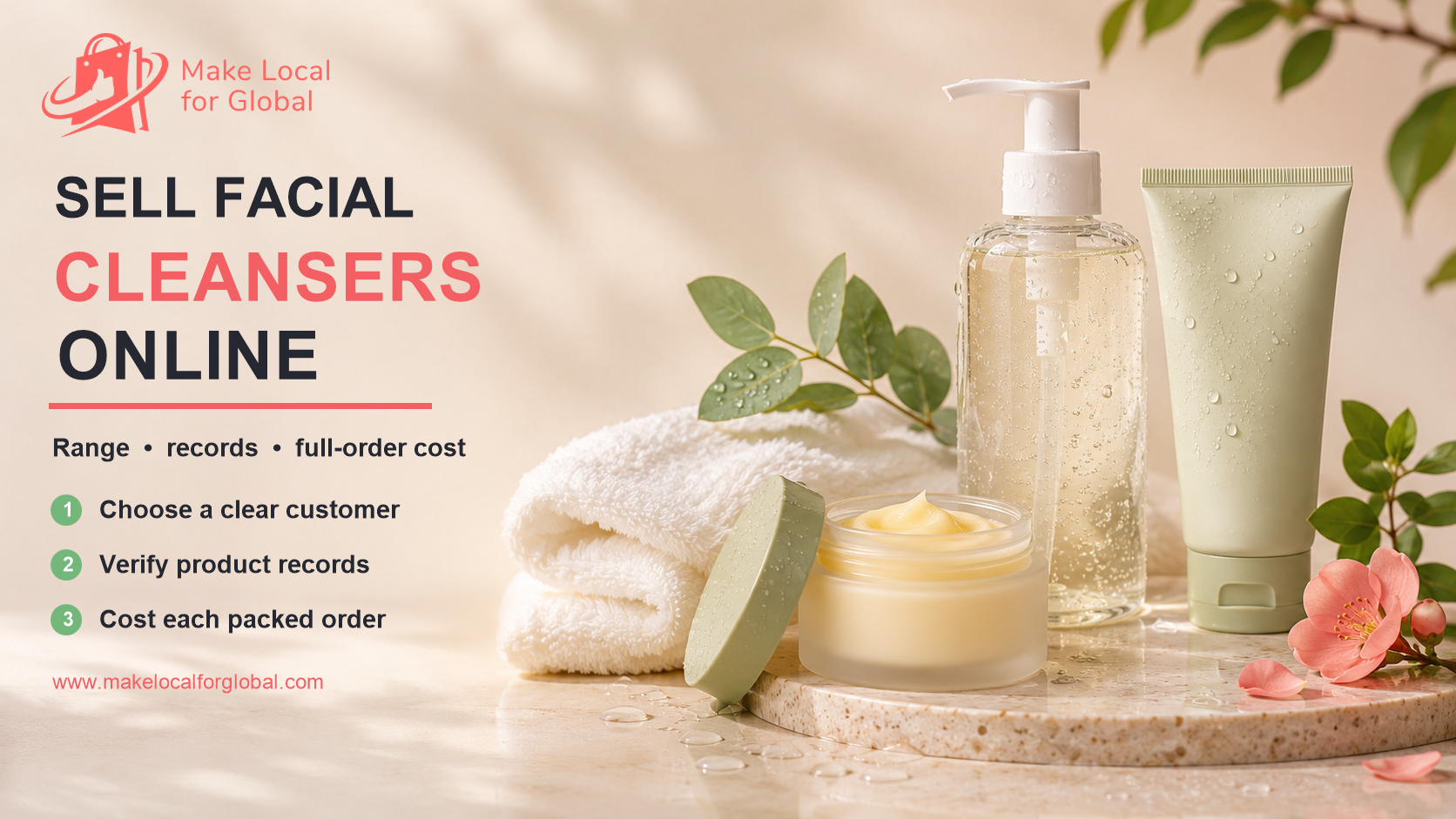
A facial cleanser can look like a simple bottle on a product page. For a new seller, the difficult work sits behind the label: selecting a product type that suits a clear customer, checking the supplier’s cosmetic records, describing the formula without medical claims, and making sure the economics still work after packaging, postage, fees and returns.
You can sell facial cleansers online by choosing a defined buyer and a small product range, checking product identity and compliance evidence for each item, ordering samples, writing accurate use and ingredient information, and costing the complete order before you commit to stock. Start with products whose supplier can explain who the Responsible Person is, how the product was safety assessed and notified for the market you intend to serve, and which claims the evidence supports. A low unit price or polished label is not enough.
This category can include gel cleansers, cream cleansers, cleansing balms, oil cleansers, micellar products and fragrance-free options. Each format raises different questions about texture, packaging, use directions, ingredients, parcel leaks and the type of customer it may suit. The article below gives you a practical sequence for investigating those choices. It is business information, not legal advice or skincare advice. Check current requirements for your role and each destination before listing a cosmetic product.
Plan the first cleanser range before ordering
Use the product format, supplier records and complete order cost to decide which sample deserves a small test.
A useful first range starts with a person and a routine, not a stack of trending ingredients. A buyer may want a quick rinse-off product after sport, a gentle-feeling cleanser for a minimal evening routine, a balm to remove long-wear make-up, or a fragrance-free option. These are starting hypotheses to test, not claims that a formula is suitable for every person with a particular skin condition.
Choose one group you can reach and ask about their existing shopping decisions. What format do they use now? Do they prefer a pump, tube, jar or flip-top? How many steps are in their routine? What makes them stop reading a product page: unclear ingredients, no volume, no usage directions, a high delivery charge, or a claim they do not trust? Ask what they bought last time and what they compared, rather than asking only whether they like your idea.
Separate what a customer says from what a product can prove. Someone may describe their skin as sensitive, yet that does not show a cleanser is clinically tested, hypoallergenic or suitable for a medical condition. Ask about purchase behaviour and preferences. Let a qualified assessor, the supplier’s records and product-specific evidence support safety and performance claims.
Use a short interview sheet. Record the cleanser format, size bought, preferred dispensing method, ingredients or fragrance information they look for, price paid, delivery expectation, and a question they could not answer on the product page. Avoid collecting health details you do not need. You are researching a shopping choice, not diagnosing a skin concern.
A simple demand check could compare two mock product cards: a 150 ml fragrance-free gel cleanser and a 100 g cleansing balm. Show their proposed prices, ingredients, package types and delivery cost. Ask which page gives enough information to decide, what remains unclear, and whether the buyer would search for a sample or full-size product. An expression of interest is useful feedback, not proof of a sale or a profitable range.
The word cleanser covers different formulations and pack types. Do not assume two items with the same broad label work the same way. Ask the supplier for the precise product identity, directions, ingredient list, size, packaging material and claims file for each SKU.
| Format to investigate | Questions a seller should answer | Operational checks |
|---|---|---|
| Gel or foaming cleanser | Is it rinse-off? What directions and warnings are on pack? What is the intended skin feel described by the maker? | Check pump or cap, leakage, carton fit and whether the pump can lock for shipping. |
| Cream or lotion cleanser | Does the maker direct the customer to rinse or remove with a cloth? What texture and quantity does the label describe? | Check tube seal, cap strength, product migration and any temperature guidance from the supplier. |
| Cleansing balm | Is the balm supplied in a jar or tube? Is a spatula included? What are the stated directions for removal? | Test lid closure, inner seal, heat guidance and parcel protection against leakage or softening. |
| Oil cleanser | How should it be dispensed and removed? Which claims and use directions are supported for the exact formula? | Inspect pump or dropper, seal, bottle finish and possible interaction with the outer pack. |
| Micellar cleanser | Does the label specify cotton pads or rinsing? What volume and usage frequency does the maker state? | Check closure, travel leakage, bottle integrity and the weight tier for the finished parcel. |
| Powder or solid cleanser | What quantity should be used and how is the product stored between uses? Are instructions clear for a first-time buyer? | Check moisture protection, pack strength, breakage, dust leakage and any included accessories. |
A small opening range might contain one rinse-off gel and one balm, if both answer a distinct need and you can support the product information. A fragrance-free variant could be a later test, after you confirm that the formula and label use that term accurately. A gift set may add value, but it introduces extra SKUs, outer packaging, inventory counts and a different parcel cost.
Do not make the range broader merely to fill a menu. A cleanser, toner, serum, moisturiser, mask and exfoliant create separate product records and customer questions. Begin with a narrower selection, then add a second format when buyer interviews, repeat orders or support questions point to a clear gap.

Price levels should reflect a product difference a customer can see and understand. An entry option might be a single cleanser in a smaller pack. A core option might be the full-size version from the same verified range. A higher-priced offer could add a second cleanser, a reusable face cloth or a travel pouch, provided the bundle is compatible, its contents are stated and its cost still works.
Do not call a cleanser “premium”, “clinical”, “natural”, “clean”, “detoxifying” or “professional” as a substitute for evidence. If a maker uses a descriptor, ask what it means and whether you can repeat it in your own advertising. Customers may interpret a word as a factual promise. Use a specific product detail such as volume, dispensing type or fragrance status where that information is accurate.
A useful range matrix links each item to its commercial and compliance information. Track product name, supplier code, formula or variant, size, pack type, ingredient list, label version, Responsible Person, notification status for the market, batch, use-by or period-after-opening details, sample check, unit quote, minimum order, lead time and claims approved for use. Add the date when you verified each record.
Keep variant names exact. “Daily gel” and “gentle gel” can sound like marketing labels, yet a buyer still needs to know which bottle they will receive. Make the selection match the packaging and stock code. If only one product is fragrance-free, do not attach that wording to the whole category page or a mixed set.
Possible routes include a UK wholesaler, a cosmetic manufacturer, a brand owner, a distributor or a private-label supplier. The role you take can change your obligations. If you import a finished product, sell it under your own name, change its label or make certain product changes, your responsibilities can differ from those of a retailer reselling an unchanged item. Confirm the details with official guidance or a qualified adviser before you order.
Ask the supplier to identify the legal entity that will invoice you and the exact manufacturer and product code. Request a current product specification, complete ingredient list, packaging details, label artwork, safety assessment status, evidence that the product has been notified for your intended market, and the name and address of the Responsible Person shown on the product. Ask who holds the Product Information File and whether the supplier can confirm that the file is accessible to the appropriate authority.
For Great Britain, GOV.UK’s cosmetics guidance says a cosmetic product must have a Responsible Person with a UK-established address, a product safety assessment completed by a qualified professional, and notification to OPSS before it is made available to consumers. Northern Ireland has separate guidance and aligns with relevant EU cosmetics rules. A seller planning to serve both markets should check both sets of current requirements rather than assume that a GB listing automatically covers Northern Ireland.
A supplier’s declaration is a starting point, not an instruction to publish every claim. Ask for the documents that relate to the actual formula, packaging, label version and market. A safety file for a previous formula may not apply after an ingredient, fragrance, preservative, container or manufacturing process changes. Get written confirmation of the current item and retain it beside your SKU record.
Use a request list so every supplier answers the same questions:
Check that the company details, invoice and payment beneficiary agree. Ask for a written quotation for the actual product and quantity, including sample freight, inbound transport and any import costs. If the supplier cannot identify a Responsible Person or will not confirm that the required files and notification are in place, pause the order. A neat mock-up or a marketplace listing is not a replacement for the product records.
Order a sample of the exact formula, size and packaging you plan to list. Save the product code, batch details, invoice, delivery date and photographs of the parcel before opening it. Compare the physical label with the supplier’s artwork and ingredient information. If they do not match, do not copy one version into your shop while assuming the other is current.
Inspect the container without opening or altering the product beyond ordinary handling. Check the cap, pump, seal, tamper evidence, label adhesion, print legibility and batch coding. Confirm that the outer carton and bottle or jar arrive without damage. If the supplier provides storage or temperature instructions, follow them and record the conditions. Do not heat, freeze, decant, blend or perform a skin test as an informal substitute for a safety assessment.
For a pump bottle, test the actuator only as the maker’s directions allow and record whether it dispenses consistently. For a balm jar, check that the lid closes and that the seal or insert described in the product documents is present. For a tube, inspect the crimp, cap and seal. These checks help you assess packaging and fulfilment; they do not establish that the cosmetic formula is safe or effective.
Take one sample through your proposed packing routine. Use the mailer or carton, void fill and protective wrap you expect to use. Turn the sealed parcel gently through normal handling positions and inspect for visible leaks or movement. This is a seller’s packing check, not a laboratory transit test. If a leak appears, record the SKU and batch, photograph the pack and ask the supplier for corrective action before dispatching stock.
Write a sample report with pass, fail or awaiting-answer against each point. List the item identity, visible label, ingredients reference, Responsible Person, batch code, use information, pack condition, dispensing parts, parcel result and unresolved questions. Keep the sample and documents together. If the next batch changes its bottle, label or formula, repeat the relevant checks before you treat it as the same product.

Check the product and the parcel together
A sample review should cover the formula, label, container, shipping protection and the full delivered-order cost.
Cosmetic products supplied to consumers must meet product-specific requirements. Great Britain guidance covers a Responsible Person, safety assessment, Product Information File, notification to OPSS, labelling, product claims and reporting serious undesirable effects. The Responsible Person must retain a Product Information File in English for ten years after the last batch was made available. It includes a description of the product, safety report, good manufacturing practice information and evidence for claimed effects.
The safety assessment must be carried out by a suitably qualified professional before a cosmetic product is made available. A retailer should not try to create or replace the assessor’s report. If you manufacture, import, place the product under your brand or make a change that affects compliance, confirm whether you become the Responsible Person or take on other duties. Ask the supplier to describe the arrangement in writing and obtain specialist advice when your role is unclear. The OPSS notification service guidance explains who can notify a GB product and which details are needed.
The pack must carry required information in a legible form. The official guidance lists the Responsible Person’s name and address, country of origin where imported, nominal weight or volume, date or period information where applicable, precautions, product function, batch or identification number and ingredients. Some information may be supplied on a leaflet or other included material when the packaging does not have enough space; follow the rule and symbol requirements for the product. Do not hide required information only in an online description.
Check the exact distinction between Great Britain and Northern Ireland before selling. GOV.UK publishes separate guidance for Northern Ireland, where relevant EU rules apply. If you sell into the EU or another country, make a separate market checklist for its Responsible Person, notification, language and labelling requirements. A parcel destination being selectable in your checkout does not confirm that the product is ready for that market.
Keep a copy of the current label and product listing for every SKU. If there is a formula change, new fragrance, revised precaution, new batch code or supplier change, ask whether the product record or notification needs an update. Put a dated review task on your calendar before labels or evidence grow old. A small spreadsheet with a document link and last-checked date can prevent staff from using an outdated ingredient list.
A cleanser’s name, imagery and surrounding copy can imply what the product does. Use words from the supplier’s approved claims file only when they apply to the exact item and are supported. If you cannot explain the evidence or the source does not match the formula, leave the claim off the page.
Claims such as “treats acne”, “clears eczema”, “heals rosacea”, “reduces inflammation” or “prevents infection” can cross into medicinal territory. Do not present a cleanser as a treatment for a diagnosed condition based on a supplier’s short description or a customer review. The ASA/CAP acne and spots guidance notes that ads presenting cosmetics as treating adult acne can be considered medicinal claims. If a product is intended to make a medicinal claim, seek appropriate regulatory advice before offering it.
Avoid turning ingredient presence into a result. “Contains niacinamide” describes a listed ingredient if the label confirms it. “Repairs your skin barrier in seven days” makes a performance promise that needs product-specific evidence and may be inappropriate for the product’s regulatory status. A few consumer comments or a laboratory result on a raw ingredient do not prove the finished cleanser produces the same outcome. The ASA/CAP cosmetics advice explains the need for evidence that matches the efficacy claim.
Keep environmental and ethical language equally precise. Terms such as “sustainable”, “clean”, “non-toxic”, “cruelty-free”, “vegan” or “plastic-free” need careful substantiation and clear scope. “Bottle made with 30% recycled plastic” says something narrower than “eco-friendly cleanser”. Ask which component or process a certificate covers, which product and production period it identifies, and whether its permission allows you to repeat the claim.
Before a product page goes live, create a claim ledger:
| Proposed wording | What the buyer may infer | Evidence to request | Decision |
|---|---|---|---|
| “Fragrance-free” | No fragrance or parfum was added under the supplier’s definition | Formula, ingredient list and written claim approval | Use only when the exact formula supports it |
| “Removes make-up” | The product removes the stated kind of make-up when used as directed | Product-specific evidence and usage instructions | Name the type of make-up only if tested or supported |
| “Gentle” | The product is mild or less likely to irritate | Supplier evidence for the finished formula and clear context | Avoid implying a guarantee for every user |
| “For sensitive skin” | Suitable for people who describe their skin as sensitive | Product-specific evidence and approved wording | Do not convert into a medical assurance |
| “Treats acne” | Treats a medical condition | Regulatory classification and authorisation advice | Do not use as a cosmetic promise |
A photo can make a claim too. Before-and-after pictures, red skin turning clear, clinical-looking coats or a product beside medical symbols may imply treatment or tested results. Use real product photography that shows the pack and texture without implying an outcome that the documentation does not support.
A page should let someone check the cleanser, how to use it and what arrives. Begin with the exact product format and a plain description. Include the size, directions, precautions, relevant ingredients information, pack contents, batch or shelf-life information, delivery cost and returns route. Follow the product label; do not invent a routine or frequency for the sake of persuasive copy.
A sample title might be “150 ml Fragrance-Free Gel Facial Cleanser with Pump”. Use that only if the label and supplier confirm all four details. If the maker does not substantiate “fragrance-free”, remove the phrase. If the package is 145 ml, show 145 ml rather than rounding it to a more appealing figure. The product name on the page should match the bottle a customer receives.
A useful opening description could read: “A 150 ml rinse-off gel cleanser in a pump bottle. The product label lists the ingredients and directions; check the pack before use and follow its precautions. The bottle and outer carton shown are included.” Replace this placeholder with the supplier’s approved wording and actual contents. Do not imply that the example is a tested formula.
Place practical information near the purchase control. A buyer should not need to scroll through marketing copy to discover volume, pack type or whether an accessory is included. A collapsible ingredient panel can help with page length if it remains accessible and the required packaging information is still supplied. Keep readable text and avoid an image-only ingredient list.
Use a product table such as:
| Field | Example of useful detail |
|---|---|
| Format | Gel cleanser, cleansing balm or other pack wording |
| Net contents | Exact weight or volume printed on the product |
| Container | Pump, tube, jar, bottle or sachet |
| Directions | Transcribed from approved label information |
| Precautions | Exact applicable wording from the label |
| Ingredients | Current ingredient list for this formula and market |
| Responsible Person | Name and address as shown on pack, where relevant to the online page |
| Shelf information | Batch and date or period-after-opening details where provided |
| Parcel contents | Product, carton and any supplied spatula or accessory |
| Delivery | Dispatch estimate, carrier service, price and destination limits |
Add an ingredient FAQ only when you can answer it from the current pack or supplier record. Avoid answering questions about a customer’s allergy, pregnancy, prescription or medical condition. Direct the person to the full ingredients and product precautions, and suggest that they consult an appropriate health professional if they need personal advice.
Use a clean, evenly lit image of the actual product. Show the front label, back label where legible, cap or pump, and the sealed pack. A texture image can explain whether the product is a gel, balm, cream or oil, but it must represent the supplied item. Do not recolour the formula, enlarge a bottle, conceal the ingredient label or add ingredients that are not present.
A scale photo can help customers compare size. Put the bottle beside a ruler or familiar object on the same plane, and label the measurement method. A set photo should identify which pieces are included. If a cloth or spatula is only a prop, say so in a caption and do not show it as if it is part of the order.
Keep separate images for variants that look different. A fragrance-free pump and a scented jar should not share one main photo if that could confuse a buyer. Review alternative text for each image: “150 ml pump bottle of facial cleanser with the front label facing forward” describes what appears. Do not fill alt text with ingredient keywords or claims.
The first image should show the bottle or jar without a decorative scene overwhelming the label. Supporting images can show the cap, seal, label, parcel protection and cleanser format. Use daylight or balanced studio light so the product colour is close to what arrives. If the label text cannot be read at the image size, provide the information as page text rather than promising that zoom will solve it.
Use the supplier invoice, packaging and current channel fee schedule to build an order calculation. The figures below are illustrative only. They are not supplier quotes, a current market price or a profit prediction. The example assumes one cleanser sold for £24.00, a seller who is not VAT-registered, and no separately charged delivery. Replace every number with your own evidence.
| Order item | Illustrative amount |
|---|---|
| Customer revenue, delivery included | £24.00 |
| Cleanser purchase cost | £6.20 |
| Inbound freight allocation | £0.85 |
| Protective mailer, carton and sealing material | £1.15 |
| Pick, pack and customer-service time | £1.50 |
| Payment and sales-channel fee allowance | £1.25 |
| Outbound delivery | £3.45 |
| Leakage, damage and return allowance | £1.10 |
| Customer acquisition allocation | £3.00 |
| Total listed variable cost | £18.50 |
| Contribution before fixed costs | £5.50 |
The arithmetic is £6.20 + £0.85 + £1.15 + £1.50 + £1.25 + £3.45 + £1.10 + £3.00 = £18.50. Subtracting that from £24.00 leaves £5.50 contribution before fixed costs. It is not net profit. Add insurance, storage, software, accounting, tax, owner time beyond the packing amount and unsold stock where they apply.
The fee allowance is not a universal marketplace rate. Check the actual channel and payment terms for your account, category and transaction. Some services calculate fees on delivery or other parts of an order. Put the source and date in the cost sheet, then recalculate when the fee page changes.
Test a second scenario with a 10% discount. Revenue falls to £21.60. If other costs remain at £18.50, contribution is £3.10 before fixed costs. A promotion that adds no new orders or repeat purchases may not be worth the reduced amount. Test a bundle separately: two cleansers may increase revenue, but can change the fee, parcel weight, breakage risk and customer-acquisition amount.
If VAT applies to your business, calculate revenue and eligible costs using a consistent VAT basis and get appropriate accounting advice. Do not compare a VAT-inclusive shelf price with costs that exclude VAT without making the basis clear. Include any irrecoverable tax, import charges, customs handling or currency cost that actually applies to your supply route.
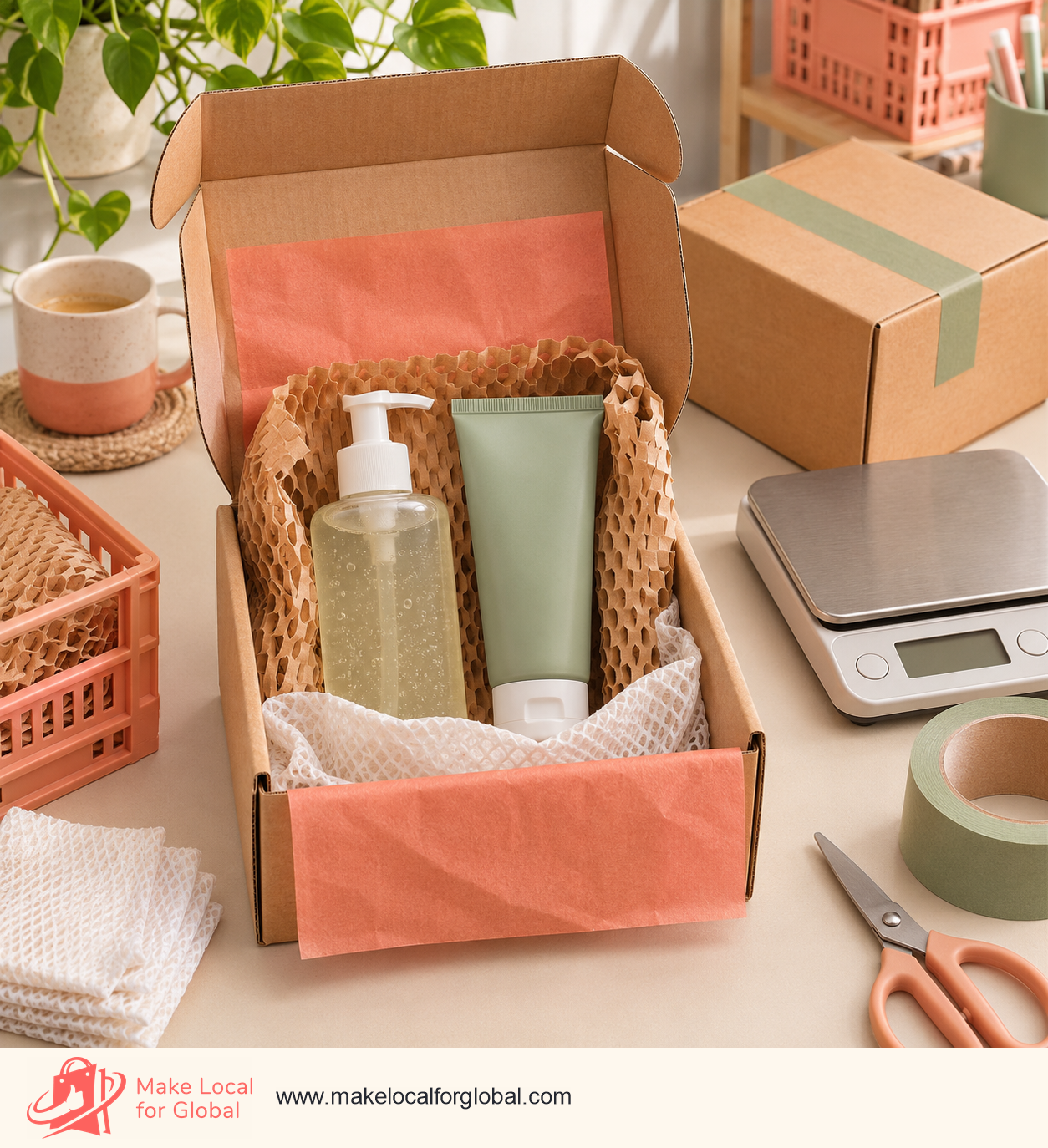
A 150 ml bottle can be light yet still need protection from leaks and impact. Weigh and measure the packed order, not only the empty bottle. Check whether a pump has a shipping lock, whether the closure needs a seal, and whether a glass container changes the carrier options or protective packaging.
Pack a sample with the materials you plan to use. Protect the closure, place the product in a suitable leak-resistant inner bag if appropriate, and prevent it moving against hard objects. Keep the outer carton compact enough to avoid excess void fill, but do not squeeze the product until the cap or seal is stressed. Follow any supplier storage instructions. If the container is damaged in your check, record the failure and discuss it with the supplier.
Do not decant a cleanser into a different bottle to improve shipping. Repackaging or changing a product can affect product compliance, traceability, label accuracy and your role. Ask the Responsible Person or a qualified adviser before changing the original pack. The customer should receive the same identified product and information that your records describe.
Request delivery quotes for one bottle, a two-item bundle and a gift set. Include the outer carton, insert, protection, label and any extra parcel. For remote destinations, confirm the service and delivery estimate directly with the carrier. Do not promise an arrival date based on an unconfirmed rate card.
Record each order’s package dimensions, weight, carrier, delivery price, damage, leakage and return status. If complaints cluster around one batch or cap design, pause the affected stock and contact the supplier. Keep photographs and customer reports attached to the product code and batch. An incident record makes it easier to assess whether the issue is one parcel or a wider product concern.
Cosmetics have shelf-life information and batch identities that need to remain linked to stock. Ask the supplier how use-by dates or period-after-opening information apply to each item and how much remaining life is guaranteed on delivery. Do not list inventory that cannot reach the buyer within the stated shelf period or whose label is damaged or unreadable.
Use a first-expiring, first-out process when batches have different dates. Record the batch against incoming stock and order fulfilment. If you sell a kit containing two products, note the batch of each. Keep stock in the temperature, light and humidity conditions specified by the Responsible Person or manufacturer. Do not use a household shelf beside a radiator or sunny window if the instructions prohibit it.
Set a reorder point from actual sales and supplier lead time, with a buffer you can afford. A long reorder lead time may justify a small safety quantity, but a large first order can tie up cash in a product with a short remaining shelf period. Track weekly units sold, stock age, expiry window, supplier lead time and returns. Review slow-moving items before ordering more.
A batch record should include supplier, purchase date, delivery condition, quantity, expiry or period information, invoice, label version and location. When you ship a product, preserve enough information to connect the order to the batch. If a customer reports a serious reaction or a product fault, you need to identify which products and customers could be affected.
Publish a clear process for damaged parcels, wrong products, leakage, missing accessories and unwanted orders. State how a customer can contact you, what order information you need, when you will respond and how you will handle the return. Do not write “cosmetics cannot be returned” as a blanket term. Online cancellation rights, hygiene seals and exceptions depend on the facts and rules that apply. Read current GOV.UK guidance or obtain advice before setting policy wording.
For an opened product returned to you, do not put it back into saleable stock. Keep the item separate, record its batch and condition, and follow supplier instructions for disposal or review. Check a sealed, unopened item for shelf life, label condition, storage history and tampering before resale. Do not promise a refund outcome that conflicts with statutory rights. Read GOV.UK’s distance-selling information and returns and refunds guidance before writing shop terms.
Use a support record with order ID, product code, batch if available, issue type, parcel photos, date reported, response, supplier notification and resolution. Keep personal information limited to what is needed to handle the order. If a customer reports an effect that prevents normal day-to-day activity, official GB guidance says this may need reporting as a serious undesirable effect. Follow the current process and contact the Responsible Person without delay; do not make your own medical assessment.
For ordinary questions about ingredients, provide the current label or ingredient information and avoid giving personal medical advice. If someone asks whether the product is safe for their individual condition, tell them the product details and direct them to a qualified health professional. A seller should not diagnose from a message or assure a customer that a formula is suitable for them personally.
An independent online shop gives you room to show product details, ingredient information, pack images, bundle options and delivery terms. You will need to bring shoppers to the site and manage stock, payments and support. A marketplace can expose the product to shoppers already browsing beauty items, but you must meet its rules for cosmetics, claims, photographs, delivery and returns. A local salon, spa or gift shop may suit wholesale or collection sales, if the product records and trade terms are ready.
Pick one main route for the first test. Build a mobile product page, place a test order, verify the correct variant in the basket and order email, check the shipping amount, then test the support and returns links. If you sell through more than one channel, sync stock by exact product code. A shared stock count is easy to get wrong when a cleanser is listed in a single bottle, a duo and a gift set.
Before paying for ads, check whether the page answers the questions buyers ask. Track product views, ingredient-panel opens, add-to-cart activity, checkout starts, completed orders, delivery cost, questions, returns, leaks and contribution. If people view the cleanser but leave after shipping appears, test a bundle or a different carrier before increasing advertising spend. If customers ask whether a cloth is included, change the pack photo and copy.
Keep email-marketing consent clear and separate from order updates. Add a purchaser to a promotional list only with an appropriate lawful basis and in line with privacy and electronic marketing rules. A post-purchase message can ask for neutral feedback without requiring a positive review or offering a reward for one.
Use phrases that describe the product and buyer question. A product listing might target “fragrance-free gel facial cleanser 150 ml” if that exactly matches the item. A range page might describe “cleansing balm and gel cleanser” where both formats are available. A seller article can target “sell facial cleansers online” and explain sourcing, claims, packaging and costs. Do not create several near-identical pages that only swap the word “gel” for “balm”.
Content ideas can answer a question without becoming skincare advice: how to compare cleanser formats, what pack details a buyer can read, what the label says about use, how to store a sealed product, or how to tell which item is included in a bundle. Link each information page to the exact relevant product. Do not use a blog post to imply a product treats a condition.
Build useful internal links between relevant shop topics. A reader considering a beauty range can compare the earlier guide to selling beauty masks online and the broader all-natural skincare selling guide. Keep each page specific and make the link useful where it appears. Do not claim an item is natural if the product record does not support the wording.
Make the title and search description distinct for each product. A cleanser listing should name its format, volume and a verified detail. A category page can explain the range and how products differ. Google’s Search Essentials describe foundational steps for helping Search understand and discover useful content; no keyword percentage guarantees a result. Write for a customer who needs to make a decision, then review search terms and customer questions to see which details deserve a clearer answer.
A first month should reduce unknowns before you commit to a large order. Decide at the end of each week what evidence would make you continue, change the product or stop.
Write one buyer hypothesis and two cleanser formats you want to compare. Speak with five to ten people who buy skincare, without asking for sensitive health histories. Ask what format they currently use, which pack details they check and how they judge a product page. Record the exact language they use to describe shopping needs.
Request supplier information for three candidate products. Compare the manufacturer, Responsible Person, product code, ingredients, notification status, sample price, minimum order, lead time, shelf information and parcel size. Mark each detail as verified, missing or awaiting a response. Do not choose by unit cost alone. At the end of the week, decide whether a product has enough documentation to justify a sample.
Order one or two samples from the supplier you can identify. Compare the package and label with the documentation, note the batch and date information, inspect the cap or pump, and run a pack test using your proposed parcel. Ask the supplier to resolve any formula, label, Responsible Person or claim mismatch in writing.
Create the claim ledger and draft one product page. Remove any wording that lacks support or sounds like a medical promise. Ask a reader to find the exact volume, directions, precautions, ingredients and delivery cost on a phone. Note where they pause or ask for clarification. Do not order stock if the product files or market notification remain unclear.
Get a current quote for the exact quantity and delivery route. Calculate a single-bottle order and a bundle using actual packaging, channel fees, carrier cost and handling time. Add returns, damage and customer acquisition allowances based on evidence or mark them as assumptions. Run a discount scenario and compare the contribution before fixed costs.
Set a maximum first purchase amount and a stop rule. Confirm shelf life on delivery, storage instructions, supplier response time and how defects or leakage are handled. Prepare stock records by product code and batch. If you cannot maintain traceability or the price leaves too little contribution, change the offer before listing.
List a limited quantity and verify the product page on mobile. Place a test order, check the correct cleanser and shipping amount, then confirm the order email and delivery label match the SKU. Photograph the packed product and measure the parcel. Keep claims aligned with the documentation.
Review visits, questions, sales, order contribution, leaks, damage, returns and batch records. Decide whether to continue, change the page, adjust the bundle or stop. Do not reorder on the strength of likes on one post. Reorder when actual sales, customer questions, shelf life, supplier lead time and available cash support the next quantity.

Yes, provided the products and your business role meet the rules for the market you serve. For Great Britain, check the Responsible Person, safety assessment, Product Information File, notification, packaging and claims requirements. Northern Ireland has separate guidance. Confirm which duties apply to you as manufacturer, importer, distributor, brand owner or retailer before listing.
A cosmetic product must have a safety assessment completed by a qualified professional before it is made available to consumers. The assessment forms part of the Product Information File held by the Responsible Person. A seller should verify that the exact product and formula are covered rather than trying to replace the assessor’s report.
No. The UK notification process is a required regulatory step for applicable products; it should not be described as regulator approval or endorsement. Check that the Responsible Person completed the right notification for the product and market, and retain confirmation with the SKU records.
Do not assume one checklist covers both. Great Britain and Northern Ireland follow separate cosmetics guidance and market arrangements. Check the current rules, Responsible Person location and notification requirements for each intended market before you advertise or ship there.
Claims that a cosmetic treats acne can be considered medicinal claims. Avoid describing a cleanser as treating or preventing a medical condition without appropriate classification and regulatory advice. A customer review is not a substitute for that advice.
Use the exact product format, size, directions, precautions, ingredient information, pack contents, delivery terms and a support route. Keep statements consistent with the label and supplier records. Do not rely on an image alone to carry required information.
Private-label or own-brand sales can change who holds legal responsibilities. Confirm who is the Responsible Person, who owns the Product Information File, who submits the notification and who approves the label and claims. Do not add your brand to a product until those roles and documents are clear.
Start with the smallest quantity that lets you test the product and meet the supplier’s minimum, provided the economics and shelf life work. Consider lead time, batch dates, storage capacity, sample quality, cash available for returns and the evidence of demand. A large order is not a demand test.
Add the cost of every product, inbound freight, packaging, pick and pack time, fees, outbound delivery, returns or damage allowance and customer acquisition. Check whether the bundle changes parcel weight or fee calculations. Compare the contribution with a single-item order, then add fixed costs and tax separately.
Use wording you can define and substantiate for the exact product. Identify which ingredients, packaging or production claim is covered and keep records that support it. A supplier’s broad phrase may not be enough to support your own advertising.
Respond respectfully, record the product and batch information, preserve the relevant communication and notify the Responsible Person. Do not diagnose or ask the customer to continue using the product. For a serious undesirable effect, follow the current official reporting procedure for the market.
A facial cleanser shop can begin with a small selection, but every item still needs a clear product identity and reliable records. Pick a buyer to learn from, compare formats, verify the Responsible Person and market requirements, inspect a sample, check pack handling, and write the product page from the label and supporting documents.
Calculate the order from checkout through delivery and possible return. Keep the figures marked as actual or illustrative, and check the contribution after each cost. If the supplier cannot resolve a documentation question or the claims file does not support the copy, pause that SKU. A careful first test can save money and help customers understand what they are buying.
If you are turning your cleanser range into a shop, you can review the ecommerce tools and apps, compare shop options, or talk to Make Local for Global about a suitable next step.
PREFERRED SOURCE
Like what you’re reading? Add Make Local for Global as a preferred source on Google to see more of our articles when you search.

Build your online presence without having to figure out everything yourself.