

READY TO SELL Farmhouse decor ONLINE?
Get a store built for you in 5 days, plus training and support to help you start, run, and grow your Alternative business.

Learn how to choose a farmhouse decor niche, inspect samples, price packed orders and build a clear UK online range, with product checks and a practical 30-day launch plan.

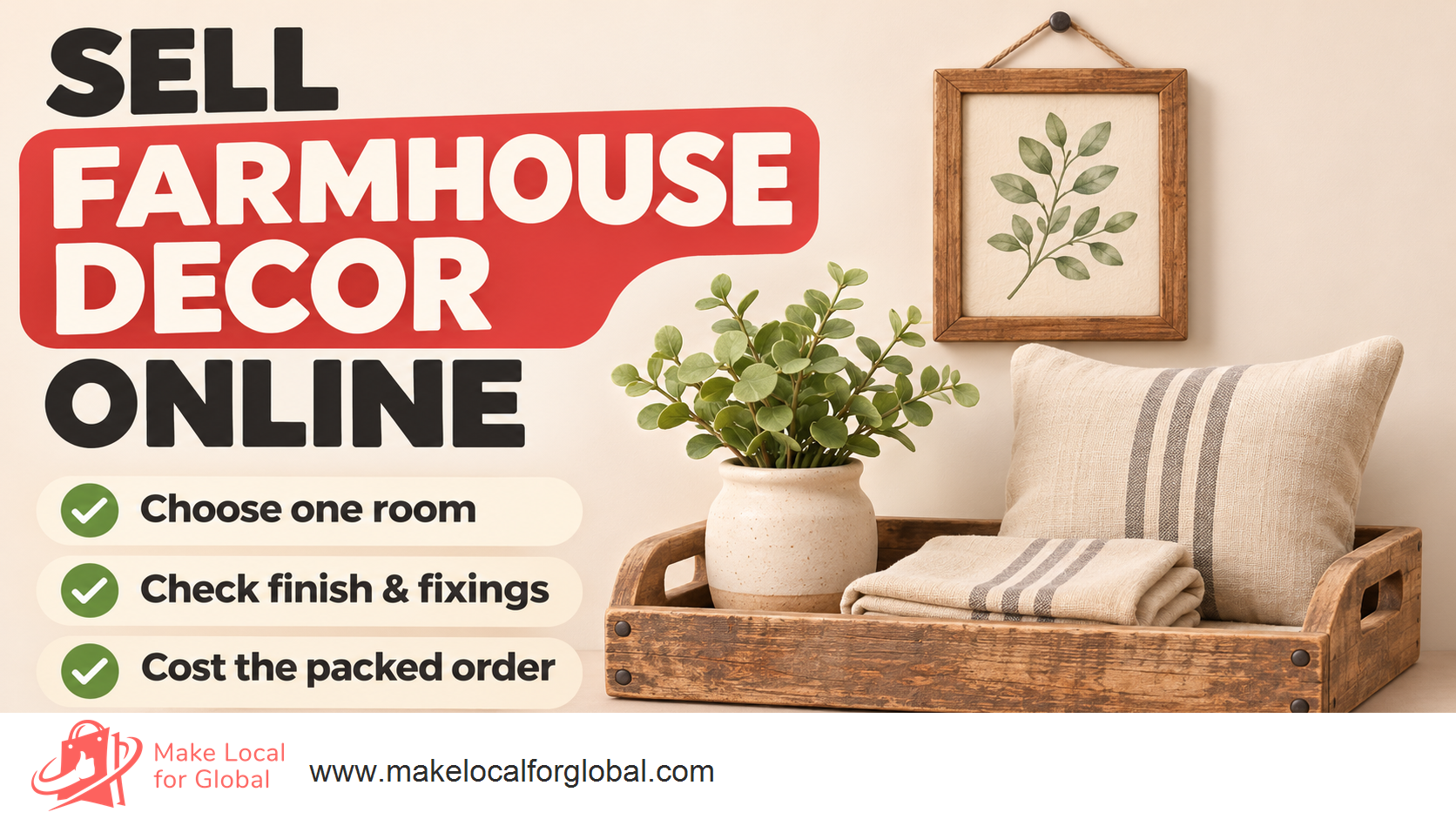
Farmhouse decor is a broad look rather than one product. It can mean a reclaimed-style tray, a linen cushion cover, a framed botanical print, a ceramic vase, a wall shelf or a woven basket. That breadth gives a new seller plenty of ways to start, yet a shop that lists unrelated rustic objects can feel hard to understand and harder to remember.
The more practical route is to choose a buyer, a room and a small set of products that belong together. Check each sample, work out the real cost of shipping it, explain size and materials clearly, then use early customer behaviour to decide what earns a place in the next order. This article sets out how to do that for a UK online shop, with an illustrative cost example and a 30-day launch plan.
Set out the buyer, room and products you plan to test, then use the Product Range Assessment to organise your first decisions.
Treat farmhouse decor as an editorial direction for a carefully selected homeware range, rather than as a promise that every product is antique, handmade or made from reclaimed materials. Buyers use broad style words to describe a room they want to create. Your product information still needs to describe the real object.
That distinction matters. A new pine tray finished to look weathered is not an antique tray. A factory-made cushion cover is not handmade by your business. A listing can use “farmhouse style” to describe its visual character, but claims about age, origin, material, craft or sustainability need evidence.
Start by making the range specific enough that a customer can picture where the products fit. For example, a seller could help people style a small cottage kitchen with a wooden serving board, a ceramic utensil pot, a checked tea towel and a shallow storage basket. Another shop could focus on quiet bedroom accents such as neutral cushion covers, a small wall print and a wooden bedside tray.
Keep the first collection small. A few products with shared colours, dimensions or materials are easier to photograph, describe and pack than a large catalogue with no clear connection. A customer should be able to tell within seconds what your shop helps them buy.
“People who like rustic homes” is too broad to guide purchasing. A useful starting customer has a room, a problem and a budget. You might serve renters who want removable kitchen accents, owners furnishing a holiday cottage, people looking for a modest housewarming present, or shoppers who need compact storage for a narrow hallway.
Do not assume that a particular customer group wants a certain style. Write down a testable thought, then look for evidence. Ask five to ten people who fit the description what they have recently bought, what was difficult to find, and which detail would stop them ordering online. Avoid asking only whether they “like” an idea. Compliments do not tell you whether someone will pay the listed price.
Look at public product reviews and questions on marketplaces for recurring practical concerns. Note the exact language customers use about size, colour, finish, hanging hardware, cleaning and delivery. A repeated question can become a product-page detail, a photograph or a sourcing check. It does not prove how many buyers exist, but it helps you make a more useful offer.
Choose a single room for the opening collection. This gives you a coherent setting for images and bundles. It gives you another way to check whether products share a genuine use. A kitchen display might combine a tray, tea towel, utensil holder and wall sign. A bedroom display might pair a cushion cover with a bedside organiser and a small print. Do not add a product only for a colour match. It should solve a real decorating or storage task.
Before you place a wholesale order, create a one-page concept with three to five sample products, estimated prices and clear pictures or mock-ups that you are permitted to use. Share it with suitable prospective buyers, collect email interest, or publish a small set of listings with limited stock if the goods are genuinely available. Do not accept payment for an item you cannot supply within the stated terms.
Track behaviour separately: relevant people reached, product-page visits, saves, questions, add-to-basket events and paid orders. A friend saying “lovely” is not the same signal as a stranger asking for a delivery date. Keep a short log of the question, where it came from and what decision it might change.
If people repeatedly ask whether a shelf fits a certain wall width, improve the size information before buying more stock. If the design receives saves but no orders, compare the delivered price and the product detail with other options. If responses are weak, test a different room or customer problem before widening the range.
Farmhouse decor can include many categories. Each has different costs, breakage risks and product checks. Select the family that suits your skills, storage space and starting cash rather than buying a little of everything.
| Product family | What buyers need to judge | Main seller checks | Shipping pattern |
|---|---|---|---|
| Wooden trays, boards and small shelves | Dimensions, wood type, finish, care, use | Smooth edges, stable joints, finish consistency, accurate material claims | Rigid protection; long or heavy items cost more to send |
| Ceramics and glass | Capacity or dimensions, glaze, colour, intended use | Cracks, chips, base stability, glaze consistency, safe-use claims | Fragile, needs tested cushioning and a protective outer carton |
| Cushion covers and table linens | Finished size, fabric composition, closure, care | Fibre label, seams, colour transfer, shrinkage and closure function | Usually compact; textile information and returns still matter |
| Baskets and storage | Internal and external dimensions, weave, load guidance | Snags, loose fibres, shape, handles, odour and consistency | Bulky relative to weight; nesting may help if the design permits |
| Wall prints and signs | Print size, frame, hanging method, finish | Colour accuracy, corners, supplied fixings, safe mounting instructions | Flat protection for prints; framed goods need corner protection |
| Lanterns and candle accessories | Intended candle type, dimensions, heat guidance | Stability, sharp edges, material suitability and safe-use instructions | Breakage and heat-use claims need close attention |
For a first range, choose a family that can share photographs and fulfilment methods. A seller with a small spare room may find cushion covers and compact wooden accents simpler to store than framed mirrors or large furniture. A maker with a kiln and repeatable production process may prefer a defined ceramic collection. The right choice depends on supplier access, test results and cash flow.
A simple price ladder helps shoppers choose without forcing the shop to carry dozens of designs. An entry item could be a small wooden tray or tea towel. A core offer might be a ceramic vase or a two-piece display set. A higher-value option could be a coordinated table setting or a larger basket with verified dimensions.
These are roles in the range, not fixed price bands. Compare the cost, perceived use and delivered price before setting a retail figure. A low-priced item can lose money if it needs labour-intensive wrapping or attracts a high payment fee per order. A more expensive bundle can be easier to ship than several separately packed fragile goods, but only if its contents arrive safely and the buyer wants them together.
Keep variation controlled. A new seller might test two wood finishes and two sizes, rather than six finishes, four sizes and custom engraving. Each variant needs accurate photographs, stock records and product detail. A focused range makes it easier to spot which style is drawing genuine interest.

You can make the goods yourself, commission a local maker, buy wholesale, import finished products, or combine these approaches. Each model changes your workload and responsibilities.
Making products gives you direct control over some design choices and can make small runs possible. It requires repeatable materials, production time and a plan for defects. Record how long each item takes to make, including sanding, finishing, labelling and packing. If the production time changes between pieces, price for the slower cases instead of relying on your best day.
Wholesale can speed up selection, but a catalogue photograph does not confirm the quality of your delivered sample. Ask the supplier about minimum order quantities, lead times, colour variation, packaging, replacement terms, material documentation and whether the stock is ready for resale in Great Britain and Northern Ireland. Ask for the exact product description, not a broad claim such as “natural wood” where the species or finish affects the listing.
When importing, establish who is the importer of record, which shipping and duty charges apply, how product traceability is maintained, and what safety information accompanies the goods. A UK business buying from the EU may have importer obligations rather than simply acting as a distributor. The Office for Product Safety and Standards business advice explains the general approach and points to product-specific rules.
For a commissioned product, agree in writing who owns design files, who buys materials, what counts as an acceptable sample, who checks production, how rejected goods are handled and whether the maker may sell the same design elsewhere. Begin with a sample or a small paid batch. A low unit quote is not useful if the finished product differs from the approved example.
Use a short supplier checklist. Ask for a written specification, material names and finish details, exact dimensions, care instructions, packaging dimensions, country of manufacture, minimum order quantity, production lead time and a process for reporting a defect. If the product has a safety-related use, request the applicable documentation and instructions before taking orders.
Confirm whether the images may be used in your own listings. If permission is limited, photograph your own sample. Ask if dimensions refer to the outer product, usable internal space or packaging. For a basket, those measurements can differ substantially. For a cushion cover, clarify whether the listed dimensions are before or after sewing and whether an insert is included.
Write down supplier answers and save invoices and product records. If a customer reports a fault or a product is subject to a safety concern, traceability helps you identify affected stock and contact the right supplier. A spreadsheet with supplier, item code, batch, order date, quantity, checks and incidents is enough for a small opening range.
Order samples from the same supplier and production route that you plan to use. A sample from a local showroom may differ from the production batch sent from a warehouse. Photograph each item in daylight and keep the images beside your inspection notes.
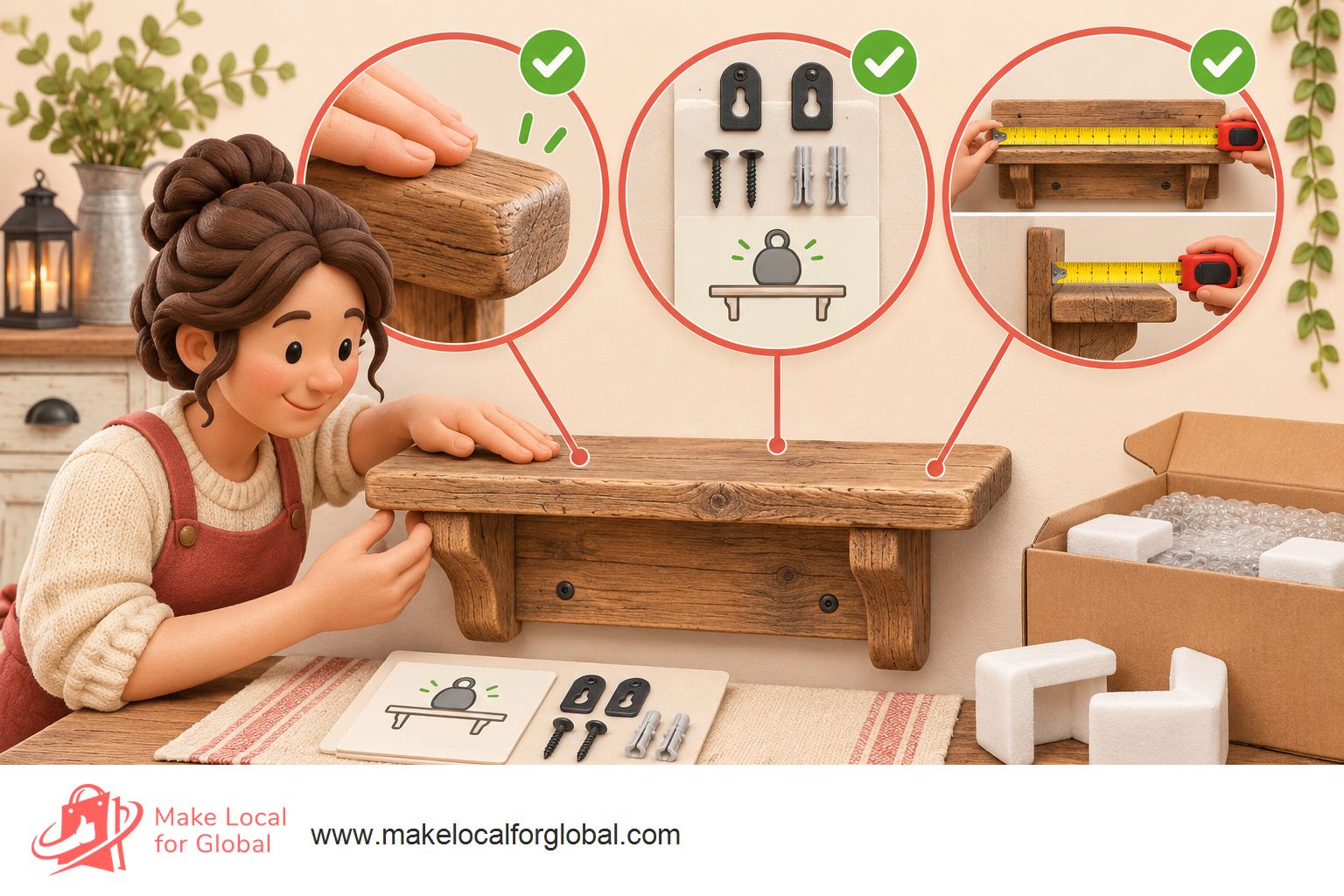
For wood, inspect the species or material description, joint strength, surface smoothness, sharp corners, wobble, coating consistency and any odour that remains after unpacking. Place the item on a level surface. If a tray is intended to carry cups, test it with a safe, ordinary load on a stable surface. State a load limit only when it has been tested and the supplier supports the figure.
For ceramics and glass, inspect the rim, base, handle attachment, glaze and any rough or sharp area. Check for cracks using good light. Compare a small group of samples for differences in colour and shape, then decide which amount of variation you can describe honestly. If you sell a vase as watertight, test it safely over a suitable surface for long enough to detect slow leaks. If it is decorative only, state that clearly.
For textiles, check fibre composition against the label and supplier records. Measure the finished item, inspect stitching and closures, and follow the care label through a wash test when the product is washable. Record whether the fabric shrinks, fades, twists or releases colour. The UK textile labelling guidance says fibre content must be shown for covered textile products and that manufacturers and retailers share responsibility for compliance in England, Scotland and Wales.
For baskets, check dimensions at several points, handle attachment, loose ends, stability on the floor and snagging against fabric. For framed signs, verify frame corners, glazing, backing, hanging hardware and the actual print dimensions. Include the fixings only if they are supplied. Do not make a universal claim that a wall fixing works for every wall type.
Repeat the checks when stock arrives. Keep a pass/fail record and photos of defects. If the batch has a new finish, supplier or component, treat that as a reason to test again. A written process helps you answer customer questions from evidence rather than memory.
Retail price needs to cover the costs that happen before and after a customer places an order. Include the product or making materials, inbound freight, duty where applicable, packaging, payment or marketplace fees, delivery subsidy, returns and damage allowance. Add marketing costs if a paid campaign is part of the sales plan. Include your own labour when you make, personalise, photograph or pack each item.
Here is an illustrative example for a small wooden tray sold direct to a UK customer. The figures are assumptions for teaching the arithmetic. They are not supplier quotes or evidence of a typical margin.
| Cost per order | Illustrative amount |
|---|---|
| Tray purchase cost | £12.00 |
| Inbound freight allocation | £1.20 |
| Protective packaging | £1.80 |
| Payment fee allowance | £1.10 |
| Outbound delivery paid by seller | £3.50 |
| Returns and damage reserve | £1.40 |
| Customer acquisition allowance | £2.00 |
| Total variable cost before labour and overhead | £23.00 |
At a selling price of £39.00 including any applicable tax, the illustrative contribution before labour, fixed overhead and tax would be £16.00: £39.00 minus £23.00. That £16.00 is not net profit. It must still cover the seller’s time, website or marketplace subscriptions, photography, insurance, storage, accounting, tax and any other business costs.
If the customer pays £4.00 delivery and the actual carrier charge is £3.50, add £3.50 to the cost and £4.00 to the revenue when you calculate the order. With free delivery, the £3.50 remains a cost even when the customer sees no separate charge. For a marketplace, check how its fee is calculated. For example, Etsy’s fees policy sets out listing and transaction charges and points sellers to payment processing and other country-specific fees. Fees can change, so read the current policy before pricing.
Write each assumption beside the number. Recalculate when the supplier price, parcel size, fee, return rate or delivery service changes. If an item is bulky, measure and weigh the packed version, not just the product. A dimension that crosses a carrier pricing threshold can change the order economics.
The cost example answers a per-order question. Work out how many orders would cover monthly fixed costs. If a site, insurance, storage and software cost £180 per month, and each sale contributes £16 before those costs, break-even is £180 divided by £16, or 11.25. Since partial orders do not exist, plan for at least 12 such orders just to cover those fixed costs, before tax and owner pay.
That calculation assumes every sale contributes the same £16. Real orders vary. A bundle may need more packing. A discount lowers revenue. A return may reverse some costs. Compare a cautious case with a best case. The cautious case might use a higher damage reserve, a lower average basket and fewer sales.
Stock ties up cash before it earns revenue. If a supplier requires 40 units at £12 each, that is £480 for stock alone, before freight and packaging. Add a reserve for defects and delays. A small test order or made-to-order model can reduce stock exposure, but it may lengthen dispatch time or create uneven labour. State realistic dispatch times and monitor them.
If you are VAT registered, build the calculation using the correct treatment for input and output VAT, then check the current HMRC rules or ask an accountant. The illustrative table does not assume VAT registration. Do not compare a VAT-inclusive retail price with costs recorded on a different basis.
A product page needs to answer the questions a shopper would ask if they could pick up the item. Start with a descriptive title that identifies the object, the useful feature and, where it helps, the size or room. “Rustic wooden tray” is clearer than “Farmhouse charm”. Do not repeat the same title pattern on every listing.
Show the facts early: height, width, depth, weight, material, finish, care, colour, included parts, assembly and dispatch time. For a basket, state both the outside measurement and usable internal size if they differ. For a cushion cover, say whether the cushion insert is included. For a sign, provide its real dimensions and hanging method. For a textile, show the required fibre information accurately.
Explain what the product does in ordinary language. A description could say, “A shallow pine tray for grouping a mug and small jar on a kitchen counter. It measures 32 cm by 22 cm by 4 cm. The wood grain varies from tray to tray. Wipe with a dry cloth. No food-contact claim is made.” That is more helpful than a series of vague style adjectives.
Use original photographs whenever possible. Show the front, side, back, close-up finish, scale beside a familiar object, packaging or included parts, and any variation a buyer should expect. Use a consistent background without making the product colour look different. A lifestyle image can help a shopper picture the object in a room; a dimension image helps them judge fit. Keep both purposes clear.
Write alternative text for the information in each image. Describe what is visibly relevant, such as “Small oak-look tray beside a ceramic mug on a cream kitchen counter.” Avoid repeating every keyword or adding a list of product claims that the image cannot confirm.
Google’s SEO Starter Guide recommends useful, reliable, people-first content, clear page titles and logical headings. It says links can connect readers and search systems to related pages. For this shop, that means writing different, accurate details for each item, linking to relevant collections and answering the questions that affect a purchase. A longer page is not a ranking guarantee.
Give each collection a distinct name and a short explanation of who it serves. A “Small cottage kitchen” collection can group related items, with links to each product. Link back to the collection from each listing. Use descriptive anchor text such as “wooden kitchen trays” rather than “click here”.
Create helpful supporting content where you have something specific to say: how to measure for a hallway basket, how to care for a linen cover, or what to check before hanging a shelf. Link that advice to the products it genuinely supports. Avoid publishing near-duplicate pages that differ only in a colour word. Each page should answer a different real question.
This article’s neighbouring homeware guides can help you plan product-specific checks: selling candle holders online, selling flower vases online, selling couch covers online and selling full-length mirrors online. Link to them from the relevant category or article section, not as a random list in a product description.
Farmhouse styling is often understood through how objects work together. Photograph a small vignette that shows the scale and relationship between pieces, then photograph each product on its own. The group image can introduce the collection. Individual images help the buyer judge what is included.
Keep colour representation as consistent as you can. Use a neutral background, avoid a strong filter, and include at least one photograph in soft natural light. If two finishes look similar on camera, place them side by side and label them accurately. Do not digitally remove a knot, glaze variation or colour variation that a customer may receive.
Photograph fragile packaging as a process test, not as a promise that every order will arrive unmarked. Keep the actual product in the photo where the image is meant to sell the item. If a photograph contains styling props, make clear which objects are included. A caption or product detail can say “tray sold separately” where needed.
Use file names that describe the item and view, such as `farmhouse-wood-tray-side-view.jpg`, and write concise image descriptions. Compress images to a size that loads quickly without making fabric or surface detail look soft. Test the product page on a phone. A buyer should be able to zoom far enough to inspect the finish and read the dimensions without sideways scrolling.
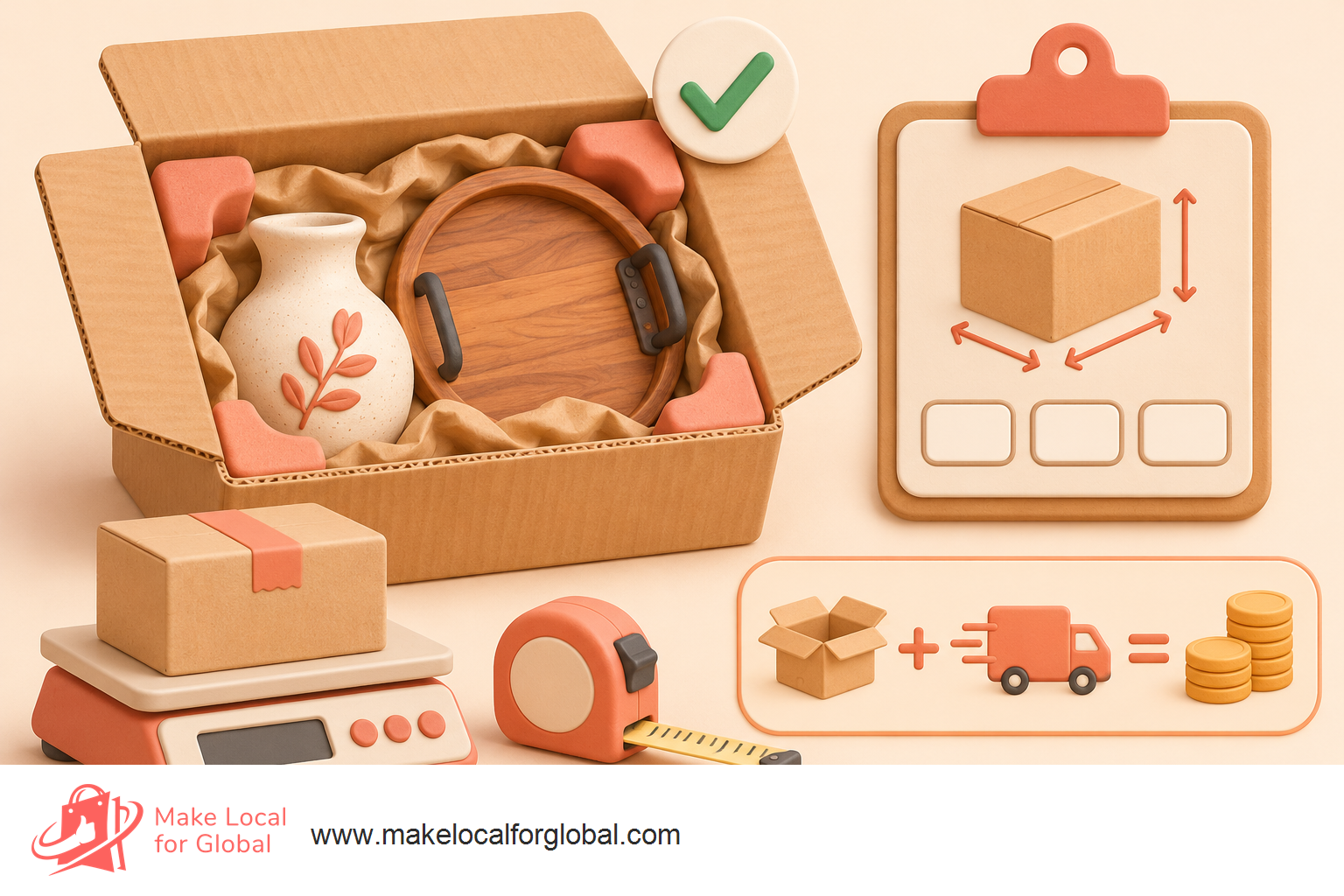
Do a test pack before you set the delivery price. Use the packaging you plan to buy, then measure the final parcel and weigh it. For ceramics, protect the rim and handle separately, fill empty movement space and use a strong outer carton. A fragile label alone does not prevent breakage. For wood, protect corners and finished surfaces from impact and rubbing. For textiles, use a clean moisture-resistant inner wrap if suitable and avoid packaging that traps damp goods.
Send a packed sample through the same carrier service you expect to use, or run a controlled drop and vibration check appropriate to the item. Photograph the packing steps. Open the parcel after testing and note scuffs, loose parts, crushed corners or movement. Change one thing at a time, then repeat the test.
Measure the packed outer dimensions and compare carrier services using the actual parcel profile. Record the weight and band used. If baskets nest, check that nesting will not mark the weave or distort their shape. If a buyer orders a set of ceramics, test the combined pack rather than multiplying the single-item cost by the number of pieces.
Choose packing materials with practical care and make environmental claims only when you can support them. “Paper cushioning” is a specific description. “Zero impact” or “fully sustainable” is a broad claim and can mislead without clear evidence. The GOV.UK packaging EPR small-producer guidance describes the current registration and reporting rules for qualifying small producers. Check whether your business meets the relevant criteria and current thresholds; do not assume a small online shop is automatically covered or exempt.
For a small launch, pack orders yourself if you can meet the stated dispatch time and store the items safely. Keep a labelled location for each product and record stock when it arrives, sells, is returned or fails inspection. Separate saleable returns from damaged goods until they have been checked.
Use packaging that another person can repeat. Keep a short packing card with the item code, product condition checks, included parts, protective materials and final parcel dimensions. That gives you a consistent process if someone else helps during a busy week.
Give customers a clear dispatch estimate and send tracking information when available. Keep a simple answer bank for size, material, care and delivery questions. If the same question appears several times, revise the listing rather than replying individually forever.
Set a return process before the first sale. Explain how a buyer contacts you, how to package a return, who pays return postage where law allows, and how you assess damage. Avoid wording that suggests a customer loses statutory rights by opening packaging or inspecting a product in the way they could in a shop.
The rules depend on the product, materials, intended use and where you sell. “Farmhouse decor” is not a legal product category that covers every requirement. A decorative cushion cover, a wooden tray, a wall-mounted shelf and an electric lamp can trigger different duties.
In Great Britain, the Office for Product Safety and Standards says products must be safe in normal or reasonably foreseeable use under the General Product Safety Regulations 2005, and businesses that make, import, distribute or sell consumer products have responsibilities. Its business advice explains supplier traceability, product records, appropriate labelling and instructions. Northern Ireland follows a different general product safety regime under Regulation (EU) 2023/988. Check the separate Northern Ireland guidance if you place products there.
The general safety duty does not replace product-specific rules. If you sell electric lamps or other electrical equipment, check the Electrical Equipment (Safety) Regulations guidance for Great Britain and the separate Northern Ireland guidance. A seller importing a finished lamp may have duties beyond passing on the supplier’s product page. Confirm which conformity assessment, documentation, markings, instructions and responsible economic operator details apply before listing it.
If you sell textiles, review fibre composition rules. GOV.UK’s textile labelling guidance says covered products need a label showing fibre content, and responsibility applies to manufacturers and retailers. Confirm which rules apply to the exact textile and territory. Do not rely on a supplier’s vague “cotton blend” description when the composition needs a proper label.
If your product is an upholstered item, a children’s product, a candle accessory or anything with a specific safety function, get category-specific advice before selling it. Make claims such as fire resistant, food safe, non-toxic, child safe or suitable for outdoor use only when you have reliable evidence for the exact product and use. Keep records of the evidence and the wording you used.
Online sellers must provide required pre-contract information and follow cancellation and refund rules. GOV.UK’s returns and refunds guidance says online customers have a cancellation period of 14 days after receiving goods, with a further 14 days to return them after giving notice, subject to exceptions. A blanket “no returns” message does not remove statutory rights for faulty or misdescribed goods. Check the rules for customised goods and other exceptions before relying on one.
Product descriptions, photographs and prices must not mislead. Be exact about whether a product is reclaimed, handmade, vintage, solid wood, washable, food-contact safe or made in a particular country. If the claim changes a buyer’s decision, keep evidence. For tax, business registration, packaging responsibility and product-specific legal questions, review current official guidance or speak with a qualified adviser. This article is a practical starting point, not legal advice.
A marketplace can provide an existing place for people to browse and compare. It can help a seller test listing photographs, product questions and price response. It brings listing rules, fees, competition and less control over the shopping experience. Read the current policies and fee schedule before deciding whether the channel suits your products.
Your own online shop gives you more control over collections, design, customer information and search content. It requires work to bring relevant visitors and keep checkout, product pages and support clear. Check the current platform plan and card processing rates; monthly plans and payment fees change. A seller can begin with one channel and add a second only when they can keep stock and delivery information in sync.
In-person events can reveal which product details people handle before purchase. A stall can help you test size, finish and bundle ideas, but its results may not match online buying behaviour. Record the date, audience, products shown, questions, sales, weather or event conditions and costs. Do not treat a busy stall alone as proof that online demand will be the same.
Use the same item codes, stock counts and product names across channels. If one tray sells at an event, update the web stock before accepting another order. Give each channel its own cost view, including fees, packaging and the time needed to maintain listings.
Marketing should answer a specific question, not just make the shop look busy. Choose one product and one audience for each test. For example, photograph a small kitchen display for people furnishing a cottage rental, then compare interest in a tray bundle with interest in the tray alone.
Search pages need useful words in titles, product detail and headings, but do not force the same phrase into every sentence. A clear product title might mention material and dimensions. A collection page might explain how the pieces coordinate. A separate care article might explain how to look after a particular finish. The page should be written for the customer who needs the answer.
Use short videos or social posts to show scale, assembly, finish or packing. A ten-second hand-held view of a shelf depth can resolve a question that a styled photograph leaves open. Use the same measured product as the listing. If you use a room mock-up, label it as a visual suggestion so a buyer does not mistake props for included parts.
Build an email list only with clear consent and a useful reason to subscribe, such as restock notices or new collection previews. Do not add buyers to promotional messages without checking the rules and your consent records. Keep a simple content calendar: one product demonstration, one customer question answered and one collection update each week is a manageable first test.
Track a small set of measures weekly: qualified visits, product views, add-to-baskets, purchases, average order value, contribution per order, returns, damage reports and customer questions. If traffic is low, the immediate test may be discovery and content. If product views are healthy but add-to-basket activity is low, review the offer, photographs and delivered price. If baskets do not convert, check postage, dispatch details and checkout friction. One metric rarely explains the whole cause.
When you change a title, photograph or price, record what changed and when. Keep the old version where possible. Do not declare a winner after a handful of visits. Let the test run long enough to gather a meaningful set of responses for your own shop, then compare like with like.
Once the range is clear, think through collection navigation, product comparisons, delivery information and checkout details before the shop goes live.
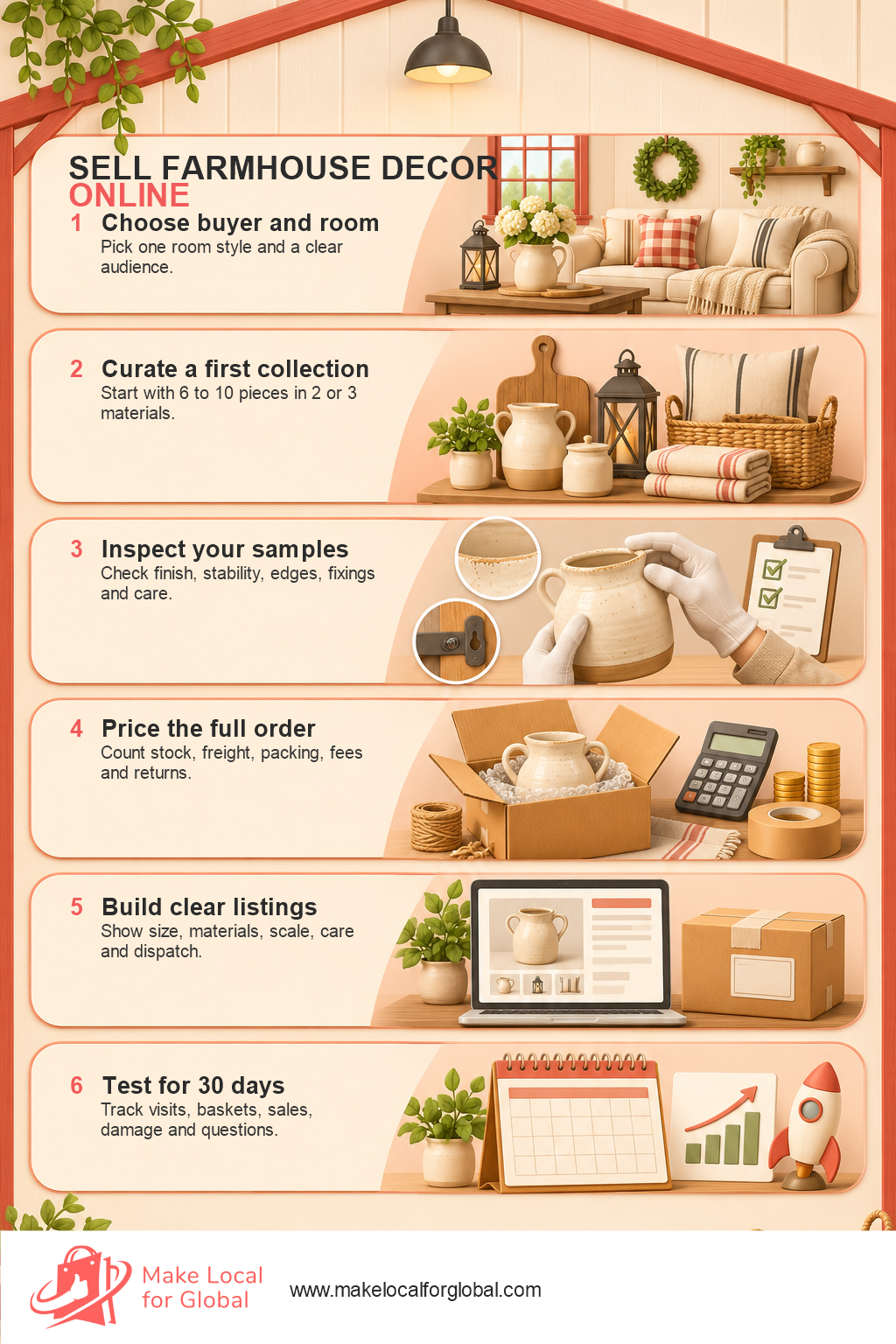
Write one sentence naming the customer, room and task the collection supports. Compare three product families against your storage, cash, skills and supplier access. Speak with prospective buyers and read product questions from relevant public listings. Pick a small set of products and write down why each belongs.
Contact suppliers or prepare your own production plan. Request samples, documentation, dimensions, minimum order details and lead times. Do not place a large order before you have compared the delivered sample with the claims you intend to make.
Use the same written checklist on every sample. Photograph defects, measure each item and test the intended use safely. Check care instructions and material information. Reject, repair or clarify products that fail before ordering stock.
Build a per-order calculation for each product. Include inbound costs, packaging, fees, delivery, returns allowance and your labour. Check a cautious scenario. Decide the amount of cash you can tie up in stock without relying on immediate sales to pay bills.
Photograph products individually and in a small room setting. Write accurate titles, sizes, materials, care, dispatch and return information. Show what is included. Add collection links and relevant guidance. Test a complete parcel and record its packed weight and dimensions.
Set stock limits and an order packing routine. Check how the product page looks on a phone. Ask a person unfamiliar with the range to find the size, material, delivery and care details without your help. Fix any point that takes too long to locate.
Publish the first collection when stock and fulfilment are ready. Send a small number of carefully targeted posts or emails to relevant audiences. Use one clear call to action and record the response. Do not start several paid campaigns until you can measure their costs and sales separately.
At the end of each week, review visits, questions, orders, contribution, returns and damage. Note what buyers asked before purchasing. If a detail is missing, improve it. If a product receives interest but no purchase, examine delivered price, availability and trust information. If it sells but costs too much to pack, test a revised pack or delivery price before adding more products.
On day 30, decide among three options for each product: reorder, test a change, or stop. Use evidence from actual behaviour and fulfilment. A small range that is easy to explain and ship can teach you more than a large catalogue built from guesses.
Buying a large assortment before testing it. Many designs can tie up cash and make the brand unclear. Begin with a small range and set a written restock threshold based on lead time and cash available.
Using style words as product facts. “Farmhouse”, “rustic” and “vintage look” describe visual character. They do not prove age, origin, material or craft. State what you can verify.
Pricing from the supplier cost alone. Delivery, marketplace fees, packaging and returns can absorb the apparent margin. Calculate a full delivered order and include labour and overhead in the wider business plan.
Copying supplier photographs and descriptions without review. Confirm rights to use images and check every specification against the actual goods. A supplier may list an outer dimension that is not the usable storage size.
Ignoring the parcel. A product that looks small on a shelf can need a large carton. Test the packed article and base your delivery estimate on the real parcel.
Making broad safety or green claims. Use precise wording supported by product records. The absence of electrical parts alone does not prove that a decorative wooden object is safe for every use.
Changing too many things at once. If you change price, title, image and delivery promise together, you cannot tell which change affected behaviour. Record one test at a time where practical.
It can suit a small shop if you choose a defined range and can source, make, describe and pack the products reliably. The phrase covers many unrelated goods, so the seller needs a clear customer and room focus. Test buyer interest before committing substantial money to stock. A broad aesthetic alone does not prove demand or guarantee sales.
Start with products that fit your space, budget and skills. Compact wooden accents, small prints or textiles may be simpler to store than fragile large decor, though each still has product-specific checks. Compare three possible product families for sample access, minimum order, finish quality, parcel cost, legal requirements and likely customer questions. Choose the one you can verify and explain best.
There is no single reliable figure. Your starting amount depends on minimum order quantities, sample costs, production time, packaging, platform fees, delivery and the cash reserve you need for returns or delays. Build a cost sheet before buying. Test with the smallest safe order size and do not spend money needed for household or core business bills.
Use “vintage” only when the age claim is accurate and supported. Use “reclaimed” only when the material has genuinely been recovered and you can substantiate that description. A new product with a distressed finish is better described as “vintage-style” or “weathered-look” if that is accurate. Product claims should reflect the actual item the buyer will receive.
Covered textile products need accurate fibre composition information. The exact rules depend on the product and territory. Check the current GOV.UK textile labelling guidance and keep the supplier’s composition evidence. A decorative cover, tea towel and textile-filled product may not all be treated in the same way, so confirm the product’s scope before listing.
Pack the actual item with cushioning that protects its fragile areas, fill movement space and use a suitable outer carton. Test the full pack with the shipping method you plan to use. Include the packaging size and weight in delivery pricing. Keep records of breakage and update the method when a failure occurs. A “fragile” label does not replace physical protection.
A marketplace can provide an existing discovery channel and a quick way to learn from listing questions. Your own site gives more control over collection pages, customer experience and search content, but you need a plan to attract relevant visits. Compare current fees, rules, setup costs and the time needed to keep stock in sync. A single well-run channel is a reasonable starting point.
Look at behaviour and questions together. If shoppers view the listing but do not add the product to a basket, review the price, photographs, dimensions, materials and included parts. If customers ask the same question, add the answer near the relevant decision point. If orders arrive damaged, investigate the pack before buying more stock.
Choose one room, one buyer and a short list of products. Then measure samples, write down the full delivered cost and test how each parcel arrives. You do not need a large catalogue to learn whether the offer makes sense. You need clear product facts, reliable fulfilment and a simple record of what buyers actually do.
Bring your buyer, sample checks, parcel costs and launch observations together, then choose the next step for the range.
The Product Range Assessment can help you structure a decision about the range you plan to test. If you need support turning the idea into a shop plan, contact Make Local for Global with the customer, products and first test you have in mind.
PREFERRED SOURCE
Like what you’re reading? Add Make Local for Global as a preferred source on Google to see more of our articles when you search.

Build your online presence without having to figure out everything yourself.