

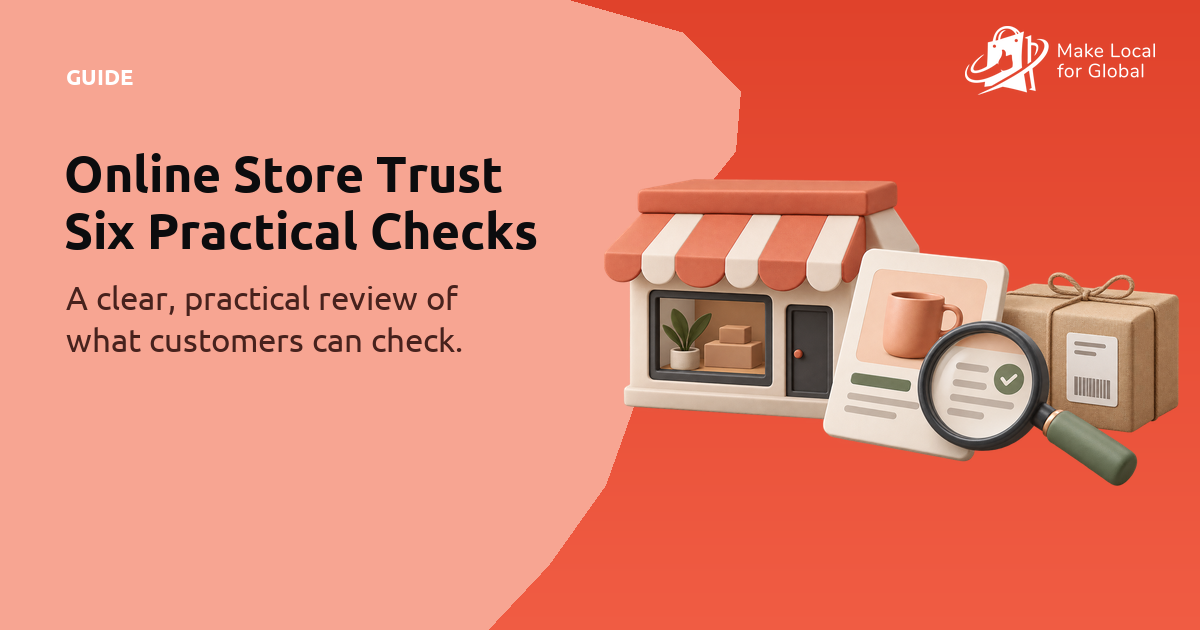
Use six practical checks to review supplier identity, samples, stock, dispatch, support and complete order costs before you commit.


A supplier can look dependable on a product page and still leave important questions unanswered. Before you make a customer-facing promise, check who you are buying from, what the delivered product is like, how orders move, and what happens when something goes wrong. These six checks help you build a small, evidence-led supplier review before committing to a wider launch.
This is not a guarantee that a supplier will perform perfectly. It is a practical way to spot unknowns, ask better questions and decide what to test next. You can also work through the free Dropshipping Supplier Assessment app to organise your evidence and download a personalised review.
Write down the legal or trading name, business contact, address, payment recipient and the terms that apply to your account. Check whether these details are consistent across the supplier’s site, order documents and payment instructions. If you are dealing with a UK business, Companies House provides a public register of company information. A register entry can help verify a company record, but it does not certify product quality, fulfilment performance or commercial suitability.
Be especially careful when payment details change unexpectedly. Confirm a new account or unusual payment request through a separate contact route you already trust. Save dated copies of the terms, including minimum orders, payment timing, cancellation rules and any fees.
Where practical, order the actual item you intend to sell. Compare the delivered sample with the listing and your intended product description: materials, dimensions, function, packaging and any performance or compatibility statements that matter to the buyer. A supplier’s catalogue photo is not evidence that the item arriving at a customer’s door will match your offer.

Keep a short record with the order date, photographs, observations and unresolved points. If a sample is not possible, ask for current product specifications and independent evidence where appropriate, and label the remaining uncertainty clearly. Avoid making claims you cannot support.
Find out where the order ships from, how stock availability is confirmed, when processing begins and what can change the normal dispatch estimate. Ask about order cut-off times, weekends, peak periods, stock shortages and how the supplier will notify you if an item becomes unavailable. Confirm the information for the destinations you plan to serve rather than assuming one estimate applies everywhere.
Map the steps from a customer placing an order to the item being delivered. How is your order passed to the supplier? What confirms acceptance? When does tracking become available, and what happens if the parcel is delayed, split, lost or cannot be fulfilled? If the supplier and your store use different systems, check how order references and status updates will be matched.

Shopify’s supplier guidance recommends considering order processing and testing a supplier with a sample order. Treat the test as a snapshot of one route and one point in time, not a promise that every future order will be identical. Record the confirmation, dispatch and delivery evidence you receive.
Identify the operational contact and the route for escalation. Ask what information the supplier needs to investigate a late, damaged or missing parcel, how replacements or returns are handled, and what response window is realistic. Then decide how you will keep your own customer informed. Outsourcing fulfilment does not remove your responsibility to make clear, supportable promises to buyers.

Put the contact, escalation steps and customer-update responsibility in a simple operating note. Clear records help you distinguish an isolated delay from a recurring issue that needs a change in your offer or supplier route.
Do not assess a supplier using the item price alone. Add delivery, transaction or platform charges, payment fees, currency conversion, minimum-order rules and likely replacement or return costs. Record amounts in £ using a dated exchange-rate assumption if the supplier charges in another currency. Check when charges apply and whether prices can change between quote and order.
Finally, consider what you would do if a product goes out of stock, the price changes or the supplier stops responding. A backup does not need to be a second supplier ready to activate immediately; it may be a pause rule, an alternative product, or a clear customer communication plan. The right option depends on your product, commitments and risk tolerance.
For each check, mark what is confirmed, what is partly known and what is still unknown. Prioritise the gap that could create the greatest customer or cash impact. Then run a small test, keep the records and revisit your decision when the evidence changes.
Use the free Dropshipping Supplier Assessment to score supplier evidence, identify priority gaps and download a practical next-step review.
PREFERRED SOURCE
Like what you’re reading? Add Make Local for Global as a preferred source on Google to see more of our articles when you search.
























Build your online presence without having to figure out everything yourself.