READY TO SELL Fruit Baskets ONLINE?
Get a store built for you in 5 days, plus training and support to help you start, run, and grow your Alternative business.

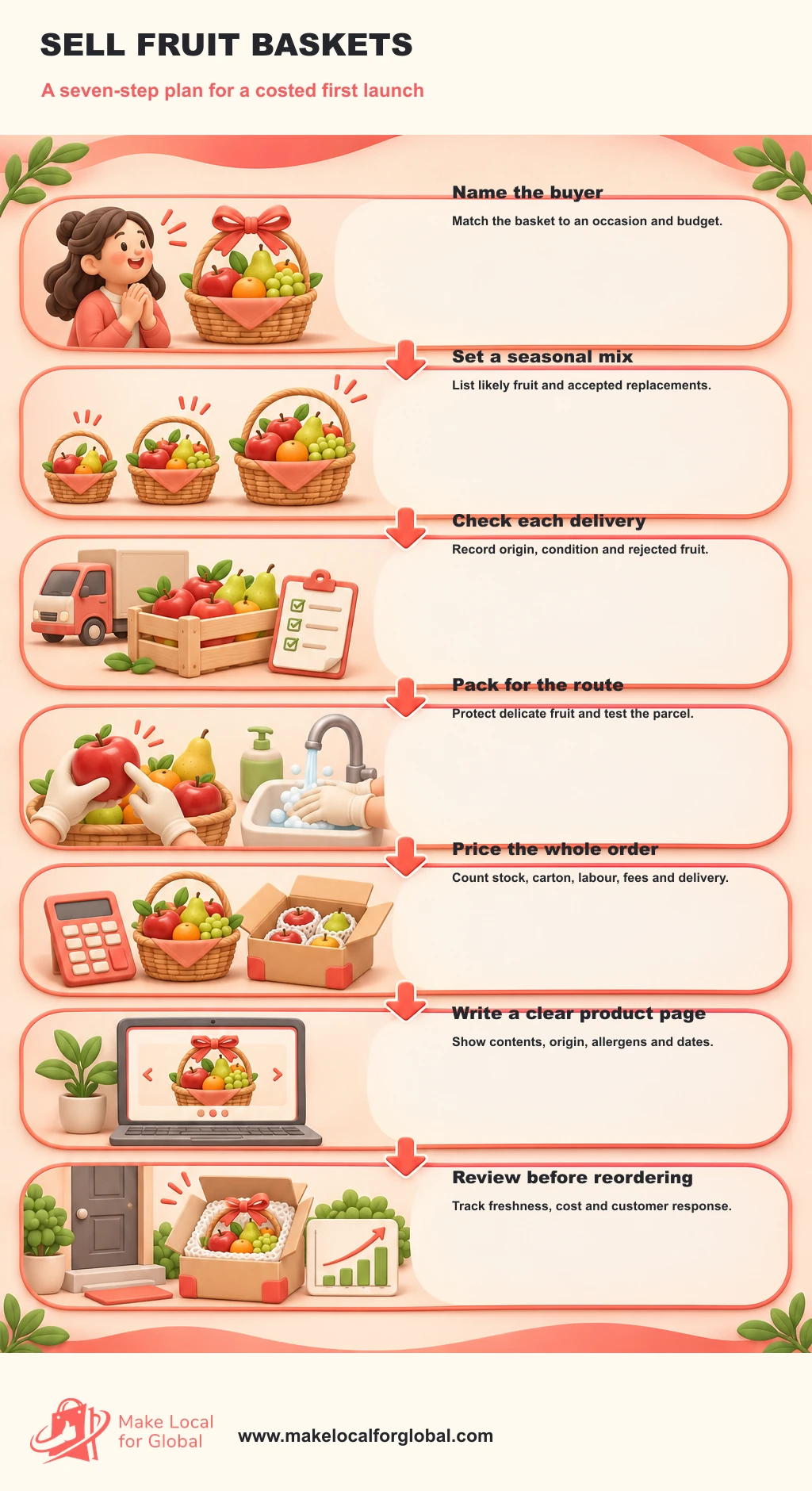
Plan a seasonal fruit basket offer with clear contents, checked produce, tested packing, delivery terms and a full order-cost example. Use a practical launch plan before committing to larger stock.


A fruit basket can be a thoughtful gift, a welcome box for a new home, a team thank-you or a practical weekly delivery. The seller’s job is to make the offer clear, source sound produce, pack it so fruit arrives in good condition and price every part of the order. A basket photograph may attract attention, yet a customer still needs to know what is inside, where the fruit comes from, when it will arrive and what happens if an item is unavailable.
To sell fruit baskets online, begin with one buyer and one occasion, agree a small seasonal range with reliable suppliers, write a safe handling and substitution process, test the full parcel, and calculate costs before setting the price. Register the food business with the relevant local authority at least 28 days before trading where that requirement applies. Treat fruit-only baskets differently from gift hampers containing foods such as chocolate, nuts, cheese or preserves: those additions bring extra allergen, labelling and VAT questions.
This plan is for a new UK seller shipping whole fresh fruit in gift or household baskets. Fresh-cut fruit has different handling and temperature risks. Get advice from the local authority and a competent food safety adviser before adding cut, peeled or prepared produce, chilled foods, alcohol or products shipped across borders.
“Fruit baskets” can describe several different offers. One buyer wants an attractive birthday gift with a note and a chosen delivery date. Another wants a weekly fruit box for a small office. A third wants a local, seasonal selection with visible farm and origin information. These people compare different details, so choose one as the starting point.
Write a one-sentence buyer statement. For example: “A small company administrator who sends welcome gifts to new staff and needs an invoice, a message card and a delivery date that can be booked.” The sentence suggests the first product questions: Can a buyer schedule delivery? Can the sender add a message? Is the contents list clear enough for the recipient? Does the seller provide a business invoice?
Other testable groups might include:
Do not assume that “healthy”, “local” or “premium” will persuade a buyer by itself. Ask what makes the gift suitable, what timing matters, which fruits they would avoid and how much they would expect to pay for the complete delivered order. A specific answer such as “I need a box that can arrive on Thursday and include a note” gives you a product requirement to test.
Start with conversations and small tests rather than a large basket inventory. Show three concept cards with the proposed contents, photo direction, price, delivery area and dispatch date. Make each card clear about whether it is available now, a planned idea or a sample. Do not accept an order or payment for a product you cannot supply on the stated terms.
Ask a potential customer to choose one offer and explain why. Record questions about fruit variety, season, delivery, packaging, quantity and substitutions. For an office buyer, ask how many people share the box and how often they would order. For a gift buyer, ask whether the recipient’s address and preferred date are known at checkout.
Compare meaningful actions with casual interest. A request for a quote, a completed basket enquiry or an order at your proposed price is stronger evidence than a social post like. Track the number of people who saw each concept, the source of those people and their next action. A small test will not predict future sales; it can show which unanswered questions should be resolved before stock is purchased.
A new seller can begin with three offers that share a packing method:
| Offer | Example purpose | What to define before launch |
|---|---|---|
| Everyday fruit box | A household or small team | Count or weight, fruit mix, delivery area and dispatch days |
| Seasonal gift basket | Birthday, thank-you or welcome | Basket style, gift message, delivery date and substitutions |
| Larger sharing box | Office, family gathering or group gift | Approximate servings, contents, packed dimensions and carrier limit |
These are starting concepts, not standard quantities. Test how much each basket holds, how much it weighs and what arrives in good condition after the route you intend to use. If the larger offer requires a different carton or carrier service, cost it as a separate product.
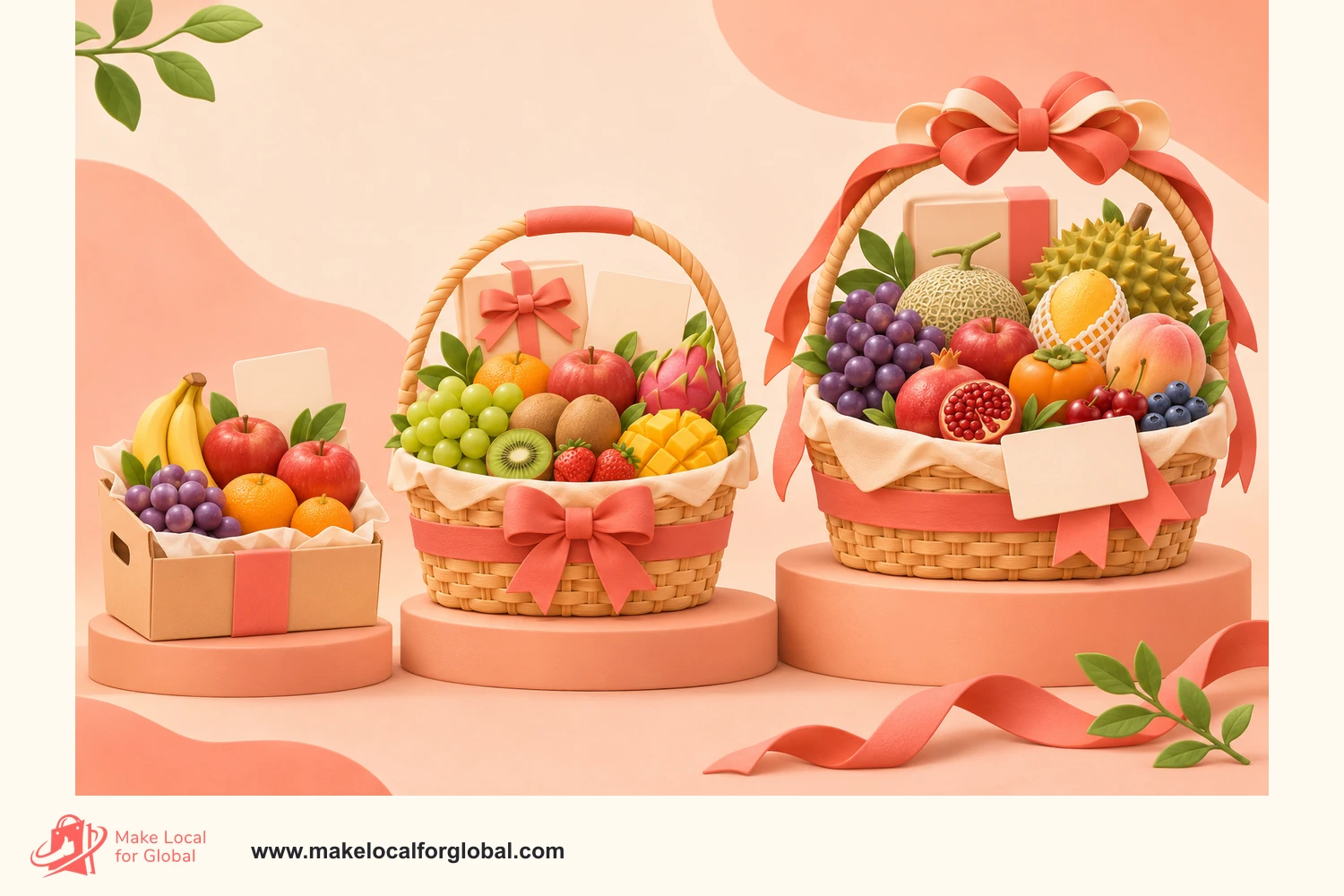
Decide whether the offer is sold by item count, weight or a named selection. A count-based basket is easy to picture, but fruit sizes vary. A weighed box gives a measurable quantity, but the actual fruit can look different from the photograph. State which method you use and do not imply an exact count where seasonal substitutions change it.
Use a contents list that helps someone picture the delivery. “Seasonal fruit basket” gives little detail. A sample description could read: “A 2.5 kg selection of whole fruit, usually including apples, pears, citrus and grapes. The mix changes with season and supply; the order confirmation lists the selected items.” Use the weight and mix only after weighing real packed baskets and checking the supply plan.
Fresh supply varies. A grower may have a short crop, a wholesaler may change an origin or fruit may fail your incoming check. Decide what the customer has agreed to before the first order.
Options include a named seasonal mix with a clear “may vary” explanation, a customer choice from allowed replacements, or a contact-first rule for a material change. Do not describe a basket as containing a named fruit if it may be replaced without disclosure. Do not substitute an item that changes the offer from fruit-only to a mixed food hamper without checking ingredients, allergen information, customer consent and VAT treatment.
Set boundaries for the replacement. A substitute should be suitable for the same use, in comparable condition and value, with the origin information updated where required. If there is no acceptable replacement, contact the buyer and offer a practical choice such as waiting, swapping, or cancelling the affected order with a refund. Keep the message and the final contents record against the order.
Choose suppliers by reliability, traceability, quality, minimum order, cut-off time, delivery schedule and willingness to share origin information. Potential routes include a local grower, a regional wholesaler, a produce market, a food-service distributor or a specialist fruit supplier. Compare them using the same list of questions, not just the price per kilogram.
Ask each supplier:
Request sample cases from likely suppliers. Compare fruit appearance, condition, usable yield, packaging waste and consistency. Keep the supplier’s product description, invoice, delivery date, origin information and any lot identifiers together. Food businesses have traceability duties; the GOV.UK traceability guidance explains the “one step back” record for incoming food and the wider records needed when supplying another food business.
Keep supplier details linked to each order batch. If a customer reports a problem, you should be able to work out which supplier delivery was used. A spreadsheet can record received date, supplier, fruit, origin, case or batch reference, quantity accepted, quantity rejected and the reason. If the seller supplies offices or another business, the traceability record may need information about that business customer. Official guidance handles direct sales to the final consumer differently.
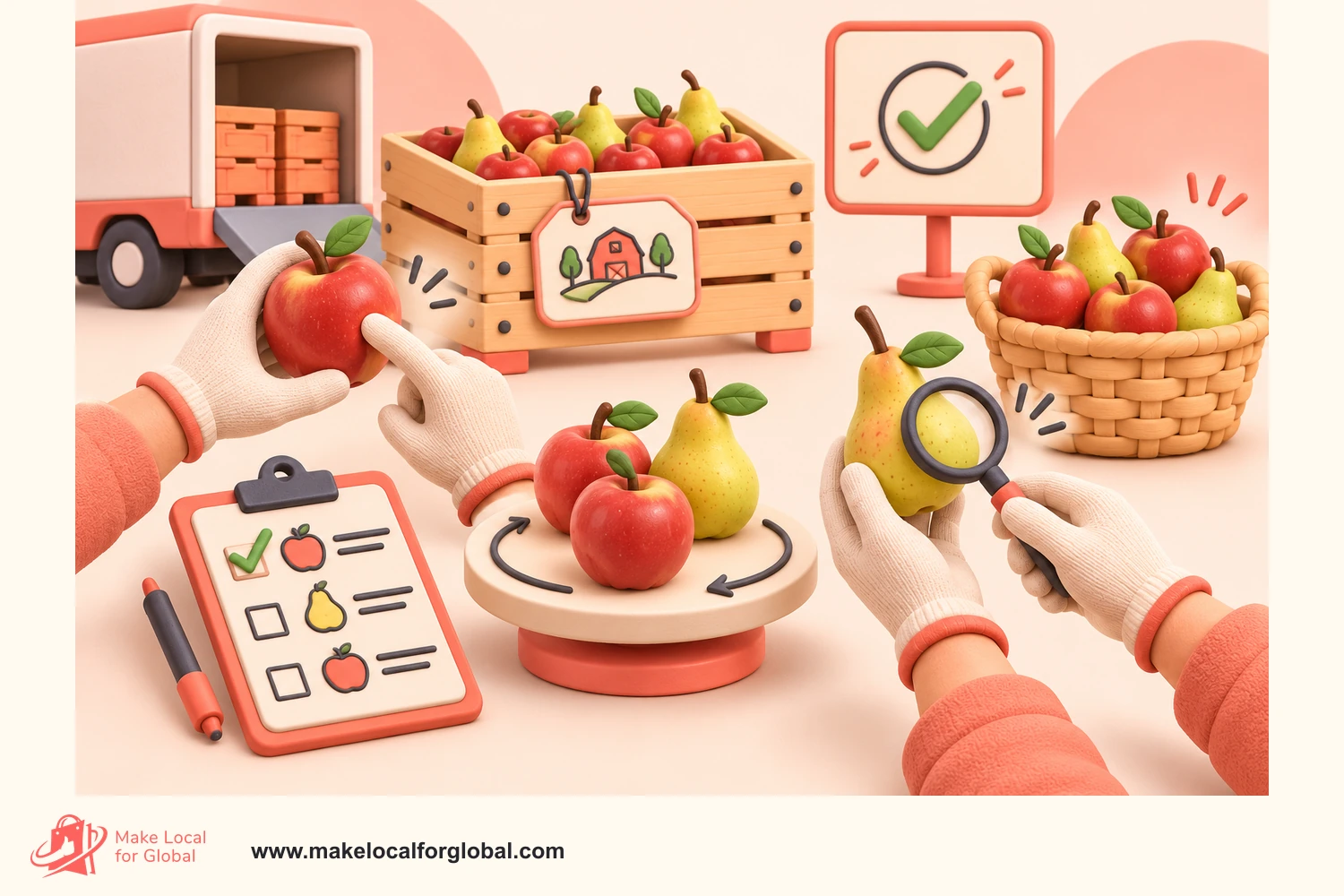
Create a short receiving checklist and use it each time. Check that the cases match the order, produce is intact and sound, fruit is clean as far as practical, no item is rotten or severely bruised, no unusual smell is present and the fruit is at a suitable stage of ripeness for the promised dispatch date. Record rejects and photograph a damaged case before disposal or supplier contact.
Separate inspection from cosmetic preference. A small variation in shape may still be acceptable; visible rot, severe damage or contamination is not a gift-ready standard. Set written thresholds with the supplier: for example, how many damaged pieces trigger a case query, what “ready to send” ripeness means for each fruit, and when a short-dated case must be declined.
Fresh fruit and vegetable marketing standards apply through production and sale. In England and Wales, GOV.UK guidance on fresh produce standards explains that most produce follows the General Marketing Standard, with a Specific Marketing Standard for listed items such as apples, citrus, pears, grapes and strawberries. Requirements differ by jurisdiction, so use the relevant guidance for Scotland or Northern Ireland. The rules can cover condition, quality class, origin, weight and other particulars.
For a retailer selling produce online, the customer must receive the same product information before purchase that they would receive in a shop. The GOV.UK guidance explains how to show origin information and when more than one possible origin may be listed. Keep the online contents description aligned with the fruit actually dispatched and update it when a sourcing change affects the offer.
Whole fruit still needs safe storage and handling. Write down the route from supplier receipt to packing bench: where cases are held, how the work area is cleaned, how staff wash hands, how damaged fruit is separated and how long a packed order may wait before collection. A small seller should describe the actual work and risks in a food safety management system rather than relying on a generic policy copied from another business.
The Food Standards Agency explains that food businesses must use HACCP procedures or a HACCP-based food safety management system. Its starting a food business guidance links to the Safer Food, Better Business resources. Contact the local authority food safety team to confirm which record set fits your operation. A whole-fruit packing operation differs from one that washes, cuts, peels, chills or combines foods.
Plan a clean packing routine:
Do not create extra handling steps without a reason. Washing, waxing, cutting or repacking produce can introduce new controls and labelling questions. Check local guidance before offering these services. If your plan includes ready-to-eat cut fruit, review hazards, temperature controls, shelf life, cleaning and delivery with the local authority before you sell it.
A basket of whole fruit can remain a straightforward offer. The risk profile changes when you add chocolate, dried fruit, nuts, biscuits, cheese, honey or other packaged food. These products may contain regulated allergens, and a gift basket can bring together items made in different facilities. Keep the manufacturer’s ingredient and allergen records for each add-on.
When food is sold online or by phone through distance selling, the Food Standards Agency says allergen information must be available before the purchase is completed and when the order is delivered. See its allergen guidance for food businesses. Put the information where a buyer can find it before checkout and include an accurate written record with the basket. Keep it current when a supplier or recipe changes.
Avoid promising “allergen-free” or “safe for everyone” unless your controls and evidence support the claim. A supplier’s package may carry a cross-contact statement. The seller should not remove that context or rely on a general note such as “ask us for details” when clear product information can be provided before purchase. If the business cannot provide accurate information for a particular add-on, leave it out of the online offer.
Set a message-card policy too. Customers may write dietary requests or medical information in a gift note. Collect only what is needed to fulfil the order, restrict staff access and do not promise a substitution that the operation cannot safely deliver. A plain fruit-only option can help customers who do not want the seller to choose mixed food items for them.
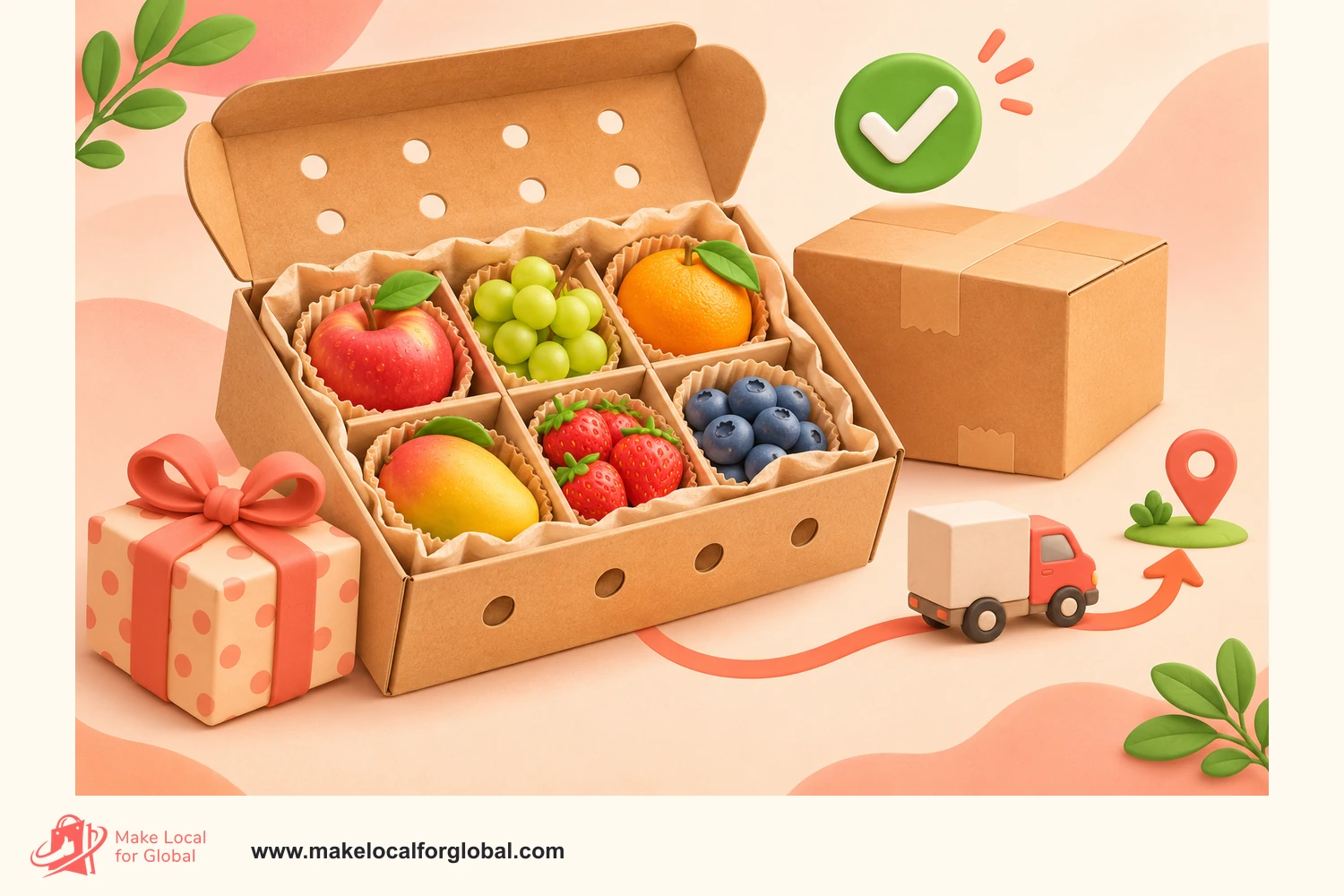
Packaging has two jobs: protect the fruit through handling and make the parcel presentable. A reusable wicker basket may look good in a photograph but add weight, cost and breakage risk. A rigid recyclable carton may travel more easily yet need a liner or dividers. Test materials with real fruit, not empty display baskets.
Check that the packaging:
Place firm items at the bottom and delicate or easily marked fruit where it will not carry weight. Do not overfill a carton to improve the photograph. Use separators only where they reduce rubbing or impact; extra material creates cost and waste. Add a short storage note when it helps the recipient, such as keeping the fruit in a cool, dry place or separating items that ripen at different rates. Give fruit-specific advice only when supported by the supplier or competent guidance.
Photograph the actual packed basket from above and from the side. Include the packaging, card, protective materials and the fruit scale. If props are not included, say so. If a ribbon or decorative basket is included, show whether it stays with the customer and make its value and contents clear.
Fruit is time-sensitive. Pick dispatch days that match supplier arrivals, packing capacity and carrier collection. A shop that accepts orders seven days a week but packs only twice a week should display that schedule before the buyer pays. Add a cut-off time and explain whether it refers to order placement, payment confirmation or a working day.
Test the full route with a packed sample. Send it to a realistic destination and ask the recipient to photograph the outside, open the parcel and record the condition immediately. Repeat in warm and cool conditions if your trading season includes both. Note transit time, crushing, moisture, loose fruit, temperature concerns and whether the carrier left the parcel somewhere unsuitable. These checks help you choose a delivery service; they do not guarantee performance on every future route.
Offer a narrower delivery area first if you can manage local delivery better than national parcel routes. A local route can reduce transit time and make exact delivery windows easier, but it adds driver time, fuel, route planning and failed-delivery risk. Include those costs in the price. For nationwide service, review the carrier’s current fresh-food rules, size limits, delivery days, delay process and compensation terms before you list an option.
State the delivery details in plain language: where you deliver, estimated arrival range, dispatch day, weekend and bank-holiday limits, whether a signature is required and what happens if the recipient is not home. Do not promise a timed slot unless the carrier contract supports it. For a gift, let the buyer select a preferred delivery date only if you can reserve produce and pack on the right day.
Prepare a late-delivery procedure. Identify orders that have not received a carrier scan, contact the buyer when a delay is likely to affect freshness, and keep the order’s dispatch evidence. Define when you will replace, refund or investigate a parcel using your customer terms and legal obligations. A rapid, clear response can resolve a problem more easily than a long exchange about who is at fault.
The fruit cost is only one part of a basket. Include packaging, packing time, inbound delivery, outbound carrier, payment fee, rejected produce, spoilage, refunds, customer acquisition and any discount. If the buyer expects a gift message and a chosen delivery date, cost the labour and scheduling that make those features possible.
The following illustration uses a £44 customer price for a fruit-only gift basket delivered in Great Britain. The figures are planning assumptions, not supplier quotes, market prices or results. The seller is assumed not to be VAT registered, and all figures are treated as cash costs for this example.
| Cost per order | Illustrative amount |
|---|---|
| Whole fruit in the packed mix | £13.50 |
| Allocated inbound supplier delivery | £1.20 |
| Carton, dividers, liner and message card | £2.20 |
| Packing labour allowance | £3.50 |
| Outbound tracked delivery | £6.50 |
| Payment fee allowance | £1.10 |
| Spoilage, claims and refund reserve | £2.50 |
| Customer acquisition allowance | £3.50 |
| Total variable cost | £34.00 |
| Customer payment | £44.00 |
| Contribution before fixed overhead and tax | £10.00 |
Calculation: £44.00 − £34.00 = £10.00. Replace every assumption with a supplier invoice, carrier quote, payment provider fee, observed packing time and actual order data. A reserve is a planning choice, not proof of a future loss rate. Contribution is not net profit. It does not cover fixed software, insurance, rent, equipment, owner time beyond the packing allowance, accounting or income and corporation taxes.
Test a downside case. If the carrier price rises by £2, fruit rejections add £1 per order and the acquisition cost reaches £6, variable costs become £40.00 and contribution falls to £4.00. If that does not cover the business’s overhead and pay target, consider a different box size, local delivery, a minimum order, a more efficient packing method or a higher price. Do not cut the fruit quantity quietly to protect margin.
Add VAT analysis before offering mixed hampers. HMRC’s Food products VAT Notice 701/14 says a single-price supply containing items with different VAT treatments can be a mixed supply. It gives food hampers and gift packs as examples. A fruit basket with a decorative reusable basket, standard-rated sweets, alcohol or other items may need a different analysis from a simple box of fruit. Ask an accountant to review the actual contents, packaging, price structure and the business’s VAT status.
Use a model for each offer and delivery zone. A large box may have a higher product value yet cost much more to ship. A corporate bulk order may use one route but need individual message cards, multiple addresses or a consolidated invoice. Make sure every distinct service feature is priced and workable.
The product page should answer the questions a sender or recipient will ask before ordering. Use a product-specific title such as “Seasonal Fruit Gift Basket, Delivered in Bristol” only if the delivery area and contents description are accurate. Avoid repeating “fruit basket” in every heading. Search-friendly writing should make the offer easier to understand, not harder to read.
For each offer, provide:
Use one hero photo of the actual basket and several details: a contents close-up, a side view that shows depth, an image beside a common object for scale and a packed parcel photo. For seasonal products, say when the photograph was taken and whether the mix may change. Do not show fruit that is absent from the offer for styling alone.
Show a sample contents list directly beside the order button. If an origin may change, explain the rule and identify how the final origin will be confirmed. The GOV.UK food labelling guidance explains that required food information for online or mail-order sales must be available before the customer buys, with exceptions for date marking information. The exact information depends on whether the item is loose, prepacked or part of another food product.
Keep terms and refund information readable. The online and distance selling guidance lists trader details, product description, full price, payment and delivery information, and cancellation details that must be supplied before an order. Make the delivery and complaint route visible on mobile; a customer buying a gift should not have to search the footer to find the date policy.
Fresh fruit can deteriorate rapidly, and the Consumer Contracts Regulations include an exception to the normal distance-selling cancellation right for goods liable to deteriorate or expire rapidly. The exception is product-specific. Do not treat it as permission to refuse every refund or to ignore a damaged, missing or misdescribed order. Regulation 28 sets out the relevant exception. The Consumer Rights Act still gives consumers rights when goods do not conform to the contract.
If a basket includes non-perishable extras or a reusable gift container, ask for advice on how cancellation rules apply to the complete package. Do not write “no refunds on food” as a universal term. State the process for late, damaged, incomplete or incorrect deliveries and follow the rules that apply to the specific goods and customer situation.
Create a short complaint checklist. Ask for the order number, delivery date, outer-box photo, contents photo and description of the problem. Request only evidence that helps resolve the issue. Decide who will assess it, what replacement stock is available and how quickly the customer will receive an answer. Keep the record with the order and use repeated issues to adjust the pack, supplier or carrier.
An own online shop gives you room to present contents, origin, delivery dates, substitutions and customer terms in one place. A marketplace can place the offer in front of existing shoppers, but check its food category rules, seller fees, delivery standards, payout timing and returns process before listing. Social platforms can introduce the gift but should link to a page where the buyer can see all required details before payment.
Start with one main checkout route and one or two ways to reach the buyer you selected. For corporate gifting, approach a small group of local businesses with a one-page offer sheet and a sample order process. For household boxes, test local search terms and a small delivery-radius campaign. For gift baskets, publish a page that answers dates, messages and contents and ask existing customers for feedback after delivery.
Potential search themes include “seasonal fruit gift basket delivery”, “fruit basket delivery [town]”, “office fruit delivery [town]” and “non-alcohol gift basket”. Use a phrase only when the page serves that search. Do not create a separate thin page for each nearby town unless you can give real delivery information and local evidence.
Track visits, product-page questions, add-to-basket actions, completed orders, delivery area, basket choice, damage reports and repeat purchase. Set one change per test. If you revise the price, photograph, delivery promise and contents together, you will not know which change shifted customer behaviour.
Relevant MLFG reading can help you compare adjacent offers. The guide to selling artisan bread online covers sourcing and food-product decisions; selling floral arrangements online raises similar questions about delivery windows and perishability. For a related product, see selling apple slicers online. Use these as comparisons, not as substitutes for fruit-specific food safety and origin requirements.
See the MLFG fruit basket service page, then compare the store setup with your own delivery area, contents and costs.
The calendar below assumes you have already selected a likely customer and are ready to research suppliers. Move the dates if food registration, local authority advice, supplier lead times or packaging tests require more time.
At the end of the week, choose the offer that solves a clear need and can be supplied with records. If buyers disagree on the contents, test two distinct options rather than combining unrelated requests into one costly basket.
The UK Food Standards Agency’s food business registration page explains that online sellers can fall within food business registration. Registration and the specific food safety controls depend on where the business operates. Check the nation-specific requirements, especially if you plan to sell in Northern Ireland or Scotland.
Keep the sample photograph, supplier invoice, test notes and cost calculation together. If the box arrives crushed or the final weight changes the carrier price, repair the pack or offer before advertising it.
Do not scale from views alone. A first-month test should teach you which basket, price, packing method and dispatch schedule can be managed reliably. A decision to pause or change the offer can protect cash as effectively as a decision to order more.
Enter your fruit, packaging, labour, carrier and payment costs before you set the delivered price.
A styled photograph with five types of fruit can set an expectation the supplier cannot meet every week. Photograph the real offer, list the contents or explain the substitution policy beside the image, and update the page when sourcing changes.
Whole fruit, washed produce, cut fruit and mixed food hampers create different controls. A seller who adds fresh-cut fruit or chilled foods should review food safety, shelf life and cold handling before accepting an order.
Fresh produce has marketing standards, and origin information can be required. Keep supplier records and make sure the online description and delivered basket stay aligned with the relevant rules.
Chocolate, nuts, biscuits, cheese and reusable containers can change food information and VAT treatment. Check each item before grouping it into one price, and show customers what is included.
A retail competitor’s price does not reveal supplier cost, packing time, carrier charge, payment fees or waste. Build a cost model from your own quotes and revise it after real orders.
A gift may be tied to a birthday or work event. Offer a date only if the supplier, packing schedule and carrier can support it; state the service window and contingency in the checkout flow.
Some perishable goods may fall within a cancellation exception, but this does not remove rights when an order is faulty or fails to match its description. Write a specific process and take advice for mixed baskets.
Food businesses that sell, store, handle, prepare or distribute food may need to register with the local authority, including online and home-based operations. The Food Standards Agency says registration should be completed at least 28 days before trading where that requirement applies. Contact the local authority for the rules that cover your food handling and location.
You can describe a seasonal selection if the wording makes the offer clear and the product information required for the produce is provided. State how contents can vary, how replacements are chosen and how the origin will be communicated. Check the marketing standard that applies to each type of produce.
Choose a method you can measure consistently. Weight makes quantity easier to compare; by comparison, item count can be easier to picture. State the method, use weighed test baskets to set a realistic amount and avoid implying a fixed count when supply can change.
Yes, if you can provide accurate product, ingredient and allergen information and meet the relevant food safety requirements. For food sold online, allergen details must be available before purchase and with delivery. Mixed contents can bring additional VAT questions, so check the precise package with an accountant.
Choose fruit suited to the route and dispatch schedule, protect it from movement and crushing, and test a packed parcel through the carrier you plan to use. Record condition on arrival and change the packaging or service if the test shows bruising, moisture or delays. Do not promise a shelf life that you have not verified.
Show contents or the selection method, quantity, origin information where required, substitution rules, total price, delivery area, dispatch timing, message-card options, allergens for add-ons, storage guidance and a contact route for problems. Photograph the basket and parcel you actually send.
The Consumer Contracts Regulations contain an exception for goods liable to deteriorate or expire rapidly, but it is not a blanket rule for every product in a basket or every kind of refund. Customers retain rights when goods do not meet the contract. Get advice if the offer combines fruit with durable gifts or reusable packaging.
Only if the carrier, packaging, supplier timetable and service policy have been tested for the area. A local delivery pilot can help a seller learn how the contents behave in transit, though local routes still need to be priced for travel time and failed deliveries.
Set the first batch from confirmed supplier minimums, customer evidence, cash available and the number of days you can hold each fruit safely. Keep the range small and dispatch on fixed days. Increase quantities only after you understand demand, waste and delivery performance.
Do not assume so. HMRC explains that food hampers and single-price packs with different VAT treatments can be mixed supplies. The outcome depends on the contents, packaging and supply structure. Ask an accountant to check your exact basket and VAT status.
A strong first fruit basket offer is one you can source, describe, pack, deliver and cost with repeatable records. Begin with one occasion and a short seasonal range. Verify the contents and origin, keep the allergen and substitution information current, test the parcel, then compare real customer response with the full cost model.
Use early orders to improve the details that matter: which fruit arrives well, how much pack time each size needs, which delivery routes stay reliable and what customers ask before checkout. Add another basket only when the next offer solves a clear buying need and can be supplied with the same level of care.
Explore MLFG’s free business apps for planning a product test, checking assumptions and setting practical next steps.
PREFERRED SOURCE
Like what you’re reading? Add Make Local for Global as a preferred source on Google to see more of our articles when you search.

Build your online presence without having to figure out everything yourself.