READY TO SELL Fuzzy Slippers ONLINE?
Get a store built for you in 5 days, plus training and support to help you start, run, and grow your Alternative business.

Learn how to choose a focused fuzzy slipper range, check fit and materials, meet footwear labelling duties, price a complete order and test demand before buying more stock.

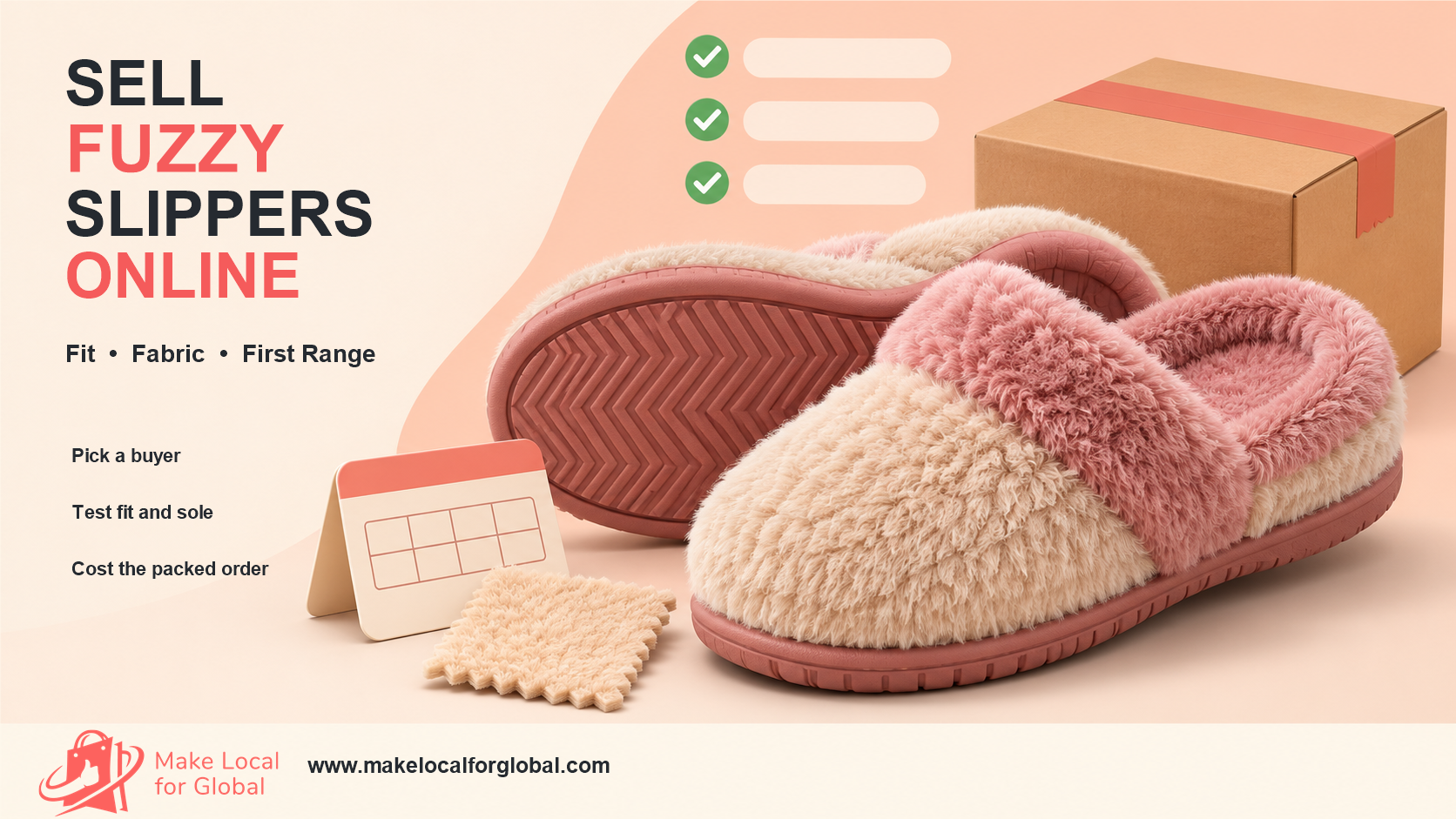
Fuzzy slippers look like an easy first product: a soft upper, a sole and a giftable price. Selling them well takes more care. The buyer cannot feel the lining, check the fit or bend the sole through a product photo. Your range, sample checks, size information, care details and parcel cost have to answer those questions before the pair reaches their door.
The practical route is to start with one buyer and a narrow range, order samples from the exact production version, measure each size, check the footwear label, then price a complete packed order. Treat comfort, warmth, grip and washability as claims that need evidence. Use early questions and return reasons to decide which colours and sizes to keep.
Use your sample measurements, verified materials and packed-parcel size to plan a shop page that answers the questions slipper buyers ask.
“Anyone who wants cosy feet” does not tell a new seller which product to buy. A person buying house shoes for a cold bedroom may want a closed heel and a washable lining. Someone who needs to step outside briefly may look for a more substantial sole. A gift buyer may care about presentation and a wide size choice. A person in shared accommodation may prefer a compact mule that fits beside a bed. Those are different jobs, even when the products are all fluffy.
Choose one primary buyer for your first test. Write a single line describing the person, the moment and the problem the slipper should address. For example: “I sell easy-to-slide-on indoor slippers for adults who want a warm pair beside the bed.” Keep this as a working hypothesis, not a claim that a group is large or underserved. It gives you a basis for choosing shape, price, product details and photos.
Ask ten people who match the intended buyer about their last slipper purchase. What shape did they choose? Which size did they buy? Did they wear socks with the pair? What made them return or stop wearing it? Ask what they actually did, rather than whether they like a mock-up. Someone saying “looks nice” tells you little. Someone explaining that a narrow toe seam rubbed after a week gives you a testable product question.
Read recent reviews of comparable slippers, including lower ratings. Group comments into fit, lining, warmth, outsole, stitching, smell, wash care, packaging, delivery and size-chart confusion. Note the product, date and exact issue in your research sheet. Reviews can reveal questions worth testing; they do not prove that every pair from a supplier shares the same fault. Check whether repeated comments relate to one colour, size or production batch.
Before paying for stock, show target buyers a one-page concept with the shape, proposed materials, size range, price hypothesis and delivery promise. Ask them to choose between real options: mule or closed heel, neutral or bright colour, one pair or gift set. Record their choices and their reasons. Then compare those answers with search suggestions, marketplace listings and supplier minimums. The first decision is a small, measurable test, not a full collection.
“Fuzzy slippers” covers several constructions. A mule leaves the heel open and is easy to slip on. A closed-back slipper can feel more secure, though the heel shape and opening need to fit the intended buyer. A bootie rises around the ankle and uses more material. A moccasin style has a stitched-looking apron or seam. A slide may expose toes and use less upper material. These styles are not interchangeable for fit, warmth, packing volume or the customer’s intended use.
Build a small range around one shape before adding every silhouette. A workable first offer might be one mule in two colours and a compact set of adult sizes, or one closed-back style in a neutral and a seasonal colour. Keep the construction consistent so the size chart, photography, supplier specification and stock records remain manageable. Add a bootie or outdoor-use version only after buyer evidence supports it and you can test its distinct claims.
Set an entry, core and gift offer only if each option has a clear reason to exist. An entry pair may use a simple textile upper and basic packaging. The core pair could add a removable insole or a denser lining if the sample and supplier information support those facts. A gift version might add a presentation box or a second pair. Do not call one version “premium” on the strength of a darker colour or higher packaging cost. Explain the actual difference.
Colour affects more than appearance. Cream, grey, rose or dark tones may photograph differently under warm and cool lighting. Pile can show dust, lint or compression in different ways. A pale sole may make marks more visible. Order or inspect a sample of every colour you intend to sell. Do not assume that the factory’s photograph shows the exact shade, surface texture or trim in the production batch.
Pair each option with a stock code that records shape, colour, size and construction. “Fluffy slipper” is not enough to distinguish a closed-back size 6 in oat from a mule size 6 in rose. If the supplier uses one code for all colours, create your own SKU map and agree a written translation with the supplier. A short range with clean records is easier to replenish than a broad set of variants that look similar on a shelf.
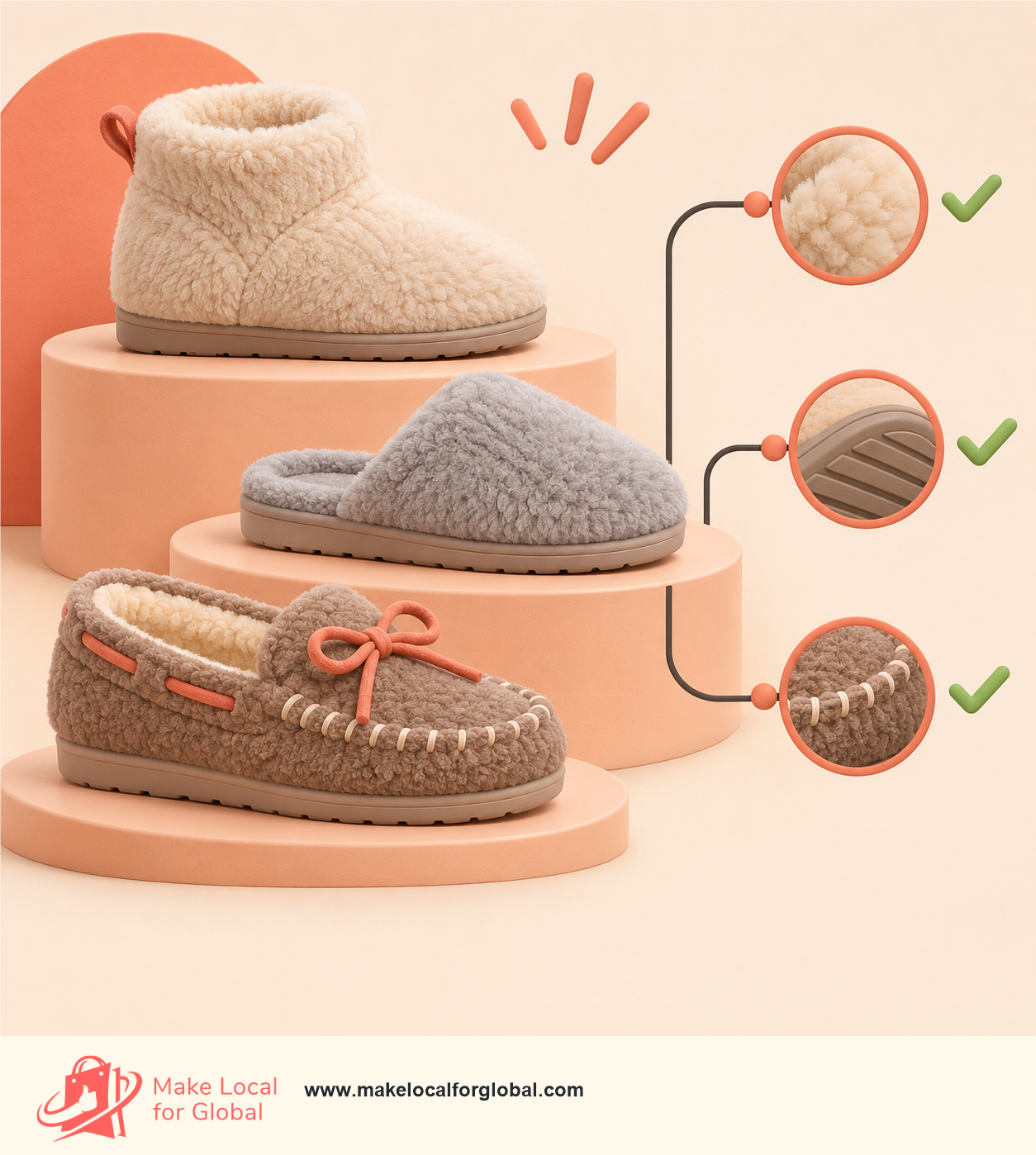
Ask what each part is made from. A fuzzy upper, lining, footbed, insole, midsole and outsole can use different materials. “Faux fur”, “plush”, “sherpa”, “fleece”, “wool blend”, “memory foam”, “rubber sole” and “vegan” do not tell a buyer the full construction. Get the supplier’s written specification for the exact model and colour. Check that it names the upper, lining and sock, footbed and outer sole separately.
Polyester plush can have a different pile length, density and backing from a wool-rich textile. A soft surface in a sample photo does not show how it will mat after wear or what care method it can tolerate. Natural wool or shearling may bring a different feel and care requirement from synthetic pile. If a product contains animal-derived material, ask the supplier what it is and retain evidence for any origin, welfare or composition wording you plan to use. Do not make a sustainability or ethical claim from a catalogue adjective alone.
The sole needs its own description. A lightweight foam layer, an EVA-style sole, a rubber-like compound and a textile-covered base can feel and wear differently. Ask for the material name, thickness, construction, care limits and whether the supplier has test information for the stated use. Inspect the actual outsole surface. A textured pattern is visible evidence of a pattern; it is not by itself proof that a slipper is “slip-proof” on every floor.
If an insole is removable, confirm that it is intended to be removed and that the replacement is available. If it is permanently stitched or bonded, make that clear. Ask whether the footbed compresses after repeated wear and how much the thickness can vary. A removable insert may simplify some cleaning instructions, but it does not mean the whole slipper can be machine washed. Use the actual maker’s care guidance.
Compare suppliers on the landed offer rather than the first unit price. Ask about sample fees, minimums per style and colour, size runs, restock time, packaging, defect replacement, payment terms, transport and import costs. A local wholesaler can make a small first order practical; a direct factory may offer more choice with a higher minimum and longer lead time. A dropship supplier may reduce stock at home but can limit control over size consistency, dispatch, packing and returns.
Before placing a deposit, request a sample from the exact style, material, colour and size run you plan to sell. Obtain an item specification, a photo of the production version, a size chart, a label sample, approved care instructions, carton dimensions, pair weight, minimum order and lead time. Ask how a material, supplier or factory change will be communicated. Save the written answers beside the order and sample record.
Slipper sizing creates avoidable returns when the page relies only on a broad range label. Supplier size conversions vary. “UK 5–6”, “EU 38–39” and “small” may not mean the same fit across brands or shapes. Fuzzy lining adds volume; a thick footbed can make the toe feel shorter; an open heel can feel loose even when the foot length appears right. Measure the product you receive rather than copying a generic conversion chart.
Use a ruler or measuring board to record the internal usable length of each size, from the heel cup to the front point where the toe meets the upper. Measure the footbed width at the widest point. Record the outside length separately, since the outsole does not show the room inside the slipper. If the shape curves upward at the toe, note where the internal measurement stops being usable. Repeat each measurement on more than one pair to see whether the supplier’s size run varies.
Ask the supplier for the intended foot-length range and method used to size the slipper. Compare it with your own measurement and the actual sample fit. A size chart should say how a customer can measure their foot, whether to measure in socks, and how to choose when between sizes. Tell shoppers to size up only when the fit tests support that advice across the size run. Record which test person wore which size and whether the foot was bare or in the socks you recommend.
If the product is sold as one size, state the measured insole length and width, the maker’s intended range and what you observed in a sample. Avoid implying that one pair fits everyone. If the upper stretches or the opening is elasticated, measure its opening and describe that construction without promising fit for all widths. If a wide-foot customer needs another option, give them a simple way to contact you before purchase.
Photograph the slipper beside a ruler or provide the key measurements in text. Show the opening, heel depth, toe shape and sole thickness. Use consistent angles and lighting across all sizes and colours. The chart should sit near the size selector, where it can inform the choice. A long sizing paragraph hidden near the bottom is less useful than a small, clear chart beside the product options.
Track return reasons by SKU and size. “Did not fit” is too broad to guide a correction. Ask whether the slipper felt short, narrow, loose at the heel, too high over the instep or bulky with socks. If one size repeatedly runs short, compare the listed internal measurement with the sample and supplier run. Update the size chart or pause the affected stock until you know what changed. Do not dismiss fit feedback as personal preference when a measurable inconsistency may exist.
Inspect each sample in bright, neutral light. Compare its upper, lining, footbed, trim, stitching, sole and label with the written specification. Run a finger along every seam and edge. Check for loose threads, uneven adhesive, a gap between upper and sole, a sharp trim end, detached decoration or a twisted footbed. Turn the pair over and look at the tread, edge finish and bond. Make a dated photo record of any concern and tell the supplier before approving the sample.
Try the slipper on both feet, since a pair can differ. Walk on the intended indoor surfaces at a normal pace. Check that the heel stays in place for a closed-back style, the opening does not catch, the toes have room, and the sole bends where the foot bends. This is a practical sample review, not a certified slip-resistance or durability test. If the slipper will be promoted for stepping outside, test that exact construction for the stated use and obtain relevant supplier evidence before making the claim.
Follow the care instructions supplied for that product. If the label says hand wash, do not put the sample through a machine cycle to see what happens. If the maker permits machine washing, follow the stated temperature, cycle, detergent and drying directions. Photograph the pair before and after the recommended process. Look for colour transfer, pile matting, shrinkage, distorted insoles, loose seams, delamination and a change in the outsole. Do not advertise a wash test as formal laboratory evidence.
Check odour after the sample has been unpacked and aired for a reasonable period. Keep packaging and sample details, since a smell may come from packaging, adhesives or storage. Ask the supplier what material or process is involved and whether the issue occurs in the production run. Do not mask a strong odour with fragrance or state that a pair is “chemical-free” without suitable evidence.
Use a short sample form for every style and colour. Include supplier, model code, size, colour, batch, received date, actual weight, internal length, width, outsole construction, label details, fit notes, care test, photos, issues and a decision. Mark each point as pass, follow-up or stop. Keep one approved pair in a clean bag as a comparison sample for later deliveries. When a new shipment arrives, compare its pile, shade, stitching and measurements against that retained pair.
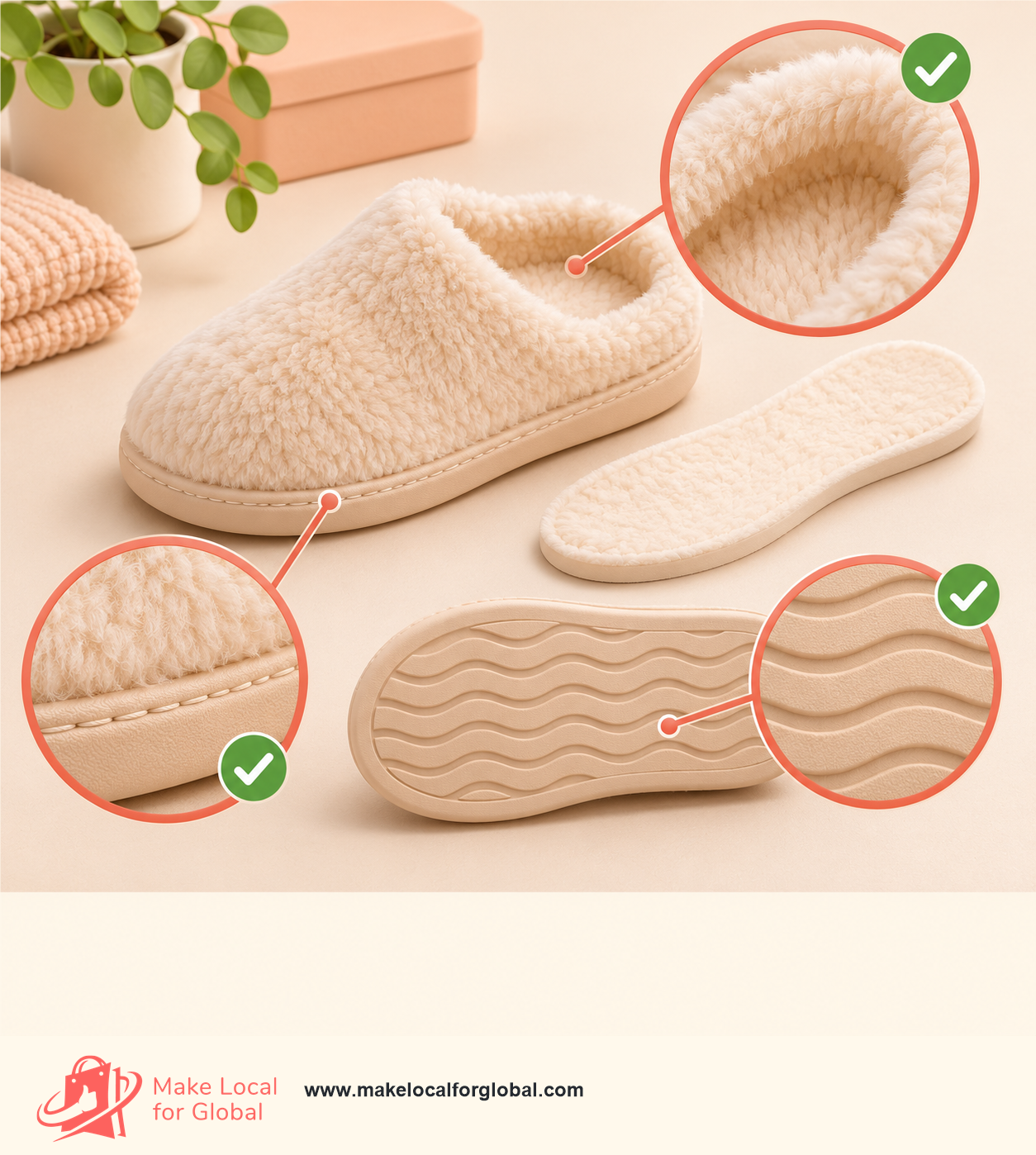
Words such as “cosy”, “soft” or “plush” describe qualities a shopper can assess from the material and sample. “Orthopaedic”, “therapeutic”, “prevents falls”, “non-slip”, “waterproof”, “odor-free”, “hypoallergenic” and “all-day support” can imply specific performance or health outcomes. Use them only when you have evidence for the exact wording and the finished model. A tread pattern, foam insert or soft lining is not enough to support every claim associated with it.
If grip is part of the offer, ask the maker what surface and test method the claim refers to. Check what the product does on the floor types relevant to the claim, in the condition described by the test. Do not imply that an indoor slipper is safe on wet tile, stairs, outdoor paving and every other surface from one informal walk test. A practical listing can explain the visible sole design and the intended use without promising to prevent a fall.
Be precise about warmth. A thick-looking pile does not establish a temperature rating. State the materials and lining construction that the supplier confirms. Avoid medical language, such as improving circulation or relieving pain, without appropriate evidence and a check of the rules that apply. A seller of ordinary household footwear should not turn a comfort description into a health claim.
Do not call a product “machine washable” based only on its upper fabric. The insole, sole, glue, trim and colourfastness may have separate limits. Describe the maker’s full instructions and whether the sole or insole needs to be kept dry. If care advice changes between colours or materials, separate that advice clearly on the page and packing insert.
Slippers are footwear. The UK government’s footwear labelling guidance says the label must identify the material making up 80% of the upper, the lining and sock, and the outer sole. If no material reaches that threshold for a part, the two main materials must be shown. Retailers have responsibility for checking that the footwear they sell is labelled correctly. Ask the supplier for the label and composition information before placing an order, then compare it with the physical pair and online listing. Read the current GOV.UK footwear labelling guidance for the exact rules.
Do not assume a supplier’s material description or marketplace listing is the legal label. Keep a copy of the label artwork, the purchase invoice, the product code and any specification that explains the composition. If the label uses material symbols, check that the correct parts of the footwear are identified. If the label is missing or unclear, ask the supplier for corrected goods and get advice from Trading Standards before selling. Do not make up a label from a product photo.
Businesses that make, import, distribute or sell consumer products have product-safety responsibilities. GOV.UK says products should be safe in normal or reasonably foreseeable use, sellers must not supply goods they know or should know are unsafe, and supplier records need to support traceability. Keep the supplier name, contact details, invoices, model reference, batch information, sample assessment, instructions, incidents and any corrective action. Read the current product-safety advice for businesses. Great Britain and Northern Ireland have separate general product-safety regimes, so check the relevant guidance if you sell in both markets.
If you sell children’s slippers, assess that range separately. Decoration, small attached parts, cords, sizing, foreseeable misuse and the age group can change the risk assessment and product-specific duties. Do not simply apply an adult product checklist to a children’s offer. Ask the supplier for the relevant documentation and seek advice from Trading Standards or a product-compliance specialist when the age range or construction raises questions.
Describe materials, size, country of origin and performance in a way you can support. If you say “recycled”, “vegan”, “responsibly sourced” or “made in Britain”, retain evidence that matches the actual pair and the wording. The wider product label must not mislead about what the item is made from or what it can do. See GOV.UK product labelling guidance and ask Trading Standards if you need product-specific help.
The unit cost from a supplier is only one part of an order. Add inbound transport, import costs where they apply, inspection, storage, branded packaging, picking time, postage, payment or marketplace fees, acquisition cost and a realistic allowance for returns or replacements. Check whether a figure includes VAT and whether that VAT is recoverable for your business. Use current quotes from your own suppliers, platform and carrier. The example below is hypothetical, for one adult pair shipped in the UK, and uses amounts excluding recoverable VAT.
| Cost per pair | Illustrative amount |
|---|---|
| Supplier pair | £8.50 |
| Inbound freight | £1.10 |
| Packaging | £0.75 |
| Postage | £3.35 |
| Payment and platform fees | £1.00 |
| Returns allowance | £1.20 |
| Customer acquisition | £2.50 |
| Total listed variable costs | £18.40 |
| Example selling price | £29.99 |
| Contribution before overheads and tax | £11.59 |
Hypothetical example for one pair shipped in the UK, excluding recoverable VAT. Replace each amount with current quotes. Contribution is not net profit.
At a £29.99 selling price, the example leaves £11.59 after the listed variable costs: £29.99 minus £18.40. That is contribution before rent, insurance, software, photography, accountancy, owner pay, tax, storage overhead, unsold sizes and any return that exceeds the allowance. It is not net profit and it is not a forecast. Change the carrier rate, platform fee or return allowance to see how quickly the result moves.
Build a second calculation for a promoted order. If a £5 discount applies and the seller still pays the same costs, contribution falls from £11.59 to £6.59. A free-delivery offer can reduce it again if the original model assumed the customer paid postage. Test the offer at full price, a planned promotion and a higher delivery cost. Decide on a minimum contribution before setting a voucher or adding a bundle.
If the supplier charges freight per carton, allocate it across sellable pairs, then account for damage or incomplete size runs. Ten cartons do not mean every pair is available for sale; a pair with the wrong colour or a damaged sole should not be counted as sellable stock. For imports, ask a freight or customs adviser how duties, import VAT and delivery terms affect your landed cost. Do not treat a supplier’s “delivered” quote as proof that all charges have been included.
Keep a separate view of cash tied up in sizes that sell slowly. A size run may require one pair in every size, but customer demand may be concentrated in only some of them. Model the minimum order, sample cost and reorder lead time before you buy. A margin on a pair that does not move is not cash available to pay the next supplier invoice.
Put your supplier, parcel and selling costs into a simple planning tool, then compare the result with the amount you can afford to test.
Check comparable listings with the same shape, material, lining, outsole, size range and delivery terms. A £12 mule with a thin sole is not a direct price comparison for a lined closed-back slipper with a removable footbed and gift box. Record the date and screenshot or link for each comparison, then note where the products differ. Use those observations to identify the information your own page should make easier to compare.
Decide whether delivery is charged separately or included in the displayed price. Either approach can work, but show the total cost before payment. If free delivery applies only above a threshold, calculate the cost of orders near that threshold. A two-pair bundle could reduce packing time or postage per pair, yet it could create a larger parcel or leave you with more stock in a size that does not sell. Model each offer as a separate order.
Gift packaging needs its own price calculation. A sturdy box may improve presentation and add weight or dimensions. A paper sleeve may cost less but offer less protection. Photograph the packaging the buyer will receive and state whether a gift message is included. Do not dress a sample in ribbon for photography if the ribbon will not be in the delivered item.
Use a reorder rule that considers actual sell-through, stock by size, lead time, returns and available cash. One useful review could compare the last four weeks of orders with the size stock remaining and the supplier’s confirmed replenishment time. Avoid turning a short burst of cold-weather sales into a year-long demand forecast. Keep seasonal stock exposure within an amount the business can afford to hold.
Use a clear title such as “Plush closed-back house slippers with fleece lining, sizes 4–8”. Include the actual product type, construction and size range. If the supplier confirms the fibre and lining, name them accurately. Avoid a string of repeated search phrases or a title such as “Luxury super cosy non-slip slippers” that makes claims without telling a buyer what is in the box.
Open the description with the most useful facts: intended indoor use, shape, confirmed upper and lining materials, outsole material, size options, fit measurements, care, dispatch estimate and what arrives. Make the purchase choice easy to review. A short “Pair details” list can cover outer material, lining, footbed, outsole, sizes and care. If an insole is not removable or the pair must not be machine washed, state that before checkout.
Place the size chart close to the size selector. Show internal usable length for each size and explain how to measure a foot. State the fit notes from your sample, such as “the supplier’s size 6 sample measured 24.5 cm internally”, only if you recorded that value. Label an observation as a sample measurement rather than a universal footwear standard. Do not copy a size table from another brand.
Use several photographs with different jobs. The first image should show the actual pair clearly. A side view can show heel coverage and sole profile; a top view can show the opening and lining; a close-up can show pile, seam and outsole texture. Include a photograph with a ruler or a graphic with the actual measurements. If the shoe comes in several colours, keep the lighting consistent and avoid editing one image to a shade that the shipped product does not match.
Give each image descriptive alt text. “Rose plush mule slippers beside the outsole tread” tells a screen-reader user what the image shows. It is more useful than repeating “fuzzy slippers online” on every photo. A caption can explain one fact, such as “The heel is open on this mule style.” Keep the title and meta description specific to this page, and use related phrases such as “fuzzy house slippers”, “plush slippers” and “indoor slippers” where they sound natural.
Write a clear answer for the common questions before launch: How do I choose a size? Can I wear socks with them? Can I wash them? Is the sole intended for outdoor use? What materials touch the foot? How long does dispatch take? If an answer is not known, ask the maker rather than inventing a confident statement. Review the full mobile page to make sure the size chart, price and delivery facts can be read without zooming or scrolling through a long block of copy.
Your own shop gives you control over product details and the checkout path. It means you need to bring qualified shoppers to the page, maintain payment and delivery information, answer questions and track orders. Marketplaces can provide product discovery, but their fees, category rules, image rules, dispatch measures, return handling and seller policies vary. Check the current rules of each platform before you set a price or promise a delivery time.
Start with a small test. Set a maximum amount for samples, photography and promotion. Choose one buyer, one shape and a few sizes or colours. Create a product page with the complete facts. Then compare a search-focused listing or collection page with one simple demonstration video showing the lining, foot opening and sole. Track views, size-chart clicks, questions, basket additions, completed orders, cancellations, returns and contribution. Stop the paid test at its budget limit, then use the result to decide what to change.
Search wording can reveal different questions. “Fuzzy slippers” may describe appearance. “Warm house slippers” may be about lining. “Mule slippers” identifies a style. “Slippers with rubber soles” asks about the base. “Washable slippers” depends on care evidence. Use phrases in headings and page copy where they accurately describe the offer. Search suggestions and competitor titles can inform the research; they do not prove a sales volume or ranking.
Build content around questions the sample can answer. A short size-measuring clip, a close-up of the inside lining, a guide to caring for the particular material or a side-by-side style comparison can help the buyer choose. Avoid a generic post that says all slippers are washable or all textured soles prevent slips. Link the content to the product page and link from the page to sizing, delivery and returns information.
For demand research, an MLFG Ecommerce Pathfinder can help someone consider a starting route. The free business apps page lists tools such as the Product Viability Assessment and Business Idea Stress Test. Use any result as a prompt for further evidence, not as confirmation that a slipper range will sell.
Related seller guides can support your research. Compare fit and stock decisions with selling ballet shoes online, consider how buyers read anti-slip sock product details, and use the practical notes on reducing avoidable ecommerce returns when you plan your size chart and photos. These products differ from fuzzy slippers; borrow the questions, not their specifications.
Pack one actual pair as if you were sending it to a customer. Keep the pair together and prevent the sole from rubbing the fabric upper. Use a clean sleeve, paper wrap or suitable inner box. Choose an outer carton or mailer that protects the shape without leaving room for the pair to slide. Avoid compressing long pile so tightly that it arrives crushed. If a box is part of the gift offer, check that it remains presentable inside the shipping pack.
Close the parcel and turn it gently. Open it and inspect the lining, pile and sole. Check whether the pair moved, the pile flattened or any trim caught on the packaging. Weigh and measure the complete parcel, including the outer wrap, insert, card and tape. Use those dimensions to compare carrier services and postage bands. The slipper’s product-only size is not the parcel size you pay to send.
Create a pick-and-pack checklist. Confirm the SKU and size on the order, match the left and right slippers, check colour and trim, inspect for marks, add the correct care card, close the tested pack, weigh it, print the label and record dispatch. A quick check matters when two neutral colours look alike in a dim storage area or when the size code is small on the inner label.
If a parcel is returned or arrives damaged, record the order number, SKU, size, batch, packaging condition, customer description, photos where appropriate and resolution. A rise in crushed pile may point to the inner wrap. Scuffed soles may point to movement in transit. Several “too small” returns may signal a chart issue. Review patterns by product and size before deciding whether a supplier, carrier or product page needs attention.
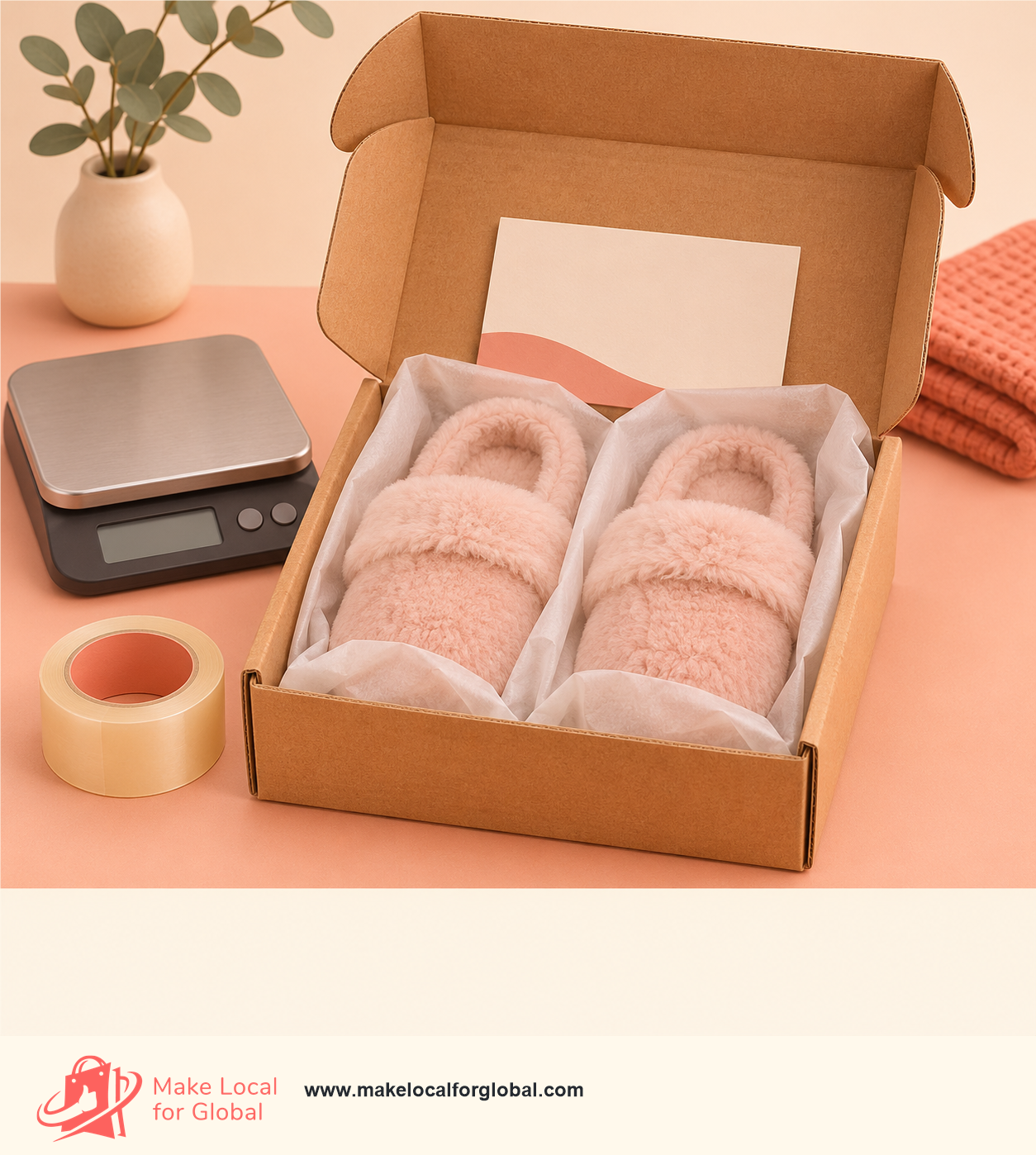
Create an inventory record for each style, colour and size. Include the supplier code, your SKU, unit cost, batch, order date, expected delivery, quantity received, sample comparison, defects, current stock and reorder lead time. Keep a record of pairs held back for photography or sample checks so the shop quantity does not promise stock that is unavailable.
On arrival, count the size run and inspect several pairs from the shipment. Compare measurements, pile, shade, stitching, outsole and label with your approved sample. If the shipment mixes batches, keep them identifiable. A change in textile backing or sole compound may alter the fit, appearance, care or weight. Ask the supplier to explain any deviation before you list the new batch as identical.
Reorder based on the rate of sale for each size, supplier lead time, stock on hand, open customer orders and the cash limit you set. For a starting estimate, multiply average daily sales for a size by replenishment days, then add a buffer you choose. Early sales may be too uneven for a reliable average. Review the estimate often, and do not order more merely for a lower unit price at a higher quantity.
Online customers have cancellation and return rights for many goods. GOV.UK explains that buyers normally have 14 days after delivery to tell a seller they want to cancel a distance order and a further 14 days to return it. They may handle an item as they could in a shop. Faulty or misdescribed goods have separate rights. State your policy clearly and follow current distance-selling guidance and returns and refunds guidance. Do not mark slippers as non-returnable for hygiene without checking that an exception applies to that product.
When an item comes back, inspect it fairly and follow the rules for handling or damage. Record whether it was unworn, tried on, defective, misdescribed or simply unsuitable. Keep return costs in your pricing model. Use the information to improve the fit notes, photography, packaging or supplier process. A no-returns statement cannot replace the rights that apply to online purchases.
The first month should create useful evidence, not a promise of sales. Set a limit for samples and promotion. Keep notes on what you tested, what happened and what you will change. If a supplier sample is late, use that time for the buyer interview or cost model.
Use a weekly review with five columns: observation, evidence, cost or effect, decision and next review date. “People liked the slippers” is vague. “Three of ten interviewees asked whether the sole can be worn outdoors, and the current supplier sheet only describes indoor use” points to a specific question to resolve. Keep observations separate from assumptions so a small sample does not become a sales forecast.
At day 30, list what you know and what remains uncertain. You may know that a measured size 6 insole is shorter than the supplier chart, that the packed box moves to a higher postage band, or that one colour receives more questions. You may not know repeat-purchase rate or winter demand from a handful of orders. Let the next stock decision reflect the evidence you have, not the excitement of the first sale.
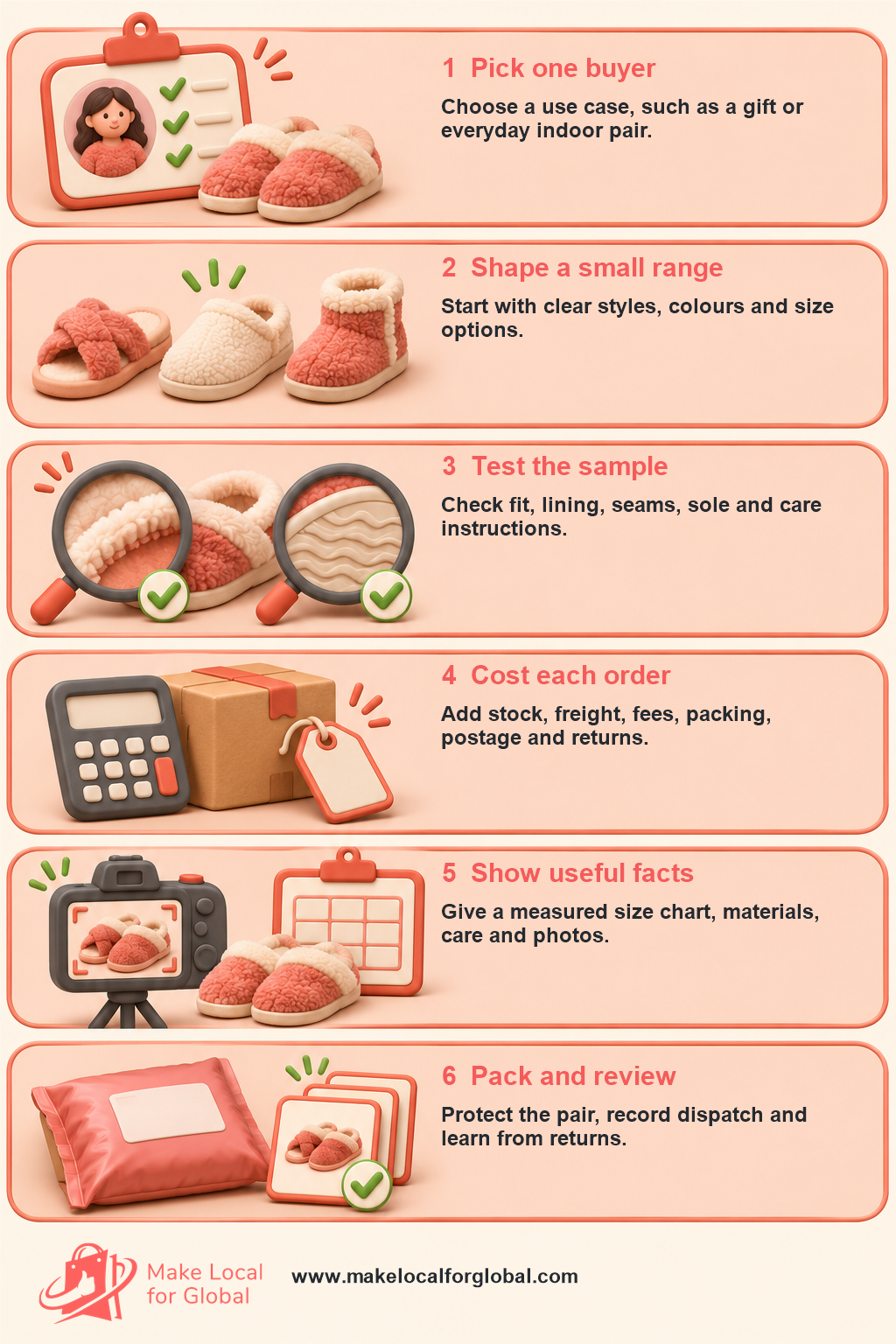
They can be a manageable first test if you keep the range small and can verify fit, materials, label details and full order cost. The softness in a photo does not prove demand or product quality. Talk to likely buyers, inspect a sample and set a spending limit before you buy a size run.
Choose the shape that matches the buyer and occasion you have researched. A mule is open at the heel; a closed-back style covers more of it; a bootie rises around the ankle. Compare how each sample fits, how much it costs to ship and what care or material details the supplier can confirm. Do not add all three styles just to make a larger range.
Measure the internal usable length and width of the sample, ask the supplier for its intended foot-length range, and test the fit with the type of socks the listing recommends. Publish your own chart near the size selector. Track returns by size and record whether feedback points to length, width, heel hold or upper opening.
Request the composition of the upper, lining and sock, footbed, insole and outer sole. Ask for care instructions, size measurements, label artwork, item reference, batch traceability, sample details and documents that support any performance or environmental claim. Confirm that the information refers to the exact model and finish you will sell.
Only use a performance claim when evidence supports that exact wording for the product and conditions described. A visible tread does not prove protection against slipping on every surface. Check the supplier’s test information and intended use. If you have only inspected a sample informally, describe the sole construction and avoid a broad safety promise.
Footwear composition labelling rules apply. GOV.UK guidance explains which materials need to be stated for the upper, lining and sock, and outer sole, plus how to handle a part without one material at the 80% threshold. Retailers are responsible for checking the label. Read the current government guidance and get advice if the supplier information is incomplete.
Yes, when the maker’s instructions and evidence support machine washing for the complete product and the exact materials. Check the sole, insole, glue, trim and colours, not only the fuzzy upper. Follow the stated cycle and drying method. If the maker says hand wash or spot clean, use that advice in the product page and care card.
Add the pair cost, inbound freight, inspection, packaging, postage, platform or payment fees, acquisition cost and a return or damage allowance. State whether VAT is included and use your actual quotes. The example in this post is illustrative, and its remaining contribution is before overhead and tax. Recalculate for discounts and different parcel sizes.
Do not assume a hygiene exception applies. Many online purchases of goods have a cancellation period, and customers can handle an item as they could in a shop. Faulty or misdescribed goods have separate rights. Check current UK guidance, write a clear policy and handle each return in line with the rules that apply.
Show the complete pair, upper, lining, opening, heel, sole and any removable insole. Add a measured size view and a photograph of the real packaging if it is part of the offer. Keep colour and lighting consistent across variants. Use the actual product, not a styled sample that differs from what the buyer receives.
Start with the smallest size run that lets you test the buyer’s choice and the supplier’s consistency. Check minimums, sample cost, replenishment time, cash at risk and how stock will be divided by size and colour. One small order can still be too large if the supplier requires a full carton per colour. Set a maximum spend before approving a purchase.
A fuzzy slipper offer needs a clear fit, a verifiable composition, a tested sample and a parcel cost that still works after the sale. Choose one buyer, compare a few styles, confirm the footwear label, then show the actual measurements and care instructions where the shopper makes a choice. Keep your claims within the evidence and use early orders, questions and returns to decide what to change.
If you are preparing an online shop for a first product, Make Local for Global describes its website setup and support and offers a contact route to discuss what you are planning. Bring your sample notes, size chart and cost sheet to that conversation. Keep the first stock commitment within the amount you can afford to test.
Bring your sample record, size chart, supplier details and order-cost sheet to a conversation about setting up your online shop.
PREFERRED SOURCE
Like what you’re reading? Add Make Local for Global as a preferred source on Google to see more of our articles when you search.

Build your online presence without having to figure out everything yourself.