

READY TO SELL ice cream makers ONLINE?
Get a store built for you in 5 days, plus training and support to help you start, run, and grow your Alternative business.

Choose an ice cream maker range, test samples, price every order and plan safe UK delivery, returns and customer support for your online shop.

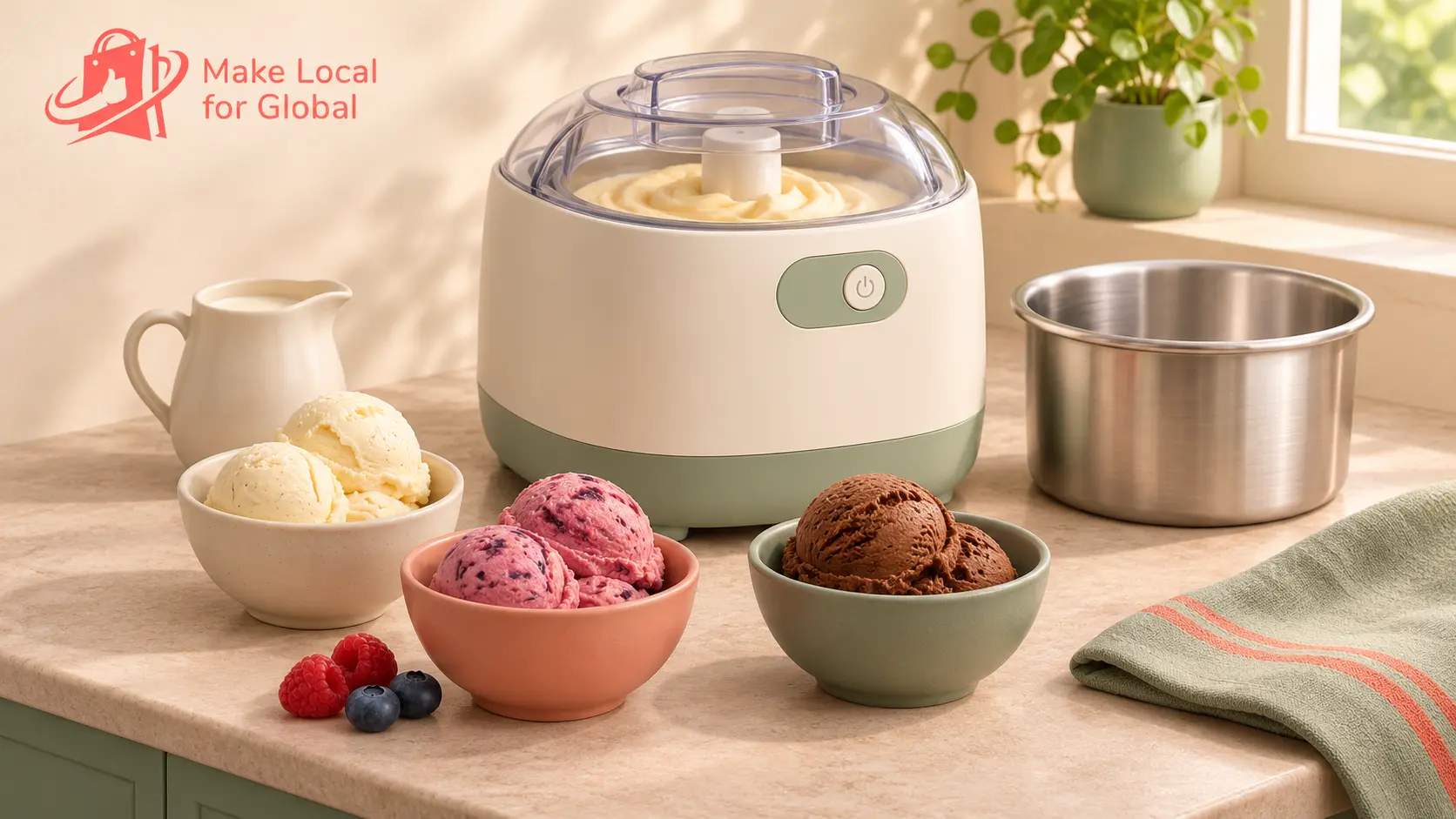
A domestic ice cream maker is a practical product to sell if you can explain how it fits a buyer’s kitchen, routine and budget. The range is harder to sell well than a single product photo suggests: some machines need a bowl frozen in advance, some chill the mixture themselves, and some process a tub that the customer freezes first. Those differences affect storage, preparation time, noise, shipping weight and returns.
To sell ice cream makers online, start with one clear buyer and a small number of models you can test. Check how each machine is assembled, cleaned and packed; describe its real capacity and preparation steps; then price the complete order, including delivery, payment fees and a realistic returns allowance. A focused store can help a buyer choose the right machine without making claims the product cannot support.
The examples below focus on domestic countertop appliances sold to UK consumers. Commercial equipment, imported own-brand products and sales into Northern Ireland can bring extra obligations, so confirm the rules for the exact product and route to market before listing it.
Compare the work involved in a focused online shop with the tasks your first range needs. MLFG can discuss a practical website plan before you commit to a full catalogue.
“People who like ice cream” is too broad to guide a first stock order. A useful buyer description connects a person’s reason for buying to the product features they will compare. That helps you select a suitable format, write more useful product information and decide which questions to ask in a demand test.
A home cook may want to choose the sweetener, fruit, dairy or plant-based ingredients in a batch. The important questions are whether the machine can work with the mixture the maker describes, how the bowl or tub must be prepared, and how long the whole process takes. Avoid promising that a machine suits every recipe. Some bases need chilling or pre-freezing, and texture depends on recipe, temperature, quantity and machine design.
Family buyers often need simple set-up, clear safety instructions, easy cleaning and enough capacity for the number of servings they expect. They may be more interested in repeat batches than in a large machine with many settings. Show the footprint beside ordinary kitchen objects and explain which parts need cabinet, freezer or worktop space.
A gift buyer may not know the recipient’s kitchen layout or freezer capacity. A clearly compared entry model, a more capable compressor model and a bundle with useful accessories can make the choice easier. For a hobbyist, controllable batches, repeatable results and access to replacement parts may matter more than a low headline price.
Choose one group for the opening range. Keep the other use cases as possible extensions until you see real buying signals. For a small test, ask potential buyers which preparation step they would accept, what space they can spare and which price band they would compare. Record the answers without treating compliments or social reactions as orders.
Ice cream makers have a seasonal pull, but an online seller should check whether interest continues outside hot weather. A short demand test can reveal whether customers are shopping for family desserts, dietary control, gifts or recipe experimentation. It can also expose objections such as freezer space, cleaning, preparation time and the noise of a motor running on a kitchen counter.
Set a decision rule before spending. For example: place a sample order only if a defined number of people join the list and answer a follow-up question about their preferred format. Decide how much you can lose on a sample and the first test. This keeps an exciting response from turning into a stock order that leaves you with expensive appliances and no clear buyer.
Product labels vary between manufacturers, so describe the actual preparation method and parts rather than relying on a format name alone. A small range can give customers a real choice without making the shop difficult to understand.
These models use a bowl that the customer chills in a freezer before churning. They can suit a first-time buyer who has freezer space and plans batches in advance. The product page should state the manufacturer’s freezing instructions, bowl dimensions, working capacity and any waiting time between batches. Ask whether the bowl must stay upright and how much freezer shelf space it occupies.
Do not call the machine ready at any time if the bowl needs preparation. Explain what happens if the bowl is not cold enough or the kitchen is warm, using the manufacturer’s instructions and your sample results. If the bowl is heavy or awkward to handle, photograph it beside the machine and describe how it is stored safely.
A compressor model chills its own batch, so a buyer may not need to freeze a bowl ahead of time. It can be larger, heavier and more expensive than a freezer-bowl machine, and the seller must check ventilation, running sound, countertop space, power requirements and delivery handling. Confirm that the product is intended for the buyer’s household use and follow the manual for batch size and operation.
Potential buyers may compare timer controls, removable parts, keep-cool functions or the ability to make another batch. Those features are not standard across every model. Only list a function after checking the exact manual and sample; describe what it does in an ordinary kitchen rather than repeating a vague supplier phrase.
Some systems ask the customer to prepare a mixture in a tub and freeze it before the machine processes it. The selling point may be choice of portions or a particular texture, but customers need to understand the sequence. Confirm which tubs are included, whether extra tubs are compatible, the required freezing time and the maker’s supported recipes. Avoid implying that the machine is a conventional churner if it works in a different way.
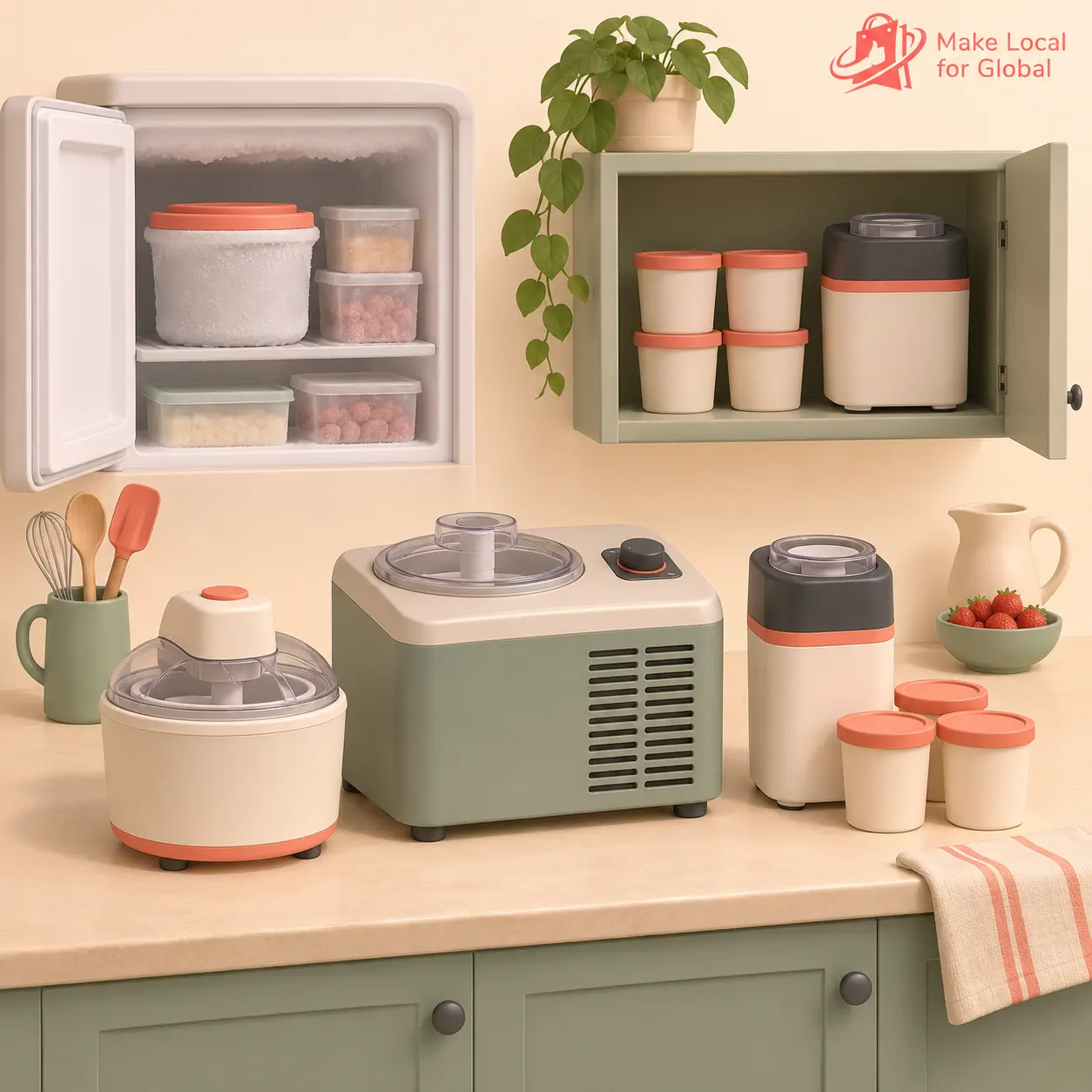
A starter range might include one entry freezer-bowl model, one mid-priced version with useful spare parts or accessories, and one compressor option for buyers who value on-demand batches. Add a frozen-tub model only if it serves a customer need your first three do not cover. The article on selling coffee makers online offers another example of explaining a small-appliance range by differences a customer can compare.
Start with authorised UK distributors or manufacturers that can provide written product information, support and a clear route for warranty claims. A low unit price from an unknown source may hide missing instructions, uncertain compliance documents, weak replacement-part support or a long route for returns. A seller’s responsibility does not disappear when a supplier is overseas.
Ask each potential supplier for the model number, technical specification, user manual, spare-parts list, warranty process, repair route, shipping dimensions and packaging details. Ask who is responsible for product compliance in Great Britain and Northern Ireland, who appears as the manufacturer or importer on the product, and what evidence supports the applicable conformity marking. Keep the replies with your purchase records.
Ask for answers in writing. A supplier’s “yes, it is compliant” message is not a complete evidence pack. If the business imports, rebrands or sells products under its own name, its role may carry extra duties. The UK government’s product safety advice for businesses explains that manufacturers and importers need to demonstrate compliance, keep technical documentation, apply labels and provide safe-use instructions. Get qualified advice if the supply chain or territory is not clear.
Order the exact model and packaging you plan to sell. Keep a dated record with the model code, supplier, batch information, packaging condition, what you tested and any support response. The aim is not to certify an appliance yourself. It is to find basic product and listing problems before a customer discovers them.
Check that the bowl, lid, paddle, drive coupling and any tubs fit as the manual shows. Assemble and remove each part several times. Look for sharp edges, cracked plastic, loose fasteners, rough seams, a lid that does not latch, or a paddle that rubs the bowl. Do not use a damaged sample; photograph it and contact the supplier.
Measure the usable batch against the maker’s instructions. A bowl’s physical volume is not always the recommended fill amount, since a mixture can expand as it churns. Record the recipe, starting temperature, quantity, room conditions, preparation time and result. If the manual says to chill a base or freeze a bowl for a stated period, do that exactly before judging performance.
Repeat a simple recipe to see whether the machine produces a similar texture on more than one run. Avoid presenting a single successful batch as a guarantee. A customer’s result can vary with ingredients and preparation, so the product listing should explain the maker’s method and point to the manual for recipe limits.
Run the unit on a stable worktop and note whether it moves, vibrates, rattles or produces a smell beyond what the manual describes for first use. Use a sound-level app only as a rough comparison, not as a lab measurement or an advertised decibel rating. If noise is noticeable in a small flat, state the observation plainly rather than using unsupported wording such as “silent”.
Check ventilation clearances and any warm-air discharge described in the manual. Do not block vents or run the machine in a way the maker prohibits. Record the unit’s weight and dimensions, then consider whether a typical customer can lift it from a delivery carton to the counter without assistance.
Follow the cleaning steps exactly. Note which parts are removable, which are hand-wash only and which must not be immersed. Test whether residue collects around a seal or coupling. Do not claim dishwasher compatibility unless the exact manual says so. Check that the manual is readable, includes safe operating steps, has the correct language and identifies the exact model.
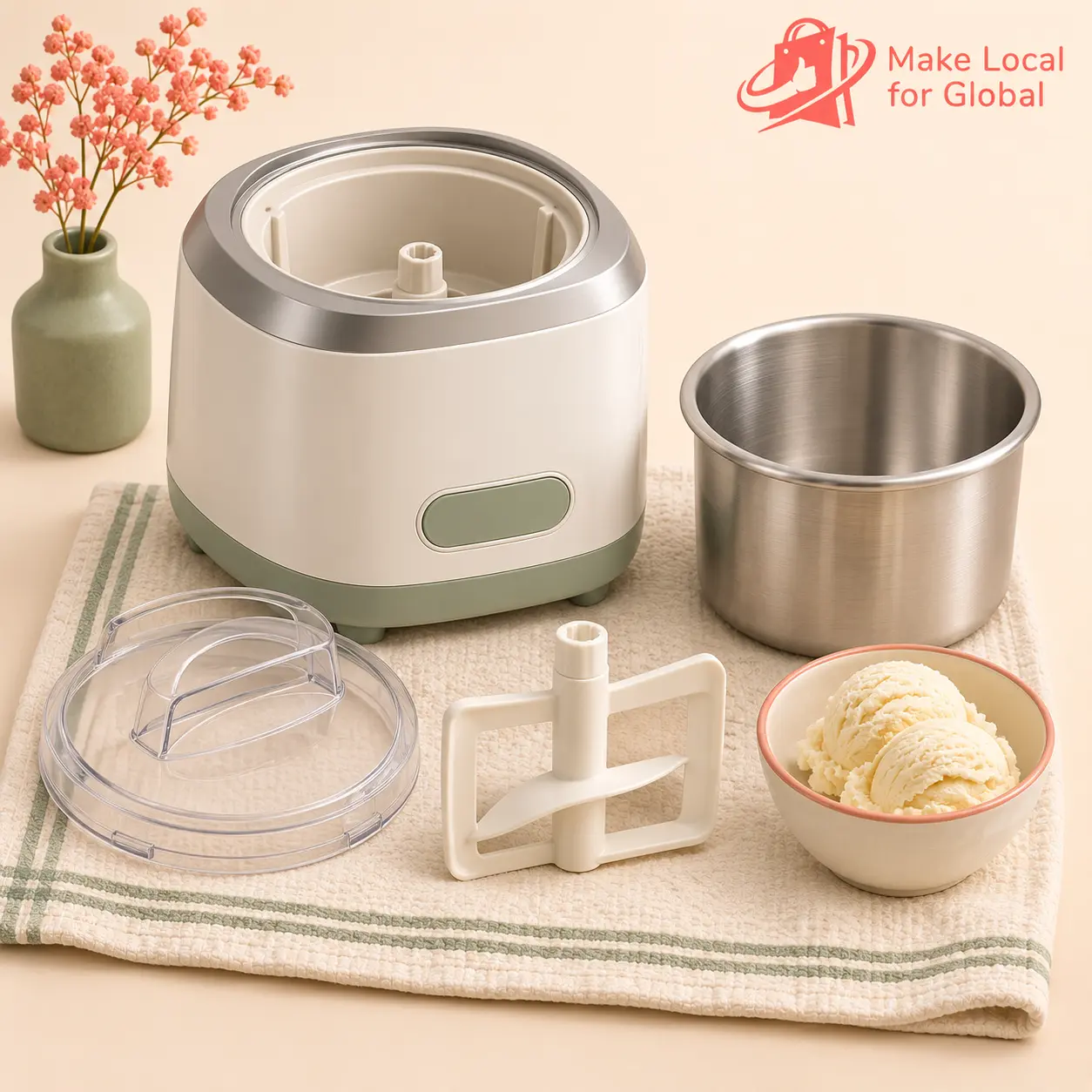
If a defect appears, stop the test. Photograph the issue, save the correspondence and ask the supplier for an explanation before deciding whether to proceed. A sample is useful only if it represents the production model and packaging you will actually receive.
Domestic ice cream makers are electrical appliances with moving parts and food-contact components. Requirements can depend on the product design, voltage, where it is sold and whether you manufacture, import, distribute or retail it. This overview is a starting point, not legal advice. Confirm the applicable rules for your exact model and territory before placing it on the market.
For Great Britain, the Electrical Equipment (Safety) Regulations 2016 set requirements for covered electrical products. The current GOV.UK guidance for businesses placing electrical equipment on the GB market describes the rules and the evidence manufacturers use to show that equipment meets the safety objectives. Check the model’s documentation, nameplate, instructions and plug rather than treating a mark in a supplier photo as proof for every item in a shipment. Northern Ireland has separate guidance under the current UK framework.
The Office for Product Safety and Standards states that a business making, importing, distributing or selling consumer products in the UK has responsibilities for safety and labelling. It also advises sellers to keep supplier records and to report known product risks or consumer incidents. Read the official Electrical Equipment (Safety) Regulations 2016 guidance for Great Britain and the linked Northern Ireland guidance that applies to your sales.
Keep purchase invoices, model and batch details, supplier contacts, product documents and customer complaint records. Set a process for a reported overheating event, damaged cord, broken moving part or other safety concern. Stop selling an affected model while you assess the facts, contact the supplier and seek advice from Trading Standards or the relevant authority where required. Do not wait for several complaints before raising a credible safety issue.
Write a clear returns and warranty process. Explain how a buyer can report a fault and what information helps you identify a model. Keep statutory rights separate from any extra manufacturer warranty. Product quality rules under the Consumer Rights Act 2015 include that goods must be of satisfactory quality, meet their description and be fit for their usual purpose. A manufacturer’s warranty does not replace the retailer’s obligations.
Distance sales have information and cancellation requirements. The Consumer Contracts Regulations 2013 set a normal 14-day cancellation period for many online goods contracts, starting after the goods come into the consumer’s physical possession. Explain cancellation and return steps before checkout, and get current advice on how the rules apply to opened appliances and any hygiene-related parts. Do not assume that a product is excluded simply because it has touched food.
Electrical retailers also have WEEE responsibilities. GOV.UK says online retailers must provide customers with a way to dispose of an old household electrical item when selling a new one and publish information on the service they provide. Check whether you need to offer a free take-back service or join the Distributor Take Back Scheme, and show the required information on your website. If you import equipment, sell under your own brand or supply from overseas, check the separate producer responsibilities.
Packaging rules may apply depending on your role and the volume and value of packaging you supply. The current GOV.UK guidance explains that small producers can have registration, reporting and fee duties once the stated thresholds and activities apply. Keep weights and materials for the carton, inserts and any extra packaging you add. Review the latest packaging EPR guidance for small producers rather than assuming that a small online shop is automatically exempt.
A strong product page lets a buyer decide whether the machine works with their home and routine. List verified facts first. Separate manufacturer specifications from your own sample observations and explain where a claim comes from. If a number changes by model or recipe, name the exact model and link to the manual.
A title such as “Compact freezer-bowl ice cream maker, 1.2-litre working batch” tells a buyer more than “Ice cream machine”. Use the exact approved capacity and do not confuse the bowl’s total volume with the recommended mixture amount. For a compressor model, lead with the format and include one factual point such as the verified batch range, dimensions or included bowl when useful.
Use original photographs that answer real questions: the unit beside a ruler or familiar kitchen object, the bowl beside the body, the paddle seated in place, the controls close enough to see and the packed carton. Photograph the actual product you ship. Avoid generated text on the appliance, false accessory counts or a staged result that implies every recipe will finish at the same firmness.
For first-time sellers, useful related reading includes how to sell food blenders online and how to sell coffee grinders online. Both categories also rely on clear appliance specifications, honest product photography and a realistic account of how much counter or storage space a machine uses.
A machine can look profitable at its wholesale price and still leave too little contribution after delivery, fees and returns. Build a cost sheet per model and update it when supplier terms, carrier rates or packaging change. Use a consistent basis for prices and taxes. The worked example below is illustrative only; it is not a recommended retail price or a promise of profit.
| Cost item | Illustrative amount | What to replace with your own figure |
|---|---|---|
| Selling price | £179.00 | Your tested customer price for this model |
| Product cost | £71.00 | Supplier invoice for one unit |
| Inbound freight and receiving | £9.00 | Freight, duties if applicable and receiving cost allocated per unit |
| Protective packaging | £7.50 | Outer carton, inserts, tape and void fill |
| Pick and pack labour | £4.00 | Your time or fulfilment provider charge |
| Customer delivery | £8.95 | Carrier price for the packed weight and destination |
| Payment fee assumption | £4.78 | Assumed 2.5% of £179 plus 30p; use your actual contract |
| Returns and damage allowance | £9.00 | A reserve based on your return, inspection and transit-damage experience |
| Customer acquisition | £12.00 | Average acquisition cost from a measured channel test |
| Illustrative variable cost total | £126.23 | Add the real costs above for each fulfilled order |
| Contribution before overhead | £52.77 | £179 minus £126.23, before fixed costs, tax and owner pay |
Illustration only. Replace every figure with your own supplier, carrier, payment and returns data. The fee rate is an assumption, not a current quote.
The arithmetic is £71 + £9 + £7.50 + £4 + £8.95 + £4.78 + £9 + £12 = £126.23 in variable costs. Subtracting that amount from £179 leaves £52.77 contribution before rent, software, insurance, accountancy, support time, storage, unsold stock, business taxes and owner pay. Contribution is not net profit.
This example assumes the listed amounts are on the same accounting basis. A non-VAT-registered seller may have supplier costs that include VAT they cannot reclaim. A VAT-registered seller normally needs to calculate sales and costs on a consistent net-of-recoverable-VAT basis, then apply the right VAT treatment to the sale. Ask an accountant to review your own model and threshold position.
Compare your offer with similar products, but do not copy a competitor’s price without understanding what is included. One retailer may include delivery, a longer support period or an accessory set; another may charge at checkout. Record the full delivered price, stock status, warranty details, dimensions, included parts and return terms.
Test a bundle only when the extra items solve a real buyer problem. A spare bowl, storage tub or recipe book can add value, but each part adds cost, packaging volume or support work. Photograph bundles separately from the base model and list exactly what is included. A bundle is not profitable merely because its price is higher.
Countertop appliances combine a motor, controls, removable parts and often stainless steel. A carton that works for a warehouse pallet may not protect the product through each parcel hand-off. Test the packed unit that you plan to send, not an unpackaged sample or a carton designed for a different model.
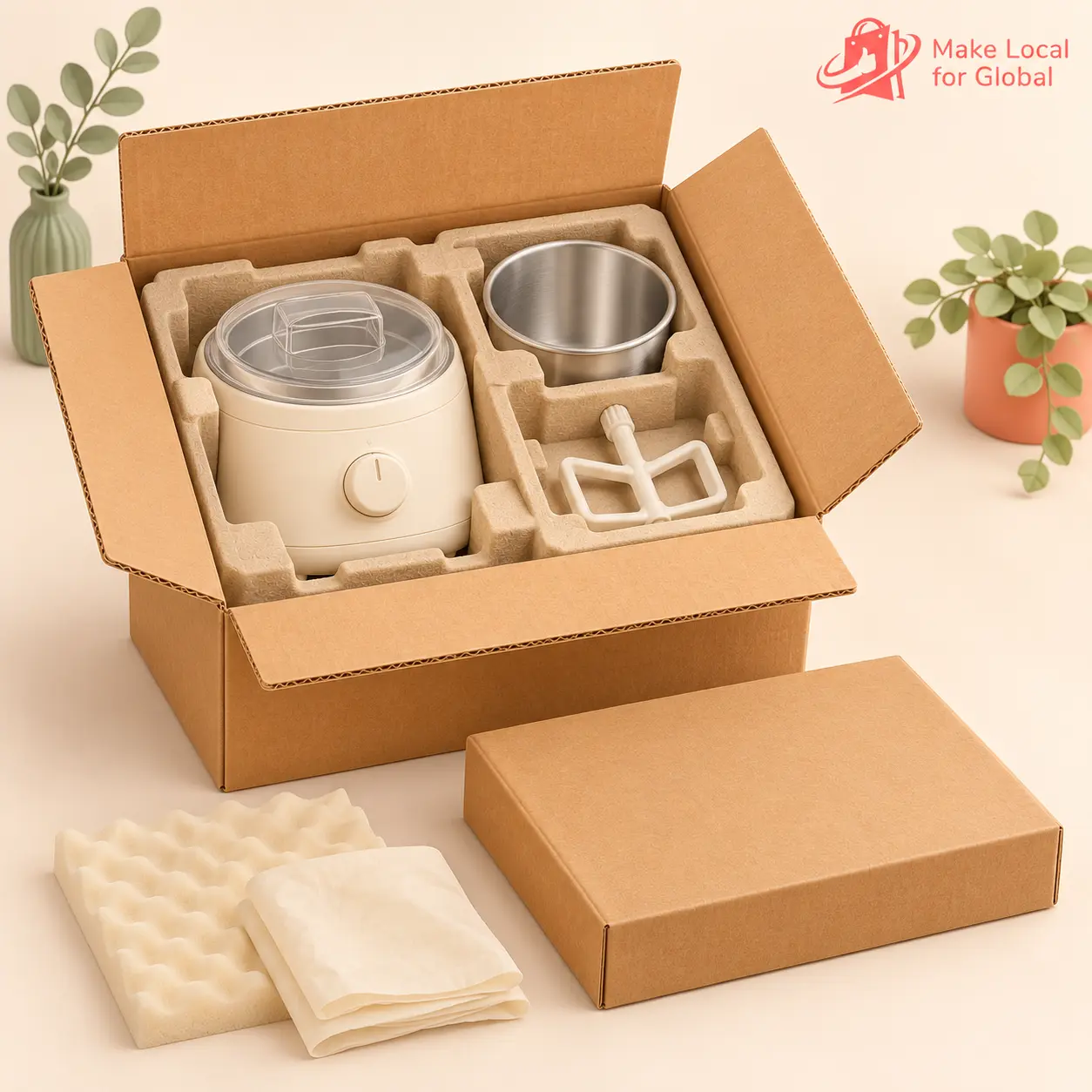
Store appliances in a dry place within the supplier’s stated conditions. Record serial or batch identifiers where available. Have a process for stock that is returned opened, transit-damaged or reported faulty: quarantine it until you know whether it can be inspected, repaired, returned to the supplier or must be handled another way. Do not quietly resell a returned product as new.
A direct online shop gives you more control over comparison pages, manuals, support content and customer questions. A marketplace can introduce a new store to buyers already searching for appliances, but its fees, delivery rules, service standards and return processes need to fit your cost model. Check the live seller terms before committing; charges and rules can change.
A local demonstration or partnership with a cookery teacher may help customers see the machine’s size and understand the preparation method. If you do demonstrations, be clear about the recipe, portion size and time shown. A polished batch does not prove that every buyer will achieve the same result at home.
Use one main sales channel to start. Keep a simple record of how each buyer heard about you, which model they considered, which question they asked and whether they completed an order. After a few weeks, compare acquisition cost and contribution by channel, not just visits or social followers.
Clear store structure can help a buyer move from format comparison to the model that fits their counter, freezer and batch routine.
Promotion should answer a buyer question and lead to a useful page. Build a few pieces of content around the real choices in the range rather than repeating “make delicious ice cream at home”. A buyer deciding between formats needs a different explanation from someone checking whether a machine fits a small kitchen.
Use search terms that reflect the product page and the buyer’s language. A phrase such as “ice cream maker with freezer bowl” may describe a format, while “compressor ice cream maker” signals a different buying decision. Look at Search Console queries and customer questions after launch; update the page when the same uncertainty appears more than once.
Small retailers can make useful content without a studio. Use a clean work surface, consistent daylight and close photographs of the bowl, paddle and controls. Show the complete appliance in at least one image so shoppers can judge shape and scale. Keep the article links natural: a customer comparing kitchen equipment may find the pancake maker range example relevant, but do not force unrelated product links into every paragraph.
A seller who answers questions quickly can reduce avoidable returns and give buyers confidence about an unfamiliar machine. Prepare answers to the ten questions you hear most: preparation, batch quantity, cleaning, freezer space, product dimensions, sound, replacement parts, delivery damage, warranty and return steps.
Give customers a copy of the manual or a clear route to find it. If you add a quick-start card, have it reviewed against the maker’s instructions and do not contradict safety warnings. Tell a buyer who to contact for a fault and what details to include. Never advise them to open the motor housing or repair electrical parts unless a qualified service route specifically allows it.
Track defects separately from preference returns. A customer who dislikes the preparation time is not the same as a unit with a damaged paddle. Record the model, batch, date, issue, resolution and supplier response. These records help identify a repeated problem and support a reasoned choice about stopping sales or changing suppliers.
Write a one-sentence buyer profile and list the three decisions that buyer needs to make. Speak with ten likely customers or a mix of home cooks, gift buyers and local kitchenware staff. Collect current product prices and compare the delivered price, model type, capacity, dimensions, parts and warranty route. Keep the source and date for every figure.
At the end of the week, choose a single buyer group and one or two product formats to investigate. Write down the objections you heard and use those as a sample test list. If most people mention lack of freezer space, do not ignore that signal when you select a freezer-bowl model.
Contact several traceable suppliers and ask the same questions about documents, model codes, lead times, spare parts, warranty, packaging and territory. Order a sample only when its cost fits your test budget. Keep the purchase record and compare the delivered carton with what the supplier showed you.
Follow the manual to test assembly, preparation, batch quantity, sound, stability and cleaning. Take photographs as you work. If the sample is confusing to use or difficult to clean, ask whether that is a model issue, a manual issue or a support issue before you decide to list it.
Build a per-model cost sheet that includes product, inbound freight, packaging, labour, delivery, fees, returns and customer acquisition. Test the contribution at two or three customer prices. If the numbers only work when delivery, returns or support are ignored, reconsider the model or offer.
Prepare one product page with verified specifications, a clear preparation method, original photographs, included-parts list, warranty details and returns information. Check the electrical and consumer duties for the supply chain. Add WEEE customer information if your business has that retailer obligation, and assess whether packaging EPR rules apply to your operation.
Open the product page to a limited audience and use one or two measurable channels. Track qualified visits, product questions, add-to-basket actions, completed sales, acquisition cost, support time and delivery issues. Note the customer’s chosen format and what almost stopped the purchase.
Review the results against the rule you set before launch. If people leave because the preparation method is unclear, improve the page. If they want a smaller model or more spare tubs, price and test that option before ordering. If the channel cost is higher than the contribution available, pause paid promotion and test a different route.
Choose a model that fits a buyer group you have tested and a supply chain you can verify. A freezer-bowl model may suit customers with freezer space and planned batches; a compressor model may suit customers who value making a batch without freezing a bowl in advance. Test the exact unit, confirm support and parts, then start with a quantity your cash flow can handle.
They can be easier to explain to a buyer who wants to avoid pre-freezing a bowl, but they may cost more, take more counter space and weigh more for delivery. Whether they suit your shop depends on supplier cost, evidence of demand, product support and the contribution after shipping and returns.
Use the manufacturer’s recommended working amount for the exact model. Say whether a figure refers to the bowl’s total physical volume or the maximum mixture amount, and explain that mixtures can expand while churning. Include the manual’s recipe and preparation guidance.
You may be taking on importer or manufacturer responsibilities, depending on the supply chain and branding. Electrical and product safety obligations can include technical documents, labelling and safe-use instructions. Confirm the rules for Great Britain and Northern Ireland, review the product evidence and get specialist advice before you order stock.
Online cancellation rights and faulty-goods rights are governed by consumer law. The normal distance-contract cancellation period for many goods is 14 days from the day after the customer receives them, with rules about return, refund and any handling beyond what is needed to inspect the goods. The details depend on the facts, so publish accurate terms and get advice before applying an exclusion.
Use the packed parcel’s weight and dimensions, the destination, insurance or service level, packing materials and any fulfilment labour. Check whether the carrier charges for size, failed delivery or remote destinations. Test the actual carton so your cost estimate reflects the product as sent.
You can keep the shop open throughout the year, but demand may change with weather, gifting dates and customers’ routines. Test interest in recipe use, family treats and gifts outside summer before building stock for quieter months. Let your own sales and search data guide the seasonal plan.
Once you know the buyer, the product and the order costs, decide what your first online shop needs to do. MLFG can help you talk through a focused next step for your business.

PREFERRED SOURCE
Like what you’re reading? Add Make Local for Global as a preferred source on Google to see more of our articles when you search.

Build your online presence without having to figure out everything yourself.