READY TO SELL food blenders ONLINE?
Get a store built for you in 5 days, plus training and support to help you start, run, and grow your Alternative business.

Choose a blender type, check supplier evidence, test a sample and calculate the full parcel cost. This practical plan covers product pages, UK rules, returns and launch checks.

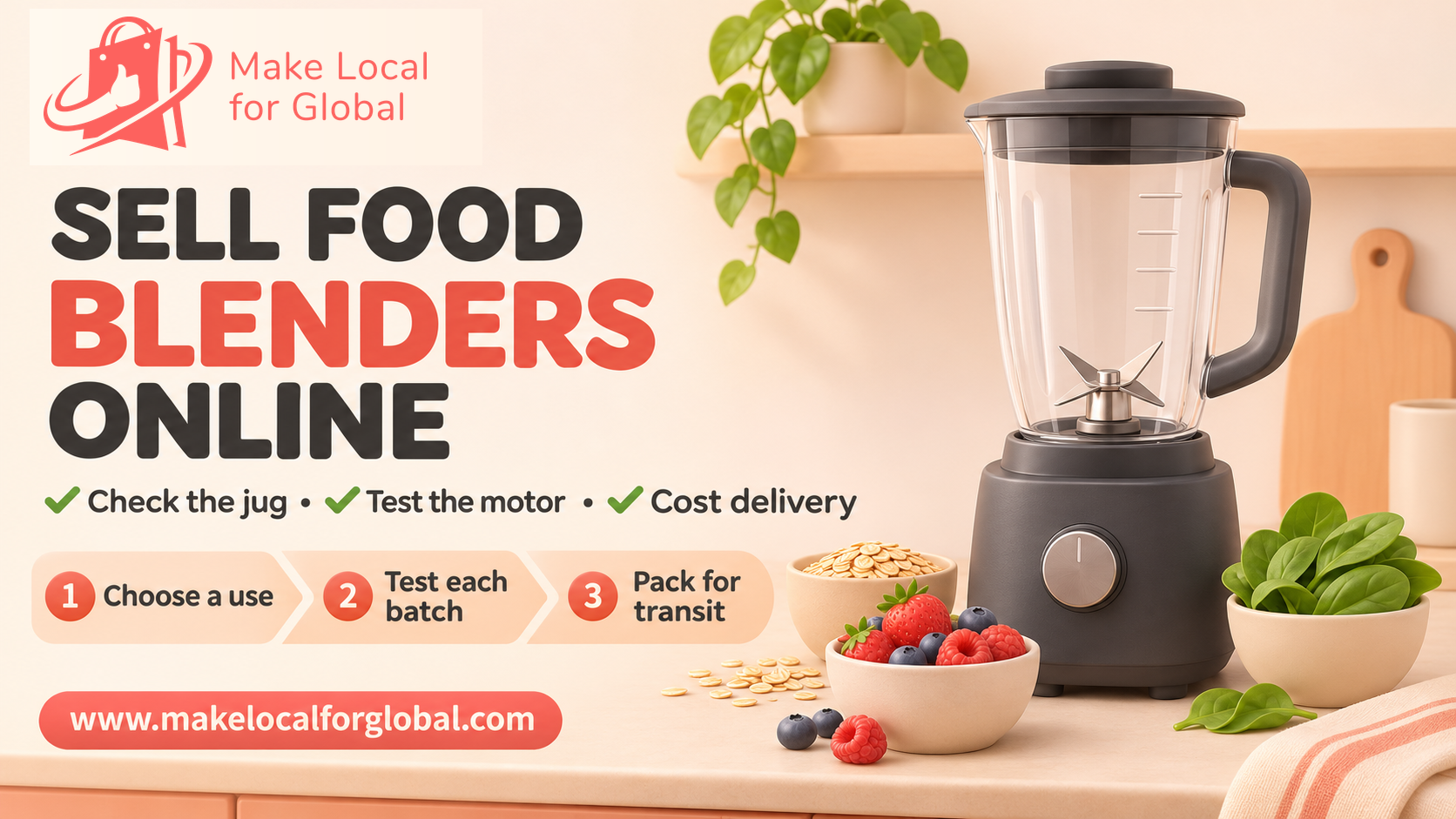
Selling food blenders online starts with a specific buyer and a product you can test, explain and support. A personal smoothie blender, a family jug blender and a commercial bar blender solve different jobs. A listing that simply says “powerful blender” gives shoppers little help choosing between them.
Start with one use case, such as single-serve smoothies for commuters or a compact jug blender for small households. Compare a few samples against that use, measure the packed parcel, and calculate what remains after product, import, payment, packaging, delivery, returns and marketing costs. If you import units or put them under your own brand, check the electrical-safety, WEEE and packaging rules before ordering stock.
This page sets out a practical route from first buyer interviews to a small online launch. The product and cost examples are illustrative. Use your own supplier documents, carrier quotes, fee schedules and legal advice before placing an order.
Compare the setup options for an online store, then decide what fits your budget, stock plan and support needs.
“Food blender” covers appliances that differ in capacity, power source, controls, cleaning and intended use. A person blending one breakfast drink needs something different from a family preparing soup and sauces or a café making repeat batches during service.
Choose the customer before you shortlist products. Write down the task they need to do, where they will use the appliance, what they have now, what frustrates them about it and how often they expect to blend. Those details help you judge the jug size, cleaning steps, noise, storage footprint, accessories and price point that belong in your first offer.
Interview five to ten people who fit one buyer group. Ask what they blended last week, which ingredients they use, how much they make at a time, where the appliance sits between uses and what would make them return it. Ask for a photo of their counter or cupboard if they are comfortable sharing one. A practical conversation about their current equipment is more useful than asking if they would “buy a blender” in the abstract.
Then show them a neutral description of two or three possible products. Do not start by showing your preferred model. Ask which details they need before they would place an order, then note the words they use for jug size, blade cleaning, storage, portability and noise. These phrases can inform your product page and search content later.
You can test demand without holding a large batch. Create a one-page concept with a clear intended use, indicative price and realistic delivery estimate. Share it with the people you interviewed or a small audience that already buys in the category. Invite them to join a waitlist or answer a short question. Do not take payment for stock you cannot supply by the date you promise.
Track actions rather than compliments. Record how many people open the page, click through to the specification, ask about a feature, join the waitlist or leave after seeing the price. A small test does not predict future sales. It tells you which question to investigate next.
If shoppers ask whether a cup is dishwasher-safe, whether it can crush frozen fruit, or whether replacement seals are available, you have identified information the listing must answer. If they keep asking for a different appliance type, revisit the buyer and product definition before purchasing stock.
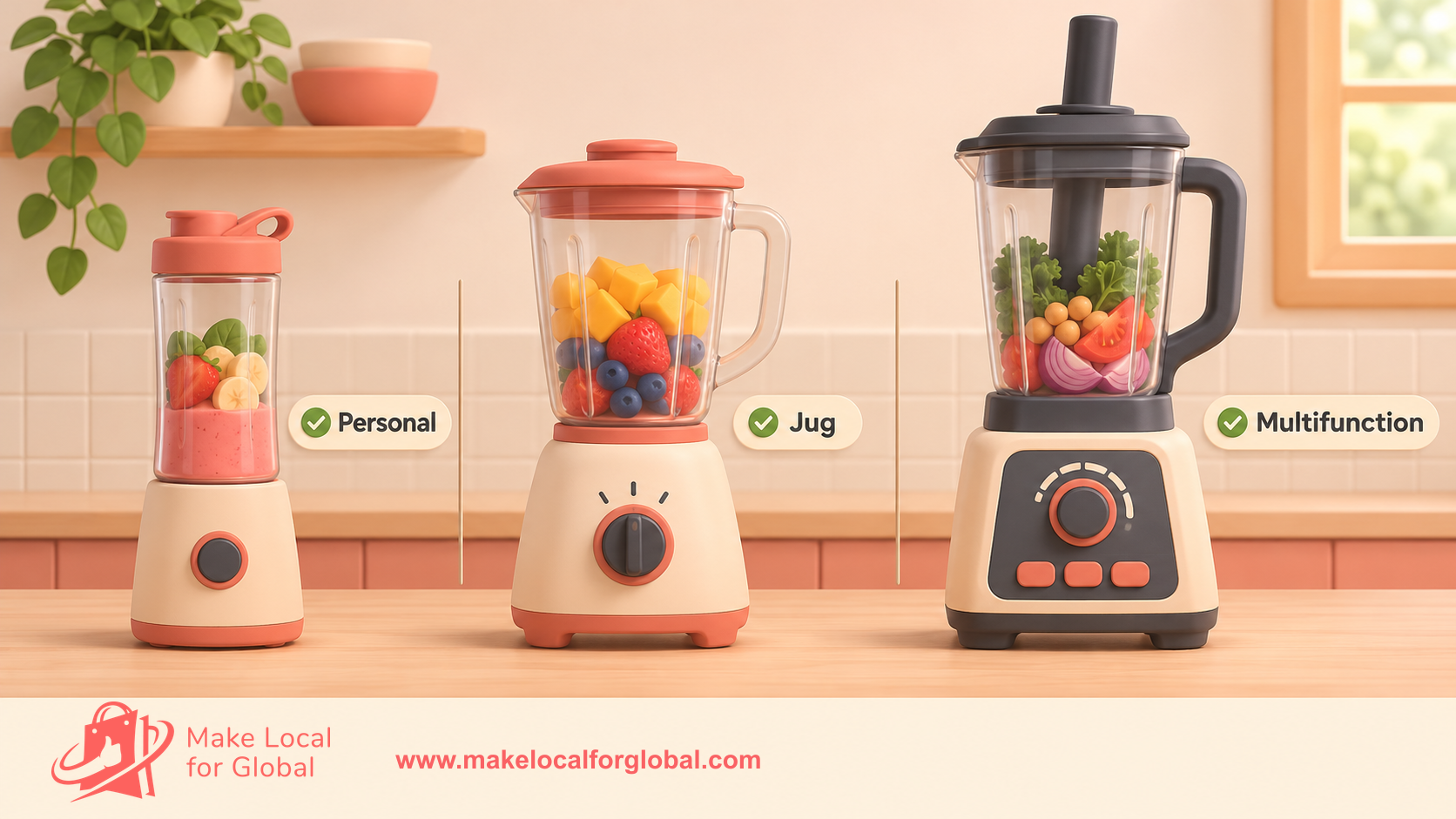
The word blender can describe several products. Keep each type clear in the catalogue so a buyer does not mistake a portable cup for a full-size jug or a hand blender for a countertop machine.
| Type | Typical buyer task | Details to compare before you list |
|---|---|---|
| Personal blender | One or two drinks, often in a cup that can be taken away | Cup capacity, lid type, blending cup compatibility, motor rest guidance and cleaning |
| Countertop jug blender | Smoothies, sauces, soups or drinks made in larger batches | Usable jug capacity, glass or plastic material, speed settings, pulse control and storage footprint |
| High-performance blender | Frequent use or tougher ingredients within the maker’s stated limits | Operating instructions, duty cycle, sound information, servicing route and the evidence behind performance claims |
| Immersion blender | Blending directly in a saucepan, jug or bowl | Shaft length, included attachments, splash control, storage and cleaning instructions |
| Portable rechargeable blender | Single servings away from a wall socket | Battery documentation, charge method, capacity, cleaning limits and transport requirements |
| Multifunction blender system | Blending plus other stated tasks using supplied attachments | Exact contents, attachment compatibility, replacement parts and which tasks each accessory supports |
Heating blenders add a cooking function and may need separate testing and instructions for hot contents, steam release, seals and cleaning. Commercial equipment brings a different buyer, use pattern and service expectation. Do not place these models beside domestic appliances as though their suitability were interchangeable.
One manufacturer’s product pages show how specific a range can be: nutribullet lists personal and full-size blender models with different motor bases, cups, pitchers and settings. Use manufacturer information as a prompt for the fields a shopper may compare, not as proof that another model can do the same job. nutribullet’s blender range describes those model differences.
An opening range can contain one main model and a second option only when each serves a buyer need you have evidence for. For example, a single-serve model could sit beside a jug model if your research shows that some buyers value a drink-to-go cup and others make larger batches at home.
Use three price positions only when you can explain the extra value in each. An entry product may have fewer accessories or a smaller capacity. A core model should fit the use case most interviews revealed. A premium option needs a specific reason for the higher price, such as a documented longer warranty, a replaceable jug, an included spare seal or a function verified on the sample.
Avoid making wattage the entire ladder. The watt figure describes electrical input or motor rating as stated by the manufacturer; it does not prove texture, durability, sound level or how well the blade and jug work together. The manufacturer’s stated limits, independent sample checks and clear customer expectations matter more than a large number on the front of a box.
Accessories can make a useful bundle if they address a real task. A spare cup, lid or seal may help a repeat buyer. A recipe booklet might help a new owner use the appliance, but only if recipes have been checked and do not imply health results. A bundle of unrelated utensils raises the order value without necessarily making the blender more useful.
Possible routes include a UK wholesaler, an established brand’s trade programme, a manufacturer that can supply your own label, or a carefully selected existing product from a distributor. Each route changes the amount of product documentation you need to obtain, the minimum order, the time before stock arrives, and who handles faults.
Before comparing prices, decide whether you will resell a named brand, import a finished appliance, or have a blender made and sold under your name. In Great Britain, the importer and manufacturer roles carry duties under electrical product rules. A business that markets equipment under its own name or trademark can be treated as the manufacturer, even if another factory made it. Read the current Great Britain electrical equipment safety guidance and take advice for your exact supply chain before placing an order.
Ask each supplier for a written answer to these questions:
Check that the documents match the actual product. A report for a similar-looking appliance, a different model suffix, another factory or a different plug does not settle the question for your stock. Keep copies of the quote, product drawings, sample record, label artwork, instructions, compliance documents and purchase order in one product file.
For a product that touches food, request material declarations or other supporting evidence for the jug, cup, lid, seal and blade assembly. The Food Standards Agency publishes guidance on materials and articles intended to come into contact with food. Do not repeat a “BPA-free”, “food-safe” or similar claim unless the exact material and model are supported by documents you have checked.
A quote is only comparable when you know what is inside it. Ask whether the price includes packaging, UK plug and instructions, accessories, test samples, shipping, customs clearance, duties, insurance, branding and delivery to your storage address. Check the Incoterm and who takes responsibility at each point in the shipment.
Put the figures in a sheet per model. Include the sample price, minimum order, currency, exchange-rate assumption, bank or transfer fee, freight, duty estimate, customs broker and expected units that may be damaged or unsellable. Ask a customs adviser or use official tariff services for a current commodity code and duty check. Do not treat a supplier’s delivery estimate as a firm consumer delivery promise.
For a first order, a local distributor may cost more per unit yet reduce the amount of stock you need to hold and the work needed to obtain original documents. A direct import can give more choice, but it can place more legal, cash-flow and quality responsibilities on your business. Compare the total landed and serviced cost, not only factory price.
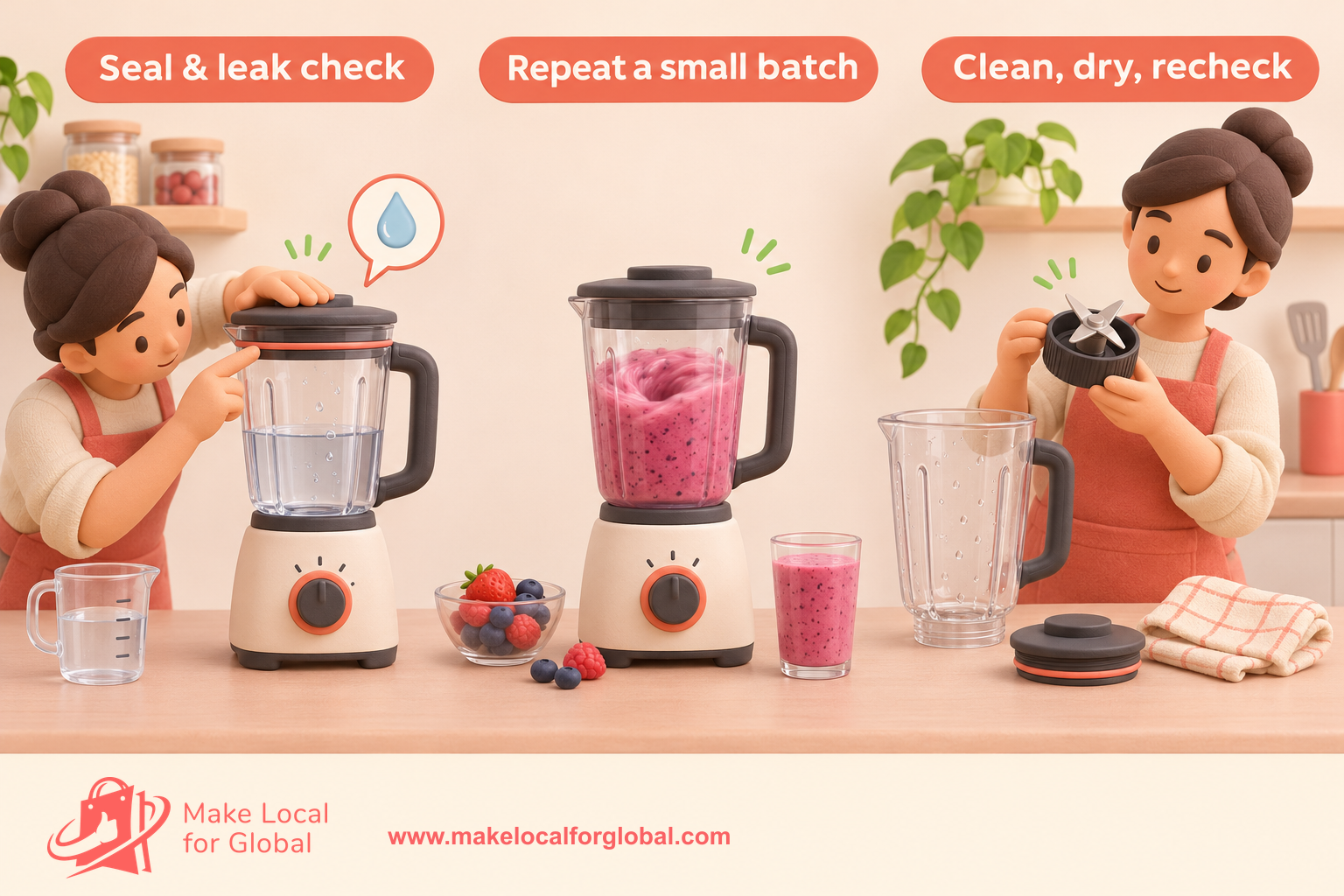
Order a sample from the same supplier and factory that will make the sale batch. Ask the supplier to identify the precise model code and component versions. Photograph the carton, unit label, plug, instructions, jug, blade unit, seals and accessories as they arrive.
Write a test sheet before using the blender. Include the manufacturer’s instructions and limits. Use normal ingredients and quantities for the intended customer, follow the stated liquid and motor-rest directions, and do not push the appliance beyond its instructions to make a dramatic video.
Test the product in repeatable conditions. For a personal smoothie blender, record a small set of ingredients by weight, the liquid amount, blend time permitted by the instructions, result, noise impression and cleaning time. For a jug blender, repeat with the batch size a family buyer would make and note how much remains below or above the useful fill marks. Do not claim a model can crush ice, blend nuts or handle hot ingredients unless the supplier’s instructions permit that exact use and your own checks support the page.
Check each physical detail that could create a support message:
Treat the sample as an opportunity to reject a poor fit. If a jar is awkward to hold, the lid is hard to remove, the manual conflicts with the sales sheet, or repeat batches differ, ask the supplier for an explanation and a corrected sample. A discount does not make an inconsistent product easier to support.
Record pass, fail or not checked beside each item, along with the date, sample model and batch code. If the production units differ from your approved sample, pause listings and ask the supplier what changed before you sell them.
Electrical blenders are products that need safety and traceability checks before sale. This section is a starting checklist, not legal advice. Your role depends on who made the product, who imported it, where you established the business, how the product is branded and where you sell it.
For Great Britain, official guidance says electrical equipment must meet the applicable safety requirements before it is placed on the market. The manufacturer has duties around technical documentation, conformity assessment, a declaration of conformity, marking and instructions. Importers and distributors have their own checks and records. The rules currently allow CE or UKCA marking for compliant products on the GB market; Northern Ireland follows a separate route. Read the current GB guidance and its linked Northern Ireland guidance for the market you plan to serve.
Do not treat a logo on a carton or a supplier’s sentence saying “CE approved” as the full compliance file. Verify that the name, address, model, plug, components and declaration match the units you will sell. Keep the technical file and purchase records accessible. Obtain help from a product-safety specialist if the documents are incomplete or your own-brand position is unclear.
Electrical equipment sellers may count as producers under the UK Waste Electrical and Electronic Equipment rules if they manufacture and sell under their own brand, rebrand another maker’s product, import electrical goods commercially, or supply directly from outside the UK. The exact definition can depend on the supply chain. The Environment Agency’s EEE producer responsibility guidance sets out registration, reporting and distributor duties.
That guidance currently describes small-producer registration below five tonnes placed on the UK market and a producer compliance scheme for businesses at or above five tonnes. It sets out annual registration deadlines, product marking and record keeping too. Treat the threshold and dates as a prompt to check the live rules for the relevant compliance year, not as an exemption from every other duty. If you sell directly to household customers, check the distributor requirements too.
Store weights and units by product category from the first purchase order. Ask the supplier for the product weight and any battery details if a model is rechargeable. Keep a record of who you believe is the UK producer for each model and the evidence behind that decision. Do not assume a marketplace has taken on your responsibility solely on the grounds that it handles checkout or delivery labels.
The box around a blender can create a separate producer-responsibility question. UK packaging EPR can apply to businesses that supply goods under their own brand, pack goods into packaging, import packaged products or supply packaging. The current GOV.UK checker sets out the activity and threshold tests. A business that falls below a reporting threshold still needs to check whether the rules apply to its circumstances.
The small-producer guidance says thresholds depend on turnover and packaging tonnage, and rules can require registration, data collection or fees for businesses that meet the criteria. Thresholds and annual fees change. Check the current small producer EPR guidance before launch, especially if you import stock or package each blender yourself.
Keep a simple packaging record for each unit: outer carton, internal moulded pulp or foam, plastic bags, cable ties, accessory boxes and any dispatch carton you add. Weigh each material type for a packaged sample and note how the weight changes when you add a shipping box. A consistent record helps you answer a compliance query and spot an opportunity to remove needless material without weakening transit protection.
Online sellers must provide important information before a buyer orders. GOV.UK lists details such as the trader’s name and contact address, product description, total price including taxes, delivery arrangements and costs, payment options and cancellation information. See the current distance selling rules for businesses and online selling guidance.
Customers buying online generally have a 14-day period after delivery to tell the seller they want to cancel, followed by another 14 days to return the goods. The rules allow a customer to handle a product as they would in a shop, and the seller may be able to deduct for unnecessary handling that reduces value. Faulty goods have separate rights. Read the current returns and refunds guidance and get advice on your policy wording.
For a blender, explain who pays return postage when a customer changes their mind, how a fault is reported, what happens to opened goods, where the warranty comes from and how spare parts are requested. Avoid writing “no returns on electrical goods” as a blanket rule. A returned appliance that has been used or is faulty needs a careful, lawful process rather than an automatic refusal.
Start with the price a buyer might accept, then work backwards through every cost. A retail price that covers the factory invoice may still lose money after delivery, platform fees, returns and advertising.
The worked example below uses a hypothetical countertop blender sold through the seller’s own store at £89.99. Every amount is an assumption for teaching the calculation, not a quote, current marketplace tariff or recommended selling price. Replace each line with your actual documents. The example assumes a VAT-registered seller and excludes recoverable input VAT from the listed costs; a non-registered seller or a seller unable to reclaim input VAT must calculate differently.
| Per-order cost line | Illustrative amount | What to replace it with |
|---|---|---|
| Customer price, including VAT | £89.99 | Tested price and your VAT treatment |
| Product purchase | £26.00 | Supplier invoice per saleable unit |
| Inbound freight and import allocation | £5.50 | Freight, duty, clearance and FX spread per unit |
| Protective packaging | £3.80 | Carton, inner protection, tape and paperwork |
| Outbound delivery | £6.90 | Carrier quote for the packed size, weight and destination |
| Payment processing assumption | £2.05 | Actual processor terms applied to the order |
| Returns and warranty reserve | £4.50 | Expected handling, return labels and likely replacements |
| Customer acquisition allocation | £6.00 | Ad spend divided by orders attributed to that spend |
| Illustrative contribution before fixed costs | £35.24 | Not net profit |
The arithmetic is £89.99 minus £26.00, £5.50, £3.80, £6.90, £2.05, £4.50 and £6.00, leaving £35.24 before fixed costs and tax. If the seller pays a marketplace commission, add that fee using the channel’s current terms. Do not include both a marketplace fee and a separate web payment fee if the marketplace’s charge already covers payment processing.
The example is deliberately incomplete as a business forecast. It excludes website subscription, storage, labour, insurance, financing, damage above the reserve, chargebacks, professional advice and income or corporation tax. It assumes the seller has applied VAT accounting correctly too. Get an accountant to review your VAT position and product cost model before relying on a contribution figure.
Create a low, expected and high case. In the low case, use a higher delivery quote, a larger return reserve and more expensive customer acquisition. In the high case, only use lower costs that you can substantiate with a signed quote, actual experience or a current fee schedule.
For example, if the packed blender moves into a larger carrier band after you add stronger protection, your delivery cost may rise. If a returned jug arrives cracked and cannot be resold, the reserve must account for the product loss as well as the return label. If an ad brings site visits but few orders, divide its spend by the orders it actually generated rather than spreading it over hoped-for sales.
Set a minimum contribution level for each channel before you buy stock. A product that works on your website may not work on a marketplace with a different fee structure. Recalculate bundles too: adding a second cup can raise product cost and parcel weight even if the order price looks more attractive.
Use the MLFG product ideas pages to explore related categories before you commit to a supplier or a large order.
Use a clear product name and state the intended use, model and key compatibility details. A title such as “1.5 Litre Glass Jug Blender with Pulse Control, Model AB123” gives more useful context than “Powerful Kitchen Blender”. Use only measurements and features shown in the documents for that exact product.
Here is a fictional example to show the level of detail, not a real product claim:
Product title: Countertop jug blender, 1.5 litre jug, two speed settings, model FB-150
Short description: A countertop blender for everyday smoothies, sauces and other uses permitted in the supplied instructions. The clear jug has a marked capacity of 1.5 litres. Check the manual for minimum and maximum fill levels, permitted ingredients, operating intervals and cleaning directions before use.
Product facts to show:
Do not turn a manufacturer’s “peak watts” into a continuous output claim. Do not promise a perfectly smooth texture, a quiet motor, a “professional” result or a particular lifespan unless evidence supports the wording and you can explain its limits. Use the manufacturer’s own terms accurately and distinguish a test result from a guarantee.
Photograph the full blender from the front and side, then add close views of the jug markings, lid and seal, control dial, plug label, included accessories and carton. Include a scale reference for the packed product dimensions. Show how the jug locks onto its base only if the photo matches the exact model.
Use a photo of the actual sale model. A supplier image may show an older lid, accessory bundle, plug or control panel. Ask permission to use supplier images and check the licence. A simple image with a caption such as “1.5 litre total jug capacity; follow the manual’s maximum fill line” can answer more than an overly styled scene.
Add a short demonstration video only after testing the product under the instructions. State the model and ingredient amounts shown. Avoid editing the video to imply a result the sample did not produce. Include captions or a transcript so shoppers can follow without sound.
Use a main phrase such as “sell food blenders online” in the article title and description, then use natural related terms where they answer a real question: personal blender, countertop jug blender, blender capacity, blender sample test, blender delivery cost and blender supplier checks. Do not repeat the exact phrase in every heading.
Create separate product pages only for models with meaningful differences. Use canonical product variations for colour changes where the only difference is cosmetic. If two products have different capacities, functions, plug versions or included accessories, say so on the page and avoid copying one description across every listing.
Build useful internal paths between product categories. A buyer researching appliances may compare coffee makers or fruit juicers too. Keep those links in a paragraph where the comparison helps, rather than adding a list of unrelated links.
Use a small group of search pages around one real selling question. A guide on choosing a blender range can link to an article about selling coffee makers online, a product page, delivery information and returns. Another practical article can compare juicers with blenders when a founder is deciding which appliance to test first. Each page should answer a distinct question and link to the next useful step.
An online marketplace can put a new listing beside shoppers already searching for appliances. It may set strict product data requirements, charge fees and give the seller less control over how the brand is presented. Read the current seller terms, prohibited-product rules, returns process and fee schedule before you publish a listing.
Your own store gives you more control over the product page, brand, email capture and customer service. It still needs a clear checkout, delivery promise, payments, privacy notice and returns policy. Many small sellers test a marketplace and their own site together, then compare contribution per order, returns, repeat questions and time spent supporting each channel.
Before launch, place a test order as a customer. Check mobile product pages, delivery options, tax display, payment confirmation, order emails, stock updates and support contact details. Confirm that a customer can correct an address error before submitting payment. Save a copy of the order email and terms for your records.
Create a short support template for common blender questions: capacity, ingredient limits, cleaning, spare parts, delivery damage and cancellation. Keep the answer aligned with the manual and your policy. If a customer reports smoke, unusual heat, a damaged cable or a loose blade, tell them to stop using the appliance and follow the product safety reporting process. Do not encourage them to continue testing a potentially unsafe unit.
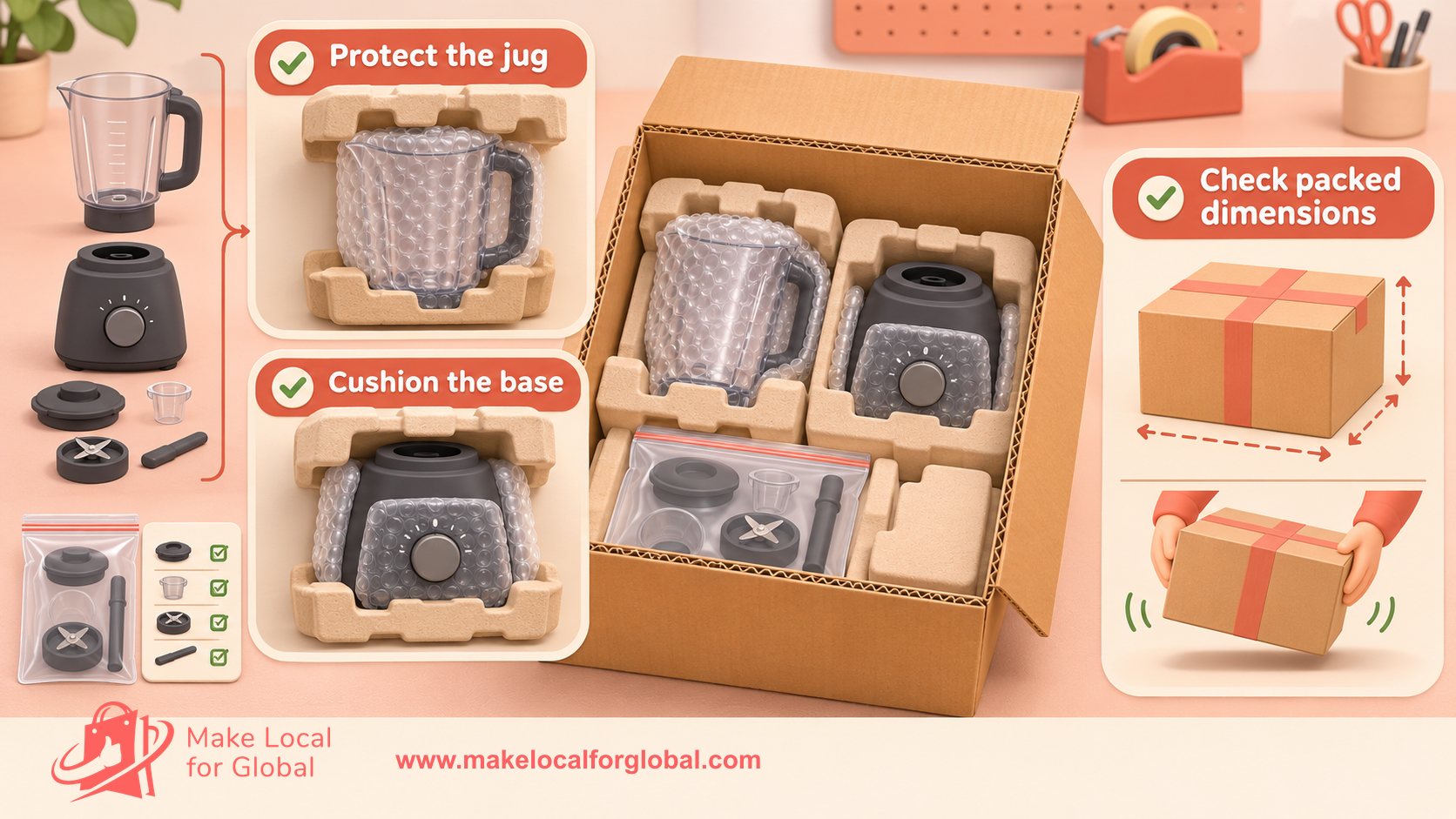
The blender’s jug, blade assembly and motor base may need separate protection. Use the supplier’s inner packaging if it holds the unit securely. Shake the closed carton gently to detect movement, then pack a sample parcel and check that the jug cannot strike the motor base or accessories.
Measure the finished parcel and weigh it with the paperwork and any outer carton. Compare the dimensions with the carrier’s current parcel limits. Record the shipping weight by model; a larger jug or accessory set may move the order into another price band.
Before shipping sale stock, send a test parcel through the service you intend to use or ask the carrier about suitable handling for a fragile electrical appliance. Keep photos of the packed unit and carton closure. They help you investigate transit damage and improve the packaging if breakages appear.
Store units dry and protect cartons from crushing. Keep batch or serial identifiers linked to each order. If the supplier changes the outer dimensions, packaging materials or model code, recheck postage, storage and the product page before accepting the revised batch.

Launch with one clear product page and a small stock level you can support. Give each channel a distinct link or campaign label so you can tell where visits and orders came from. Do not treat impressions, likes or page views as a sale.
Speak with people from the chosen buyer group. Share a concise product comparison that includes capacity, intended use, included parts, delivery estimate and price. Record which feature prompts a question and which detail gives them confidence to continue.
If the same question appears several times, improve the listing before increasing promotion. If no one can explain why your product fits their job, narrow the audience or rethink the model. Do not buy more units to compensate for a vague offer.
Run the written sample tests and save the result. Reconcile the model code on the unit, manual, declaration, carton and supplier invoice. Check the current Great Britain or Northern Ireland rules for the markets you plan to serve. Ask a qualified adviser to resolve missing product-safety documents before the listing goes live.
Measure a packed sample. Get current carrier prices and calculate your minimum contribution by channel. Set aside a realistic amount for returns, replacement parts and support time. Check WEEE and packaging responsibilities before you import or private-label stock.
Publish the page with accurate photos, capacity details, instructions, delivery terms, contact information and return information. Ask a small group of suitable shoppers to review the page for missing answers. Do not ask for a positive review; ask where they hesitated or what they could not verify.
Use a modest, fixed promotion budget that the business can afford to lose. Change one element at a time, such as the main photo or the delivery message. Record spend, visits, add-to-basket actions, orders, questions and cancellations by channel.
Review the first buyer conversations, orders, cancellations, parcel damage, support requests and return reasons. Compare the actual contribution with your model. Update delivery or packaging assumptions using paid invoices, not early guesses.
Reorder only when the evidence and cash position support it. If the blender sells but creates repeated questions about a replacement seal, investigate supply before scaling. If shoppers click but do not order, check the price, product facts, delivery estimate and trust information before increasing ad spend.
Buying by wattage alone. Buyers care whether the appliance fits a task, not only how much power it draws. Compare jug design, instructions, batch size, controls and the results of a repeatable sample test.
Mixing appliance types in one unclear listing. A personal cup blender, hand blender and countertop jug blender have different parts and use patterns. Separate them unless the product is genuinely one system with clearly identified attachments.
Accepting a generic compliance pack. Ask for documents tied to the exact model, brand, factory, plug and accessories. If the supplier cannot show a match, do not assume a similar document covers your unit.
Treating a sample as a production guarantee. A sample can reveal a problem, but it cannot prove that every later unit is identical. Set quality checks and ask the supplier to tell you about component or factory changes.
Leaving out the parcel. A blender that fits a small box can become expensive after adding a protective insert and outer carton. Price the packed sample, not the product base alone.
Ignoring replacement parts. A cracked jug or missing lid can turn a low-cost product into a full return. Ask how parts are ordered, what they cost and whether the model will stay in production.
Promising too much in the copy. Broad claims about ice, nuts, hot soup, noise or lifespan create questions and complaints if the manual does not support them. Use the model’s instructions and the evidence you hold.
Treating an online return as a discretionary favour. Tell customers how cancellation, delivery, faults and refunds work. Make the wording match the current rules and handle each product condition consistently.
It can suit a seller who can identify a specific buyer, verify a model and support the appliance after delivery. The category brings electrical product responsibilities, bulky parcels and potential return costs too. Test a small offer and calculate contribution before committing to a large stock order.
Start with the buyer task you have evidence for. A personal blender may suit single drinks, a countertop jug model may fit family batches, and an immersion blender may suit people who blend directly in a pan. Compare the sample, instructions, parts supply and packed cost before deciding.
Test a sample from the supplier and factory that will make your sale stock. Follow the manual, record the model and batch, repeat the intended use and inspect the parts customers handle. Set a separate incoming-stock check for later batches, especially if a supplier changes components.
Possibly, but importing or selling under your own name can bring manufacturer, importer, electrical safety and producer-responsibility duties. Check the exact model’s documentation and your role before ordering. Get product-safety and legal advice if you are unsure.
Show the exact model, intended uses, jug or cup capacity, dimensions, motor rating as stated by the maker, settings, included parts, cleaning directions, warranty route, spare-part details, delivery estimate and return information. Add real photos of the model and avoid claims that the manual or your evidence does not support.
Pack a real sample with the protection you plan to use, then weigh and measure the closed parcel. Ask the carrier for a quote using the actual destination and service. Include the packaging and delivery cost in the order model, then recheck it when a box or bundle changes.
Some do. The UK guidance says manufacturers, own-brand sellers and commercial importers can be producers, with registration and reporting duties. The exact obligations depend on your role and annual tonnage, so check current guidance and keep sales weights from the first order.
Only if the instructions for that exact model allow the use and your product information supports the claim. Some models have limits on hot ingredients, dry blending or ice. Quote the manual accurately and show the relevant warnings.
Give the buyer a clear support route and retain the order, model and batch details. Ask them to stop using a unit with a damaged cable, unusual heat, smoke or a loose blade. Investigate the fault, follow the relevant consumer rules and tell the supplier or authority where required.
The amount depends on the supplier minimum order, sample costs, compliance work, storage, packaging, delivery, site or marketplace fees and promotion. Price a real order from supplier to customer before setting a budget. The cost table above is an illustration, not a funding target.
Compare them using actual fees, buyer access, customer support time, return rates and the amount of control you need over the brand. A marketplace may be useful for a small demand test. An independent store can give you more control over product detail and repeat customer communication, but you must bring shoppers to it.
Choose one buyer, compare a small number of blender types and request the exact documents for the model you plan to sell. Test a sample using its instructions. Measure the finished parcel, include every cost and write the page around facts a buyer can verify.
Then run a small launch with a clear budget and a record of questions, clicks, orders, returns and damage. Keep the range narrow until the product and fulfilment process work for real customers. If you expand, add a model only when it has a distinct job, a verified supply route and a contribution calculation that stands on its own.
Tell Make Local for Global what you want to sell and what stage you are at. You can review the available store options before choosing a next step.
PREFERRED SOURCE
Like what you’re reading? Add Make Local for Global as a preferred source on Google to see more of our articles when you search.

Build your online presence without having to figure out everything yourself.