

READY TO SELL gas fire pits ONLINE?
Get a store built for you in 5 days, plus training and support to help you start, run, and grow your Alternative business.

Plan a documented gas fire pit range, verify the exact model and market, price bulky delivery, and create clear product information before taking orders.


Gas fire pits can make a promising outdoor-living product, but they are not a casual first stock purchase. Buyers need a clear idea of the size, fuel arrangement, included parts, safe-use limits and delivery method. Sellers need to know the exact model they are offering and the rules for placing it on the market. A supplier photograph and a low unit price are not enough.
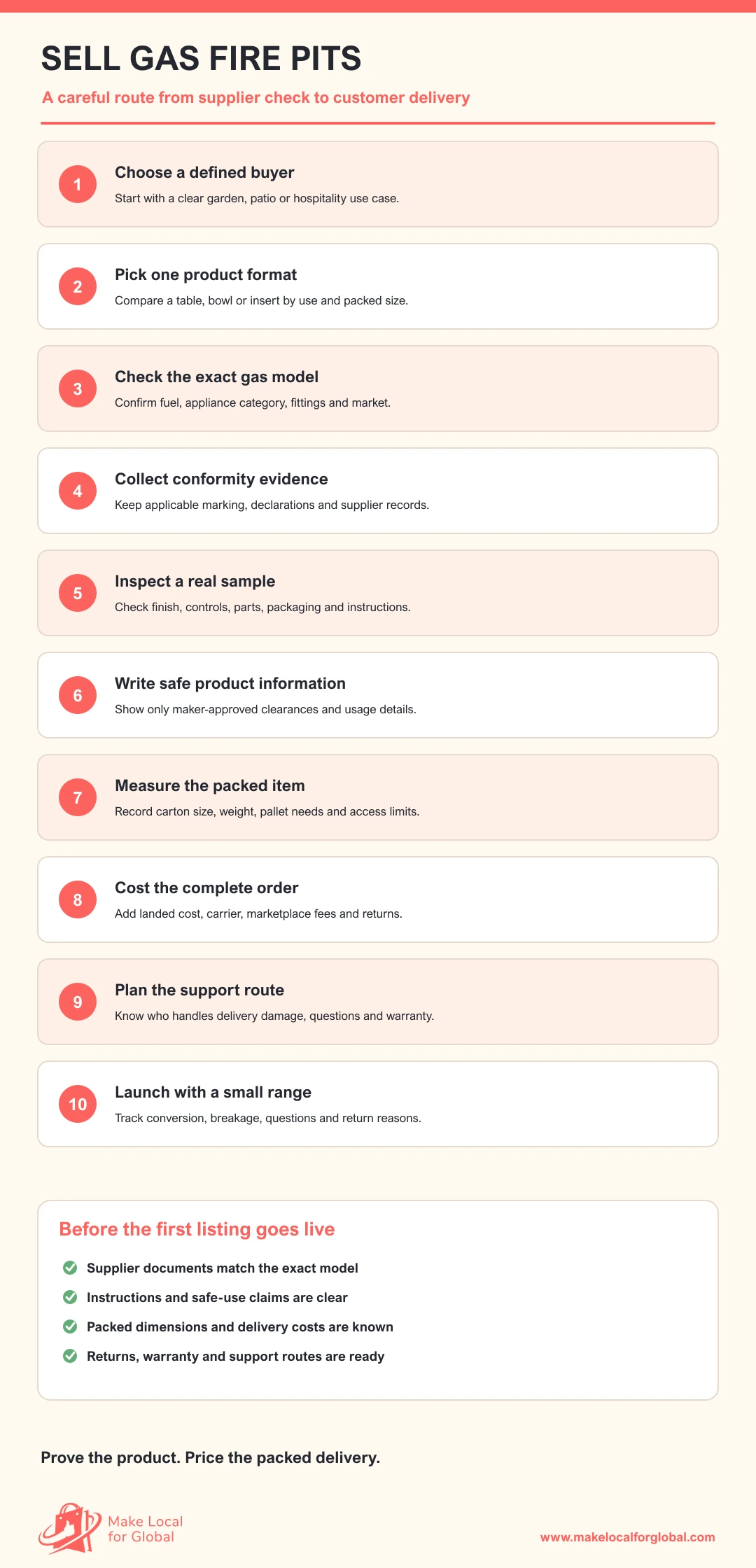
To sell gas fire pits online, choose a specific buyer and product format, verify the exact appliance and supplier records, inspect a sample, calculate the full delivered cost and build a product page that answers installation, use and after-sales questions. Start with a small range you can document and support. Keep claims tied to the manufacturer’s current instructions and evidence.
This guide is for sellers planning a UK-focused ecommerce range. Gas appliance rules differ by market and can change. The examples below are practical planning steps, not legal advice or a substitute for product-specific conformity assessment. If your business will import, brand, modify or assemble an appliance, establish your legal role and get qualified regulatory advice before you buy stock.
Check whether your fire-pit idea fits your budget and selling plans
Use MLFG’s Ecommerce Pathfinder to compare your starting options. Its result is a planning aid, not a forecast of demand or revenue.
“Gas fire pit” covers several products. A rectangular fire table may be a centrepiece for a furnished patio. A low bowl may suit a smaller seating area. A compact portable model has different portability, fuel and storage questions. An inset burner may be designed for integration into a particular outdoor kitchen or surround. These are not interchangeable products, even when search results place them together.
Begin with the person and place you understand best. You might serve homeowners furnishing a compact patio, holiday-let operators looking for outdoor furniture with documented materials, garden designers who need a documented product for a project, or hospitality venues replacing a group of existing units. Each buyer expects different dimensions, lead times, service and proof.
Write a short buyer statement before you speak to suppliers. For example: “We help owners of furnished patios choose a compact, documented gas fire table with clear fuel and delivery information.” This is a hypothesis to test, not a slogan to print on every page. Use it to decide which sample to inspect and what questions to ask prospective buyers.
List the reasons a customer might hesitate. For a homeowner, common questions may include whether the appliance fits the space, which fuel it uses, what comes in the box, how it is ignited, how the product is protected when not in use and how a large parcel will arrive. A trade buyer may care more about repeat availability, delivery windows, batch consistency, replacement parts and warranty response.
Do not guess which concern matters most. Talk with people who buy outdoor products, read relevant public reviews, study questions on comparable listings and ask a local garden or outdoor-living business what customers routinely misunderstand. Note the exact wording of questions. “Will this fit between my chairs?” points to a useful dimension diagram. “Does the price include a regulator?” points to a product-page content gap.
Keep observations distinct from proof of demand. A like on a social post is not an order. A message asking for a delivery quote is a stronger signal, but it may still not become a sale. Track page visits, saved items, calls, quote requests, completed checkouts, cancellations and return reasons separately. These measures show where people leave the buying process.
If you want a structured way to compare an idea with your time, budget and preferred sales model, try MLFG’s Ecommerce Pathfinder. Treat its suggestions as starting questions for research, not a promise of demand or revenue.
New sellers often start with too many nearly identical models. That makes product photography, stock control, parts support and customer service harder before there is evidence that shoppers want every option. A useful first range can be small: one format, a carefully chosen alternate size or finish, and perhaps one accessory that fits the same customer.
| Format | Buyer question | What to verify before listing |
|---|---|---|
| Fire pit table | Can it work as a focal point and a usable table? | Overall dimensions, burner layout, surface material, heat clearances and maker-approved use |
| Fire bowl | Does its height and shape suit the seating area? | Diameter, stability, burner arrangement, weather protection and handling weight |
| Portable tabletop unit | Is it genuinely portable and compatible with the stated fuel? | Exact fuel system, connection method, intended setting, included parts and maker instructions |
| Inset burner | Is it compatible with this specific surround or kitchen? | Approved installation details, cut-out dimensions, ventilation requirements, gas supply and professional installation requirements |
Illustrative figures only. Replace them with current supplier, carrier and channel costs.

The table helps compare formats; it is not a safety specification. Use the instruction manual and conformity records for the actual model. Never infer that an inset burner is suitable for a homemade enclosure from its dimensions alone.
An open flame is not a decorative feature that can be described independently from the appliance. Keep product claims about use, location, clearances, fuel, wind protection, covers and accessories within the manufacturer’s documented instructions. If a supplier cannot provide the information needed to describe a model safely, do not fill gaps with assumptions.
Each size, colour, finish and fuel configuration creates another version to identify and explain. A “small” and “large” model may use different regulators, burner outputs, packaging or spare parts. A finish option may have a different care routine. Before you add a variant, check that your supplier will identify the correct model on the carton and invoice, and that your stock system can keep the instructions and customer support details matched to it.
Build a simple range sheet. Include supplier model code, appliance category, intended fuel, dimensions, weight, finish, included components, manual revision, conformity documents, warranty, carton details and supplier contact. Use the sheet to compare candidates side by side. If you cannot fill a field accurately, mark it as an unanswered supplier question rather than guessing.
You can map offers by role without ordering all of them at once. An entry option might be a compact portable unit for a smaller patio. A core offer could be a rectangular fire table that suits the customer you selected. A project option might be an inset burner, held back until you have the model-specific installation details and a support route for the type of buyer who needs it. These labels describe your range plan, not product performance or price.
Gas fire pits are gas appliances. A seller’s obligations depend on the product, how it is supplied, the destination market and the seller’s role in the supply chain. A retailer distributing a compliant item is not in the same position as a business importing it, selling it under its own name or changing it. That distinction must be settled before placing an order.
For Great Britain, government guidance describes the gas-appliance rules, conformity routes and economic-operator responsibilities. Northern Ireland has a separate route, and importers must read the guidance for that market rather than copying a Great Britain checklist. The permitted marking route differs by market and assessment: Great Britain can use CE or UKCA routes when their conditions are met; Northern Ireland uses CE, with CE plus UKNI in defined cases. Start with the Great Britain guidance on gas appliance rules and the Northern Ireland guidance. Confirm the current marking and documentation requirements for the product and destination before sale.
Do not rely on a supplier saying “it has a CE mark” or sending a photograph of a label. Ask for the documents relevant to the exact model and the intended market. Check that the product marking, manufacturer or importer details, model code, instructions and declaration refer to the same item. A document for a similar-looking model is not evidence for the model you plan to list.
Send the same due-diligence questions to each supplier. Ask for concise written answers and documents, not a sales brochure alone. Questions can include:
The answers should be specific enough to verify against documents and samples. If the supplier uses vague language, will not identify the manufacturer, or cannot match records to a model code, pause the purchase. A low unit cost is not a reason to take on an unknown compliance or customer-safety problem.
Buying from a UK wholesaler may leave a seller with distributor responsibilities. Bringing goods into a market from another country, making a product available under your own name, or changing it can create different duties. Product marking alone does not identify every obligation. The scope depends on the arrangement, the destination and the regulations that apply at the time.
Before importing, ask a product-compliance specialist to map the chain: manufacturer, authorised representative if applicable, importer, distributor and retailer. Confirm who retains the technical file, who handles corrective action, who can trace a batch and what happens if a safety issue is reported. Put these responsibilities in the supplier agreement. Keep records in a place you can access if the supplier relationship ends.
For general product-safety duties, read the current government advice for businesses. If you sell into Northern Ireland, check the separate rules that apply there as well. Do not assume a product that may be supplied in one part of the UK is automatically ready for every other market.
Do not launch from a supplier’s catalogue image alone. Buy or obtain a production sample of the exact product you intend to sell. Compare it with the documents and product page. Make a dated record of what you received, including the carton, labels, parts, manual revision and any differences from the supplier’s specification.
Your inspection is a seller’s quality check, not a substitute for the manufacturer’s conformity assessment or a safety test. Do not modify the appliance, change a fuel component or conduct gas work as part of an informal inspection. Any safety-critical work must be handled by a competent person in line with the rules and maker’s instructions.
Use a checklist that covers customer experience and traceability:
Do not infer that a part is safe or correct from its appearance. If a regulator, hose, fitting or burner component differs from the document, stop and obtain written confirmation from the manufacturer or supplier. Keep the returned response with the model record.
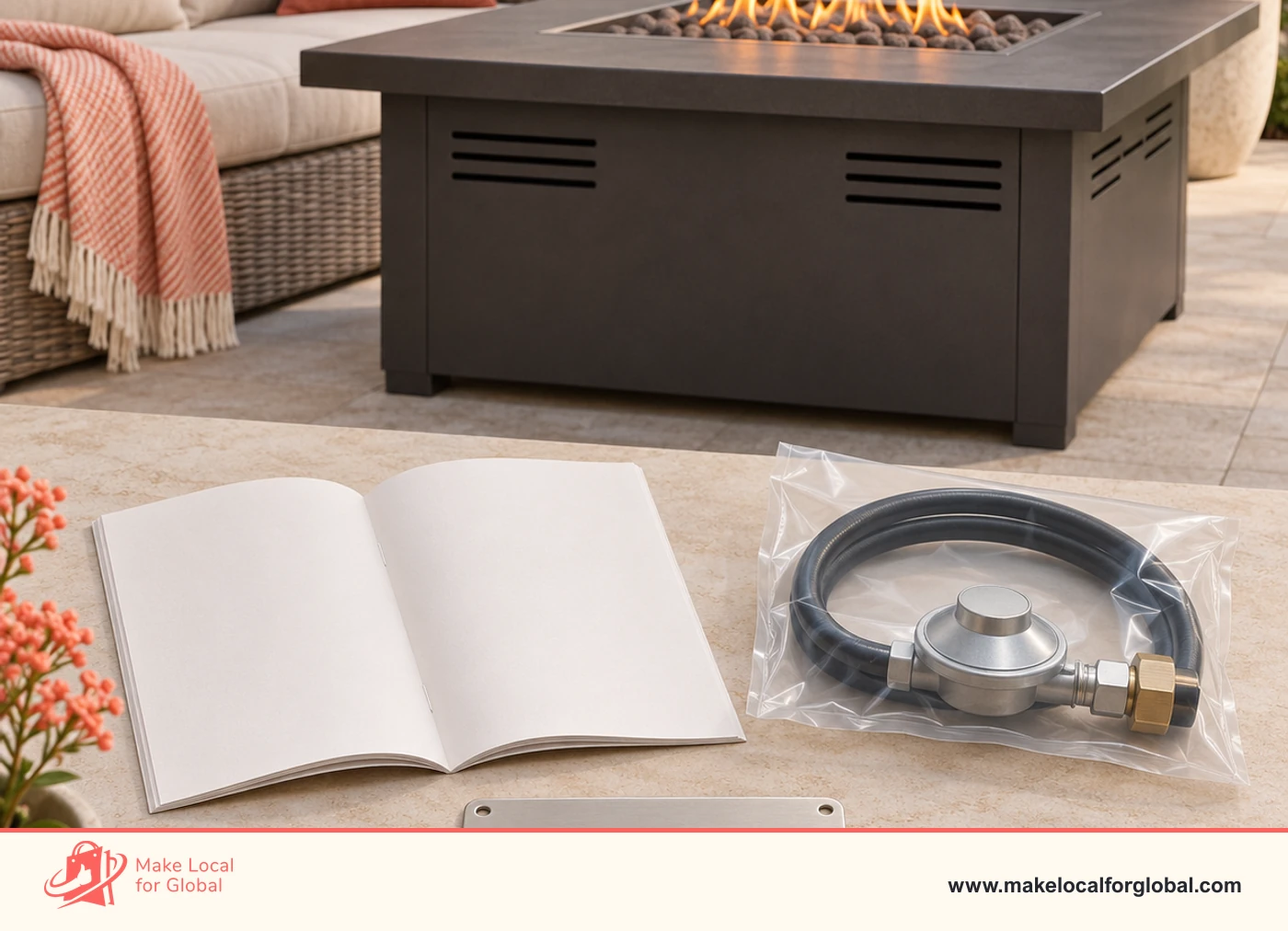
Create one digital folder for each model, not one general folder for the whole range. Store supplier correspondence, invoices, current declarations, instructions, photos of product markings, sample inspection notes, conformity advice, warranty terms and change notices. Record the date you received each item and who supplied it.
Use a controlled filename such as `supplier-model-manual-revision-date.pdf`. Avoid replacing an old file without keeping its revision history. If the supplier changes a component or manual, update the listing only after confirming which stock has the old or new specification. If a customer reports a safety concern, a clear record helps you identify affected units and give accurate information quickly.
A good product page helps a shopper decide whether the product fits their setting and whether the supplied arrangement is right for them. It does not turn the product page into an installation manual or promise that an appliance is safe in every garden. Make the source of each technical claim clear and keep it consistent with the manufacturer’s instructions.
Use the exact product type and model family in the title. A clear title might identify a “rectangular propane gas fire table” if that wording matches the manufacturer’s product and supplied configuration. Avoid vague labels such as “luxury garden fire” that hide the fuel and product form. Use “natural gas compatible” for an LPG appliance only when the maker provides a supported configuration for that exact model.
Use a short opening paragraph to state who the product may suit, its overall footprint, fuel type as documented and what is included. Separate confirmed details from options. If the image shows an accessory that is sold separately, say so beside the image and in the specification list.
State external dimensions using consistent units and show a diagram with the measurement points. For tables, include the top surface and base dimensions where they differ. For bowls, state the outside diameter and height. For inset burners, identify the manufacturer-approved opening dimensions and installation conditions, if those are part of the verified product information.
Do not use only “small”, “medium” or “large”. Explain what the measurement describes. Customers need to compare the product with seats, a table, a wall or a route through a garden. Include the assembled dimensions and packaged dimensions separately. The first helps with fit; the second helps with delivery.
If weight affects moving the parcel or handling the appliance, state whether it is product weight or packed weight. Do not make an unsupported promise that two people can carry it. If delivery is palletised or kerbside, describe that plainly and make access constraints visible before checkout.
The product page should say what fuel configuration the exact model is designed for and what the customer needs to provide. Spell out whether a cylinder or fuel is excluded. If a regulator, hose, wind guard, cover, decorative media or battery is included, identify it by name and, where appropriate, the supplier’s model code. If it is not included, do not leave the shopper to infer that it is part of the price from a photograph.
Use “ready to use” only when the manufacturer confirms what set-up is allowed and the listing describes it accurately. A customer may need a fuel cylinder or a qualified installer, depending on the product and the installation. Refer to the model instructions and competent professional support. Do not write step-by-step gas connection or leak-testing advice when you lack the authority and qualifications to provide it for that product.
For domestic gas work in Great Britain, HSE says the person working on a gas appliance must be Gas Safe registered and competent in the relevant area. Direct customers to the appropriate professional route rather than presenting a general ecommerce description as installation guidance. See the HSE domestic gas FAQs. Requirements and registers can differ by jurisdiction and work type, so make the customer check the local requirement.
Only publish clearance, location, weather, wind, cover and storage advice taken from the instructions for the exact model. If the manual says outdoor use only, display that restriction where a shopper can see it before buying. Do not infer that a patio, balcony, conservatory, pergola or covered area is appropriate. A flame guard or glass screen does not automatically change the appliance’s permitted use.
Use clear language to explain that the buyer must follow the supplied instructions and keep the product away from conditions the manufacturer excludes. If the manual requires that the unit be cool before covering, state that exactly. Do not invent a cooling time or recommend a universal clearance based on a different model.
Include maintenance details the supplier supports: how to clean named surfaces, what to do with decorative media, which cover fits, what to store indoors and how to order replacement parts. Keep cleaning advice within the manual. Do not recommend solvents, abrasives or repairs that the manufacturer does not authorise.
Use original images of the exact sample wherever possible. Include a clear product photograph, a scale or dimension view, a close-up of the finish and controls, and a box-contents image. If a styled garden scene shows furniture, a cylinder, cover or other accessory that is not included, say so beside the image.
Photograph the real product from a consistent angle and use even, natural light. Include one scene that shows proportion beside ordinary outdoor seating without implying a universal safe distance. Add an annotated dimension diagram with tidy labels and an actual font, not text generated inside the image. Keep each label short, use consistent units and leave open space around the product. At small screen size, a buyer should still recognise the product and read the headline or key dimension.
Alt text should describe what the image conveys, not repeat a list of keywords. For example: “Charcoal rectangular gas fire table shown on a paved patio” is more useful than a string of search phrases. A decorative image that adds no information may need empty alt text if your platform supports it. Captions can clarify whether pictured accessories are included.
After validating the first sample, decide whether the second product solves a different customer problem. A table and a bowl may serve different garden layouts. A second colour may be only a cosmetic choice. A cover or wind guard could be useful, but only if the maker confirms its fit with the exact model and the listing makes compatibility clear.
For each possible SKU, compare customer, dimensions, compatibility, packed weight, evidence completeness, supply lead time, support, landed cost and likely delivery method. Score each from 1 to 5 only after setting a definition for each score. A “5” for documents might mean the model and destination market are verified with current records; a “1” might mean the supplier has not answered. This avoids scoring based on vague impressions.
Do not let a lower unit price outweigh missing evidence. A model with a slightly higher purchase cost may be a better first product if the supplier can provide the right documents, spare parts and reliable cartons. You are buying the ability to make a credible offer, not just the appliance.
Write down what you will not stock yet. You may decide to exclude inset burners, which need project-specific installation; avoid multi-fuel systems when compatibility questions exceed your current support; or leave out a large hospitality model until you can handle pallet delivery. A boundary helps you say no to supplier upsells and keeps the first launch manageable.
Treat each range addition as a fresh model review. Do not copy the old page, swap the photo and assume the documentation or use instructions are the same. Confirm model code, dimensions, fuel, parts and delivery again.
Look at a mix of marketplaces, specialist garden retailers, manufacturer sites and local showrooms. The aim is to see how customers compare products and where the information is incomplete, not to copy a competitor’s words or design. Note price bands, formats, delivery promises, review themes, product questions, stock signals and the way accessories are presented.
Use a research table with one row per comparable model. Record the source URL and date, advertised price, format, product dimensions, stated fuel, included parts, delivery charge or threshold, returns wording and any point that remains unclear. Separate confirmed facts from your interpretation. If you cannot see whether an accessory is included, record “unclear”, not “included”.
Look for gaps you can address with evidence. If many listings hide packed dimensions, you could provide them clearly. If fuel information is hard to find, put it in a visible specification table. If delivery is a surprise at checkout, show the delivery method and restrictions before the buyer commits.
Ask potential customers how they use their outdoor space, which product form they prefer, what information they would need and how they expect a large item to be delivered. Avoid leading questions like “Wouldn’t this stylish fire pit be perfect?” Ask “Which of these formats would fit your garden?” and “What would you need to check before ordering?”
Once you have a verified product and a realistic fulfilment plan, test a small offer. A landing page, a local event display, a limited purchase order or a clearly labelled enquiry campaign can help you learn. Do not accept payment for stock you cannot supply within the terms presented. Do not advertise an unverified product as compliant or ready for sale.
Track a simple path: views, specification interactions, delivery questions, basket additions, checkout starts, paid orders, cancellations and returns. If views are high but buyers ask the same question, improve the page. If people abandon after the delivery quote, revisit the product or the shipping model. If orders convert but damage returns are high, review the carton and carrier handling before increasing stock.
Potential sources include established UK importers, specialist outdoor-living distributors, appliance manufacturers and contract suppliers. Verify that the business exists, can identify the manufacturer, has a route for current documents and can support faults and warranty cases. Ask for trade references where appropriate and check how long the supplier has handled this category.
Request a sample before committing to a large minimum order. Check the packaging and delivery from the supplier, not the product in a showroom alone. Ask whether the sample is from the same production line and specification as future stock. If it is a demonstration sample, request confirmation that it matches the sale version.
Agree in writing how you will be notified of a product, component, manual or packaging change. Ask whether the supplier can give advance notice before substituting a model. Make sure you can stop an order or listing if a change affects the product information or compliance evidence. Keep supplier details for warranty claims, spare parts and safety reports.
If you will import, consider currency movements, freight, customs, tax, lead time, damage in transit, cash tied up in inventory and the cost of regulatory advice. A factory quote is not your landed cost. Get a written quote that states Incoterms or the agreed delivery responsibility, insurance, payment terms, minimum order, sample cost, dispatch date and what happens if goods fail inspection.
Gas fire pits can be expensive to move and return. Build the price from the full order economics, not the supplier’s unit price. Keep one-off launch costs separate from costs that repeat for every order.
For a typical sale, list:
Do not count VAT as profit if you are VAT registered. Keep tax treatment in your bookkeeping and get an accountant to review your assumptions. If your products have different delivery costs or price points, calculate margin by SKU rather than using one average.
The figures below are invented planning values, not current market quotes. Replace them with supplier, carrier and payment-provider quotes for a specific model before setting a retail price.
| Illustrative per-order cost | Amount |
|---|---|
| Appliance purchase and inbound allocation | £245 |
| Protective packaging and pallet materials | £18 |
| Customer delivery charge paid by seller | £42 |
| Payment and sales-channel fees | £24 |
| Average returns and warranty reserve | £20 |
| Marketing cost allocated per order | £26 |
| Variable cost before overhead and tax | £375 |
| Example selling price excluding VAT | £520 |
| Contribution before fixed costs | £145 |
Illustrative figures only. Replace them with current supplier, carrier and channel costs.
This is a contribution, not the profit you take home. It has not included website costs, salaries, insurance, accounting, storage rent or all taxes. If the buyer pays a separate delivery fee, include the amount you collect and the amount you actually pay. Do not make delivery “free” without including its cost in the price.
To find a minimum viable selling price, total the variable costs and add the contribution needed for fixed costs and profit. Then check the resulting price against the market and what the buyer receives. If the price only works when you omit an expected return collection or warranty case, the model is not viable yet.
Review the costs of running the shop too
Compare MLFG’s current store plans with your product, delivery and support costs before you choose a route.
Distance sales to consumers come with cancellation and refund obligations. The details depend on the contract and circumstances; a large item can have different practical return costs from a small parcel. Read the GOV.UK guidance on accepting returns and giving refunds and the online and distance selling rules. Make the required pre-contract information clear, including any applicable return costs for goods that cannot normally be returned by post. Have your customer terms reviewed for the markets you serve.
Before launch, ask the carrier for the return collection price and procedure. Confirm whether a pallet, two-person delivery, timed service, packaging retention or access requirements apply. Ask what happens if a customer refuses the delivery or the item arrives visibly damaged. A customer should not discover the return route only after checkout.
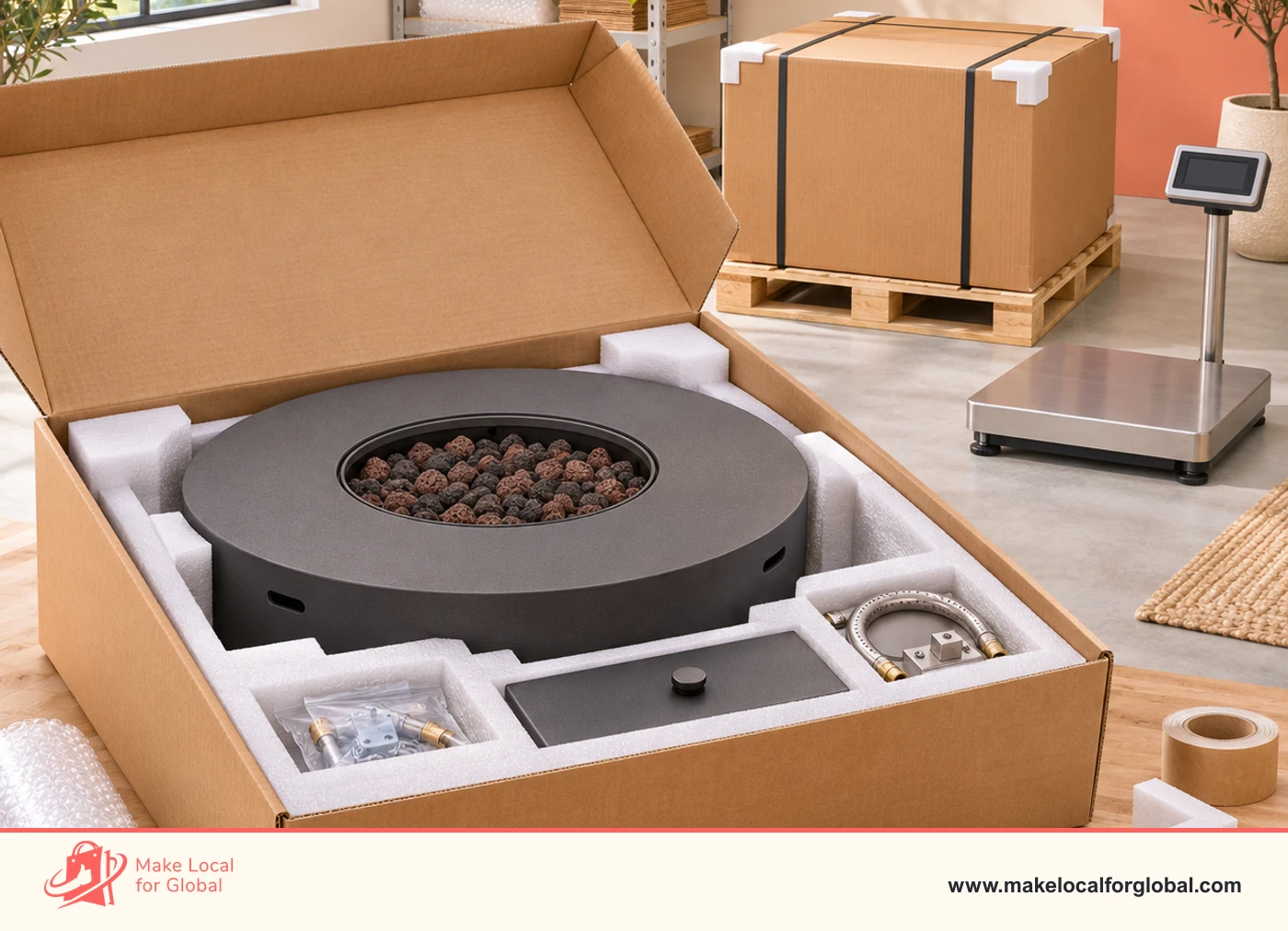
Measure the packed carton and weigh it. Do not rely on the product dimensions from a brochure. A large fire table may need a pallet or a specialist service. A compact bowl may still be heavy, awkward to grip or vulnerable to impact. Carrier limits and surcharges vary, so request a quote using the actual packed size, weight, destination and service level.
Check how the product is protected at the corners, burner area, controls, glass or stone top, decorative media and removable parts. A carton that looks sturdy may not stop a heavy component moving inside. Ask the supplier how the package has been tested and how to report repeated damage. Photograph the sample as it arrives and keep the protective inserts for reference.
If you repackage products, confirm that you have not removed safety labels, required instructions or traceability information. Keep the packaging design and contents consistent with the documented product. Test the carton through the intended carrier or use supplier evidence that reflects the same service. Do not advertise “damage-proof packaging”.
Decide where the product will be stored and who can safely move it. Check floor loading, pallet access, dry storage, stock rotation and separation from items that could damage surfaces. Gas cylinders or fuel are not needed to sell an appliance and create separate storage, transport and safety obligations. Do not bundle or ship them before you verify the applicable rules and carrier capability. A carrier that accepts the fire pit may still refuse cylinders.
State whether delivery is kerbside, threshold, room-of-choice or another service. Define the estimated dispatch window, delivery appointment process, access limitations, what happens if nobody is present and how a buyer should report damage. Use wording that matches your carrier contract. Avoid promising a delivery day you cannot control.
Ask whether the carrier serves islands, remote postcodes and multi-storey buildings. If there is an extra fee or restriction, disclose it before payment. Make the checkout collect a telephone number if the carrier needs it, and explain its use in your privacy information. For trade or project orders, quote the site delivery separately when access, unloading or multiple units affect cost.
Customers may need help with a missing part, damaged carton, unclear model identification, an instruction question or a warranty claim. Decide who handles each situation and how quickly you will acknowledge it. Create a support record that links the order to model, batch or serial information, supplier, carton and manual revision.
Write a simple escalation path:
Do not ask a customer to open a gas component, alter a regulator or test a connection to help you diagnose a fault. Support staff need a written boundary: they may answer documented product and delivery questions, but safety-critical work must go to the appropriate qualified person.
Review warranty terms before listing. Identify who provides the warranty, what it covers, any registration requirement, how long a claim may take, whether parts or collection are included and what evidence is needed. Do not present the manufacturer warranty as replacing the customer’s statutory rights.
Good ecommerce copy answers the decision questions in the order a buyer has them. Begin with the product and the setting it serves. Follow with dimensions, verified fuel configuration, box contents, delivery and support. Keep the language direct, and make exclusions visible beside the price or image that could otherwise cause confusion.
Use a consistent product information layout:
Add a comparison chart only when it helps people choose between models. Compare like with like: dimensions with dimensions, included parts with included parts, and delivery estimates on the same basis. Avoid unsupported claims such as “safest”, “best heat output”, “all-weather” or “maintenance-free”. If a performance claim matters, use the manufacturer’s documented specification and explain the test context where available.
Choose one primary phrase that matches the page’s real purpose, such as “gas fire pit table” or “outdoor gas fire pit”, only if that phrase accurately describes the item. Use related terms where they help: gas fire table, fire bowl, patio fire pit and product-specific model names. Avoid placing every variation in the title or repeating the same phrase in each heading.
Write a specific page title and meta description for each product. The title should identify the model and useful differentiator. The description should summarise verified features and the delivery or fuel detail that helps the shopper decide. Do not use the same title, meta description and opening paragraph across every product. Search snippets may be rewritten, so make the page itself useful even when the snippet changes.
For a shop article or buying guide, answer the broader research questions and link to the actual product pages. Keep product schema and availability details accurate. Never invent reviews, star ratings, stock or warranty information. Search visibility cannot be guaranteed, so measure qualified visits and completed orders rather than chasing a plugin score alone.
Before a customer pays, show the price, delivery cost, delivery restrictions, payment methods and any product exclusions that affect the order. Make the order button unmistakable and avoid adding a cylinder or paid accessory to the basket automatically. If a product is available to preorder, state a realistic dispatch window and what happens if that date changes.
Send an order confirmation with a clear support contact. For large deliveries, give the customer practical preparation information from the carrier and supplier, not an improvised appliance-use guide. Keep a copy of what was displayed at the point of purchase in your order records.
Your own store gives you control over detailed specifications, support pages, compatible accessories and the customer relationship. Running it means attracting shoppers, maintaining the site and handling checkout and customer service. A marketplace can bring existing search traffic, but check its category rules, fees, listing limits, shipping requirements and returns processes before you commit.
Before listing on a platform, verify that gas appliances are allowed in the relevant category, which documentation the platform may request, whether it requires a particular delivery service, what product claims are restricted and how a safety complaint is handled. Platform acceptance does not prove that a listing is compliant. You remain responsible for the product and the claims you make.
Consider starting with one main channel and using other channels to direct interested buyers to the complete product information. Keep stock and availability synchronised so you do not sell the same unit twice. If a platform truncates descriptions, put critical model, fuel and delivery information near the beginning and link to fuller instructions or support where permitted.
An owned website can hold a detailed fit guide, product comparison, delivery policy and frequently asked questions. MLFG’s guide to garden arches covers a related bulky garden product. For an outdoor-accessory range, see grill covers. Link related topics where they help a customer, and keep this page focused on gas fire pits.
Outdoor-living products often receive more attention as households prepare gardens for warmer evenings. The actual timing varies by region, weather and customer. Work backwards from the period when you hope to sell: supplier lead time, document checks, sample inspection, product photography, web content, carrier setup and support training all take time.
Do not overbuy on the strength of a few warm days. Keep a simple weekly view of stock, paid orders, cancellations, questions, delivery problems and supplier lead times. Set a reorder point from actual sales and replenishment time rather than a forecast copied from another season or category.
The first campaign should teach you which product information and customer groups matter. Choose one buyer, one lead model and one clear offer. Use product photographs that represent the exact item and identify any styled accessories that are excluded. Keep price and delivery terms visible in every channel.
Possible ways to introduce the product include:
Use a basic measurement plan. Record the campaign, source, product page, cost, enquiries, orders, contribution after variable costs and returns. If the campaign generates views but no serious questions or purchases, check the price, delivery and product fit before increasing spend. If enquiries convert but post-sale support consumes too much time, improve the page and check whether the product is a good match for your service capacity.
Ask for customer feedback after delivery in a way that follows the applicable privacy and review rules. Do not offer a reward only for positive reviews. Use feedback to identify gaps: perhaps the image scale is unclear, the packed parcel is difficult to move or the included parts need a more prominent list. Fix the information for everyone rather than sending the same answer one customer at a time.
Before you accept the first order, walk through the complete purchase as if you were a customer. Check the page on a phone and desktop, ask a colleague to locate the fuel and delivery details, test payment and confirmation messages, confirm your carrier’s collection process, and verify that support staff can find the right manual.
Review the range at a regular interval. Sales volume alone does not tell you whether a product is working. A model can sell well but lose money after pallet delivery, damage and returns. Another may sell slowly but create useful accessory sales or repeat trade orders. Combine financial and operational measures.
Track sales and contribution by SKU, margin after delivery and fees, advertising cost per acquired customer, return rate, damage rate, failed-delivery rate, average response time, warranty cases and stock days. Compare return reasons with customer questions. If a high share of returns relate to fit or size, make dimensions and images clearer. If damage clusters around the burner or top, discuss packaging changes with the supplier and carrier.
Set a decision threshold before the next buying cycle. For example, you might require a model to cover its variable costs, keep damage below an agreed target and show a path to repeat orders before you reorder. Choose targets that reflect your cash, storage and customer-service capacity. Review the actual result, not the target you hoped to reach.
If you discontinue a model, keep records for units already sold and provide support under the terms that apply. Remove inaccurate availability and compatibility claims at once. Keep instructions and replacement-part information available for existing customers where required.
A brochure may not identify the exact appliance or destination market. Obtain the model-specific records and match them to product markings and the unit you sampled.
Outdoor use does not tell a buyer about permitted locations, clearance, wind, cover, storage or installation. Publish only the exact maker-approved instructions and do not imply a covered or enclosed setting is suitable without evidence.
An unclear photograph can lead to an unsafe or unusable purchase. List the contents and exclusions in text, and make sure the item received matches the listing.
Large parcels have delivery, damage and return costs. Calculate the delivered order and keep a reserve for warranty support before deciding the retail price.
A lower unit price is not helpful if the product documentation is incomplete, cartons are damaged or stock sits through a season. Use the sample and test order to verify the real supplier and fulfilment process first.
Their item may use a different burner, fuel, manual or market route. Write from your verified documents and your own sample. Do not reuse another seller’s photographs or claims without permission and evidence.
Bulky or palletised delivery affects whether the customer can receive the product. Explain the service, access limits and return method as the buyer compares options.
An online seller should not guide a customer through gas work by message or video. Keep support within documented product information and refer technical work to the manufacturer or a competent professional.
Use four weeks to answer the highest-risk questions before placing a large stock order. The plan assumes you can get supplier replies and a sample within the month. If paperwork, testing or delivery quotes take longer, extend the schedule instead of skipping those checks.
Choose one buyer group and one product format. Write a list of the questions a buyer would ask, then send the supplier due-diligence questions from this article. Request exact model documents, sample pricing, lead time, warranty terms and packed-carton details. Set a spending cap for samples, advice and initial stock before you see a discount offer.
Record each supplier response in a comparison sheet. By the end of the week, you should be able to name the model, destination market, supplier contact, document gaps and next action. If the supplier cannot identify the manufacturer or match a declaration to the model, do not treat the offer as launch-ready.
Receive and document a sample. Photograph the markings, carton, included parts and product from the angles needed for a listing. Compare it with the documents. Record any missing item, confusing instruction or mismatch and ask the supplier to resolve it in writing.
Get at least one carrier quote using the real carton dimensions, weight and intended destination. Build a per-order cost sheet with purchase price, inbound freight, packaging, outbound delivery, payment fees, return reserve, marketing and fixed-cost contribution. Test how the margin changes if delivery costs more than expected or a return needs collection.
By the end of the week, decide whether to proceed, request more evidence or stop. Keep a record of the reason. A no-go decision before stock purchase is useful information.
Write the product page from the verified model details. Add dimensions, packed size, fuel, included items, exclusions, manual link, delivery method, return details and support route. Have someone who has not seen the product read the page and find the fuel, what is in the box and how delivery works. Record how long each answer takes them to find.
Set up order confirmations and support templates for delivery questions, damage reports, missing components and warranty claims. Make a clear escalation route for safety or technical concerns. Confirm that no template invites a customer to test, adjust or repair a gas component.
By the end of the week, verify the mobile page, checkout, delivery fee and support contact. Keep a screenshot or copy of the page version used for launch.
Publish one verified offer or run a limited interest campaign with accurate availability. Set a modest budget and decide in advance what result would justify another step. Track views, specification questions, delivery quotes, checkout starts, completed orders, contribution and cancellations. Avoid scaling from clicks alone.
At the end of the week, review the data with the customer questions and supplier lead time. Choose one action: continue with a small order, improve the page, renegotiate the carrier route or pause. Keep the next decision tied to something you observed, such as repeated questions about included parts or a delivery cost that removes the margin.
It may suit a seller who can source documented products, handle large-item logistics and provide dependable after-sales support. The answer depends on your buyer, supplier terms, delivery cost, compliance responsibilities and ability to fund stock. Test a small, verified range and measure the full contribution after returns and support before adding models.
Possibly, but importing or placing a product under your own name can create responsibilities beyond those of a retailer. The exact duties depend on the product, your role and destination market. Before ordering, speak with a qualified product-compliance adviser, confirm the applicable conformity process and put documentation, traceability and corrective-action duties in writing with the supplier.
Selling an appliance and carrying out gas work are different activities. You must understand the product-supply rules that apply to your role. If work on a gas appliance or fitting is required in a domestic premises in Great Britain, HSE says the person doing that work must be Gas Safe registered and competent in the relevant area. Offer installation or repair services only when your business is qualified and authorised for the work.
Ask for the current model-specific declaration and conformity evidence relevant to the market, product identification details, instructions, manufacturer or importer information, warranty terms and a process for product changes and safety reports. The correct set depends on your role and market. Have a specialist confirm any uncertainty before sale.
Do not assume that a cylinder is included or that you can store or ship it. Many appliance listings exclude fuel, but the exact offer should be verified. If you want to supply a cylinder, check separate legal, storage, carrier and insurance requirements first. State the inclusion or exclusion clearly beside the product information and price.
There is no dependable single start-up figure. Your costs can include samples, compliance advice, stock, inbound freight, storage, packaging, carrier setup, website, payment fees, photography and return reserves. Prepare a model-level budget using written supplier and carrier quotes. Keep working capital for delays, damage and warranty cases rather than committing every available pound to initial stock.
Add the landed product cost, packaging, customer delivery, channel and payment fees, marketing, return allowance and warranty support. Compare the result with current products that genuinely match the model’s format, specification and service. If the price only looks competitive after omitting an expected delivery or return cost, review the product or supplier before launch.
Start with clear photographs of the exact model. Show the overall product, key dimensions, finish, controls and box contents. Styled scenes can communicate scale, but identify accessories that are not included. Use readable labels added with a real font and check the final layout at phone size. Do not use generated lettering for safety information or product specifications.
Yes, if the marketplace allows the product and you can keep stock, product information and customer support consistent across channels. Check platform policies, fees, documentation requests, delivery rules and complaint processes before listing. Your own site can hold fuller specifications and support details; marketplaces may impose different limits.
Do not troubleshoot or ask the customer to test or adjust gas components. Tell them to stop using the appliance and follow the emergency advice for their location if there is immediate danger. Escalate the report to the manufacturer and appropriate competent professional, preserve the order and product identifiers, and follow applicable product-safety reporting and corrective-action duties.
Use the real carton size and weight to choose a carrier, inspect a production sample, keep the original protective materials, make delivery terms visible, and document the condition before dispatch. Ask customers to report delivery damage without delay through your stated process. Review every incident with the supplier and carrier; update packaging or the listing when the evidence points to a preventable problem.
Selling gas fire pits online takes more preparation than adding a garden accessory to a catalogue. Choose one buyer and a clearly defined model, verify the supply chain, inspect the sample, explain fuel and contents accurately, and price the delivery and support that sit behind every order. Keep technical and safety claims tied to the exact manufacturer’s instructions.
Start with a modest, documented range. Measure whether buyers understand the product, whether the delivery route works, whether the margin survives real orders and which support questions repeat. Use that evidence before adding formats or making a larger stock commitment.
Talk through the online-store route for your product
If you have a verified supplier and a realistic delivery quote, discuss the practical steps for presenting and selling your range online.
PREFERRED SOURCE
Like what you’re reading? Add Make Local for Global as a preferred source on Google to see more of our articles when you search.

Build your online presence without having to figure out everything yourself.