

READY TO SELL button-down shirts ONLINE?
Get a store built for you in 5 days, plus training and support to help you start, run, and grow your Alternative business.

Learn how to sell button-down shirts online: choose a buyer, compare samples, measure every size, check fibre details and price the complete order before buying stock.

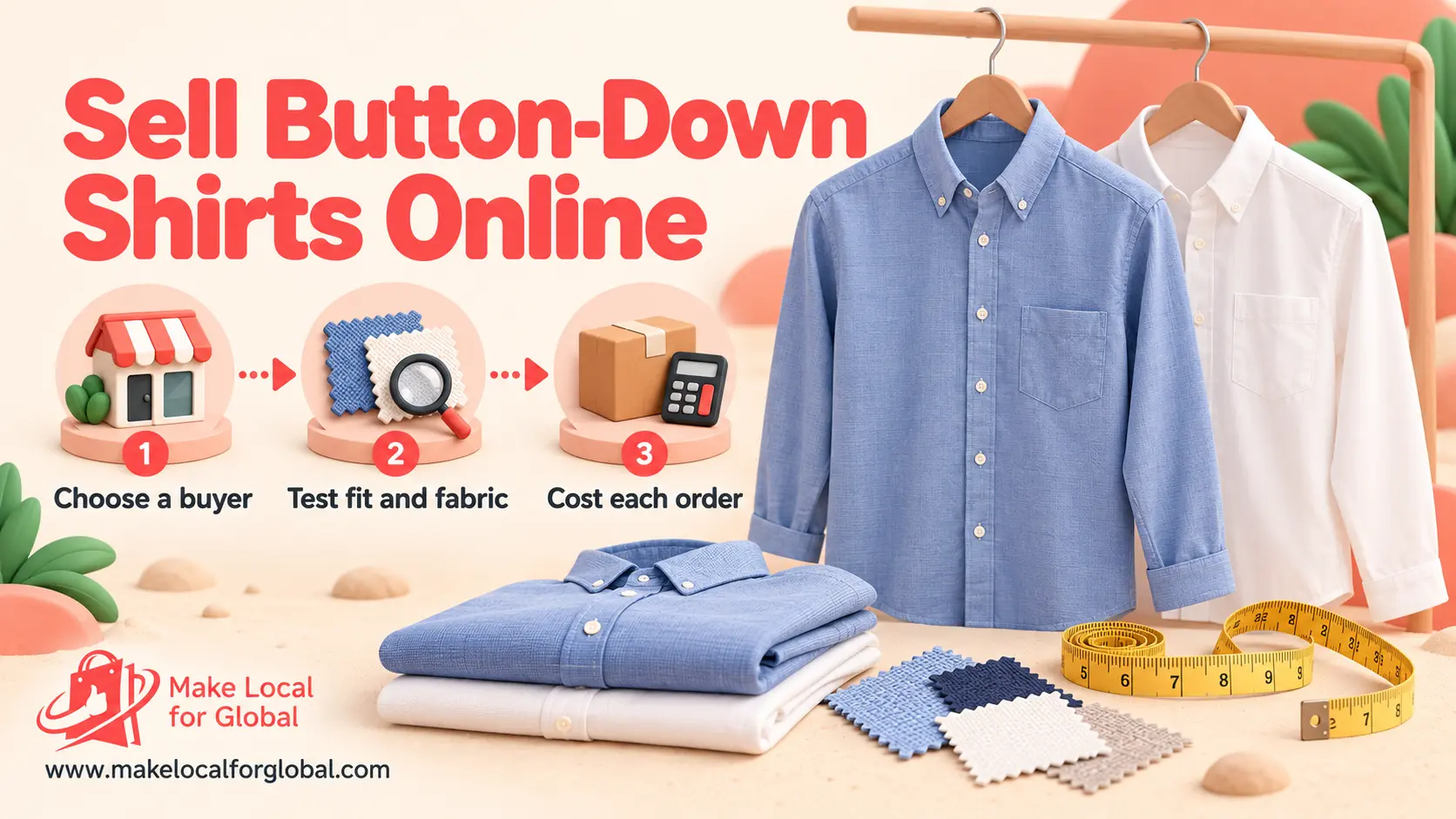
Button-down shirts can look alike in a thumbnail and fit very differently in real life. To sell button-down shirts online, choose one clear customer, test samples, measure every garment and cost a packed order before buying a larger range.
Clarify the term in your listing. Some shoppers use “button-down” for any shirt that fastens at the front; in menswear, a button-down collar has buttons that hold the collar points to the shirt. Show the collar and describe the style accurately.
Map the styles, sizes, prices and product-page details before ordering stock.
A focused range is easier to explain than a catalogue of near-identical colours. Choose a buyer and use first: casual Oxford shirt, work shirt for layering, or a light warm-weather option. Ask five people who fit that customer profile what they wear, how they want the shoulders and sleeves to sit, and what makes them return a shirt. Keep their exact words; “blue Oxford button-down” signals a different need from “white work shirt with longer sleeves”.
Start with two or three options that solve distinct needs. Fabric names alone do not confirm how a sample feels or wears. Check the weave, weight, finish, colour, care and garment measurements from the actual supplier sample.
| Option | Check | Possible use |
|---|---|---|
| Oxford-style button-down | Weave, collar, button spacing, body length | Casual outfits and layering |
| Poplin spread collar | Opacity, crease behaviour, sleeve length | Workwear or smarter outfits |
| Linen or blend | Fibre percentages, drape, shrinkage and care | Relaxed warm-weather styling |
Examples only; confirm the exact cloth and construction from a sample.
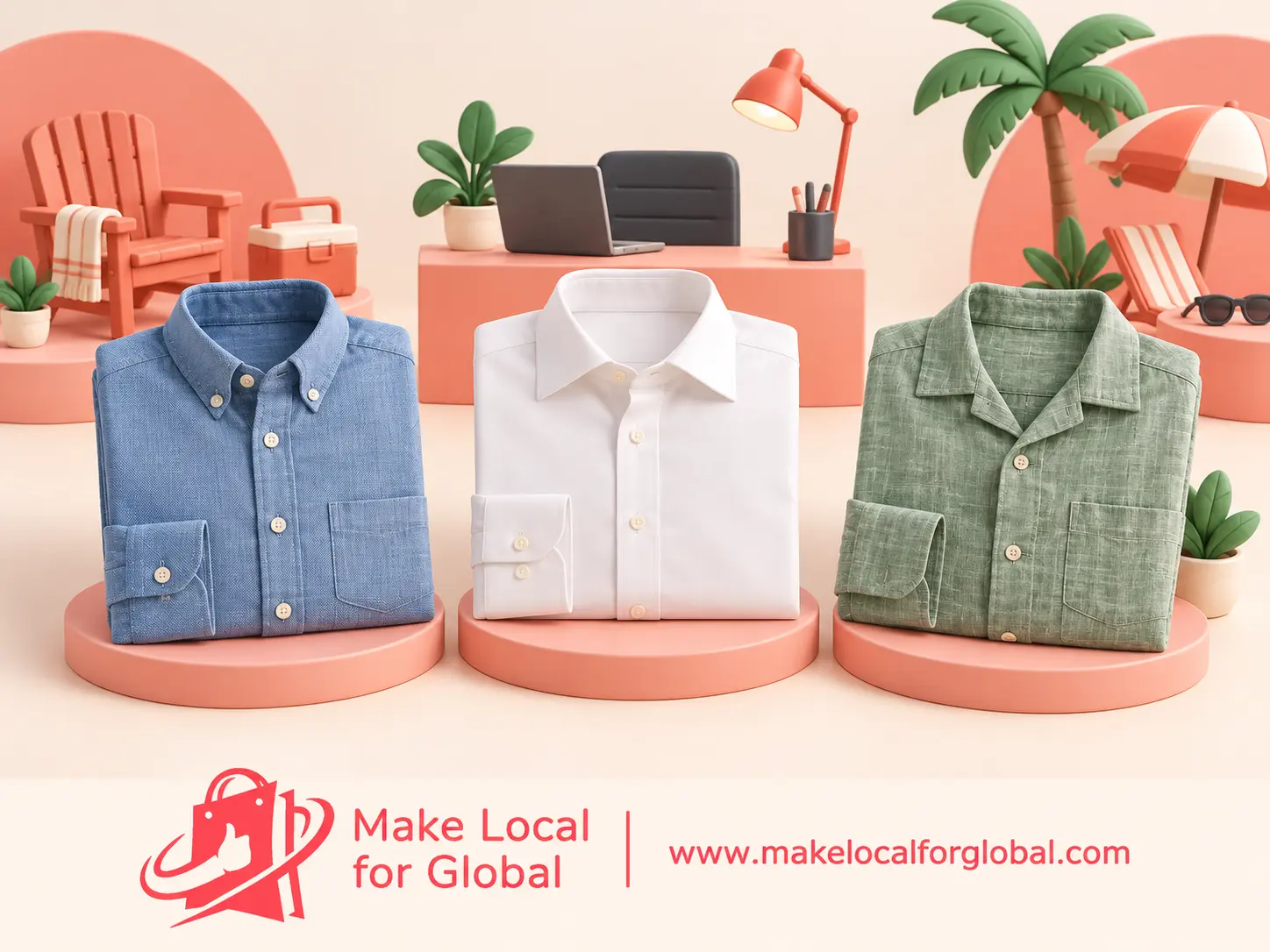
Plan the stock count before adding colours and sleeve lengths. Two styles, two colours and four sizes already create 16 variants. Decide which combinations you can afford to sample or hold, and ask suppliers about minimums and reorder lead times. For another clothing-product example, compare the choices in our guide to selling bow ties online; adapt the range to your own buyer.
Request samples in each fit and fabric you may list. Ask for garment measurements, size tolerances, fibre composition, care instructions, minimum order, lead time, defect policy and restock timing. If you are considering wholesale, private label, dropshipping or made-to-order, map the journey from order to delivery. Catalogue photos cannot show whether buttons pull at the chest or sleeves vary between sizes.
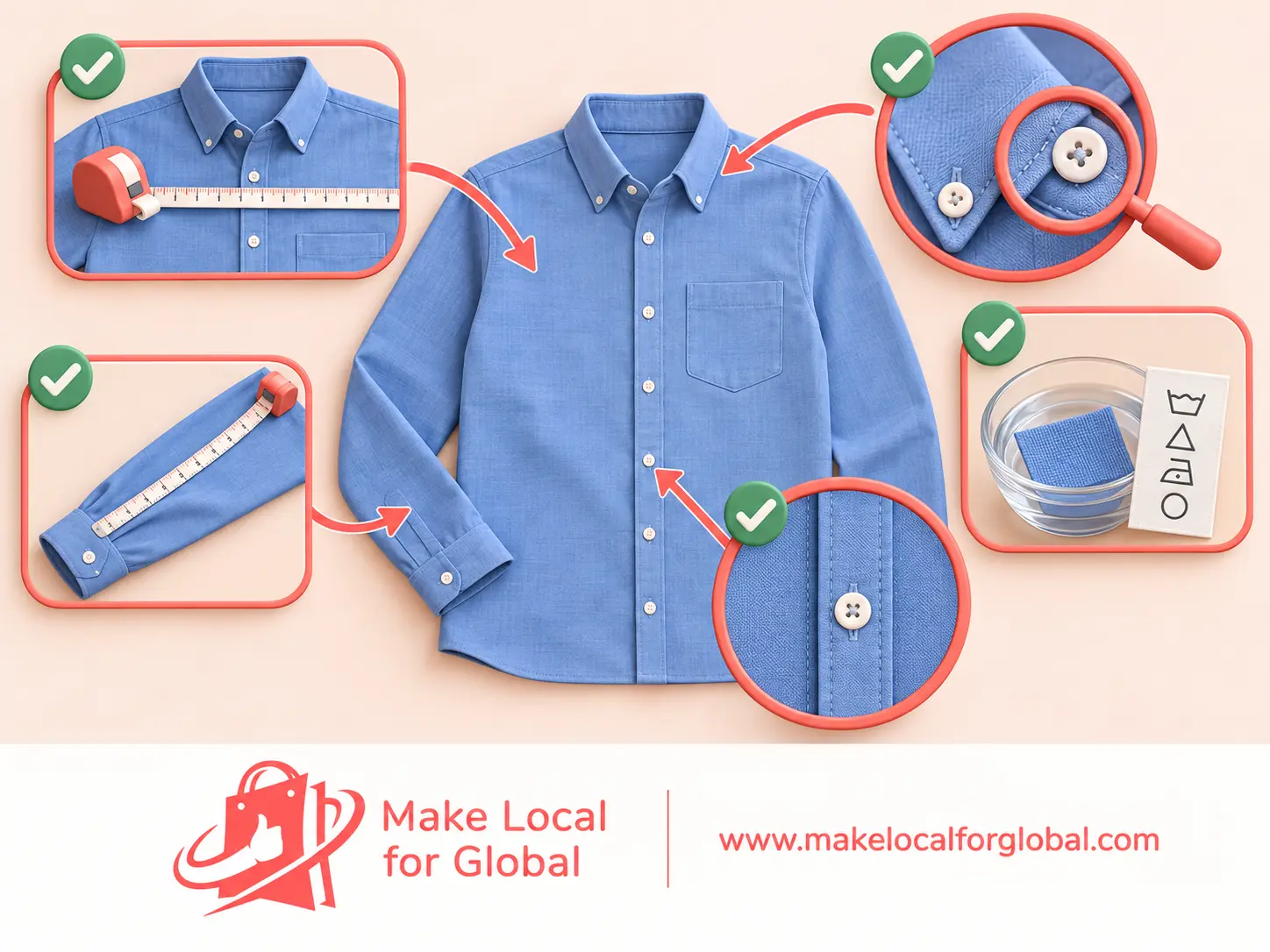
In England, Scotland and Wales, GOV.UK textile labelling guidance says textile products must show fibre content, including different contents for relevant components. Manufacturers and retailers share responsibility. Check labels and supplier records; review Northern Ireland and export-market rules separately.
Make organic or recycled claims specific, and keep evidence for the stated fibre and percentage. The CMA fashion guidance warns that broad wording can mislead shoppers about the whole garment. Keep invoices, batch references and claim evidence. Review the product safety advice for businesses for supplier traceability and record-keeping duties.
Give buyers garment measurements, not just a generic body chart. Explain how to lay a shirt flat and take each measurement, so someone can compare it with a garment they own. Include accurate model information only when you have it.
| Detail | What to show |
|---|---|
| Fit | Chest, shoulder, sleeve and back length by size |
| Fabric | Fibre percentages, weave, care and tested shrinkage notes |
| Construction | Collar, cuffs, pockets, closure and intended tuck |
| Photos | Front, back, collar, cuff, label and fabric close-up in natural light |
| Delivery | Dispatch estimate, postage, contact and cancellation information |
A specific title might be “Blue Oxford button-down shirt, regular fit, cotton blend” only when sample and label support each detail. Avoid claims such as “perfect fit” or “non-iron” without evidence. Photograph the actual shirt and show the colour honestly.

Explore the Product To Sell article collection for more examples of how product-specific measurements and images help shoppers compare options.
Include delivery, fees, returns and customer acquisition before you set a shirt price.
Example: a customer pays £42 for a shirt and £3.95 delivery. Subtract the landed shirt (£14), inbound freight share (£1.80), packaging (£1.10), postage (£3.95), estimated selling/payment fees (£4), returns allowance (£2.50) and customer acquisition (£3.50). That leaves £15.10 contribution before overheads and tax.
| Order line | Amount |
|---|---|
| Customer pays | £45.95 |
| Variable costs in example | −£30.85 |
| Contribution before overheads and tax | £15.10 |
Illustration only. Replace each figure with your real supplier, courier, platform and marketing costs.
The £4 fee is a planning estimate, not a quoted schedule. Marketplace charges vary; check your channel’s current terms. Etsy’s fees and taxes page describes several possible charges. Add storage, software, insurance, time and VAT treatment where applicable; this is contribution, not net profit.
Fold shirts consistently, protect them from moisture and test the parcel against the courier’s size band. Count packaging in the unit cost. Online buyers generally have 14 days after delivery to cancel many goods; read GOV.UK distance-selling guidance and show cancellation information before checkout. Check exceptions and each market’s rules. Log return reasons such as sleeve length, chest width, colour, fabric feel or fault, then improve the relevant listing detail.
| Days | Action | Record |
|---|---|---|
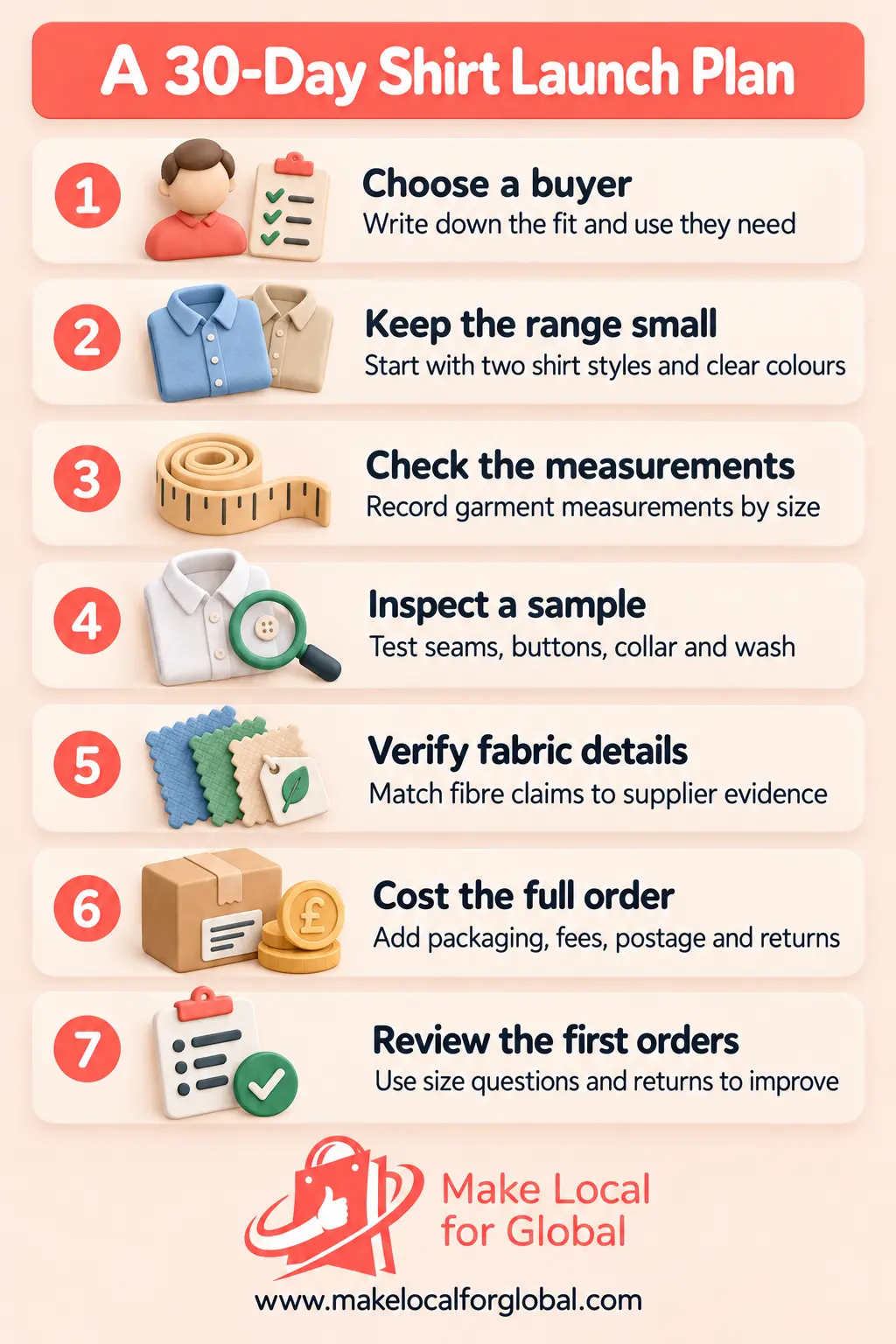
| 1–7 | Choose a buyer; compare three ideas. | Use cases, fit preferences, objections |
| 8–14 | Order and test samples. | Measurements, wash changes, lead times |
| 15–21 | Photograph, write listings and cost parcels. | Questions, postage band, contribution |
| 22–30 | Run a small sales test. | Visits, orders, returns by size and style |
It can mean a button-front shirt, while a button-down collar has buttons securing the collar points. State exactly which feature your product has.
Measure fit, inspect construction, verify fibre and care details, confirm delivery costs and retain evidence for product claims.
Choose a small number you can sample and cost accurately. Two distinct options can help you compare customer response before adding sizes and colours.
GOV.UK guidance for England, Scotland and Wales says textile products must show fibre content. Check separate requirements for Northern Ireland and export destinations.
Publish garment measurements, explain how they were taken, show details and log return reasons so you can improve the right information.
Choose one customer, order one or two samples and measure them before planning a full range. Check labels, photograph useful details and price the complete parcel.
When your range and size information are ready, review the store options or ask MLFG about a next step.
PREFERRED SOURCE
Like what you’re reading? Add Make Local for Global as a preferred source on Google to see more of our articles when you search.

Build your online presence without having to figure out everything yourself.