

READY TO SELL Gourmet Gift Sets ONLINE?
Get a store built for you in 5 days, plus training and support to help you start, run, and grow your Alternative business.

Plan a curated gourmet food gift box with practical guidance on choosing a buyer, checking labels and suppliers, costing the full order, protecting food and testing demand.

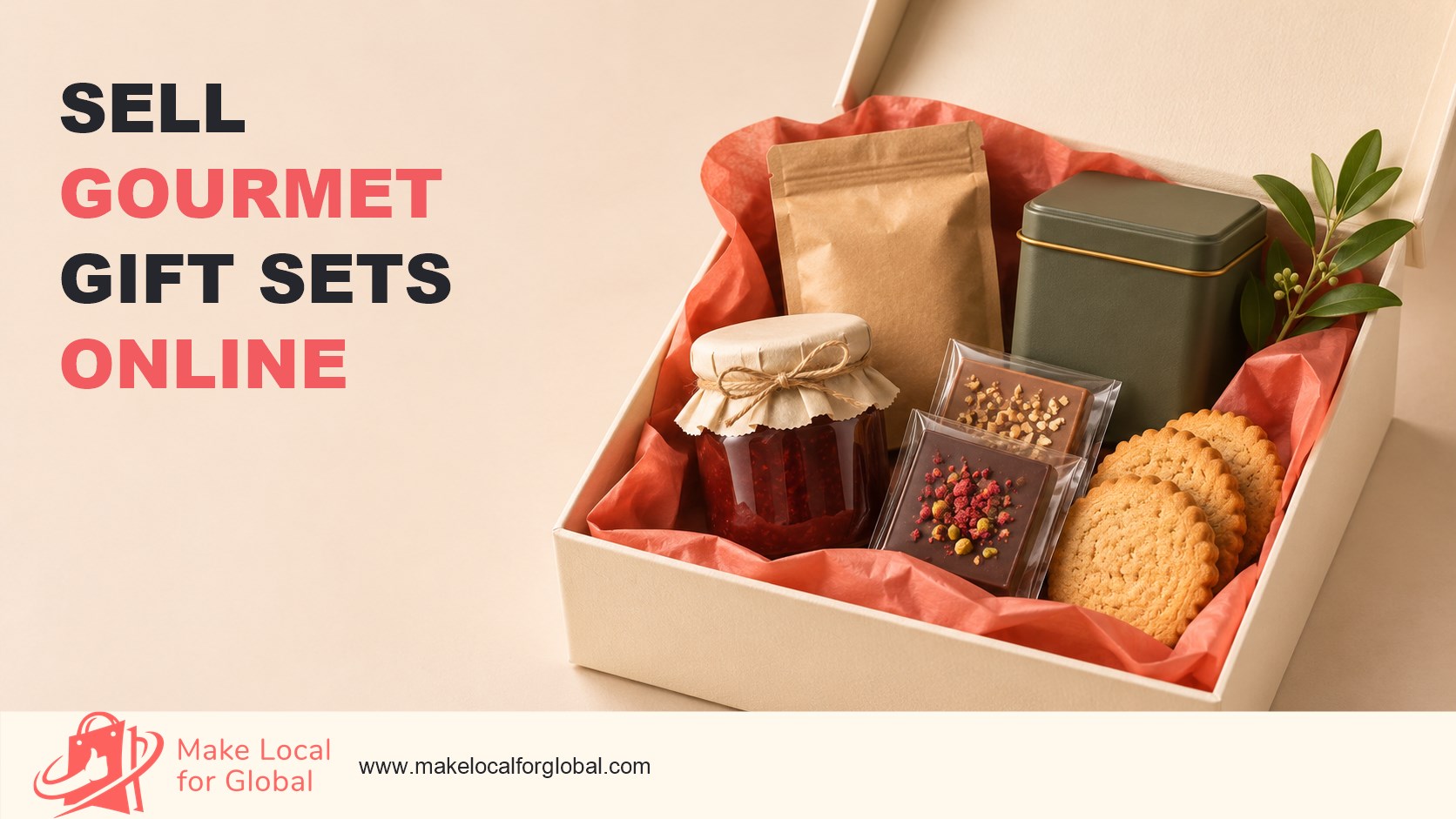
A gourmet gift set can look simple on a product page: a handful of sealed treats inside a presentation box. The shop behind it must make each component clear, keep food details accurate, protect fragile products and price the packing work. Start with a defined recipient and one coherent box, then check demand, supplier evidence, online food information and the packed delivery cost before buying a large quantity.
This article focuses on shelf-stable, prepacked food products arranged into curated gift boxes in Great Britain. It covers sellers who resell sealed products or place individually sealed items into a gift presentation box. Making, opening, portioning or relabelling food changes the work and may change which rules apply. Chilled goods, alcohol, fresh food, supplements and products sold in Northern Ireland can bring extra requirements. Check the current rules for your food, activity and location with the relevant authority before trading.
Use the free Ecommerce Pathfinder to compare possible routes before committing to stock. Treat its result as a starting point for research, not a sales forecast.
“Food lovers” is too broad to guide a first range. A set for a new-home host has different contents, presentation, price and delivery timing from a box sent to a team after a project or a present for someone who enjoys making coffee. Choose one buyer or occasion first. A narrower starting point gives you something testable: a box with a named use, a known price and a clear reason for every item.
Write a buyer card before contacting suppliers. Note who sends the gift, who receives it, the likely occasion, the sender’s budget, the message they want to communicate, the delivery date that matters and any food information they need before purchase. Keep the buyer and recipient separate. A company may place an order for twenty recipients, but each person receives an individual box at a different address. A family member may choose a present, but the recipient’s dietary needs affect whether that present is suitable.
A host-gift buyer may value a compact box that can be opened and served without preparation. A new-home set could focus on breakfast or pantry basics. A thank-you box may need a short message card and a reliable delivery date. A corporate buyer may need consistent contents, an invoice, a single dispatch window and a spreadsheet for multiple recipients. A seasonal gift may depend on a narrow order window and a firm last-dispatch date.
These are hypotheses, not proof of demand. Ask people who have bought a similar gift recently what they chose, what they paid, how they decided, what was difficult and what information they checked. Ask where they discovered the seller and how close the delivery date was to the occasion. Do not lead with “Would you buy my gift box?” A polite yes is weak evidence. A description of a recent purchase, a request for a sample price or a clear question about delivery reveals more.
A curated box can help someone choose a present, introduce several products from a small maker, provide a ready-to-serve selection or make a corporate order easier to manage. Pick one main job for the opening offer. If you try to cover every occasion in one box, you may combine unrelated food, raise the price and make the product difficult to explain.
Describe the job without claiming the set will make an event perfect or impress every recipient. “A tea-time box with biscuits, a small preserve and a brew tin” tells a buyer what arrives. “The ultimate gift for any occasion” says little about the food or the recipient. A concrete description gives you a better starting point for a name, product page and customer interview.
A set can be a gift box without being a hamper. Keep this article centred on compact, curated food assortments with individually sealed items. Sellers developing an open basket or broad mixed-product offer can compare the format with our guide to selling gift baskets online. A gift box usually needs a clear theme and an itemised contents list; a broad basket can require more room for different shapes, materials and dispatch protection.

A first catalogue can start with one main box and two variants. For example, a tea-time gift could offer a standard set, a larger set with an extra preserve and a choice of message card. Keep the food mix stable while you test the difference. If the entry box, premium box and seasonal box all use unrelated products, you will not know which choice explains the orders or the returns.
A simple range might contain:
This is a planning structure, not a required number of products. Three coherent items can make a good offer if each has a role. A larger assortment can be harder to protect, describe and cost. Do not add a low-cost item just to make the box appear fuller. Extra contents can increase packing time, the outside parcel size and the chance that one fragile product damages another.
A tea-time set could combine tea, biscuits and a sealed preserve. A coffee set might pair roasted coffee with chocolate or a small sweet. A pantry set could bring together crackers, chutney and savoury biscuits. A baking set might include chocolate, sprinkles and a packaged mix, though you need accurate ingredient information for every product. A regional set can include named products only when the origin description is supported by supplier records and the wording is not misleading.
The adjacent gourmet coffee article covers a product range centred on coffee. A box that uses coffee as one component should explain why the other items belong with it. Our gourmet chocolate guide is useful for sellers whose main offer is chocolate. A curated gift set should keep its own focus on the assembled assortment, not repeat a full product guide for every component.
Set a practical ceiling for the number of product lines, packaging materials and custom options in the first launch. A handwritten message may be manageable. Five ribbon colours, three box sizes, a replacement product choice and separate dietary versions can multiply picking combinations. Count how many possible versions you would have to photograph, label, stock and check. Start with the smallest choice set that still gives the buyer a meaningful decision.
| Set format | Buyer need | Checks before listing |
|---|---|---|
| Tea and biscuit pairing | A simple host or thank-you gift | Pack sizes, allergens, breakage and date marks |
| Coffee tasting set | Several flavours or roast profiles | Origin claims, grind, weights and freshness |
| Chocolate selection | A treat for a chosen occasion | Ingredients, allergens, heat risk and storage |
| Savoury pantry box | Condiments or snacks for sharing | Seals, glass protection, ingredients and quantity |
| Corporate thank-you set | A consistent gift sent to several recipients | Address handling, message cards and dispatch capacity |
Planning examples only. Confirm the actual product, label information, pack size and supplier terms before listing.
For every box, write a line-by-line contents sheet with the product name, pack size, supplier, batch or lot identifier, date details, storage advice, unit cost and replacement option. Decide which products are fixed and which can vary. If a supplier runs out, do not silently replace one food with another. A different item can change allergens, quantity, presentation and the value a customer expects. Get the buyer’s agreement before changing a paid order.
State the size of each food item where the information is available, and show whether the set contains one of each item or a multi-pack. The buyer should be able to distinguish a miniature sample from a full retail pack. A box photograph can show scale, but a photo does not replace written contents. If the gift box, card or serving accessory is not included, say so and avoid showing it as though it will arrive in the parcel.
Use the table as a starting point. A food set can contain products with different label obligations, date formats, storage instructions and suppliers. Check each component. Do not copy a generic statement from one listing across the full range.
A clear set makes demand easier to test than a vague brand idea. Create a one-page offer with exact contents, proposed retail price, delivery charge, dispatch estimate and a sample image. Ask likely buyers to explain what they think is inside, who they would send it to and what might stop them ordering. If they assume the pictured mug is included, change the image or caption. If they ask whether the set suits a particular allergy, improve the food information before promoting it.
You can compare two themes without ordering full quantities. Show one sample box or a simple mock-up, identify it as a proposed product and collect interest without taking payment. Record the actual questions. A request for a separate corporate invoice, an order date or an ingredient list is more useful than a general compliment. Keep responses anonymous in public examples and ask permission before using any customer comment in advertising.
If you plan to take preorders, confirm that the supply, food information, dispatch promise, refund process and legal duties are in place. Do not accept payment for stock you cannot identify or confidently deliver. A test is not a licence to promise products that are still waiting for supplier confirmation. State the release date, delivery estimate and what happens if a product becomes unavailable.
Run a small test through one channel. Set a spending limit for paid promotion and one decision date. Track product-page visits, basket additions, checkout starts, completed orders, messages about contents, cancellation requests and the amount left after variable costs. A high number of page visits with no completed purchases can point to price, trust, delivery or product clarity. A few friends ordering once do not establish repeat demand.
Before a test starts, write what evidence would justify a second batch. It might be a minimum number of paid orders from people outside your close circle, an acceptable contribution per box and a manageable rate of customer questions. Set a stock cap and a date for reviewing the result. The rule reduces the temptation to reorder because you have already spent money or because a social post received positive comments.
Record what did not work. If people choose a smaller box at a lower price, review whether the core set is too expensive or whether the higher box fails to explain its extra value. If orders cluster around one occasion, build a second version only when you can source the extra stock and communicate its delivery date. If people ask about allergens before ordering, make those details easier to find rather than adding more decorative copy.
A seller can buy sealed products from a wholesaler, source directly from several makers, commission a private-label product or use a fulfilment partner to store and dispatch prepared boxes. The right model depends on cash, product control, supplier lead times, the time available to assemble orders and the records you can maintain. A cheaper unit price is not useful if the supplier cannot provide current ingredients, batch identification or date details.
Buying sealed products from a wholesaler may simplify packing, but it does not remove your role as the seller of the box. Check that each supplier can provide a specification, complete ingredient and allergen details, date-marking information, storage advice, lot references, invoice and change notices. Ask whether the product and its images may be used in your shop. Check the product you receive against the product the supplier described.
Buying from makers can give the set a clear point of view. It may mean coordinating multiple delivery dates, minimum order quantities and invoice terms. Ask each maker when stock will arrive, how they identify batches, how they notify you about recipe changes and what they do if a product is delayed or damaged. Agree whether you can use the maker’s name and product photographs. Obtain written permission for the exact use rather than assuming that a public social photo is free to reuse.
Private-label products can make the offer more consistent, but the seller and supplier need clear written responsibilities. Agree the formula or specification, label approval, allergens, packaging, batch records, quality checks, minimum order, lead time and process for changing an ingredient. If you alter the recipe, open packs or apply a new food label, seek advice from your local authority before launch. Do not assume that a contract transfers every legal duty away from the seller.
A fulfilment provider can store, assemble or dispatch orders. Ask how their site handles food, how stock lots are recorded, how they rotate dates, what happens when a parcel is damaged and how quickly they can stop an affected batch from shipping. Verify which business holds the supplier information and customer order records. Make sure your contract gives you access to the information needed for complaints, product withdrawals and customer questions.
Use one supplier questionnaire so comparisons are fair. Request the exact product name, size, ingredients, allergen declaration, batch or lot coding, date-marking approach, storage conditions, product photographs, unit price, minimum quantity, lead time and delivery terms. Ask about date life remaining on delivery and whether a replacement product may be sent without prior approval. Clarify who tells you about formula, supplier or label changes.
Ask how shortages and breakages are recorded. Ask what evidence accompanies a product claim such as a named origin, organic status or particular ingredient. If a supplier sends a technical sheet, retain its version and date. A product code alone is not enough if the ingredients or label vary under that code. Check each new version against the online listing and box contents sheet.
Ask for a small sample of every item and packaging style you plan to use. Keep the invoice and sample notes together. Take photographs of the outer packaging, food label, lot code and condition on arrival. Record the date you checked it. When the commercial order arrives, compare it with the approved sample; do not assume that one sample proves later supply will be identical.
Inspect the product for seal integrity, visible damage, leaking jars, broken biscuits, crushed cartons, missing components and legible date or batch information. Confirm the pack sizes and names against the purchase order. Check that a food component has not been exposed to loose packing material or decorative pieces. Keep protective material and products in separate clean areas during assembly.
Compare the sample label with the supplier’s written details. The food name, ingredients, allergens, net quantity, date, storage and any instructions must match. If you cannot reconcile the packaging with the documents, hold the item and ask the supplier to clarify. Do not fill gaps with a guess from another seller’s page. A quiet discrepancy can become a problem when a customer asks about a particular ingredient or when a batch is recalled.
Test the whole set as one order. Place the actual items in the presentation box, close it, add the outer parcel and check whether contents shift. Weigh and measure the finished package. Photograph the box open and closed. Ask another person to pick the same order using the contents sheet; a second person can reveal a confusing name, missing item or unclear instruction.
Selling food online is a food business activity. In England, Wales and Northern Ireland, the Food Standards Agency registration service says a new food business must register with the local authority at least 28 days before trading or before food operations start. If the business operates from home, the registration guidance asks for the home establishment address. Contact the relevant authority about your premises, storage, online sales and assembly process; use the applicable route for Scotland. Read the current FSA food business registration guidance before you choose a launch date.
A seller who only stores and assembles sealed products has different hazards from a seller who opens, portions or makes food. Write down what you actually do: receiving, inspection, storage, picking, assembly, labelling, parcel packing and dispatch. Identify where contamination, incorrect allergen information, pest activity, heat, damaged seals or stock mix-ups could occur. Keep the controls proportionate to the activity and review them when the products or process change.
The FSA explains that food businesses need food safety management procedures based on HACCP principles. Small businesses can use a suitable pack such as Safer Food, Better Business where it fits the activity, and food manufacturers can explore the FSA’s MyHACCP tool. Northern Ireland has separate Safe Catering guidance for some food operations. Choose a system suited to your location and work, record how it is used and ask your local authority about gaps. A certificate from a short course does not replace operating procedures and records.
Keep stock off the floor, away from sunlight and heat sources, dry and protected from pests. Follow the supplier’s storage advice. Store cleaning chemicals away from food and packaging. Use clean packing surfaces and tools. Keep staff or helpers clear on handwashing, damaged-pack handling and what to do when a seal or date looks wrong. If you work from home, separate the food storage and assembly area from domestic food, pets and everyday household activity as your risk assessment requires.
For each delivery received, record the supplier, product, lot or batch code, quantity, date received, date marking, storage location and any condition check. For each box assembled, record which product lots went into it. Link the box version and customer order to the relevant lot records. This makes it easier to identify affected orders if a supplier reports a problem.
Rotate products by date using a written process. A first-in, first-out shelf can fail when newer stock has a shorter date than older stock. Check dates before each assembly and use a documented method that places the shortest suitable date first. Set an internal minimum remaining date for orders so there is enough time for packing, delivery and the recipient to enjoy the food. The supplier’s date is not a reason to dispatch a product that is no longer suitable for the promise you made.
Write a simple complaint and recall process before the first order. Record what the customer says, product, batch, date, photos and order number. Identify who will contact the supplier, who can stop dispatch and how affected buyers will be informed. Store an approved supplier contact for evenings or busy seasonal periods. Keep the process easy to find; a policy hidden in a folder no one can access is not useful when a parcel arrives damaged.

The product page needs to help a buyer understand the food before paying. For distance selling, food information must be available before the purchase is concluded, with mandatory particulars available at delivery. The current GOV.UK food labelling checklist lists information that can include the food name, ingredients, required warnings, net quantity, origin where required, lot or date details, storage and use instructions, plus the responsible food business name and address. The exact particulars depend on each product and the way it is sold.
The Food Information Regulations and the retained food information rules cover different packaging and sales situations. In distance sales of prepacked food, certain mandatory information must be available before the purchase is completed, and all mandatory particulars must be available when the food is delivered. A durability date is treated differently in the pre-purchase information rule. Check the current text and local guidance for the set you sell, particularly if you open, relabel or repack an item.
A gift set contains several foods. Make it easy to inspect the information for every component before checkout. Give each item a plain name, pack size and ingredient or allergen information that matches its package and supplier documents. A photograph of the outside of a box rarely lets a buyer read all the component labels. A separate list or expandable product details area can help, as long as the information is free, visible and clearly tied to the right item. Do not send a buyer to a manufacturer’s website to find details that belong on your own product page.
If a box contains products from different makers, maintain a component table internally and build the listing from that record. Example fields include box name, component name, net quantity, ingredients source version, declared allergens, storage instruction, supplier, lot format and date code. When the supplier changes a recipe or packaging, pause the product page until you have the correct details. A copied listing can become inaccurate even when the box still looks the same.
The 14 regulated allergens include cereals containing gluten, crustaceans, eggs, fish, peanuts, soya, milk, nuts, celery, mustard, sesame, lupin, molluscs and sulphur dioxide or sulphites above the specified threshold. The current GOV.UK allergen information page describes prepacked and loose-food categories. For prepacked products, allergens must be declared in the ingredient information as required. Check the label for every component, including biscuits, chocolate, preserves and flavourings.
A set page should name allergens found in its individual foods in a way a buyer can follow. Do not hide them behind a generic “may contain” statement or a promise to ask after purchase. If the customer asks whether a box can be changed, answer from current product and process information. If you cannot verify a safe substitution, say so and do not make a free-from promise.
A “free from” claim is a safety assurance, not a styling phrase. The GOV.UK allergen guidance says businesses using such claims need strict controls to prevent cross-contamination, and vegan wording does not mean a product is free of a particular allergen. Do not label a box “nut free”, “gluten free” or “allergy safe” because the visible items lack that ingredient. Check supplier processes, your own handling and current technical guidance before using a claim. If the evidence does not support it, describe the ingredients without making a safety claim.
Words such as “local”, “artisan”, “organic”, “natural”, “healthy” and “sustainable” can affect a buying decision. Use a claim only when the product and evidence support it. “Packed in Yorkshire” does not mean the ingredients were grown there. A regional image or flag can mislead if the food’s actual origin differs. Keep supplier evidence for origin statements and check whether a protected name or certification has conditions for use.
The GOV.UK nutrition and health claims guidance says food cannot be presented as treating, preventing or curing disease. Nutrition and health claims have conditions, and some nutrition labelling rules apply to prepacked foods. Do not describe a gift set as “immune boosting” or “good for your heart” without checking the relevant rules and authorised wording. A taste description such as “dark chocolate with roasted coffee notes” should still match the item rather than imply a medical result.
If your box uses a stated percentage, ingredient or origin in its name, check whether that detail needs further substantiation or quantity information. The product name, hero image and set description all shape what the buyer thinks is included. A “British honey and tea set” should not use a photo suggesting that the tea is British-grown when the supplier’s information says otherwise. Keep the page copy, labels, packing slip and actual order aligned.
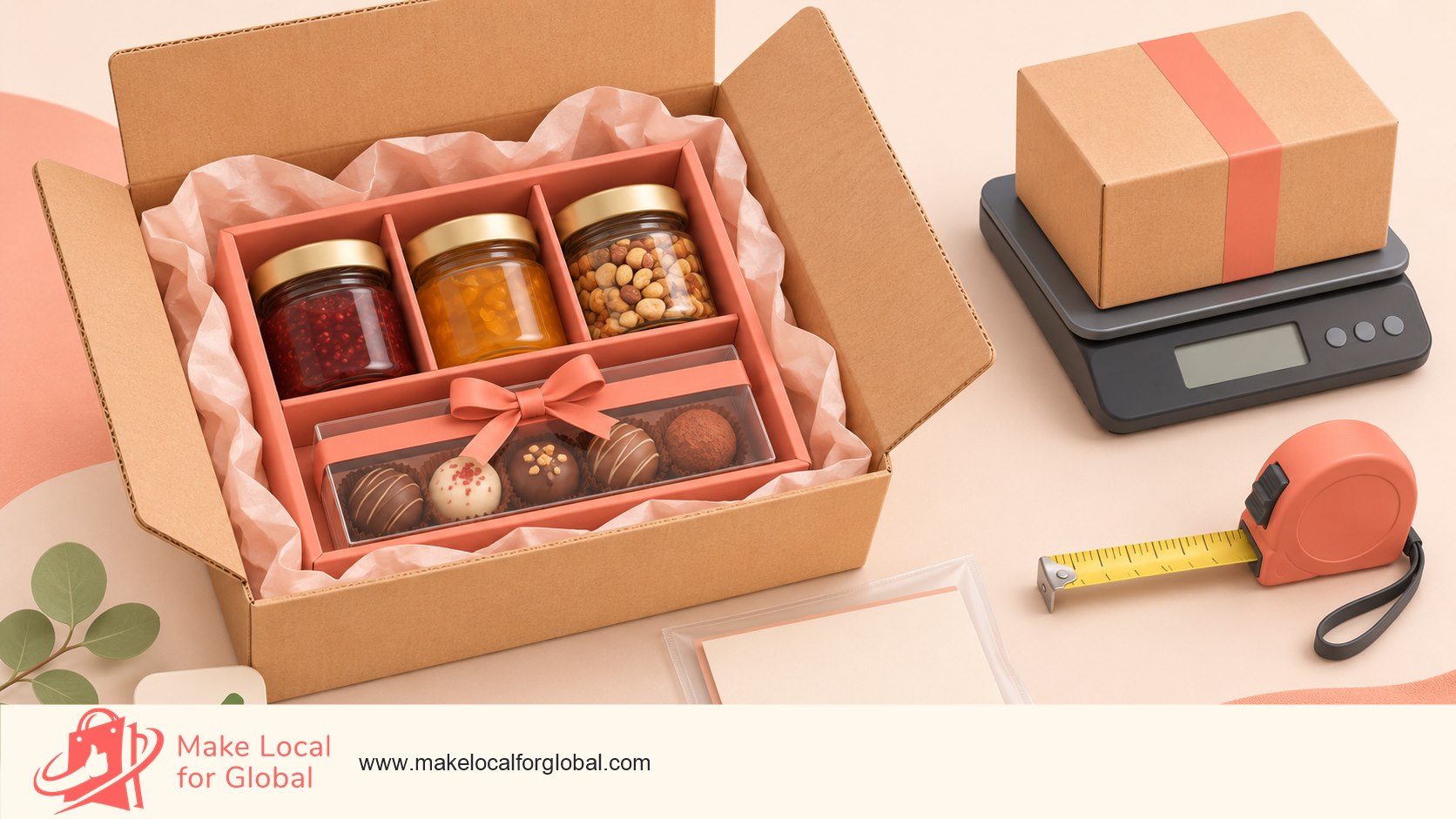
The presentation box is part of the offer, but it must work as a package. Measure the individual products before choosing an insert. Glass jars need restraint around their shoulders and lids, chocolate can soften in heat, biscuits can crush and paper sleeves can scuff. Design one layout in which each product is held in place, then test it with the real sample and shipping carton.
Use packaging intended for food contact whenever it touches food. The GOV.UK packaging guidance explains that packaging used for food must be suitable for that purpose and notes that some materials require written compliance evidence from the supplier. Keep that document with the packaging specification. Decorative tissue can surround sealed packs; do not put unverified paper, ribbon, foam or loose filler in contact with unpackaged food.
Keep glass and tins from striking one another. Use a divider or sleeve that holds each container upright. Check the lid, seal, protective wrap and carton condition after the test parcel has been moved through normal handling. A gift box that arrives with a broken jar may create food-safety, customer-service and refund work even if the outer parcel looks acceptable.
Choose materials that match the recipient experience and dispatch method. A rigid box can present well and add cost and weight. A recyclable paper insert may be simpler to store than a moulded tray. A ribbon can make the parcel attractive but may catch in automation or add assembly time. Keep each material because it protects, presents or identifies the set; remove decorations that create extra handling without adding value a buyer notices.
Photograph the approved pack from above and from the side. Note the box supplier, dimensions, insert type, tape, outer carton, void fill and assembly sequence. Record the finished parcel weight and dimensions. A pack specification reduces variation when someone else assembles orders or when a seasonal rush arrives. If you change one component, repeat the test because the new size or shape may allow movement.
Add a message card without covering food details or introducing a misleading claim. Check that ink does not transfer to food packaging. Offer a message limit that fits the card, and preview punctuation and line breaks before printing a batch. For company orders, obtain the recipient list in a secure, agreed format, confirm spelling and delivery postcode, and check whether the client expects a single invoice or separate ones.
Consider waste before you add layers. Food gift boxes can include a product wrapper, insert, presentation box, outer carton, tape and protective fill. Choose protection based on the actual parcel risk rather than a photo of an elaborate unboxing. Businesses that supply packaging should check the current GOV.UK extended producer responsibility guidance. The 2026 guidance uses turnover, packaging weight and the activity performed to determine whether a business has reporting obligations; use the official checker for your company and current reporting year.
A gift set can have a healthy product markup and a weak order contribution after the gift box, insert, labour and postage are counted. Price each component from a current invoice. Allocate inbound freight to the products. Add food packaging, presentation box, card, protective materials, assembly time, payment or marketplace charges, outbound delivery, a realistic damage and refund reserve, and the cost of finding the customer.
Here is an illustrative order for a curated box sold at £39.95 with £3.95 delivery. The seller receives £43.90 before costs. The figures are examples only; they are not a supplier quote, fee schedule or recommended price.
| Order component | Example cost |
|---|---|
| Customer payment (£39.95 box + £3.95 delivery) | £43.90 |
| Food products | £13.80 |
| Inbound freight allocation | £0.60 |
| Presentation box and insert | £2.80 |
| Protective outer carton and materials | £1.05 |
| Message card | £0.35 |
| Assembly labour | £2.00 |
| Payment fee allowance | £1.30 |
| Outbound delivery | £4.75 |
| Damage and refund reserve | £0.85 |
| Customer acquisition allowance | £3.00 |
| Total listed costs | £30.50 |
| Contribution before overhead and tax | £13.40 |
Illustration only. Replace each amount with current supplier invoices, carrier rates and actual channel charges.
The arithmetic is £43.90 minus £30.50, leaving £13.40 before the website, storage, insurance, software, accountancy, equipment, taxes and any owner time that has not been counted. If you charge a lower price, offer free delivery or add a free message card, update the calculation. Check payment fees from the current agreement and calculate them on the amount the provider actually charges. A marketplace may calculate fees on delivery or tax differently from a direct website.
For VAT, use the correct treatment for your business and each food product. VAT rates can depend on the product and circumstances. Do not assume that every item in a gourmet box has the same rate. Ask an accountant or check current HMRC guidance before setting a VAT-inclusive retail price. If your business is VAT registered, calculate the amount retained after output VAT and eligible input VAT rather than treating the full payment as sales income.
Choose a minimum contribution that can support your fixed costs and the time needed to run the shop. Then model a single box, a multi-box order and a corporate order separately. A company order can reduce the average customer-acquisition cost, but it can add personalised cards, recipient address checks, invoice terms and a firm delivery deadline. Count those tasks rather than assuming a larger order is automatically more profitable.
Check how the box behaves if a key cost changes. Try a higher carrier band, a price increase from the supplier, a damaged parcel, a paid advert that brings no order and a box size that needs extra protective material. If a small change removes most of the contribution, reduce the product mix, change the parcel design, adjust the price or leave the item out of the range. A discount should come from an understood cost saving, not from guessing that volume will make up the difference.
Decide what delivery means in the customer-facing price. A single delivered price can look simple, but it still needs an accurate carrier estimate. Separate postage can make a low item price appear more attractive and then surprise a buyer at checkout. Test both display methods with the full order total visible before payment. Do not call delivery free if the business is paying for it from the price; explain the offer plainly and count the cost.
A food gift set is often bought for another person, so the shopper needs to judge the contents without opening the box. Name the products and brands, list sizes or net quantities, show the unopened packaging clearly, state the total price and delivery terms, and explain what happens if one item becomes unavailable. Avoid relying on a styled photograph to communicate facts that belong in the product description.
Give each component its own written detail. For a jar, include the product name, ingredients, allergen information, net quantity and storage instructions from the supplier’s current label. For tea or coffee, state the variety and pack size. For chocolate, list the format and quantity. If a buyer can select a variant, explain what changes and what stays fixed. Where food rules require mandatory particulars before a distance sale, provide them at the required point in the buying journey and include required information with the delivered product. Check the current rules for the exact products and business model.
Use photographs to show scale and arrangement. A wide image can show the open box; a closer view can reveal the sealed food products and their labels; a simple size reference can help a buyer understand the quantity. Do not digitally replace a label or show a product that is not part of the order. Add concise alt text that describes the image rather than repeating a string of search terms. Captions can identify what is included when the image supports that information.
Keep variant choices simple. A first range might offer one standard box, one larger box and a seasonal sleeve or message card. Each extra choice adds stock planning, page maintenance and the possibility of a picking error. Add customisation only when buyers ask for it and the packing process can handle it reliably.
Place the dispatch window, delivery area and cut-off time near the purchase button. If a courier delay could affect a birthday or event, explain that the date is an estimate and invite buyers to order early. State whether a signature is required and whether the parcel can be left in a safe place. Do not promise a delivery day until the carrier service and dispatch schedule support that promise.
Set a clear substitution policy. For a fixed gift set, the safest customer experience may be to pause sales when a component is unavailable. If substitutions are part of the offer, explain what may change, how a replacement is chosen and whether the buyer must approve it. A dietary restriction or allergen makes casual substitutions unsuitable. Do not imply that a substitute has the same ingredients or allergen status without checking.
Publish contact details and a route for order questions. Explain how to report damage and what information the customer should include, such as the order number and a photo of the parcel. A useful support process records the batch or supplier lot where relevant and feeds recurring breakage or labelling issues back into the pack test.
A small maker can start with a direct website, a marketplace, local events, business gifting or a mixture. Each route has different fees and customer expectations. A marketplace can expose a new box to shoppers who are already searching, while a direct shop gives more control over the product page and customer journey. A market stall lets people inspect the presentation but requires stock, display space and time on site. Corporate orders can be larger but may bring personalisation, invoice terms and delivery coordination.
Choose one primary route for the first test and calculate its real cost. Include listing or subscription fees, transaction charges, advertising, packaging and the time spent handling enquiries. Do not compare a marketplace fee with a direct-site fee while ignoring the cost of generating traffic to the direct site. The useful question is how much contribution remains per completed order after the costs of that route.
Use one audience and one occasion in your initial promotion. For instance, test a thank-you box with a small set of local employers, or a host gift with a limited group of food-focused customers. Explain the contents and dispatch window, then record visits, questions, add-to-baskets, purchases, cancellations and damaged deliveries. Keep the test small enough that a weak response is affordable and specific enough that the result teaches you something.
A post, email or market display can show the open box and the set’s contents. Use the same product name and price across the promotion and product page. If the box is presented as a gift, show the presentation packaging that the buyer will receive. Do not use generic food imagery that suggests extra products or a different size.
Give the page one clear title that describes the product and the buyer’s likely task. Use a distinct product name, not a list of near-synonyms. Write a short search description that explains the box’s particular contents, recipient or delivery promise. The page should answer a real buyer question: what is inside, how much food is included, when it will arrive and what happens if a component changes.
Use headings to organise product facts, delivery information and gift options. Add internal links where they help someone compare a related product, such as a gift basket, gourmet coffee or chocolate set. Make the link wording describe its destination. Avoid repeating the same search phrase in every heading or adding a block of search terms to the page. Search visibility depends on a useful page and accurate product information; no title, plugin score or keyword count can guarantee a ranking.
Review search queries after the page has been live long enough to collect data. Look for impressions that indicate what buyers expect, but compare those terms with what the box genuinely contains. If shoppers arrive for a different kind of product, rewrite the offer or make the distinction clearer rather than adding unrelated keywords.
When the contents, food information and delivery method are settled, review the store setup or ask MLFG about presenting the range online.
Run a small packing session from the written specification. Ask another person to pick and pack an order using the same instructions. Record how long it takes, where items can be confused and whether the finished parcel fits the carrier’s size band. Weigh and measure the closed carton, not just the presentation box. Repeat the check after changing a product, insert, carton or protective layer.
Store food according to its label and supplier instructions. Keep stock off the floor, protected from pests and separated from cleaning products or personal items. Use a stock rotation method that takes date marks into account. A box should not be assembled so early that short-dated contents spend a long period waiting in a finished parcel. Check the shortest date in the set and consider the time needed for packing, dispatch and delivery before setting a dispatch promise.
Create a simple batch record for each pack run. Note the date, products and lot details used, quantity assembled, who checked it and any substitutions or faults. Keep supplier invoices, product specifications, label versions and packaging evidence together. If a supplier changes a recipe, label or pack size, compare the new version before updating the listing or packing routine.
Plan for peaks such as Christmas, Mother’s Day and business gifting. Set an order cut-off based on supply lead times and the number of boxes that can be checked and packed accurately. Agree a contingency with suppliers for delayed stock. A short preorder window can reveal demand before buying a large quantity, provided the delivery timing is stated clearly and the customer can cancel when required.
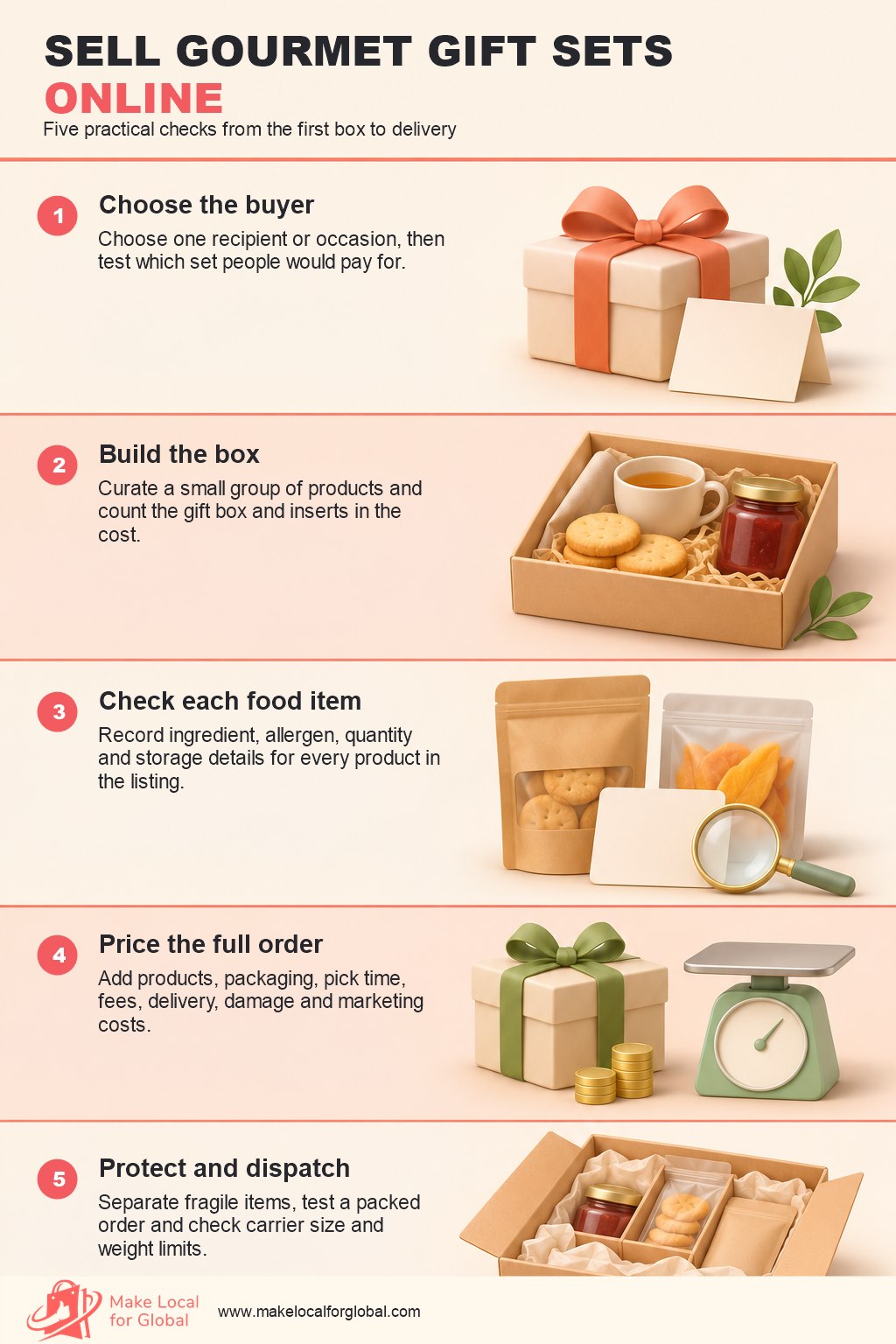
In the first week, choose the recipient and occasion, ask potential buyers what they would expect in the box, and shortlist a small number of suppliers. Request current product specifications, labels, date information, prices and delivery terms. Record what is unknown before designing the range.
In week two, buy samples and inspect the food, seals, labels, presentation and likely shelf life. Check the relevant business-registration and food-safety requirements with the local authority. Draft the product record, choose food-contact packaging and test a sample parcel. Revise the contents if the box cannot be protected or priced at a viable level.
In week three, build the cost model and a clear product page. Photograph the real sample, list each included item, state the delivery conditions and prepare the packing instructions. Ask a person who did not create the listing to read it and confirm what they think will arrive. Correct any gap between their expectation and the real box.
In week four, run a controlled launch. Limit stock to what can be packed and checked. Promote the offer through one or two relevant channels, record the response and inspect every order outcome. At the end, compare sales and contribution with the original target. Keep the parts buyers valued, remove the parts that added cost without value, and test one change at a time.
Food-business registration requirements can apply to businesses that store, handle, distribute or sell food. The exact position depends on the activity and local authority. Contact the relevant local authority before starting and use the Food Standards Agency’s registration route where it applies. Registration is normally required at least 28 days before trading begins.
A retailer may combine sealed products, but placing them in a new box does not remove responsibility for accurate descriptions, safe handling and relevant food information. Confirm who is responsible for the label and what information must be available before purchase and at delivery. Ask the local authority or a qualified food-law adviser about your exact operation, especially if you open or repack food.
There is no universal number. Start with a combination that feels complete for its buyer and occasion, then price and pack it as a real order. Every extra item adds selection, supply, storage, label checking and assembly work. A small coherent set can be easier to explain and fulfil than a crowded box.
Separate rigid containers so they cannot strike each other, keep products from moving inside the box and test the complete parcel. Use a sturdy outer carton appropriate to its weight and dimensions. Send a sample through the intended service or run a handling test, then inspect the contents and packaging. Re-test after changing the layout or materials.
Choose the price display that makes the full cost clear. If delivery is included in the item price, count the carrier charge in the contribution model. If delivery is separate, show the charge before checkout is complete. Compare completed-order value and conversion without describing a cost as free when it is built into the price.
Use claims only when they are permitted and supported for the food products in the box. Food claims about health and nutrition have specific rules. A gift theme does not remove those requirements. Use factual descriptions of taste, ingredient, quantity and origin when they accurately match the supplier information.
For a fixed box, pause orders until the original product is available or explain a defined substitution process before the customer purchases. Check that a replacement has suitable ingredients, allergen details, quantity, value and shelf life. Do not silently replace a product or rely on a customer to infer what changed.
A strong gourmet gift set is a considered combination of suitable foods, accurate information, protective packaging and a clear occasion. Start with a single recipient, check every product and label, calculate the full order cost and test a parcel before promoting it widely. Once buyers understand what is inside and you can reproduce the pack with confidence, the range can grow from evidence rather than guesswork.
Bring your buyer notes, supplier details and cost model to an MLFG conversation if you want help planning the ecommerce side.
PREFERRED SOURCE
Like what you’re reading? Add Make Local for Global as a preferred source on Google to see more of our articles when you search.

Build your online presence without having to figure out everything yourself.