
READY TO SELL Fuzzy Blankets ONLINE?
Get a store built for you in 5 days, plus training and support to help you start, run, and grow your Alternative business.

Plan a fuzzy blanket range with tested pile and backing, clear care details, accurate product photos and a complete delivered-order cost model.

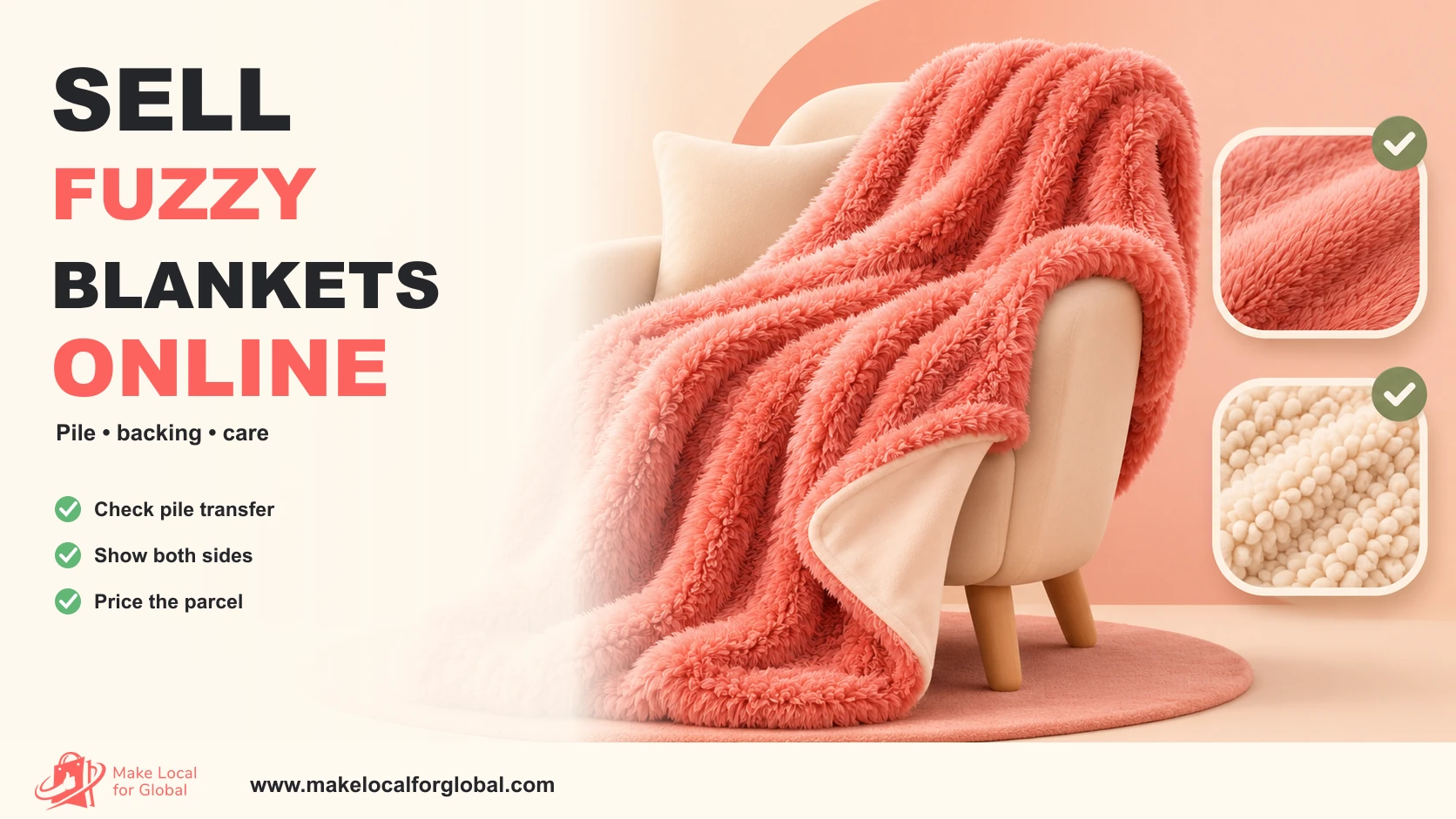
A fuzzy blanket can look soft in a photograph, yet a shopper cannot touch the pile, feel its weight or tell whether loose fibres will cling to clothing. Those details shape whether the item feels worth its price and whether it arrives in the condition the product page suggested.
To sell fuzzy blankets online, define the type of pile you are offering, compare the face and backing, test shedding and care on a real sample, and show the texture at close range. Then cost the finished parcel and write down the exact fibre content, dimensions, weight and cleaning instructions. This article focuses on plush, sherpa, faux-fur and high-pile blankets. MLFG’s broader cozy-blankets article covers the wider throw category and range planning.
Explain the pile, backing, size and care before a customer chooses a fuzzy blanket.
“Fuzzy” describes a surface impression, not a dependable product specification. A short velvet-like pile, a long faux-fur surface and a looped sherpa texture can all feel plush in a shop. They look and behave differently in photos, on a sofa and after washing. Name the construction or fabric accurately, then describe the touch and appearance in plain language.
| Blanket surface | What a customer may notice | What your sample needs to prove |
|---|---|---|
| Short-pile plush | A close, smooth face with a soft hand-feel | Pile direction, colour shift, surface marks and recovery after packing |
| Sherpa or looped fleece | A nubby, wool-like texture on one side, sometimes with a smoother reverse | Whether the reverse stays soft, how edges are finished and whether loops catch |
| High-pile or faux-fur look | Longer fibres that create depth and a strong visual texture | Fibre shedding, pile lay, backing stability and seam security |
| Reversible pile blanket | Two different textures or colours in one item | Edge construction, side-to-side composition and how the product is shown in photos |
Treat these as visual groups, not fabric-composition names. Ask the supplier for the correct fibre composition and construction. “Faux fur” describes an appearance or product style; it does not tell the shopper which fibres are present. A blanket with different face and reverse materials may need component-level information on its label.
Start with a likely buyer and a clear use: a sofa throw for a living room, a warm layer for reading, a present for a winter birthday, or a decorative bed layer. These buyers may value different things. Someone choosing a living-room throw may want a surface that looks good from across the room and is easy to fold. A gift buyer may value clear packaging and a reliable delivery estimate. A person who plans to use the blanket every evening may ask more about weight, washing and the reverse side.
Ask a few likely buyers what they would need to know before ordering a plush throw. Show them two sample fabrics with the fibre labels removed and ask which details would help them choose. Then show the exact product page draft and ask them to identify the size, feel, care method and what arrives in the parcel. Record questions and pauses; they reveal gaps in the listing.
Do not treat a positive reaction to a sample as proof of demand. Ask what the person currently uses, what problem they are trying to solve and what would make them switch. If people like a dense, heavyweight throw but your supplier can only provide a light decorative version, test a smaller offer that matches what you can produce consistently.
One possible opening range uses a smaller sofa throw as the entry item, a larger everyday blanket as the core item and a boxed or paired version as a gift option. Keep the product construction and care process similar so you can learn from a small number of samples. Choose two or three colours you can photograph accurately, then add shades after the first orders show which ones shoppers select.
Before adding a colour, check the same fabric quality and construction are available in that dye lot. A colour change can affect how loose fibres show on clothes, how the pile reads in a picture and how much lint is visible on a light sofa. Keep a sample swatch from each approved batch and compare repeat deliveries under the same light.
Use product codes that distinguish size, colour and revision, for example PLUSH-130-150-OAT-V1. If you change the backing, pile, binding or fibre supplier, record a new version. The code helps you connect a customer question to the exact sample and production batch.

A supplier quote is easier to compare when each supplier prices the same specification. Send a short brief that names the intended use, finished dimensions, face and reverse construction, fibre composition, edge finish, label needs, packaging and expected order quantity. Ask which details are fixed and which are estimates. Request separate prices for samples, a small first run and a repeat order.
For each option, record the fabric or article code, colour reference, stated fibre percentages, fabric weight if supplied, pile height if supplied, finished dimensions, tolerance, wash instructions, minimum order, lead time and price. Ask whether the face and backing use different fibres. Ask how the manufacturer checks batch colour and whether the same specification will be available for future orders.
Buying finished stock from a wholesaler can make it easier to test a small range. Ask whether the seller permits your intended use of its product photographs and descriptions. Check whether the stock is replenishable, whether colourways can be mixed in a carton and who provides accurate composition and care details.
A local sewing room or maker may let you choose fabric and edge details, but sample cost and production time can be higher. Ask who buys the material, who inspects it, what happens if the pile or colour changes, and whether the pattern or product label can identify your own range. Agree in writing who pays for a rejected batch or a corrected sample.
Importing direct may reduce a quoted unit price, but your estimate needs to account for freight, duties or taxes where applicable, inspection, transit time, currency movement and responsibility for product information. Request a sample from the same production route you intend to use. Check current import requirements for the destination and speak with a customs adviser when the shipment terms or tax treatment are unclear.
For every route, ask the supplier for documents that identify the material and the test or claim they support. A general line such as “premium quality” does not tell you how the blanket was tested. Avoid using test marks or certificates in your product copy until you have checked the document, scope, date, product code and issuing organisation.
Plush surfaces can hide the backing weave and the joining seam. Ask for a cut swatch or a sample with an exposed edge so you can see how the face connects to the reverse. Ask for composition details for each component, not a vague “polyester feel” description. If the product includes trim, labels or a different reverse, ask how those parts are described.
Ask for the material specification in writing and match it to the sample received. Keep the supplier’s file, invoice, sample photograph, label artwork and the product listing in one product record. When a new shipment arrives, compare its hand-feel, colour, width and finish against the approved sample before changing the stock count.
A swatch can show colour and touch, but the finished blanket reveals edge curl, weight, seam bulk and how the pile behaves when folded. Order one complete sample for every construction and size you plan to sell. Follow a repeatable check sheet so that samples from different suppliers are judged on the same points.
Unfold the blanket over a clean surface and inspect it before handling. Rub a light cloth over a dark surface and a dark cloth over a pale surface using the same short, gentle strokes. Note visible fibre transfer, static cling and where material collects. Repeat the check on a seam and near the binding. Photograph the cloth and sample under the same light for the supplier record.
This is a comparative in-house check, not a laboratory method or a guarantee of future performance. Do not describe a blanket as “non-shedding” or “lint-free” based on one sample. If fibre transfer appears, ask the supplier whether it is expected from the construction, whether production finishing can reduce it and whether an independent test is appropriate. Test a production sample again before using a stronger claim.
Brush the pile lightly in different directions and note whether the shade changes. Photograph the blanket both ways round so you can explain natural variation to a buyer. Fold it as it will be packed, leave it under the planned parcel pressure for a defined period, then open it and record how the pile looks. Some marks may relax after handling; others remain visible or change the appearance.
Use the sample to test your shipping method. A tightly compressed parcel saves space, but long pile can flatten or develop sharp fold lines. A loose fold may add parcel size. Compare the unpacked appearance after a real test transit or a controlled packing period, then decide how the product should be folded and how long a customer may need to let it recover.
Inspect the binding from corner to corner. Look for uneven width, loose threads, skipped stitches, gaps, rough labels and exposed backing. Pull gently at the corners and edge seam. The purpose is to find weak points on a sample, not to simulate a formal strength test. If a seam opens or fibres pull from the edge, pause the range and ask the maker to review the construction.
Run a hand over the reverse side and check whether the surface feels different from the face. Look for backing distortion, holes, creases that will not relax or sharp trim. If you plan a double-sided product, turn it over in every photograph and make sure the description tells the buyer which side has which texture.
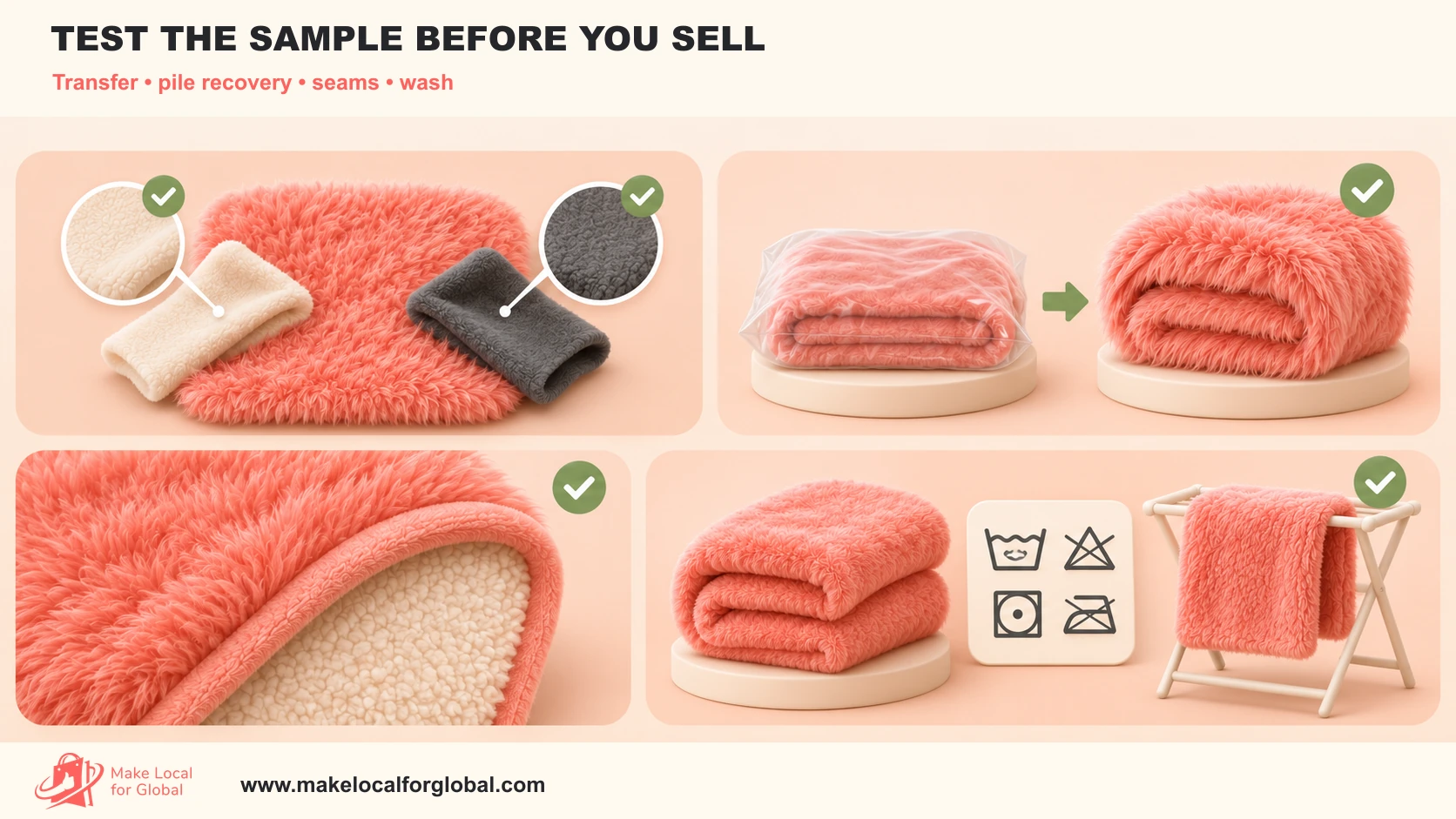
Use the care instructions supplied for the actual sample. Wash and dry it exactly as stated, then compare its size, colour, pile direction, softness, seam and loose-fibre transfer with the unwashed sample. Record the detergent, cycle, temperature, drying method and number of washes. If the blanket needs a specific cycle or cannot be tumble-dried, make that clear before the buyer orders.
Do not invent a care symbol or recommend a wash method the maker has not confirmed. A sample that looks smooth before washing may mat, shed more, or lose shape after a cycle. If the maker’s instructions are vague, ask for written clarification and test the proposed care routine before adding the product to your shop.
Take a full product photograph in daylight and a close-up of the pile. Show the face, reverse, bound edge, label and the blanket folded over a chair or sofa for scale. Include a hand only if it helps show pile length; hands vary, so pair the picture with a dimension or measurement diagram. Avoid filters that deepen the colour, blur the pile or make a lightweight blanket look thick.
Compare your images on a phone and a larger screen. A very close texture shot can look attractive yet conceal the size and finish. A wide room photograph can show scale but make a fluffy texture hard to see. Give each image one job, then place a short caption beside it when the shopper needs extra context.
The advertised fabric price is only one part of a sale. Estimate the full cost from the sample and the actual parcel you expect to send. Include material waste, sewing, labels, inbound freight allocation, protective packaging, payment fees, delivery support, expected returns or exchanges and the cost of bringing a shopper to the product page.
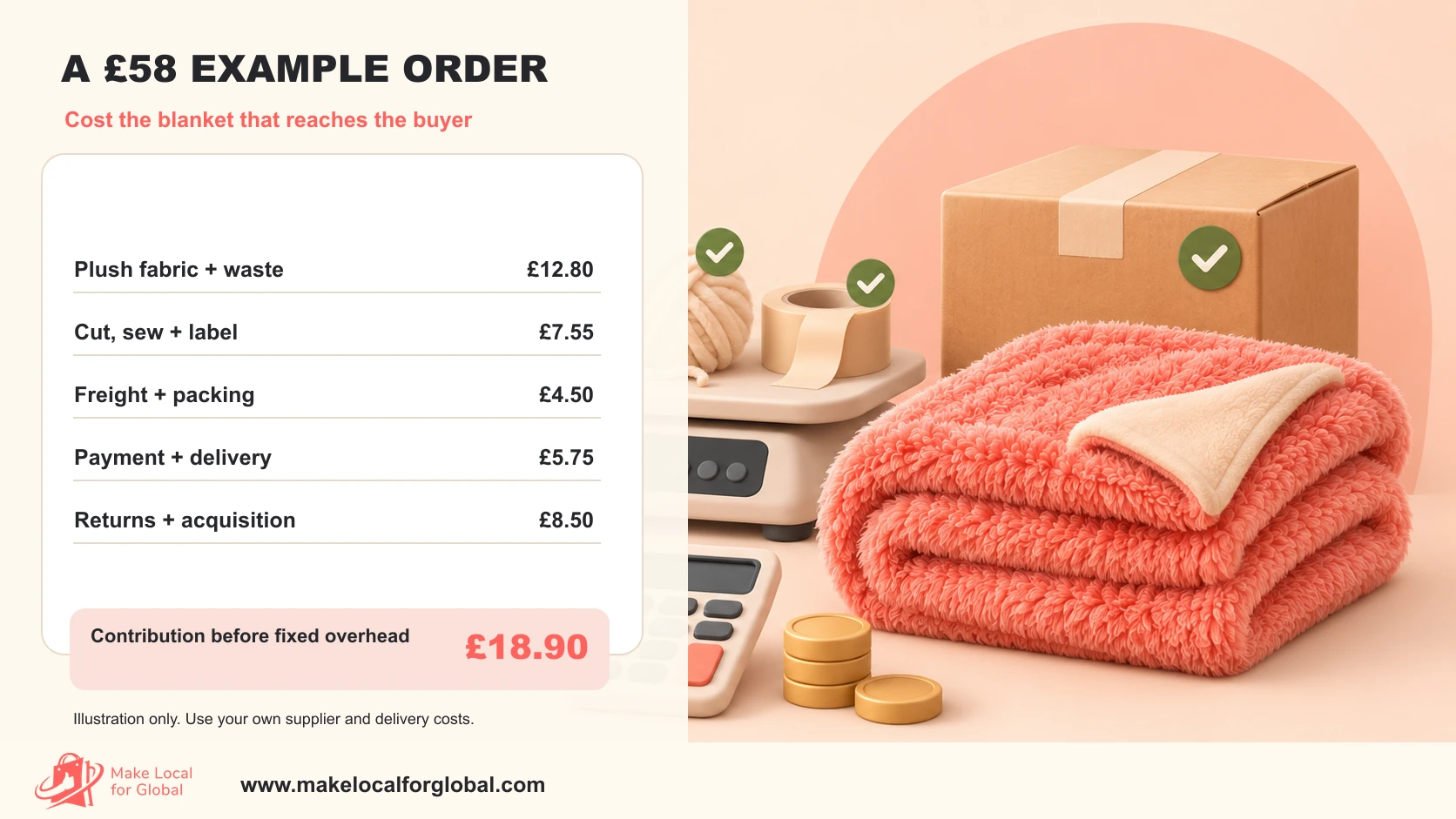
The table below is an illustration for a blanket priced at £58 before any applicable VAT. It is not a supplier quote, forecast or profit promise. Replace each figure with your own invoices, measured labour and delivery rates.
| Example cost per blanket | Illustrative amount |
|---|---|
| Plush fabric including cutting waste | £12.80 |
| Cutting and sewing labour | £6.75 |
| Label and finishing materials | £0.80 |
| Inbound freight allocated per unit | £1.90 |
| Protective packaging | £2.60 |
| Payment processing | £1.55 |
| Delivery subsidy paid by seller | £4.20 |
| Returns or exchange allowance | £2.50 |
| Customer acquisition allowance | £6.00 |
| **Illustrative variable cost total** | **£39.10** |
| **Contribution before overhead** | **£18.90** |
The arithmetic is £58.00 minus £39.10, leaving £18.90 before fixed overhead. That remainder must help cover photography, software, storage, insurance, bookkeeping, equipment, taxes and owner time that is not already in labour. It is not net profit. Confirm VAT treatment for your business with HMRC or an accountant; the example does not assume a registration status or tax obligation.
Run a few scenarios before you place a large order. If a higher-pile face adds £4.00 in fabric cost and a bulkier parcel adds £1.50 in delivery, the same £58 price leaves £13.40 contribution. If a customer acquisition allowance rises from £6.00 to £10.00, contribution falls by another £4.00. The point is to see which parts of the offer put pressure on the order, then adjust the product, price or shipping arrangement.
Estimate launch cash separately from unit contribution. Include samples, labels, photography, first stock, packing supplies and any minimum order. A direct-to-consumer order paid today may not put cleared cash into your account on the same day. Make a cash plan for the period between buying the material and receiving settled customer funds.
Set a reorder point from supplier lead time and actual sales, not hope. For a made-to-order test, limit available orders to the number you can produce within the stated time. If you hold stock, decide how much you can afford to keep in each colour and size. A blanket may use a compact SKU count, but each colour, pile type and size still ties up cash.
Compare product, packing, postage, payment fees and returns before setting a blanket price.
A shopper choosing a fuzzy blanket needs more than “soft and cosy”. Describe the pile length or construction in accurate everyday language, say what the reverse feels like, give the fibre composition, show finished dimensions and name the care method. Tell the buyer whether the parcel contains one blanket, a set or a gift box. State the photographed furniture or props are not included where that might be unclear.
A descriptive product name might be “Plush high-pile sofa throw, 130 × 150 cm, oatmeal”. Avoid a title that simply says “Luxury blanket”. A product description can open with: “A high-pile plush throw with a smooth reverse, finished edges and a labelled care panel. The blanket measures 130 × 150 cm before washing; check the size diagram for the measurement points.” Only use that example if it matches the sample you actually sell.
Add a specification list with finished width and length, material composition, face and reverse, colour name, weight if you have a reliable measurement, edge finish, care method, package contents and dispatch estimate. Explain whether the surface has a directional pile that can look darker or lighter when brushed in different directions. If the blanket has a different texture on each side, name the side shown in each product photograph.
Include a full-length photo, close-up of the pile, reverse-side view, bound edge detail, folded view and a scale photograph in a familiar setting. If you sell several colours, photograph each one under comparable light and keep the colour name consistent between product option, label and image filename. Include a simple measurement graphic if the product’s dimensions are easy to misread.
Show the textile after its recommended care only if the image really shows that sample. Do not digitally increase the pile, hide visible lint or smooth a seam that the buyer will receive. If the sample has a natural shade change with pile direction, demonstrate it instead of making each photo appear to be a different colour.
Write concise alt text that describes the useful image detail, such as “Oatmeal high-pile throw folded over a sofa arm, showing the long face pile” or “Close view of the plush throw’s stitched edge and smooth reverse”. Google’s image SEO guidance says to use clear image context and descriptive alt text, not repeated keyword lists. Use filenames such as plush-throw-edge-finish.webp and keep the image close to the matching text.
Screens can render colour differently. Add a factual note that the sample was photographed in daylight and that device displays can vary. If pile direction changes its appearance, explain that a brush or hand movement can make the surface appear lighter or darker. Do not use that note to excuse a colour that materially differs from the product shown.
If you observed light loose fibres in sample checks, state any relevant first-use care advice only when it is supported by the supplier’s instructions. Do not dismiss a customer’s concern or treat a single sample test as proof that every production item behaves the same way. Keep a way for buyers to contact you with the product code and batch label if a problem appears.
Place common questions near the size and colour choice. Buyers often ask whether the reverse is smooth, whether the blanket can be machine washed, what size it is, whether the colour changes with the pile and what arrives in the parcel. Answer with the sample specification and care details, rather than a generic response that would fit any throw.
Textile fibre information is a legal requirement for many textile products. The UK government’s textile labelling guidance says the label must show fibre content, including fur and other animal parts, and separate fibre content may be needed for components with different compositions. The cited guidance applies in England, Scotland and Wales. Check current rules for Northern Ireland and any other country where you sell. As retailer, verify the supplier’s composition details and confirm that the information on the product or packaging matches the item you offer.
Product safety rules depend on the item, its material, intended use and the market. The Office for Product Safety and Standards business advice explains that manufacturers, importers, distributors and sellers carry safety responsibilities. Keep the supplier, product code, sample, batch and complaint records together. If you sell blankets positioned for babies or young children, check the product-specific risks and current requirements before making a safety claim or expanding that range.
Furniture and furnishings fire-safety rules have a defined scope and have been amended. A loose blanket or throw can be described in different ways according to construction and intended use. Do not assume it is covered or excluded without checking the actual legal definitions. Read the official 2025 amendment overview and the current regulations; ask Trading Standards, OPSS or a qualified adviser if the product classification is unclear. A supplier statement alone does not settle your own responsibilities.
Avoid claims such as “non-toxic”, “safe for babies”, “hypoallergenic”, “fireproof”, “zero shedding” or “made sustainably” unless you hold evidence that supports the exact claim and intended use. Environmental wording needs particular care. The CMA’s Green Claims Code guidance says businesses need evidence for environmental claims and should not imply a broad benefit that the product record cannot support. Describe verifiable facts such as stated fibre content, a named certification that applies to the product or packaging composition, and explain the scope accurately.
Online orders have information and cancellation rules. The government’s online and distance selling guidance describes information to provide before a customer places an order, including the business details, product, full price, payment, delivery cost and expected timing. Some goods made to a customer’s specifications or clearly personalised may have a cancellation exception under the Consumer Contracts Regulations. A standard blanket selected from listed sizes and colours is not automatically custom-made. Faulty or misdescribed goods have separate protections. Publish a clear returns process and check the rules for each market where you sell.
An own shop gives you room for measurements, texture photography, care information and clear product variants. A marketplace can offer an existing audience but brings its own listing rules, fees and competition. A pop-up or local homeware event lets people feel the pile and compare a smooth reverse with a plush face. Record the questions people ask in person and use them to improve the online page.
For a first sales test, choose one channel where you can keep product descriptions and stock accurate. Use a simple order log with variant, batch, source, dispatch date, parcel cost, customer question and return reason. If orders arrive through more than one channel, make sure the same blanket is not sold twice after a stock count is out of date.
Use page titles that identify the blanket type, size or use. A category page can explain the difference between short plush, sherpa and faux-fur-look constructions. Product pages can describe the exact size, composition and care. Helpful support pages may explain how to wash plush fabric, what to check in a texture close-up or how to choose a throw size for a sofa. Keep colour options on one product page when the construction is the same; create a separate page when the fabric, size or care instructions differ materially.
Use a main heading that describes the product, descriptive subheadings, readable paragraphs and links to relevant MLFG product guides. Link the broader cozy-blankets range article for the wider throw business decisions. Related product links should help a shopper or seller move to a relevant question, such as decorative cushions or decorative curtains. Do not repeat the same anchor text in every section.
Google’s SEO Starter Guide recommends clear titles and useful, well-organised content for people. Use the phrase “sell fuzzy blankets online” naturally in the page title, opening and a relevant subheading. Include related language such as plush throws, faux-fur blankets and high-pile blankets only where it accurately describes the item. Search performance cannot be guaranteed by a title, keyphrase or word count.
Get first feedback through a small test rather than assuming that a seasonal product will sell. Share the product page with people who match your buyer, collect questions, test a modest promotion and compare visits with product selection and paid orders. Track cost per order beside contribution so that sales volume does not hide a weak unit margin. Ask buyers for an honest review after delivery and permission before using their room photograph.
Test how the blanket folds and fits in the parcel you plan to use. Weigh the parcel after adding the care card and protective layer. Check whether compression leaves a visible crease or changes the pile lay. If you use a bag or carton, confirm that the blanket arrives clean, dry and free of odour. Do not rely on a small swatch to estimate the parcel size of a full throw.
Set a realistic dispatch estimate for stocked and made-to-order options. If you offer a gift box or message, list exactly what is included and how the package will arrive. Keep an inspection step before dispatch: match the variant, confirm dimensions and label, examine the face and reverse, remove loose packing fibres and include the care information.
Create a simple route for a fit, care or quality question. Ask for the product code, batch label, photograph and the care routine followed. Compare the details with the approved sample and supplier specification. If a concern could point to a safety issue, stop sending the affected batch until you have checked it and follow the relevant reporting or corrective process. Keep a record of what you told the buyer and what action followed.
Days 1–7: choose the product brief. Decide on a buyer, one use and one surface construction. Compare likely search wording and marketplace listings, then note what is unclear in those pages. Ask a few target buyers what they would need to know to order a fuzzy blanket without touching it. Write a one-page specification for the sample.
Days 8–14: request and test samples. Ask two or three suppliers for the same size and construction details. Record composition, pile, backing, MOQ and lead time. Check loose fibres, colour transfer, edge seams, fold recovery and the stated wash routine. Keep photographs and costs with each sample.
Days 15–21: calculate and build the page. Work out the packed order cost, set an initial price and check a lower-margin scenario. Photograph face, reverse, edge and scale. Write measurements, composition, care and dispatch information. Ask someone unfamiliar with the sample to use the listing and tell you what they think is included.
Days 22–30: open a controlled test. Offer a small number of variants and limit stock to what you can fulfil. Use one promotion route and record spend, visits, questions, orders and returns. Ask early buyers whether the photos and care details matched the blanket they received. Adjust the listing or sample specification before ordering deeper stock.

Explain the surface, reverse, composition and size. “Soft” cannot tell a shopper whether the reverse is smooth, whether the pile is long or what care routine is needed.
A small swatch hides edge finishing, seam bulk, fold marks and parcel behaviour. Approve a full sample before pricing production.
One sample check does not prove every item or batch behaves the same way. Keep the test record and use claims that match your evidence.
A filtered or retouched image can change colour and surface depth. Use consistent light and show the back, edge and full size.
Put care information beside the product choice. If a special cycle or drying instruction is needed, the buyer should know before checkout.
Colour changes can affect pile visibility and shade consistency. Start with a small set and compare repeat production to approved swatches.
Add labour, inbound freight, packaging, delivery, fees, exchanges and acquisition costs. Then account for monthly overhead separately.
Check the exact product code and evidence for each material, care or environmental claim. Supplier marketing copy is not proof that the statement applies to your product.
The phrase can describe short plush, sherpa-style, faux-fur-look and other high-pile surfaces. Tell shoppers which construction and fibre composition the product actually uses. Do not use “fuzzy” as a substitute for a proper material description.
Compare suppliers on sample quality, composition details, minimum quantity, colour repeatability, lead time and written care instructions. Ask for a complete sample in the intended size. Include freight and inspection time when you compare quotes.
Use a simple repeatable in-house comparison: handle the sample over a clean surface, rub light and dark cloth gently across it, inspect the seams and photograph the result. Follow up with the supplier if fibres transfer. This check does not certify the product or support an absolute “non-shedding” claim.
Start with the use you have chosen, such as a sofa throw or a bed layer. Measure the finished sample after its stated care process and show width and length. Compare the blanket to furniture or a bed in a photo, but do not rely on an unlabelled lifestyle image to convey size.
Textile fibre-content rules apply to many products sold in England, Scotland and Wales. Check the current rules for the product and sales market, obtain accurate composition information and label components with different fibre contents as required. Confirm Northern Ireland requirements separately.
Only use a claim if you have evidence that supports it for the actual product and intended use. Baby and young-child products raise specific safety questions. Check applicable rules and obtain qualified product advice before marketing a throw for that use.
Start by pricing samples, labels, photography, the first stock quantity, packing materials and delivery. A small test may require less inventory than a broad colour range, but it still has sample and setup costs. Model cash timing and your own labour before placing an order.
Show the full blanket, pile close-up, reverse, edge finish and the product beside familiar furniture for scale. Use similar lighting for colour variants. Keep each image faithful to the sample and add concise alt text that explains the visible detail.
Explain your store’s cancellation, return and faulty-goods process using the rules for the market where you sell. Give care instructions before purchase and ask what happened to a product if a customer reports a problem. Store policy cannot remove statutory rights.
Selling fuzzy blankets online depends on showing what a shopper cannot feel through a screen. Name the surface clearly, photograph its direction and reverse, test the sample through packing and care, and keep fibre and safety information tied to the exact item. Cost the finished parcel before you decide how wide the range should be.
Begin with one buyer, one construction and a small number of colours. Use real questions and order records to decide what to change. Add more sizes or textures only when you can source, inspect, photograph and support them with the same care as the first blanket.
Test buyer demand, supplier consistency and real order contribution before adding more colours or sizes.
PREFERRED SOURCE
Like what you’re reading? Add Make Local for Global as a preferred source on Google to see more of our articles when you search.

Build your online presence without having to figure out everything yourself.