READY TO SELL Garden Kneelers ONLINE?
Get a store built for you in 5 days, plus training and support to help you start, run, and grow your Alternative business.

Learn how to sell garden kneelers online, compare pads and seats, test samples, price parcels and build a first product range with confidence.

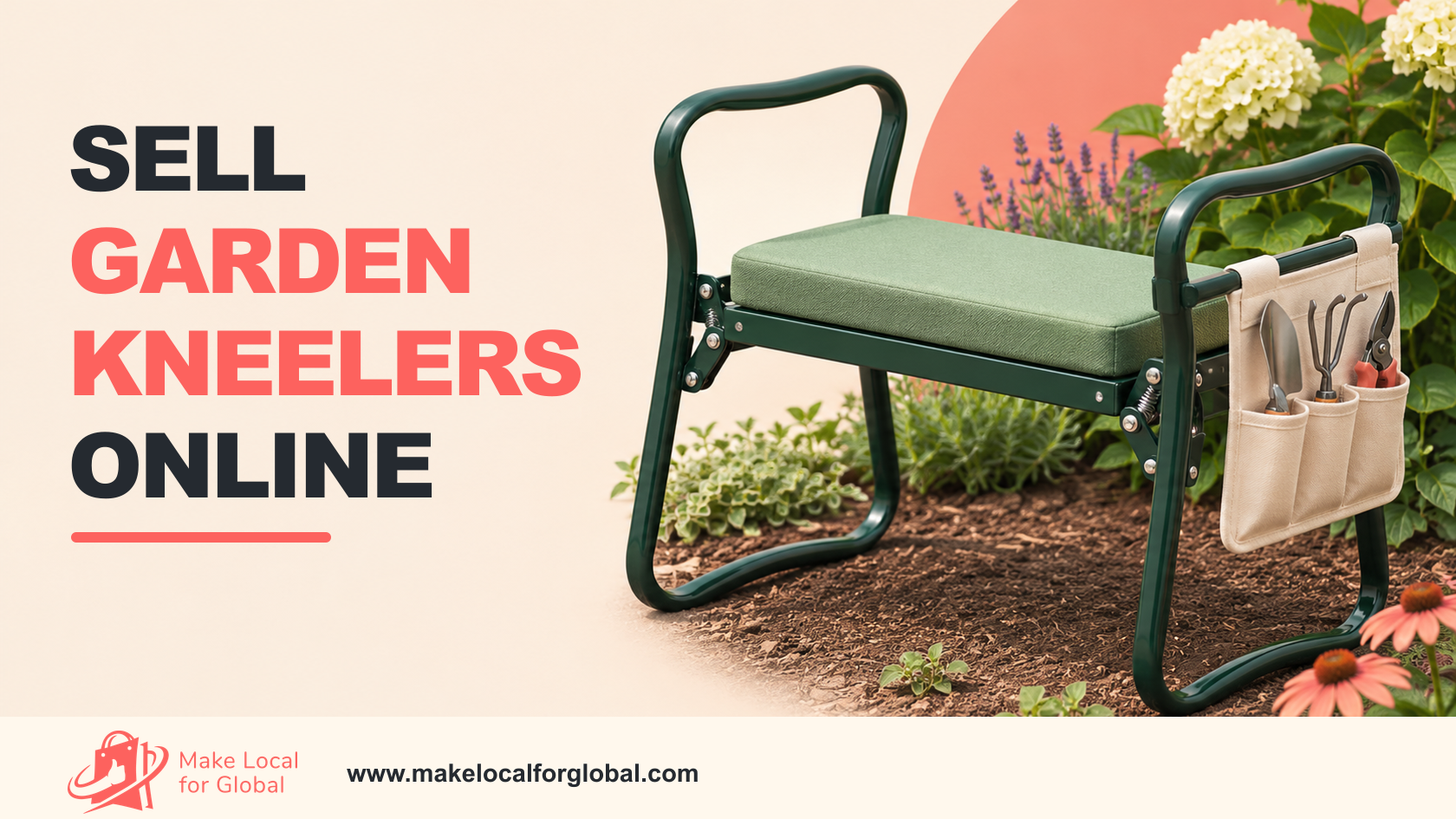
Garden kneelers look simple in a product photo, yet buyers need to know how the frame folds, how large the padded surface is and what arrives in the parcel. Those details affect the product choice, the price and the number of questions after an order.
To sell garden kneelers online, choose a clear buyer and a small range, check samples and supplier records, calculate the packed order cost, then write product pages that show the measurements and safe use limits. Start with one or two models. Add more only when enquiries, conversion and returns give you a reason.
This market includes flat foam pads, padded kneeler seats, foldable 2-in-1 kneeler benches and models with tool storage. They do not solve the same problem. A customer who tends raised beds may want a raised seat; someone weeding at ground level may prefer a simple pad that can be carried from bed to bed.
Choose one buyer and one model, then list the sample and cost questions to answer before placing a stock order.
The word “kneeler” can refer to several different products. Write down the exact form, use and buyer before comparing suppliers. It prevents a broad catalogue search from turning into a set of similar-looking items with different safety, packing and return needs.
| Type | What the buyer gets | Selling questions to answer |
|---|---|---|
| Foam kneeling pad | A portable pad, often with a handle or textured surface | What are its length, width and thickness? Does the cover wipe clean? Is it soft enough for the intended surface without making an unsupported comfort claim? |
| Folding kneeler seat | A metal or plastic frame with a padded platform used close to the ground | How does the frame lock? What is its verified user-weight limit? What are the folded and open dimensions? |
| Reversible kneeler bench | A frame that turns over to offer a seat or kneeling platform | Which side is for each position? Are the feet stable on the intended surfaces? Can the product be folded without catching fingers? |
| Kneeler with storage | A pad or frame supplied with a pouch, pockets or tool holder | Is the storage removable? What tools fit? Does the pouch affect folding or parcel size? |
| Raised support model | A kneeling pad with raised handles or a support frame | What use and load limits does the supplier document? Are claims about mobility or health support properly substantiated? |
Do not treat a “garden kneeler” and a “garden kneeler seat” as interchangeable search terms on the product page. A kneeling pad may be light and easy to post, yet it cannot offer the raised position or frame handles of a bench. A foldable model can carry a higher order value, but its joints, padding and carton need closer checks.
Some retailers describe certain designs as mobility aids. That wording carries different buyer expectations. If you intend to sell a product for a disability-related use or make health claims, check the applicable rules and evidence before writing those claims. For a general gardening accessory, describe the product’s construction and intended garden tasks without promising pain relief or a medical outcome.
Start with a real task instead of assuming that every gardener wants the same feature. Possible groups include allotment holders who move between plots, container gardeners who work at several heights, people tending raised beds, gift buyers shopping for an enthusiastic gardener and garden centres or community groups buying for shared use.
Use short conversations to find out what they already use. Ask where they garden, how long they work in one spot, what makes their current setup awkward, whether they carry tools and where they store equipment. If the person uses a kneeler already, ask what they would change about its size, weight, padding, folding action or cleaning.
Avoid treating a compliment as demand. A friend saying that a seat looks useful does not show that a stranger will pay the proposed price. Ask what they bought last time, what they compared, what they paid and what would make them choose a different model. Those answers reveal buying criteria you can show in a product page.
Check search suggestions and marketplace listings for language buyers use. Compare phrases such as “garden kneeling pad”, “folding garden kneeler and seat”, “padded garden kneeler” and “garden kneeler with tool pouch”. Note how retailers explain measurements, material, folded storage and delivery. Their listings show the way products are presented, not proof of sales or quality.
If you have an existing audience, share a simple product comparison with a clear question. For example, show a pad and a folding seat and ask which task each would suit. Do not present a mock-up as available stock or take payment before you can give a credible dispatch date. Record the number and type of replies, requests for measurements and visits to the product page. Use the signals to decide whether to order samples.
For a more deliberate first test, choose a time period and a small budget before running an advert. Set a limit for cost per enquiry, check which product page people view and record whether they join a list, ask a question or leave. A click alone is not a sale. If most visitors ask how tall the frame is, the page needs dimensions before you test a new advert.
A useful opening range may contain one flat kneeling pad and one folding kneeler seat. They answer different needs and create a direct comparison for buyers. Add a storage pouch, alternate colour or second seat model only when it adds a clear use case rather than a near-duplicate choice.
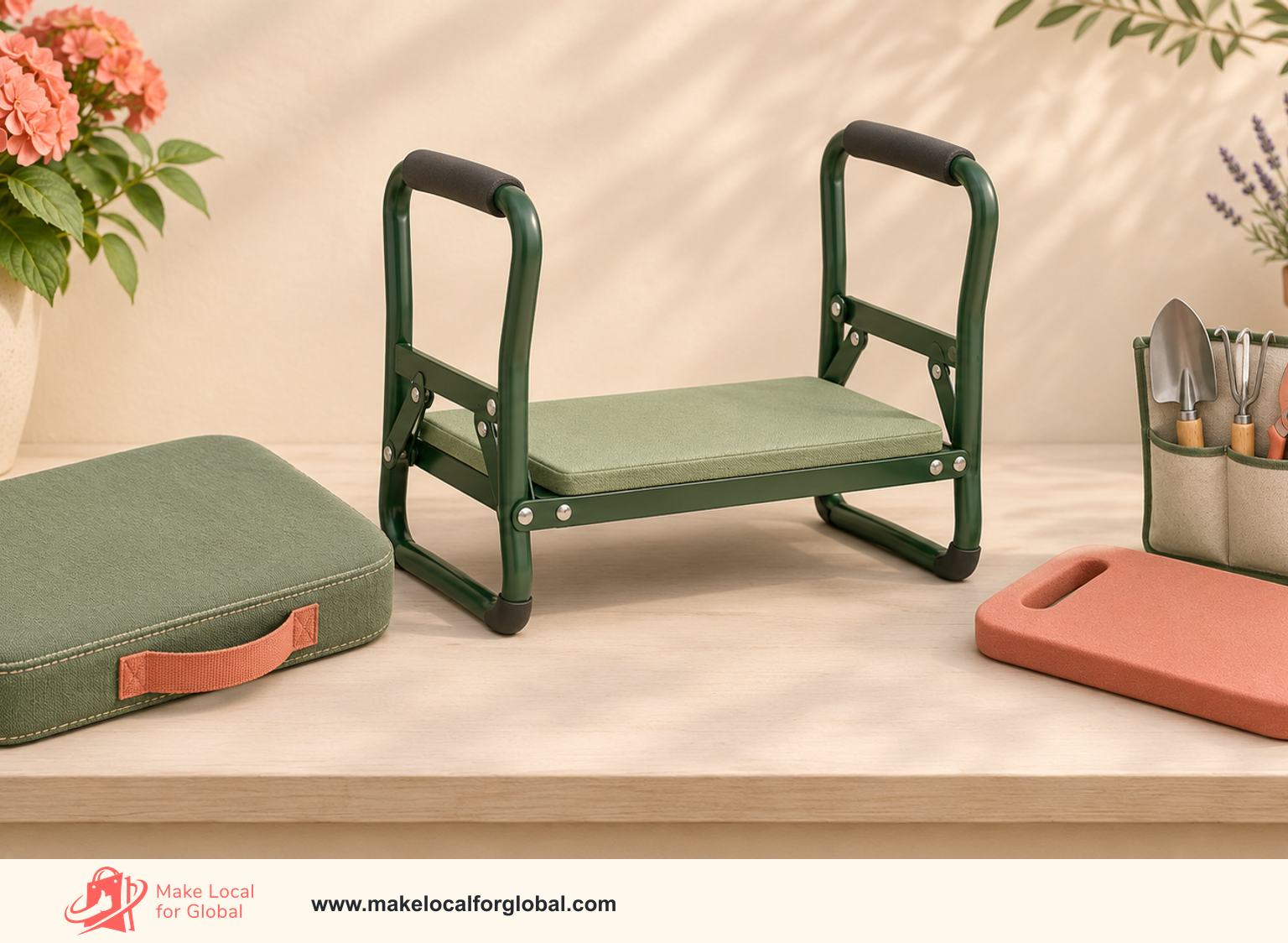
Set the range around distinctions a buyer can understand:
Do not call one version “premium” solely on a higher price. State what changes: a wider pad, replaceable cover, tested hinge, stronger documented load rating, removable storage or a compact folded profile. Check each feature against your purchase cost and customer feedback.
Use a range table on your store page so buyers can compare the products without opening several tabs. Keep the same attributes in each row: open dimensions, pad size, folded size, product weight, frame material, pad material, included storage and stated load limit. Mark a field “not supplied by manufacturer” during research rather than guessing it.
Bundles can increase order value, but they can create picking errors. A “raised-bed bundle” might pair a folding seat with a washable kneeling pad, for instance. Before selling it, photograph the exact contents, check that both items fit one carton and calculate postage on the combined packed weight and dimensions. State whether the pouch or tools shown in the photograph are included.
If colour choices are available, start with shades you can reliably reorder. Ask the supplier whether the colour represents a separate minimum order quantity. A colour that looks sage on a screen can arrive olive or grey. Request a physical sample and photograph it in daylight before creating a colour selector.
Avoid stocking each model in several colours and sizes on day one. Every option ties up cash, needs a product record and creates another opportunity for an inventory mismatch. Use enquiries and actual orders to decide which variant earns a place in the next purchase.
Related garden products can share a buyer without being bundled into one offer. Compare the product questions in MLFG’s guides to garden tools and gardening gloves when planning useful add-ons. For a wider outdoor shop, review the handling and delivery points in the guides to garden benches, garden carts and garden planters. Each product needs its own size, use and shipping details.
Possible routes include a UK wholesaler, a domestic manufacturer, a direct import from an overseas maker or a dropship supplier. Each route changes how much stock you buy, who sends it and what records you need. Ask for a written quote that identifies the actual model, included parts and shipping terms.
Before placing an order, ask:
Request written answers and keep them with the product record. A listing photo, marketplace description or verbal assurance is not enough to support a load limit or material claim. Ask for the instruction sheet and any available test reports. Check that the report identifies the model you plan to sell.
If you import products, include transport to your premises, import charges and customs paperwork in the decision. A low unit quote can hide a high cost after freight, duty, inspection and storage. Ask a customs adviser or HMRC for help with commodity classification and import VAT if the product route is unclear. Keep the supplier invoice, delivery documents and product identifiers together.
Dropshipping can reduce the amount of stock you hold, yet it does not remove your obligations to the customer. You still need an accurate delivery estimate, a process for damaged parcels, access to stock information and a workable returns route. Order the product yourself first. Check who supplies the tracking number, who handles a missing part and whether the package carries another retailer’s promotion.
Open the parcel and record what arrived. Photograph the carton, protective material, labels, instructions, included parts and the product before assembly. Compare the contents against the supplier’s list. Record any mismatch before you discuss a bulk order.
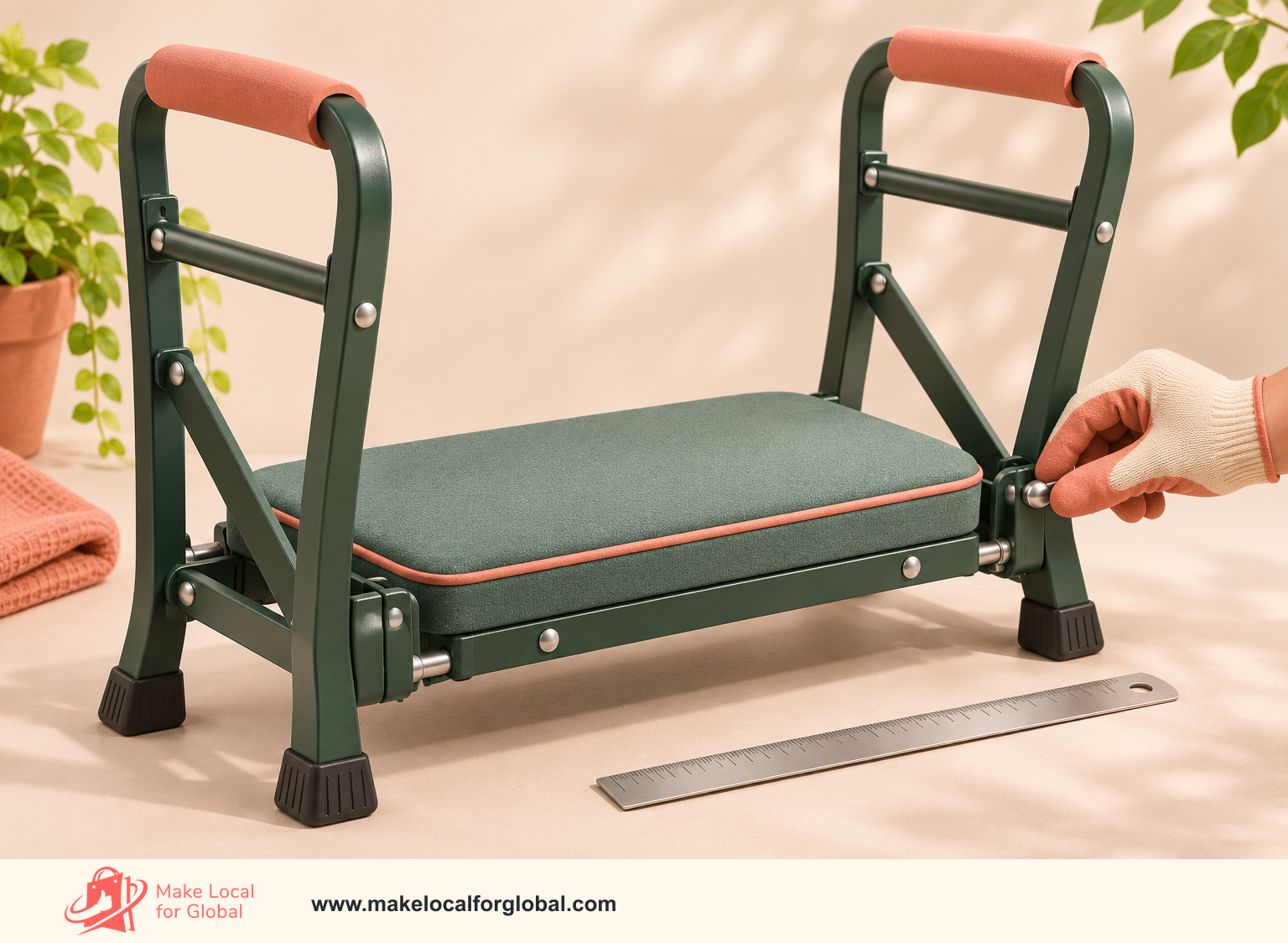
For a folding frame, inspect welds, bolts, pins, springs, crossbars, locking points and plastic feet. Look for sharp edges, loose joints, chipped coating, corrosion, uneven legs and parts that rub during folding. Open and close the frame following the supplied instructions. Watch for pinch points and confirm that the lock points hold as intended.
Place the frame on a flat, firm surface and check that it stands without rocking. Do not test a stated load limit by asking someone to stand or sit on an unverified frame. Obtain the manufacturer’s written test information. If the rating matters to the product claim or the risk feels unclear, arrange suitable product testing before sale.
Check the pad dimensions, surface texture, seam quality, foam recovery and attachment to the frame. Press a few areas with consistent pressure and note whether the padding changes shape. If the cover is described as removable or washable, follow the care instructions on the sample and record the result. Call a cover “waterproof” only when the supplier supports that claim for the finished product.
For a flat foam pad, check its thickness at more than one point, handle strength, edge finish and whether the surface slips on grass, paving or a potting shed floor. A test on one surface does not prove grip on every surface. Describe only the conditions you actually checked.
Check the hinges for trapping risks during both opening and folding. Keep children away during the test. If the instructions warn users to keep fingers clear, make the warning visible in your product information and include the original leaflet. A quick demonstration video can show the locking action without hiding the hazard.
Repeat your inspection on a second sample if possible. One sample can reveal a bad unit; a second helps you see whether the finish, seams and operation vary. Record model, colour, date, supplier, photos and pass or fail notes. Stop the order if a safety-critical point cannot be explained or if the supplier will not identify the product specification.
A garden kneeler’s selling price must cover every cost attached to that order. A foam pad may be light to post, yet a steel folding model may need a larger carton and stronger protection. Compare packed dimensions before comparing courier prices.
Start with this equation:
Contribution before overheads = customer price − landed product cost − packaging − fulfilment − delivery − channel and payment fees − expected returns cost − customer acquisition cost.
“Landed product cost” includes the supplier unit price plus any inbound freight, import charges and inspection costs assigned to that unit. Do not count customer delivery money as free profit if it goes straight to the courier.
The numbers below are a planning example, not a supplier quote or a recommended retail price. It assumes a seller is not VAT-registered and charges £44.99 for a folding kneeler seat with delivery included. Replace each input with a current quote from your supplier, carrier and payment provider.
| Order item | Illustrative cost |
|---|---|
| Customer payment for the order | £44.99 |
| Product and inbound freight allocated to this unit | £16.50 |
| Protective carton and packing materials | £2.00 |
| Pick and pack time or fulfilment charge | £1.50 |
| Tracked parcel delivery | £5.50 |
| Payment fee assumption, 2.5% plus 30p | £1.42 |
| Returns, damage and replacement allowance | £1.80 |
| Advertising cost allocated to the order | £4.00 |
| Contribution before fixed overheads | £12.27 |
The arithmetic is £44.99 − £16.50 − £2.00 − £1.50 − £5.50 − £1.42 − £1.80 − £4.00 = £12.27. This is not net profit. It leaves out web hosting, subscription fees, insurance, accounting, storage, staff time beyond pick and pack, income tax and any other fixed cost.
The payment fee is an assumption to make the example readable. Check the terms for the channel you use. A marketplace may apply a transaction fee to the postage charge or add payment processing, listing, advertising and regulatory charges. Use its current fee schedule and calculate the actual amount for your order value. Do not put a marketplace commission into the example and then count it twice.
Use your supplier, carton and courier quotes to check whether the price leaves room for returns and customer acquisition.
Create a low, expected and high cost case for each model. Use a higher courier quote and a greater returns allowance in the low case. If the order only works when the supplier gives the best quote, postage never changes and every customer keeps the product, your margin is fragile.
Test price changes against the value the buyer can see. If a larger frame costs more, show the added pad width, verified load limit or storage function. If the price is higher than similar offers, explain the reason with evidence, clear photos and service details. Do not promise a “stronger” frame without a defined test or documented specification.
Track actual costs by model after launch. Record order price, channel, payment fee, parcel charge, packing time, discounts, returns and damage. Review the contribution after the first group of fulfilled orders. A high click rate with low purchase completion may point to delivery costs, unclear measurements or a missing answer on the product page.
Leave VAT out of a simple example only if you can model it correctly. GOV.UK currently says a business must register when its taxable turnover goes above £90,000 in a rolling 12-month period, or when it expects to exceed that amount in the next 30 days. The threshold is based on taxable turnover, not profit. If you register, rebuild the calculation using VAT-exclusive revenue and the input VAT you can reclaim. Check the current VAT threshold guidance and speak to an accountant about your figures.
Use one page per model or a clear variation selector for products that share the same design. The title should name the item and its main distinction, for example “Folding Garden Kneeler Seat with Tool Pouch”. Avoid placing every keyword in the title.
Give the first paragraph a direct description. Say whether the product is a foam pad or a folding seat, what it is used for and what is included. Then present the measurements, materials and use information in a scannable specification list.
Include these details wherever they apply:
Photograph the product folded and open. Add a close view of the hinge, feet, pad seam and tool storage. Show scale beside a garden bed or a familiar object without claiming a measurement from the photo. A simple dimension graphic is useful when the numbers are clear and verified.
For the main image, make the whole product visible against a tidy background. Avoid placing text on top of the frame or pad. A second image should show the kneeler in the intended position, and another should show the actual folded footprint. If a person appears, use a natural pose and do not imply a medical result.
Write practical alt text for each image. For example: “Green folding garden kneeler seat shown open beside a raised flowerbed” tells a screen-reader user what is visible. It does not need to repeat the product title or include a string of keywords. A photo of the folded frame needs different alt text from a close-up of the hinge.
Answer questions before they arrive in your inbox. Does the product arrive assembled? Which side is the seat? Can the cover be removed? What is the folded width? Are tools included? Is the load rating from the supplier? Can it be left outdoors? If you do not know, ask the manufacturer before publishing the claim.
Avoid health promises such as “stops back pain” or “protects your knees” if the claim lacks suitable evidence and legal review. Use observable descriptions instead: “padded platform”, “folding steel frame” or “side handles”. Likewise, do not say “all-weather” when the sample has only been used indoors.
An online marketplace may put the product beside other garden accessories and can help you test listing language. Read its current seller fees, return rules, image requirements and product restrictions. The platform’s rules do not remove your responsibility for accurate descriptions and safe products.
Your own ecommerce store gives you control over product pages, bundles and customer email, but you need to bring visitors to it and handle payment, delivery and customer service. A social channel can show short demonstrations of the folding action. Keep the video tied to the exact model, show how the lock works and include the safety instructions.
You can use both a marketplace and a store, but keep product IDs, inventory and prices aligned. Set one stock record per model and colour. If an item sells on one channel, update availability on the other before accepting another order.
Build search content around the questions your customers ask. Useful phrases may include “garden kneeling pad size”, “folding garden kneeler seat”, “how to choose a garden kneeler” and “garden kneeler folded dimensions”. Use these naturally in headings, descriptions and image alt text. A page that answers buyer questions is more useful than a paragraph repeating “sell garden kneelers online”.
Publish a short video showing the kneeler opening and folding. Add a photo sequence with the pad, hinge and folded parcel. A comparison page can explain when a simple pad is easier to carry and when a raised seat is a better match. A care note can answer whether the product should be stored in a dry shed. Use your actual sample and instruction sheet as the source.
For an online shop build, compare MLFG’s ecommerce store plans after you have checked the product and the likely order cost. If you are still testing a product idea, use the B2C Launch Assessment. Neither replaces product testing or legal advice.
Anyone who makes, imports, distributes or sells consumer products in the UK has responsibilities for product safety. For Great Britain, the GOV.UK business product-safety guidance explains that products should be safe in normal or reasonably foreseeable use. It says sellers need supplier records that make the product’s origin traceable. Northern Ireland follows a different general product-safety regime from 13 December 2024, so check the relevant guidance if you sell there.
Ask the supplier for the product specification, maker details, batch identifiers, instructions and evidence for any stated load limit. Keep complaints and incident notes with the product record. If a frame collapses, a hinge traps a hand or a pad arrives with a sharp component, stop selling that batch during the investigation. Tell the supplier and seek advice from Trading Standards where a product may present a safety risk.
Product pages should explain the product accurately and include clear warnings and instructions where needed. A photo or video should not encourage a user to sit on an item that is only rated for kneeling. Do not add a higher load claim to make the listing more attractive. Ask the manufacturer to correct inaccurate packaging or supply documentation before you rely on it.
For Northern Ireland, the relevant general product safety rules changed under the EU General Product Safety Regulation from 13 December 2024. The UK government page notes that GB and NI requirements can differ. Check a current official source for the destination you serve rather than copying a GB-only label onto every parcel.
When selling online, give buyers the information required before they order. The GOV.UK distance-selling guidance lists the business contact details, description, total price, delivery costs and arrangements, and cancellation information that need to be clear. It says consumers can normally cancel up to 14 days after delivery, and the rules can extend if the seller does not provide the cancellation information. Give the customer a copy of the contract in a format they can keep.
Show the total price, delivery estimate and return route before checkout. State who pays return postage when that is permitted and tell the buyer how to exercise a cancellation right. Do not describe a standard item as “non-returnable” solely on the basis that its packaging has been opened. Check the rules and the product’s actual condition before deciding what refund applies.
Packaging extended producer responsibility has size and turnover thresholds. A small startup should not assume it has no reporting duty without checking the current GOV.UK EPR eligibility guidance. In 2026, the government guidance says the obligated-producer test includes UK establishment, more than 25 tonnes of packaging supplied or imported in the previous year and worldwide annual turnover of £1 million or more. The detailed thresholds vary by size and turnover. Keep packaging purchase and import records so you can check whether the rules apply as the business grows.
If you sell into the EU or outside the UK, separate rules may apply. Keep the product’s destination and source records with each order. Seek qualified advice where the product classification, safety standard or country-specific consumer rules are not clear.
Packing starts with the product’s folded dimensions. Measure the actual sample after folding and compare those numbers with the supplier’s carton. Do not estimate parcel size from the open product photo. A small measurement variance can change the carrier band or make the product impossible to pack safely.

Protect the pad from sharp frame ends and the frame from movement inside the box. Place the folding frame in its locked or manufacturer-recommended transport position. Add a sleeve or spacer where metal can rub against foam. Keep the instruction sheet and any small parts together so they do not disappear under packing material.
Make a packing checklist for each SKU: product code, colour, pouch, instruction sheet, inspection check, carton, measured parcel size and carrier service. Photograph the final packed parcel when you first set up the process. If an order arrives damaged, compare the customer’s photo with the pack record and speak to the courier or supplier with specific evidence.
Before setting “free delivery”, add parcel costs into the product price. A folded steel frame can weigh more than a foam pad and may need a bigger box. Ask carriers for prices using the real packaged weight and size. A small size variance can move a parcel into another carrier band. Check remote areas, Northern Ireland, Highlands and islands separately. State any delivery limits before checkout.
Create a return route before the first sale. Decide where returns go, how the buyer gets a return label, how a returned frame is inspected and how opened packaging is handled. Record the reason: too small, heavier than expected, hinge concern, colour variation, damaged carton or changed mind. A return code helps you see whether a product-page correction could prevent the same problem.
If a product fails a safety check after sale, treat it differently from a simple change of mind. Record the model and batch, stop further dispatches from that batch and contact the supplier. Follow the relevant product-safety reporting and recall guidance. Do not continue selling pending a buyer report or supplier reply.

Choose one primary buyer and one gardening task. Review a small group of current product listings and record their sizes, features, included accessories, prices and delivery terms. Speak with potential buyers about how they kneel, sit or carry tools today. Keep notes in their own words.
Pick no more than three candidate products. Write one sentence for each that explains who it is for and why it differs from the others. If two options need the same sentence, remove one from the first shortlist.
Ask shortlisted suppliers for written pricing, minimums, lead times, specifications, safety records, packaging size and defect handling. Request one sample of the likely main model and one alternative if the product distinction matters to the range. Do not commit to bulk stock before checking the sample and landed cost.
Create a record sheet for each model. Add supplier, product identifier, batch, material, dimensions, load limit source, warnings, packaging, sample photos and unresolved questions. A blank field means you need an answer; it is not an invitation to guess.
Inspect the sample and document the checks. Use the actual packaged dimensions to obtain courier quotes. Build the full order calculation and compare a low, expected and high cost case. If the selling price leaves too little contribution in the high-cost case, change the range, price, bundle or supplier before ordering stock.
Write the product title, first paragraph, specifications, delivery information, care notes and returns route. Photograph the open product, folded product, hinge, pad and included pouch. Ask someone who has not handled the sample to find the weight limit, folded size and included parts on the page. If they cannot find an answer quickly, revise the layout.
Publish only the products you can describe and fulfil. Set stock to the amount you physically hold or the supplier can reliably allocate. Place a test order through the actual checkout and confirm the confirmation email, stock reduction, dispatch notice and tracking link.
For each real order, record source channel, sale price, actual payment fee, parcel cost, packing time, customer question, return or damage. Record a colour mismatch, if one is reported, rather than assuming that a variation in one sample proves a supplier defect. Compare actual costs with the estimate after your first review period. Make one adjustment at a time so you can see whether the new price, image or description changed the result.
Use the Startup Budget Planner to organise costs for stock, packaging and the store. For help planning the shop around the products you have tested, contact Make Local for Global and describe the range, target buyer and launch budget.
Choose the product for a clearly defined job. A simple foam pad is portable and easier to pack; a folding kneeler seat offers a raised position and frame handles but needs hinge and load documentation. Compare both with sample checks, buyer conversations and a full order cost.
No. A garden kneeler can be a flat foam pad, a folding frame or a reversible bench. A product described as a seat should be designed and rated for that use. Show the exact open and folded positions in photos and follow the manufacturer’s instructions.
Ask for the maker and model, material specification, dimensions, lead time, minimum order, load evidence, warnings, batch identification and defect process. Order a sample and compare it against the documents before buying stock.
There is no single startup figure. Add sample purchases, minimum stock, inbound freight, packaging, storage, web or marketplace charges, payment fees, delivery and a returns allowance. Use supplier quotes and your actual parcel measurements, then calculate a low and high case before placing an order.
State whether the item is a pad or a frame, show the open and folded dimensions, materials, product weight, load limit source, folding instructions, warnings, included parts, care, parcel delivery and return information. Use photos of the actual model.
Do not make a medical or pain-relief claim without evidence and advice on the rules that apply to your product and advertising. Describe what you can verify, such as a padded surface, frame material, height or handle design. Avoid presenting a general garden accessory as a medical device.
Yes, if the platform rules allow the product and you can keep stock, prices, delivery dates and returns information consistent. Start with one channel if you need to learn the fulfilment process, then add another when you can manage inventory across both.
Show the cancellation terms and return process before the order. The standard distance-selling rules give consumers a 14-day period after delivery to cancel most goods. Keep records of the request, parcel condition and refund. Read the current official guidance for exceptions and refund timing.
It depends on the business’s activities, annual turnover and packaging tonnage. Check the current GOV.UK test and keep records for cartons and other packaging you supply or import. Do not assume that a new business is exempt without checking its situation.
Measure the folded product and parcel, secure the frame, cover exposed ends and stop the product moving inside its carton. Keep the pad away from sharp metal and add the instruction sheet. Photograph the first correctly packed order and use it as the packing reference.
Choose one model for one gardening task. Confirm its safe-use information, inspect a sample, calculate the packed order cost and publish a page that makes the measurements easy to find. Wait for real enquiries and orders before adding to the range. If you want support planning your ecommerce store, speak with Make Local for Global.
Compare ecommerce plans or speak with MLFG about a product range, order flow and launch budget.
PREFERRED SOURCE
Like what you’re reading? Add Make Local for Global as a preferred source on Google to see more of our articles when you search.

Build your online presence without having to figure out everything yourself.