

Learn how to choose Halloween ecommerce products from your existing range, match them to customer occasions, build useful bundles and check stock, pricing and delivery.


Halloween products do not have to be newly made or covered in pumpkins. A useful campaign can start with items already in your shop, provided customers have a clear reason to choose them for the occasion.
The aim is to create a small, easy-to-browse range that fits a real customer need and that you can stock, describe and deliver with confidence. Start with your catalogue, then use colour, occasion and product fit to decide what belongs. Shortlist existing products, test the customer fit and remove anything you cannot support with accurate details or reliable stock.
If your product range is ready but the store needs work, see how Make Local for Global can help with an ecommerce store.
Review products you already sell before approaching suppliers or planning a new range. Existing stock gives you practical information: which sizes and colours are available, how products are packaged, what they cost to ship and which questions customers ask.
List your products in a sheet. Add columns for stock, variants, price, contribution after variable costs, dispatch time, colour, use and likely customer occasion. This first pass is not about making every item seasonal. It helps you spot a few credible candidates.
A homeware shop might already sell candle holders, blankets, serving boards and reusable cups. Some could suit an autumn gathering or a cosy night in, even if their product names have no Halloween wording. Search customer questions, reviews, past orders, returns and social comments for clues about how people use each item. A familiar use gives you a stronger product story than a seasonal label added for appearance.

Orange, black, purple, deep red and autumn neutrals can help a collection feel connected. Colour makes products easier to group in a campaign image or collection page, but it is not enough on its own. A black item still needs a clear use, customer and reason to buy.
Look beyond exact Halloween shades. A neutral serving bowl might work for a party table. A burgundy scarf could suit autumn outfits. A cream gift box may pair with seasonal packaging without changing the core product. Ask whether each item suits the occasion, is available in enough quantity and is simple to explain.
Keep product details accurate. Do not describe an item as orange, black or purple if its colour differs in normal light or across variants. Show each relevant option in the product photos.
Think about what customers may be doing, rather than starting with a list of Halloween symbols. One person may be preparing a family gathering; another may need a costume accessory, a small gift, party supplies or a quiet evening at home. Write down a few occasions that fit your customers and products, then ask what would make that activity easier, more comfortable or more enjoyable.
| Occasion | Product fit to look for | Question to check |
|---|---|---|
| Hosting a small gathering | Serving pieces, table accessories, reusable cups | Is it easy to clean and ready to use? |
| Dressing for an event | Accessories, clothing or costume details | Are size, material and fit clear? |
| Sending a seasonal gift | Small homeware, stationery, gift-ready products | Can the recipient understand what is included? |
| Staying in for the evening | Candles, blankets, mugs, suitable snacks | Are safety, care and delivery details clear? |
These are starting points, not assumptions about every shopper. If your customer base does not connect with Halloween, a general autumn edit may be a better fit.

Product positioning is the short explanation of who an item is for, what it helps them do and why it belongs in the campaign. A product can suit more than one use, but a page or post should lead with one main idea.
The second description suggests a use, but still needs verified facts such as capacity, material, care instructions and dispatch time. Do not add claims about durability, safety or performance unless your product information supports them. Try this sentence for each candidate: “This [product] helps [customer] with [occasion or need].” If it feels strained, leave the item out or position it for autumn more broadly.
A seasonal collection groups items that make sense together and gives visitors one route to browse. Choose a simple theme such as “Halloween hosting”, “Autumn evenings” or “Small seasonal gifts”. The name should match the products within it. If only a few items fit, a featured group on an existing category page may be clearer than a large, sparse collection.
Keep the page practical. Add a short introduction, show prices and availability, and link each item to its full product details. Explain whether pictured accessories or props are included. Check the page on a phone, where a long product grid can take time to scan.
If you want help turning a product range into a clear store, use the Make Local for Global website to review the ecommerce setup options. The right next step depends on what your business needs and the service details available when you enquire.
Give the collection one obvious starting point. Feature the item with the clearest customer fit, useful product information and reliable availability. A hero product does not need to be the most expensive or dramatic item. Use supporting products to answer a related need: perhaps a serving piece alongside reusable cups, or a main gift item with suitable packaging if that packaging is actually included or offered.

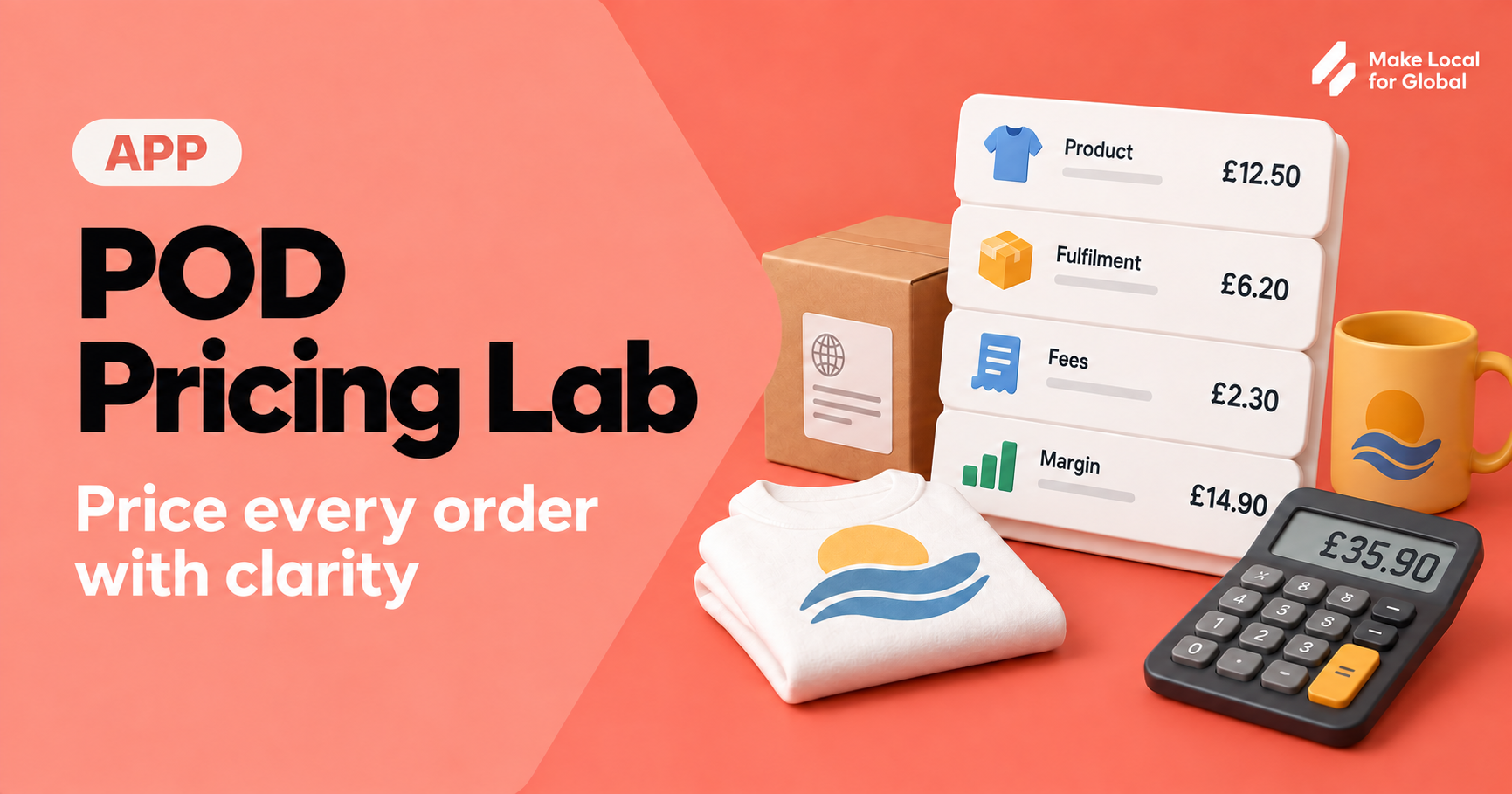
Bundles work when items solve one shared need and are available together. Before setting a price, add up every item, packaging, payment fees, any delivery contribution and discount. The remainder is contribution before fixed costs, tax and other business expenses, not net profit.
Worked illustration for a non-VAT-registered seller: assume a bundle sells for £27 and has a combined product cost of £9. Add £1.50 inbound freight, £1 packaging, £0.80 payment fees, £2 delivery paid by the seller, £1.35 returns allowance and £3 customer acquisition cost.
Estimated variable costs total £18.65 (£9 + £1.50 + £1 + £0.80 + £2 + £1.35 + £3).
Remaining contribution is £8.35 (£27 – £18.65), before overheads, tax and other costs.
These figures are illustrative, not a recommended price or margin. Replace them with supplier and carrier quotes, actual fees and observed returns. A VAT-registered business should calculate using its net sales value and apply its own VAT treatment.
Do not bundle products just to raise the basket value. The combination should be easy to understand, straightforward to pack and supported by enough stock of every component.
Excluding products is part of good campaign planning. An item may not belong if it has very low stock, unclear variants, a long supplier lead time or delivery timing that conflicts with the occasion. Leave out products with incomplete photos or specifications, little connection to the collection, or a use customers will not understand from the page. A themed backdrop cannot fix a poor product fit.
Check fragile, perishable, size-sensitive or made-to-order products with extra care. Confirm handling, safety and delivery information before featuring them. If something may arrive after the event, say so plainly or choose another item.
There is no single correct number of products. Choose a range small enough to keep in stock, photograph, describe, promote and fulfil. Several well-matched items can be easier to shop than a long list of repeated choices.
As a working exercise, shortlist one hero product, a few supporting products and one bundle only if it makes practical sense. Remove near-duplicates unless customers need the options. Ask someone unfamiliar with the planning to scan the collection: can they say who it is for, what the main offer is and where they would click next? Hesitation may reveal unclear labels or too many choices.

List products that could fit Halloween or a broader autumn occasion. Record price, stock, variants, lead time, product cost, dispatch time and customer questions. Remove products with missing details before doing more work.
Choose two or three possible occasions and ask existing customers which products they would consider. Use a short email poll, a social question or recent customer conversations. Record replies and product mentions, but treat them as directional feedback, not a sales forecast.
Choose a hero product and supporting items. Confirm stock and supplier timing, then calculate contribution for each item and any proposed bundle. Draft the collection name, product order and positioning sentence for every item.
Show the draft collection to a few people who have not helped plan it. Note where they hesitate, which product they click first and what they ask about price, contents or delivery. Make corrections, then confirm the range you can actually promote and fulfil.
For the wider campaign, read How to Plan a Halloween Promotion for Your Ecommerce Store for advice on goals, dates, budget, emails and delivery cutoffs.
There is no fixed number. Start with products you can support with clear information, available stock and realistic delivery. Add more only when each item gives customers a useful choice.
Yes, if you can explain their fit through an occasion, colour, use or gift idea that makes sense to your customers. Do not rely on a seasonal photo to explain an unrelated item.
Only after checking demand, costs, supplier timing and your capacity. Existing catalogue items may give you a lower-risk way to test a campaign. If you create something new, confirm samples, production time and fulfilment plans before promoting it.
They can be useful when items belong together and customers can see the shared purpose. Check the bundle price against product, packaging, payment and delivery costs, and keep stock of every component.
Lead with the product that has the clearest customer fit, sufficient availability and a product page that answers common questions. A popular product with poor stock or unclear delivery may not be the best campaign lead.
Choose products for customer fit, not for the season alone. Use colour and occasion to organise the range, show one clear featured item, and keep bundles practical. Leave out anything you cannot explain, stock or deliver with confidence.
When a shopper can see what the product is, why it belongs and what happens after checkout, your seasonal collection has a clearer job to do. If you need support with the store itself, use the Make Local for Global ecommerce service to review your options.
PREFERRED SOURCE
Like what you’re reading? Add Make Local for Global as a preferred source on Google to see more of our articles when you search.
















Build your online presence without having to figure out everything yourself.