

Compare print on demand supplier costs in £ using complete quotes for production, extras and shipping. Use the free planner to spot hidden differences.

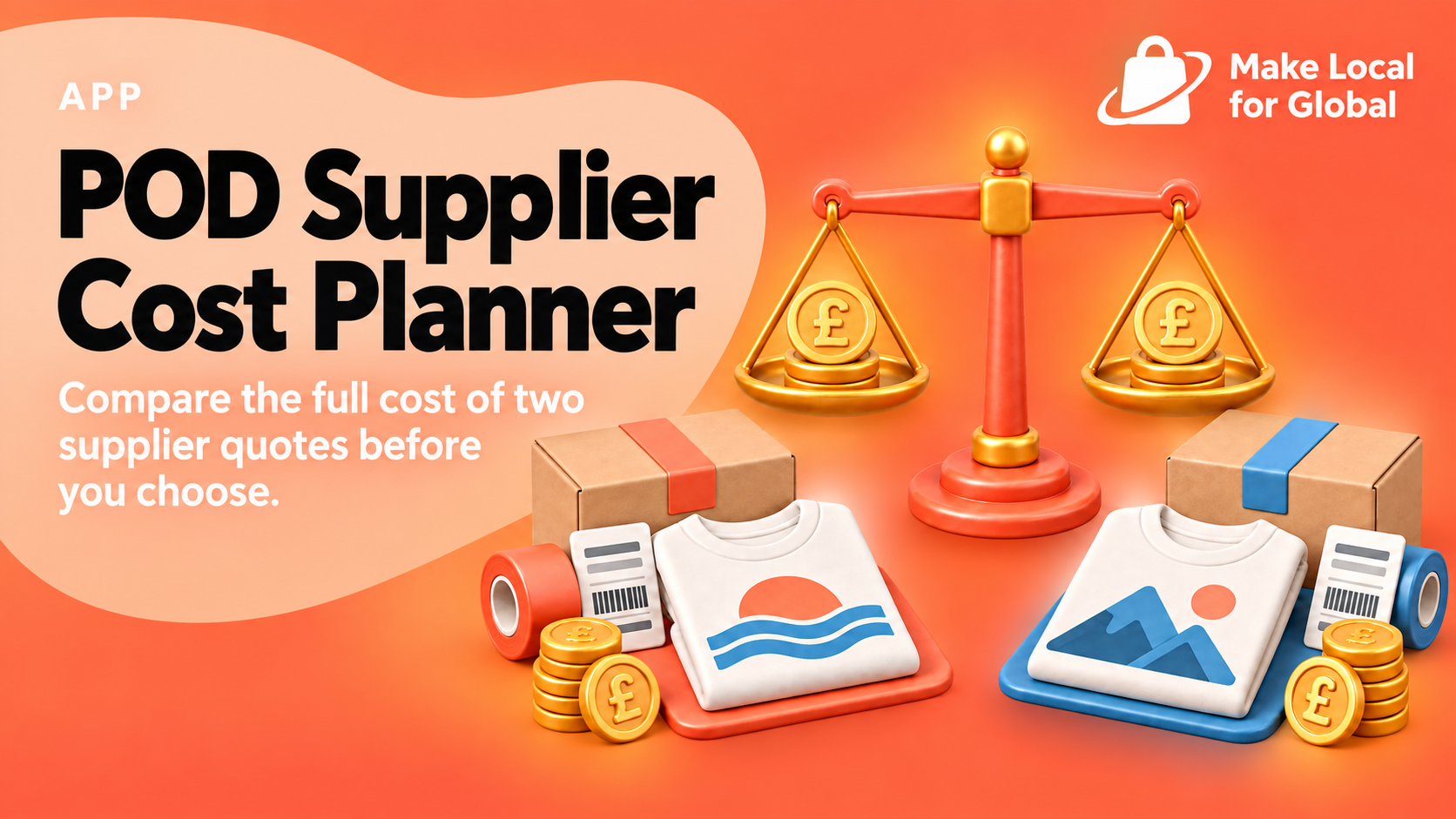
A print-on-demand supplier can look inexpensive until the full order is assembled. A low product price may sit beside extra print charges, higher delivery costs or fees that were absent from the first comparison. If you are choosing between two POD suppliers, compare the same product, variant and delivery route using a written, itemised quote. This guide shows you how to build a fair comparison in pounds, what evidence to request and how to use the free POD Supplier Cost Planner.
The planner is deliberately narrow. It compares one order from two suppliers. It does not fetch live prices or calculate your retail margin. That separation matters: first establish what a supplier would charge for a comparable order, then use a broader pricing tool to decide what to charge your customer.
Enter the product, extras, shipping and other per-order charges from each quote. See the complete difference and download an itemised checklist for your next supplier conversation.
Print-on-demand providers do not all present charges in the same way. A base product price may cover one print area, while another placement or treatment costs extra. Shipping varies by product and route. Taxes depend on the transaction and where it is fulfilled. The current Printful product-pricing guidance explains that product price and extras need to be considered together; Printify’s charging guidance separates production and shipping charges. Check the terms in your own supplier account rather than assuming either model applies to every provider or order.
For a useful comparison, request a price for one named product and variant. State the artwork placement, expected order quantity, packaging requirements and delivery destination. Ask which items are included and which would be billed separately. If the quote is in another currency, record the conversion method and date; this planner expects pounds and does not perform currency conversion.

For each supplier, add four amounts: the finished product charge, print or other extras, shipping and any other per-order charge. Use the same basis for both quotes. If a price already includes an extra, do not add it twice. If applicable VAT, duties or fees are not included, obtain clarification and add the relevant amount to the quote before treating the total as comparable. Tax treatment can be complicated, so confirm uncertain cases with the supplier or a qualified adviser.
| Charge for one UK order | Supplier A | Supplier B |
|---|---|---|
| Finished printed product | £12.50 | £11.00 |
| Print or other extras | £1.50 | £2.80 |
| Shipping | £4.20 | £5.50 |
| Other per-order charges | £0.80 | £1.00 |
| Total from these example quotes | £19.00 | £20.30 |
Supplier B has the lower headline product price by £1.50. Once the remaining example charges are included, Supplier A has the lower full-order total by £1.30. These are invented teaching figures, not current prices from a supplier. The point is to make every line visible before you choose. Enter your own dated figures in the planner.
Other charges might include packaging, a placement fee or a route-specific handling amount. Keep the label used on the actual quote in your notes. If the supplier cannot say whether a charge applies, mark the comparison provisional rather than entering zero and presenting the answer as settled.
Shipping can change the order total and the buyer experience. Compare the same destination, service level and parcel contents. A quote for a single UK delivery cannot be compared fairly with a bulk shipment to another country. Printify’s shipping guidance explains why shipping depends on the product and provider. Ask for the actual route that matches your planned first customer.
Separate dispatch time from delivery time. A stated production or dispatch window tells you when the parcel may leave the facility, not when it will arrive. If one quote offers faster service at a higher price, record that trade-off. The planner captures quoted dispatch days so you can see the difference beside the cost, but it does not predict arrival dates.

The free planner lays the two itemised totals side by side and flags when the supplier with the cheaper product has a more expensive complete order.
Cost is one signal. A cheaper shirt with a poor print, weak packaging or unreliable support can create a worse customer experience and more work for you. Order a physical sample from the serious contenders. Inspect the print, product material, sizing or dimensions, packaging and arrival condition. Record the date, product specification and your observations. Our POD sample testing checklist explains the inspection process, while the Sample Testing Planner helps budget it.
Also ask what happens when something goes wrong. Who handles a misprint or lost parcel? What evidence must you provide, and how quickly must you report the issue? A supplier’s written response matters more than a vague promise. If a quote excludes returns, reprints or customer support, do not silently treat those as equivalent to a supplier that has documented terms.
Evidence to save: dated quote or checkout screenshot, product and variant, artwork placement, delivery route, tax and fee assumptions, sample photos, dispatch terms and the supplier’s reply to your questions.

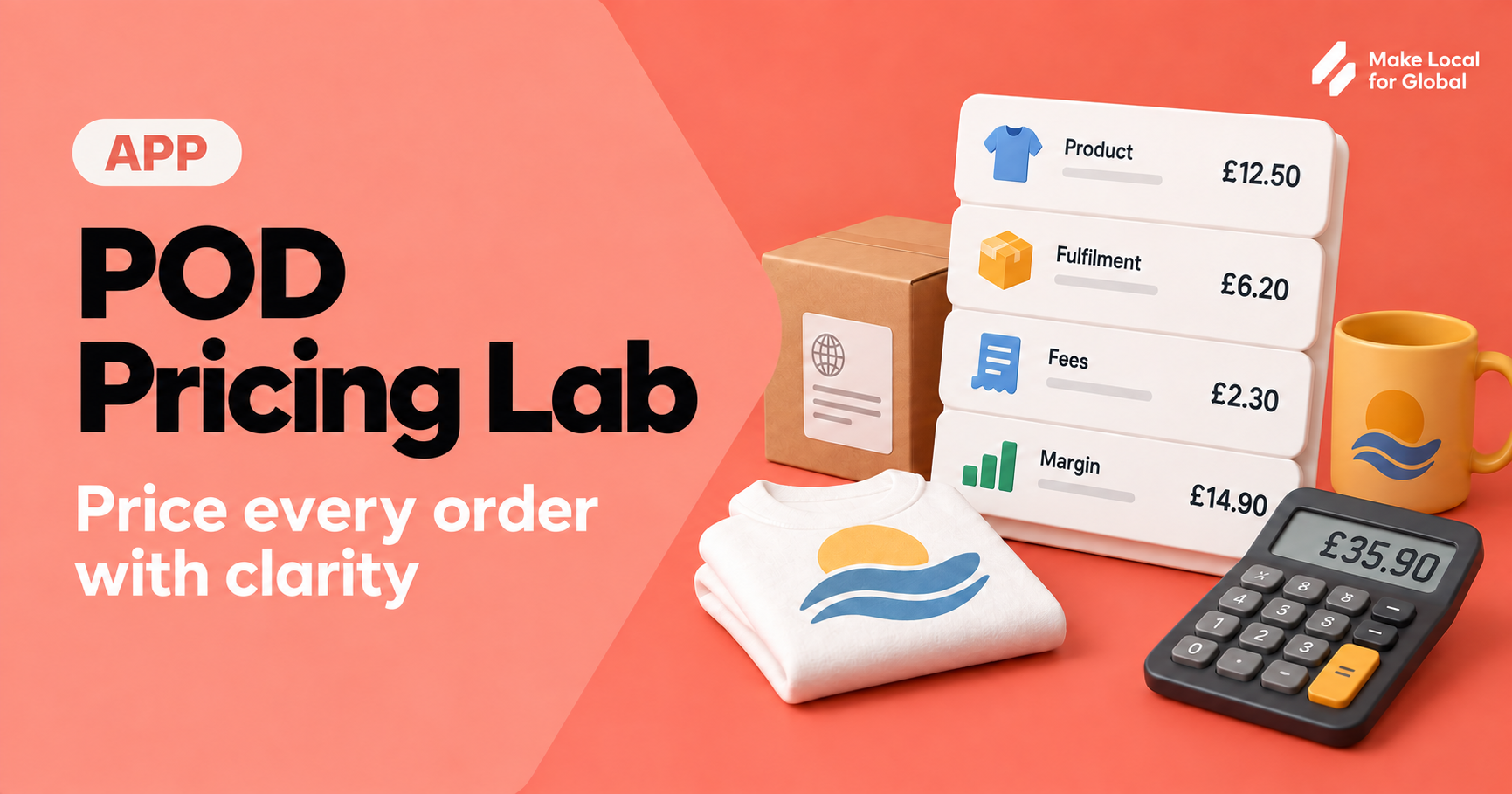
Once you understand supplier cost, work on retail price separately. The POD Pricing Lab guide covers a wider pricing decision, including what you charge customers. Do not assume the cheapest supplier quote leaves an acceptable margin; platform fees, payment processing, promotions and returns can affect the business result. A supplier-cost comparison is the first layer, not the whole financial plan.
No. You enter current written quotes. The tool adds the lines you provide and makes the difference clear. Verify the total with the supplier before paying.
Convert both quotes to pounds using a documented rate and date before entering them. Check card or payment-provider conversion fees separately. The app does not fetch exchange rates.
Ask for the applicable charge and record the assumption. Do not use zero simply because it was omitted. For uncertain tax treatment, seek appropriate advice; the planner does not calculate tax.
Not necessarily. Compare sample quality, delivery reliability, support, product range and written issue-resolution terms. Cost is evidence for a decision, not the decision by itself.
Save an itemised comparison and a quote-evidence checklist as a PDF. When your supplier costs are clear, explore the wider retail pricing decision or talk through your ecommerce plan with MLFG.
PREFERRED SOURCE
Like what you’re reading? Add Make Local for Global as a preferred source on Google to see more of our articles when you search.























Build your online presence without having to figure out everything yourself.