
Plan a Halloween promotion for your ecommerce store with a clear goal, suitable products, a margin-aware offer, campaign dates, a budget, social and email content, and realistic delivery promises.

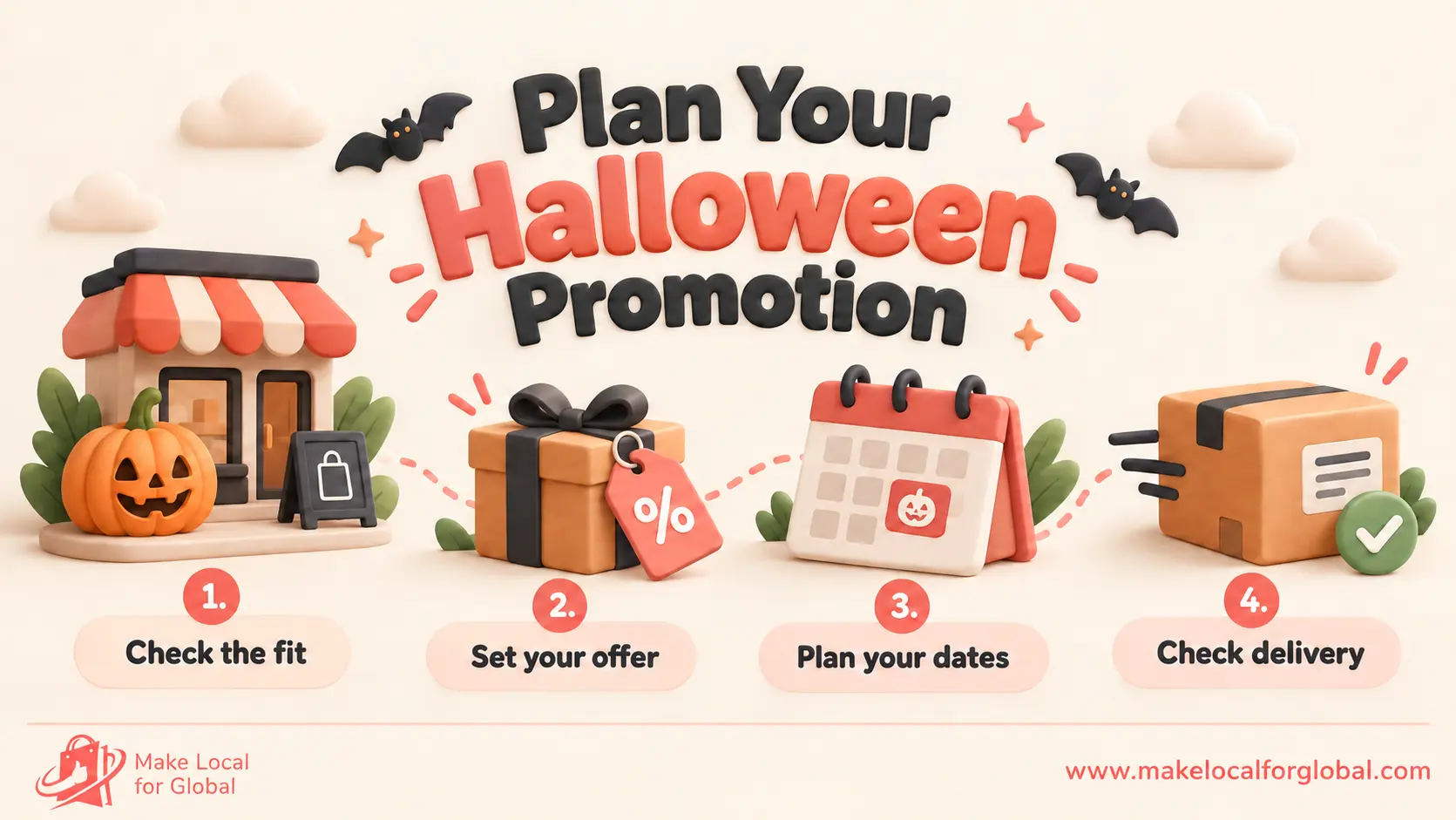
Halloween can be a useful moment for an ecommerce store, but a seasonal promotion only makes sense when it fits your customers, products and capacity. A clear plan helps you avoid last-minute decisions, protect your margins and make promises you can keep.
Use this guide to decide whether Halloween belongs in your calendar, choose a goal and offer, set dates and a budget, and coordinate your social content, emails and delivery plan.
Not every business needs a Halloween promotion. Start with your customers rather than the calendar. Ask whether your audience celebrates the occasion, whether Halloween connects naturally with what you sell, and whether a themed message would feel useful rather than forced.
A fit might be obvious for costumes, decorations, sweets, gifts or seasonal experiences. Other stores may have a less direct connection but can still take part through autumn colours, themed packaging, a suitable gift bundle or a playful social post. If the link is difficult to explain, it may be better to focus on your usual products and customer needs.
Check practical capacity too. Consider whether you have enough stock, time to prepare creative, and fulfilment space for a busier period. A promotion that attracts orders you cannot reliably fulfil is not a good fit.

Decide what the promotion should achieve before choosing a discount or creating content. A focused goal makes it easier to choose products, set a budget and judge whether the campaign worked.
Pick one primary goal and a simple measure, such as orders for the featured range, average order value, or revenue after discounts. You can track other useful numbers too, but avoid treating every metric as equally important.
Choose products that make sense for the occasion and are ready to sell. Review current stock, supplier lead times, product margins and any variations that may run out first. If an item is made to order, confirm how many orders you can complete within your normal turnaround.
Keep the selection manageable. One hero product, a small collection or a thoughtful bundle is often easier to explain than a store-wide promotion. Bundles can help customers find complementary items, but include only products that genuinely work together and are available in sufficient quantities.
Make the product page do its job: use clear photos, explain what is included, show the price, describe sizing or materials where relevant, and make delivery information easy to find. Seasonal styling should not hide the details people need to decide.
A discount is only one kind of offer. Depending on your products and costs, you could try a bundle price, a small gift with purchase, a limited seasonal design, or free delivery above a sensible order value. The best option is one customers can understand quickly and your business can afford to provide.
Before setting the offer, calculate what remains after product costs, packaging, payment fees, delivery contributions and the discount. Check whether it can be combined with other codes and state any exclusions clearly. Avoid choosing a percentage because it sounds impressive before checking what it does to your profit.

Keep the terms simple. Tell shoppers which products qualify, when the offer starts and ends, and whether a code is required. Put those details near the products and checkout steps where customers need them.
Work backwards from the point when customers need their orders. Your campaign calendar should account for preparation, promotion, order processing and delivery, not just the day of Halloween.
Decide when product pages and creative will be ready, when you will first mention the promotion, when the offer opens and closes, and when you will send a final reminder. If delivery before Halloween matters, set a last-order date based on your actual fulfilment and carrier information. Build in a little breathing room for busy periods and unexpected delays.
Make the dates visible in your campaign materials. If the offer ends before Halloween or delivery cannot be guaranteed after a cutoff, say so plainly. A short, honest window is more useful than a deadline customers cannot interpret.
List the costs the campaign may create: product discounts, paid promotion, photography or design, packaging, samples, platform or payment fees, and any extra fulfilment support. Include costs already committed as well as new spending, then set a limit you can afford.
Estimate how many orders you would need to cover the additional campaign spend using the contribution you expect to keep per order after variable costs. This is a planning estimate, not a guarantee. Use realistic order values and costs, and decide in advance what you will do if results are below or above expectations.
If you are using paid ads, start with a modest test and check results against your goal. Do not increase spend just because clicks are coming in; check whether visitors are viewing products, adding to basket and buying at a sustainable cost.
Give each social post a purpose and make the next step clear. A simple sequence could introduce the seasonal collection, show a product or bundle in use, answer a common question, share the offer details, and remind people of the final order date.
Use platform-appropriate copy and formats, but keep the facts consistent: product availability, price, offer terms and delivery dates should match your store. Prepare images or short videos in advance, add captions or on-screen text where helpful, and link directly to the relevant collection or product page rather than making people search for it.
Schedule what you can, while leaving room to respond to questions and adjust if stock changes. A few useful, well-timed posts are easier to manage than a daily content plan that your small team cannot sustain.

Email can give interested customers more detail than a short social post. Depending on the length of your campaign, plan a brief announcement or teaser, a launch email, a reminder that answers likely questions, and a final note before the offer or delivery cutoff.
Each email should have one clear message and one main link. Explain what is included, who the offer is for, when it ends and what customers should do next. Segment where it is useful, for example by interest in a relevant product range, and follow the email preferences and requirements that apply to your list.
After the campaign, consider a helpful follow-up: thank customers, share care or use instructions, or point them to related products. Keep the communication relevant instead of extending a Halloween offer indefinitely.
Delivery details can determine whether a seasonal purchase is still useful. Check processing time, dispatch days, carrier estimates, destination restrictions and any supplier or production delays. Distinguish clearly between the last day to place an order and the day an order is expected to arrive.
Review your product pages, delivery policy, checkout and campaign messages so they give the same information. If you cannot promise arrival by Halloween, do not imply that you can. Offer the best estimate you can support and explain what happens after the cutoff.
Finally, test the customer journey on a phone: open the campaign link, check the product details, add the item to your basket and confirm that delivery options and costs are visible. This catches confusing steps before customers do.

A successful Halloween promotion does not need a complicated theme or a large discount. It needs a genuine reason to take part, products customers can buy, an offer that works for your numbers, and clear communication from the first post to the final delivery update.
Plan around your customers and your capacity, then keep the campaign focused. When the product, offer, dates and delivery promise all make sense together, shoppers have a clearer path from discovery to checkout.
PREFERRED SOURCE
Like what you’re reading? Add Make Local for Global as a preferred source on Google to see more of our articles when you search.

















Build your online presence without having to figure out everything yourself.