

Want to start ecommerce on a low budget? This guide compares low-cost ecommerce business models, startup costs, risks and beginner suitability.

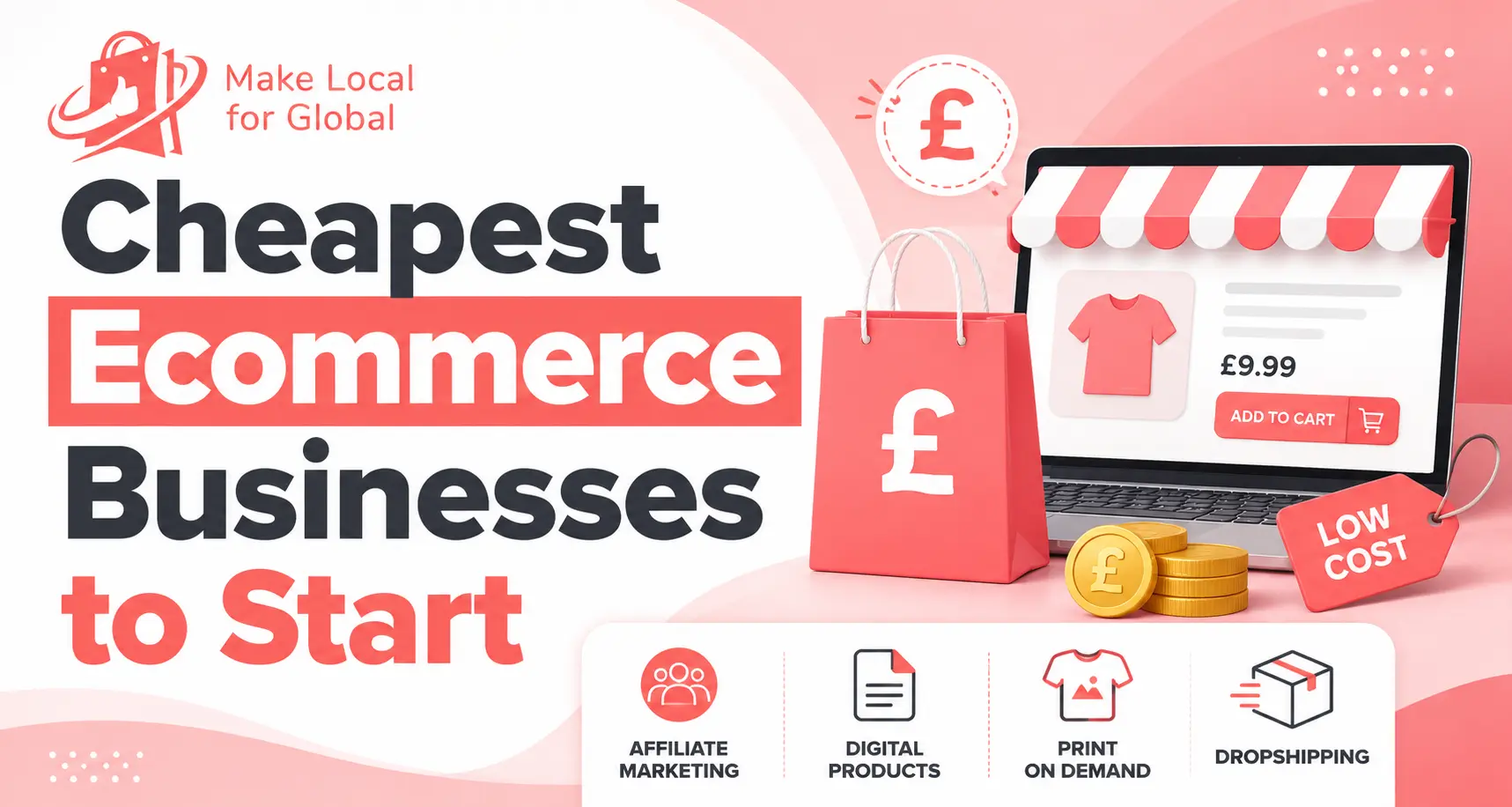
Starting an ecommerce business does not always mean buying stock, renting storage or spending thousands before your first sale.
Some ecommerce models are much cheaper to test than others. The lowest-cost options usually avoid bulk inventory, keep fulfilment simple and let you start with a small product range.
This guide compares the cheapest ecommerce businesses to start, including affiliate marketing, digital products, print on demand, dropshipping, single product stores and simple handmade product stores.
Make Local for Global helps hobbyists, artists, startups and small businesses launch a WordPress and WooCommerce online store without needing technical skills.
Plans start from £99/year. Your website can be ready in 5 days.
The cheapest ecommerce businesses to start are usually:
The cheapest model is not always the easiest to make profitable. You still need a clear offer, a website customers trust, a way to get traffic and enough margin after costs.
| Rank | Business model | Why it can be low cost | Main warning |
|---|---|---|---|
| 1 | Affiliate marketing | No stock, checkout or fulfilment needed | Needs traffic and trust before income grows |
| 2 | Digital products | No physical stock or postage | Product value must be clear before purchase |
| 3 | Print on demand | Products are made after orders | Design quality and niche choice matter |
| 4 | Dropshipping | Supplier holds and ships stock | Supplier quality and delivery times can hurt trust |
| 5 | Single product store | Fewer product pages, images and stock decisions | Business depends heavily on one offer |
| 6 | Handmade products | Can start with small batches | Time, materials and packaging must be priced properly |
A business model can look cheap at first, then become expensive once hidden costs appear.
Before starting, check these costs:
Beginner tip: cheap to start does not mean free to run. Always calculate the full cost of getting a customer, delivering the product and supporting the order.
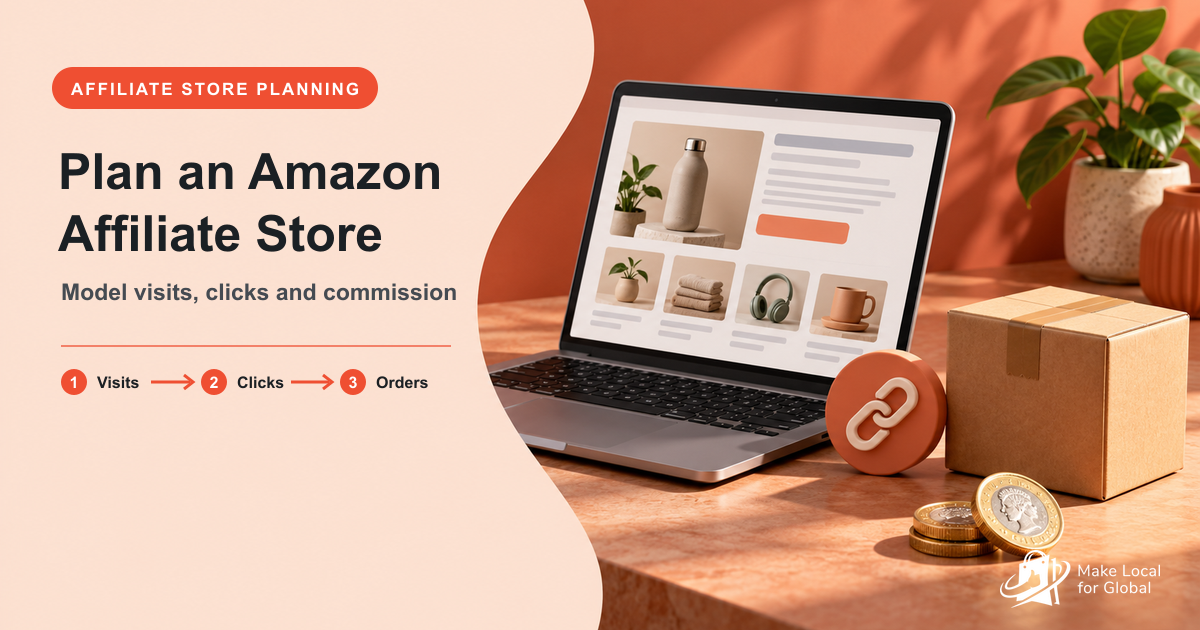
Affiliate marketing is one of the cheapest ecommerce-related businesses to start because you do not need to buy products, handle payment or fulfil orders.
You promote products or services from another company and may earn commission when someone buys through your tracked link.
This model works best with helpful content such as reviews, comparisons, tutorials, guides, newsletters, videos or niche blogs.
You need traffic before you can earn. Commission rates can change and affiliate programmes can close or reject referrals. You should clearly disclose affiliate links where required.
Digital products can be low-cost because customers receive a file, download or online access instead of a parcel.
Examples include ebooks, templates, worksheets, digital art, printables, planners, stock photos, presets, spreadsheets, design files and online resources.
Once the product is created, you can sell it again without creating a new physical item for each order.
Customers need to understand the value before buying. Use previews, screenshots, examples, file details, software requirements and clear instructions.
Print on demand lets you sell custom products without buying stock in advance. The supplier prints the product after a customer places an order.
Common products include t-shirts, hoodies, mugs, posters, tote bags, notebooks, phone cases, stickers and wall art.
This model can be a good fit for artists, designers, creators, hobbyists and niche communities.
Generic designs are hard to sell. You need a clear niche, product samples and honest delivery information.
Dropshipping lets you sell products through your online store while a supplier stores, packs and ships the product.
This can reduce stock cost, but it does not remove business responsibility. Customers still buy from your store, so delivery issues and product problems usually come back to you.
Supplier quality, delivery time, product availability and refund handling can affect customer trust. Order samples before selling.
Make Local for Global can help you launch a WordPress and WooCommerce website for affiliate content, digital products, print on demand, dropshipping, single product stores or multi product stores.
A single product store can be low-cost because you only need to prepare one main product offer.
This can suit a digital product, handmade item, print on demand design, niche product, starter kit, course, ebook or launch offer.
The website is easier to plan because the homepage, product page and sales message can all focus on one product.
If the product does not sell, there are fewer backup products. Test demand before spending heavily on branding, ads or large stock orders.
Handmade ecommerce can be low-cost if you start with small batches and materials you can afford.
Examples include candles, jewellery, soap, knitted items, stationery, craft kits, art prints, ceramics and personalised gifts.
This model works best when you already make the product, understand the cost of materials and can package orders safely.
Many makers underprice their time. Include materials, packaging, fees, delivery admin, failed batches, customer support and your own labour when setting prices.
| Budget level | Ideas to consider | What to avoid |
|---|---|---|
| Under £100 | Affiliate content, digital product drafts, product research, simple content site planning | Buying stock, paid ads, expensive tools |
| £100 to £300 | Digital products, print on demand, focused affiliate site, small handmade batch | Large catalogues, untested suppliers, too many apps |
| £300 to £700 | Dropshipping test store, single product store, POD brand, small handmade range | Bulk stock purchases before validation |
| £700+ | Multi product store, better product photography, samples, small stock range | Private label orders without demand testing |
| Your skill | Low-cost business to consider | Why |
|---|---|---|
| Writing | Affiliate content or ebooks | You can turn helpful content into traffic or a product |
| Design | Print on demand or templates | Designs can be sold without bulk stock |
| Teaching | Guides, courses or worksheets | Knowledge can become digital products |
| Craft | Small-batch handmade store | You can start with a limited range |
| Research | Dropshipping or affiliate comparisons | You can study products, suppliers and buyer intent |
| Community building | POD merch or niche digital products | Audience knowledge can guide product choice |
Even a cheap ecommerce business has legal, tax, consumer, payment and product responsibilities.
UK beginners should check:
Make Local for Global does not support products or services that are unlawful, unsafe, restricted, misleading, harmful, counterfeit or unsuitable for ecommerce.
Some models are better after you have tested demand or built more budget.
Be careful with:
For many beginners, the cheapest sensible path is:
Make Local for Global helps you get your ecommerce website built, launched and ready to manage without doing the technical setup yourself.
Plans start from £99/year. Website ready in 5 days.
The cheapest ecommerce businesses to start are usually affiliate marketing, digital products, print on demand, dropshipping and focused single product stores.
Affiliate marketing has low fulfilment responsibility, but needs content and traffic. Digital products avoid shipping, but need clear value. Print on demand avoids bulk stock, but needs good design and niche choice. Dropshipping avoids stock storage, but supplier quality matters. A single product store keeps setup focused, but relies heavily on one offer.
Start with the model that matches your skills and your budget. Keep the first version small, test real interest, then spend more only when you have evidence that customers care.
Affiliate marketing, digital products and print on demand are often among the cheapest because they can avoid bulk stock and physical storage.
You can start planning and testing some models with around £100, especially affiliate content, digital products or print on demand. A full ecommerce launch may still need more for website setup, samples, tools and marketing.
Dropshipping can be cheap compared with buying stock, but you still need a website, samples, supplier checks, product pages and marketing.
Digital products are often cheaper to deliver because there is no postage or packaging. They still need time, skill, clear product value and a reliable delivery setup.
Print on demand can be cheaper at the start because products are made after orders. The trade-off is that per-product costs can be higher than bulk buying.
You can start trading, but you may need to register for Self Assessment if your trading income is above the relevant threshold. Check GOV.UK or speak to a qualified adviser for your situation.
Avoid large stock orders, restricted products, unclear suppliers, weak margins, high-return products and tools that cost money before you know whether customers want the product.
Yes. WooCommerce can support digital downloads, affiliate products, physical products, print on demand, dropshipping and focused ecommerce stores with suitable setup.
PREFERRED SOURCE
Like what you’re reading? Add Make Local for Global as a preferred source on Google to see more of our articles when you search.










Build your online presence without having to figure out everything yourself.