

Print-on-demand products can be useful for new sellers, but the costs can add up quickly. This beginner-friendly guide explains how to include provider cost, delivery, fees, marketing, design time and profit before setting your price.

Print-on-demand can look simple when you first start selling online.
You add a design to a product, such as a t-shirt, mug, tote bag or poster. When a customer orders, the print provider makes and sends the product.
This means you do not usually need to buy stock before selling.
But pricing print-on-demand products can be tricky.
If you only look at the product base cost, you may set your price too low. You need to think about printing cost, delivery, platform fees, payment fees, your design time, possible returns and profit.
This guide explains how to price print-on-demand products without losing money.
A print-on-demand product is made after the customer orders it.
Common examples include:
The customer buys from your store. The print provider prints and sends the product.
This can be useful for new sellers because you do not need to hold boxes of stock at home.
But you still need to price carefully.
Print-on-demand products often have a higher base cost than buying products in bulk.
For example, a plain mug bought in bulk may be cheap, but a print-on-demand mug includes the product, printing, handling and sometimes packaging.
That means your selling price needs to cover more than the product itself.
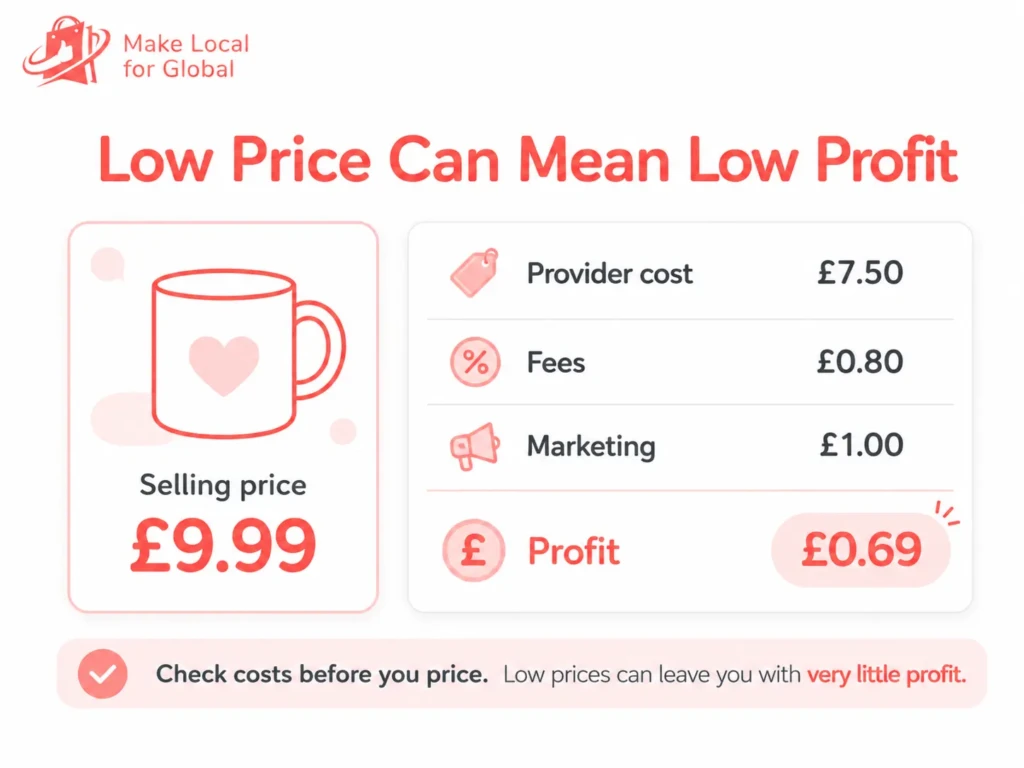
If your mug costs £7.50 from the print provider and you sell it for £9.99, it may look like you made £2.49.
But you may still need to cover payment fees, platform fees, marketing and your own time.
After those costs, the profit may be very small.
The print provider cost is the amount your supplier charges you to make the product.
This may include:
Some providers show product cost and delivery separately. Others may show them during checkout or order setup.
Before setting your price, write down the full cost.
Example:
If you do not include delivery in your thinking, the product can quickly become unprofitable.
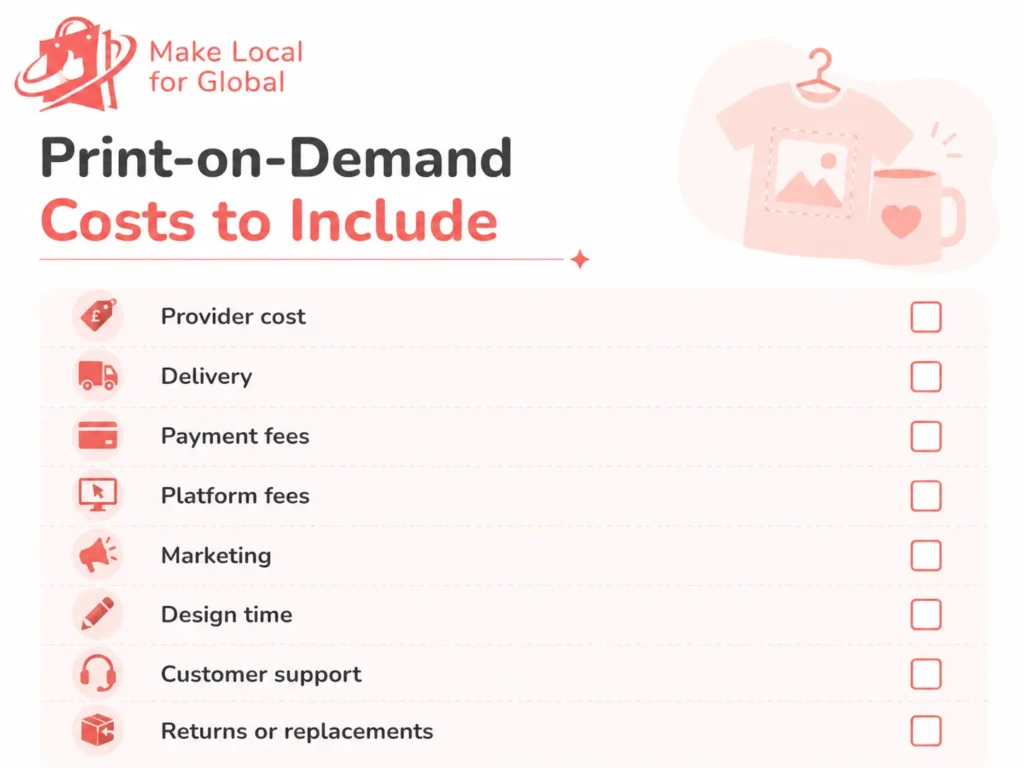
Print-on-demand sellers often forget costs that are not shown in the product base price.
These can include:
A product can look profitable until these costs are added.
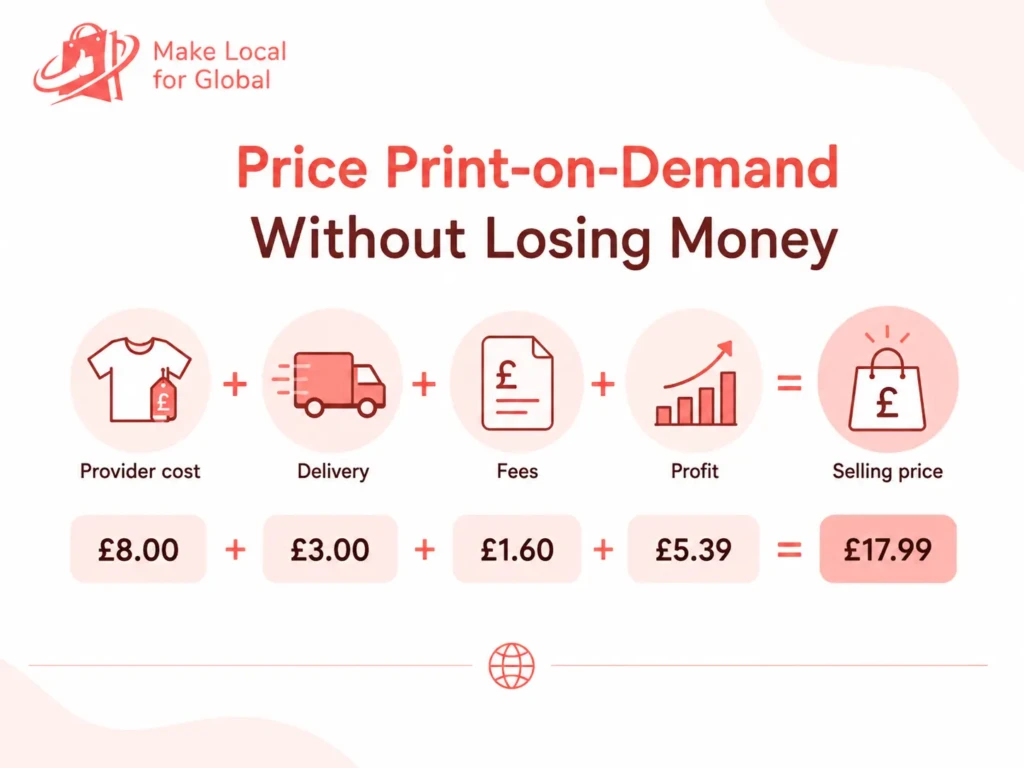
A simple formula is:
Provider cost + delivery + fees + marketing + profit = selling price
If the delivery cost is already included in the provider cost, do not add it twice.
Example:
This price has a reason behind it. You are not guessing.
Let’s say you sell a printed mug.
Your costs might look like this:
The total would be:
£6.50 + £3.00 + £0.60 + £1.00 + £5.89 = £16.99
So the selling price could be:
£16.99
If you sold the same mug for £9.99, there may be little or no profit left after costs.

Now let’s say you sell a printed t-shirt.
Your costs might be:
The total would be:
£10.50 + £3.50 + £0.80 + £1.50 + £7.69 = £23.99
So the selling price could be:
£23.99
This gives you a clearer reason for the price and helps avoid selling at a loss.
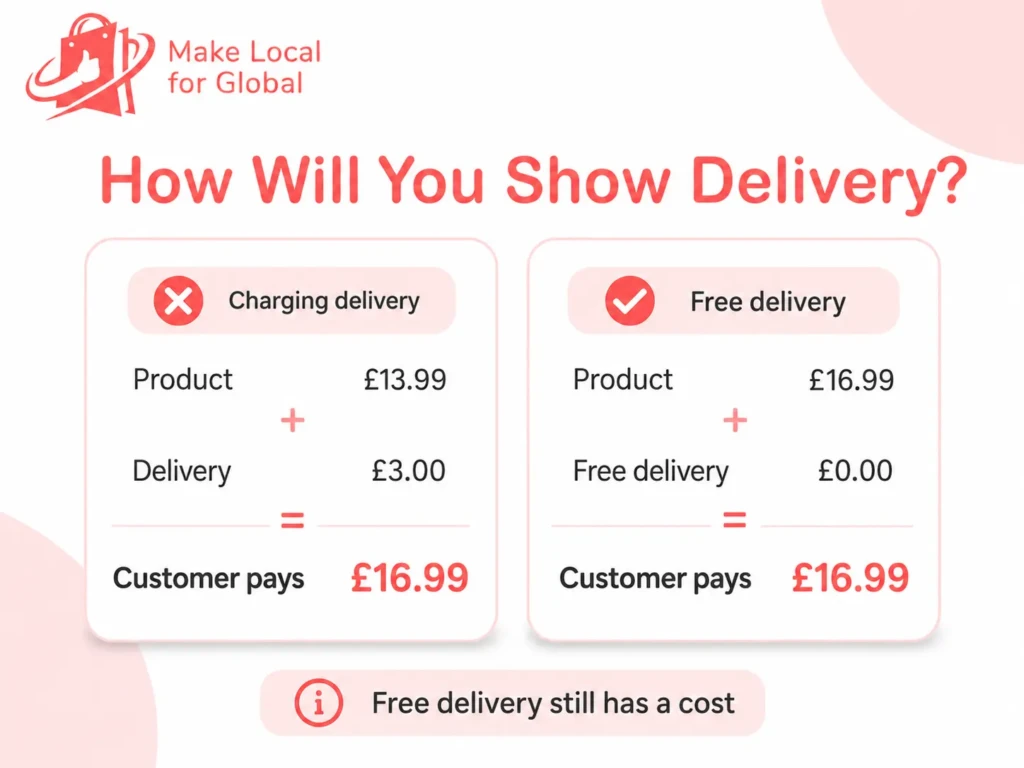
Delivery is one of the biggest pricing choices for print-on-demand products.
You can show delivery separately, or include it in the product price.
Example:
This makes the product price look lower, but customers still see delivery at checkout.
Example:
This can feel simpler for customers, but you must make sure the delivery cost is already covered in the price.
“Free delivery” is still a cost. Someone has to pay for it.
Discounts can be risky with print-on-demand products because the provider cost can be high.
Example:
If you give a 20% discount, the selling price becomes:
£13.59
Your cost is still £11.10.
Your profit becomes:
£2.49
That may still be profit, but it is much lower.
Before offering discounts, check the numbers.
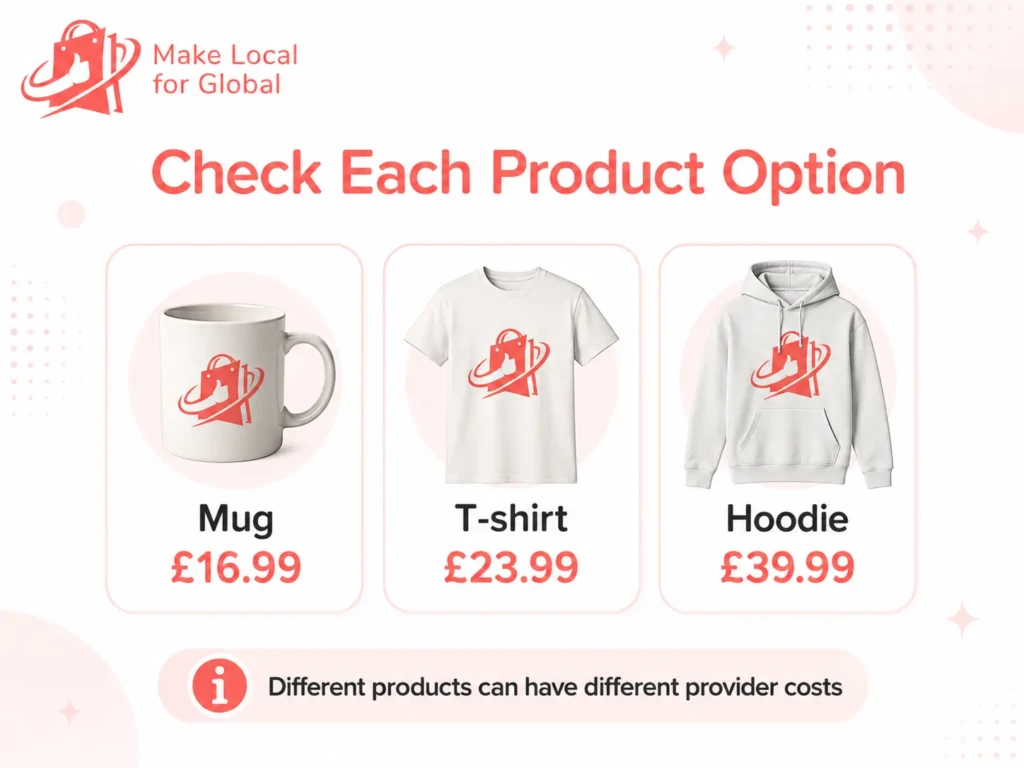
Do not use one profit rule for every print-on-demand product without checking.
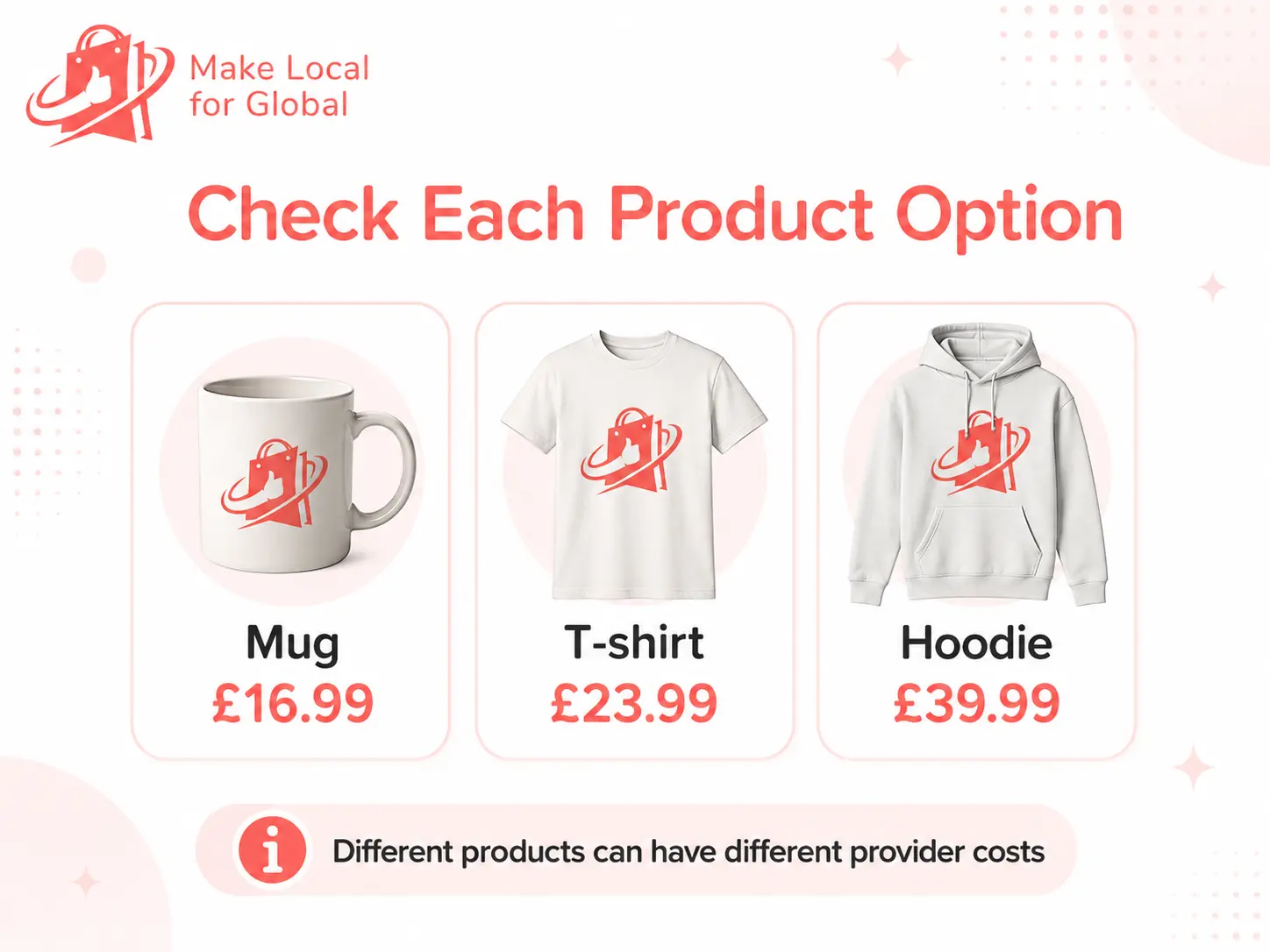
A mug, t-shirt and hoodie can have very different costs.
For example:
If you add the same £5 profit to each product, it may not work for every item.
Higher-cost products may need more profit because returns, discounts and customer expectations may be different.
Print-on-demand products often have options, such as size, colour or finish.
These options may change the provider cost.
For example, a standard t-shirt may cost less than a larger size, premium shirt or hoodie.
Check whether your store needs different prices for different options.
If the provider charges you more for a certain variation, your selling price should reflect that.
A print-on-demand product can look expensive if the product page does not explain it clearly.
For example:
Mug – £16.99
This title does not say much.
A better product title could be:
Personalised Floral Ceramic Mug – 11oz
Then the description could explain:
Now the customer understands more about what they are paying for.
Your design is part of the product.
If you create the artwork, edit the text, make mockups and test the layout, that work has value.
You may not charge every customer separately for your full design time, but it should be part of your pricing thinking.
For example, if you spend 4 hours creating a t-shirt design and sell the product with only £1 profit, it may take a long time before the work feels worth it.
Customers may compare your print-on-demand product with other products online.
When checking similar products, look at:
Do not copy another seller’s price without checking what is included.
A plain mug and a personalised printed mug are not always the same.
Your print provider may change product costs or delivery costs.
If that happens, your profit may change too.
For example:
If your selling price stays the same, your profit drops by £1.50.
Check your product costs regularly, especially if your provider sends updates.
Before setting your price, ask:
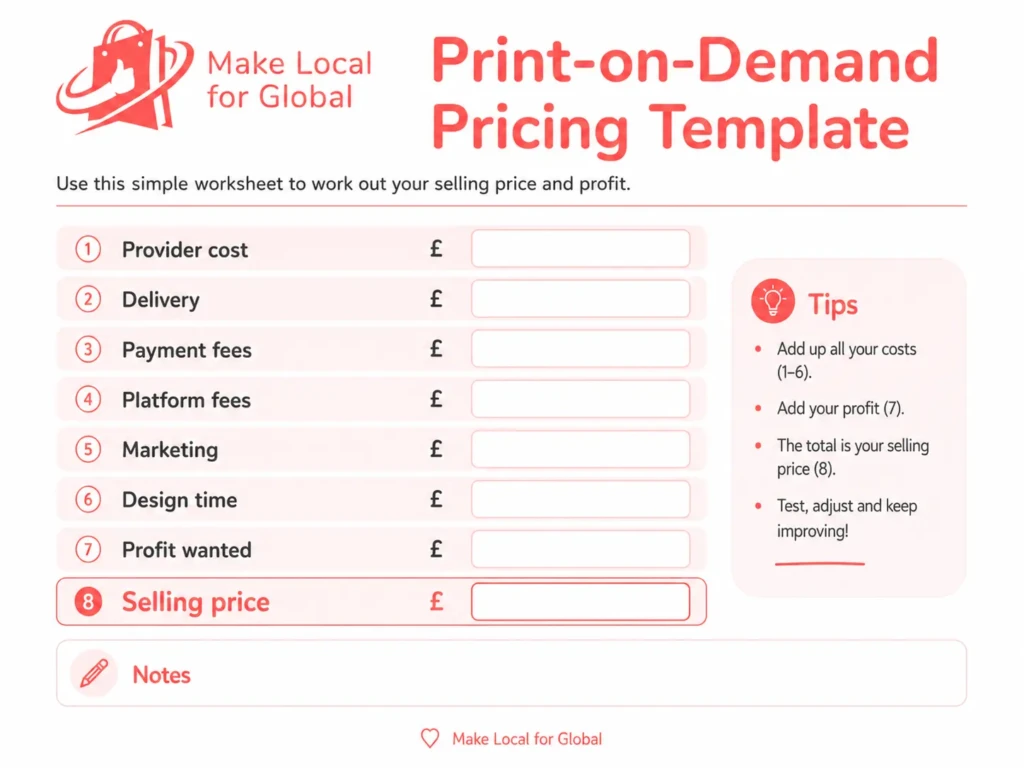
Use this template when pricing a print-on-demand product.
Example:
Make Local for Global helps hobbyists, artists, startups and small businesses launch online stores without needing technical skills.
If you sell print-on-demand products, your product page should make the price clear in £ and explain what the customer gets.
A clear title, helpful description and good product images can make the price easier to understand.
Your price should cover the print provider cost, delivery, fees and profit so each sale makes sense for your store.
Print-on-demand is useful because products are made after customers order.
But you still need to check your numbers before setting a price.
Start with the provider cost. Add delivery, fees, marketing and profit. Check each product and variation separately. Be careful with discounts.
A product can look like it is selling well, but still make little money if the price is too low.
Pricing carefully helps you sell print-on-demand products without losing money.
PREFERRED SOURCE
Like what you’re reading? Add Make Local for Global as a preferred source on Google to see more of our articles when you search.














Build your online presence without having to figure out everything yourself.