

Dropshipping prices should not be set once and forgotten. This beginner-friendly guide explains how to review supplier costs, delivery, fees, marketing and profit so you can update prices when costs change.


Dropshipping can feel simple at the start.
You add a product to your online store. A customer buys it. Your supplier sends the product to the customer.
You do not usually buy stock before selling.
But there is one pricing problem many new sellers miss.
Supplier costs can change.
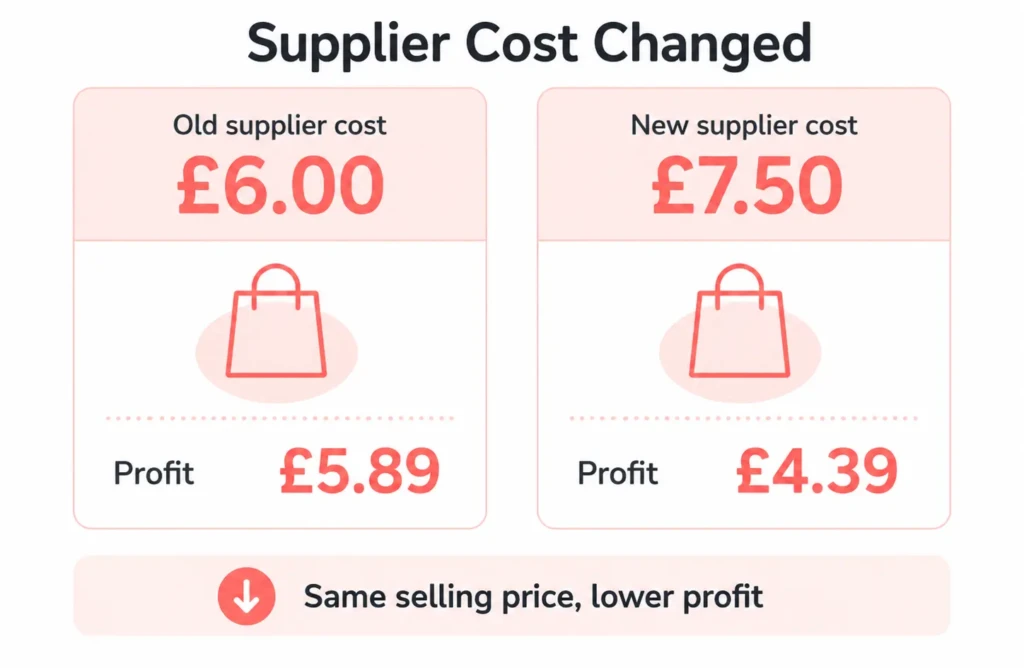
A product that costs you £6.00 today may cost £7.50 later. Delivery may go up. Supplier fees may change. Currency changes may affect the final cost if the supplier charges in another currency.
If your selling price stays the same, your profit can get smaller without you noticing.
This guide explains how to price dropshipping products when supplier costs change, using simple examples.
A dropshipping product is sold through your store, but a supplier sends it to the customer.
You usually do not keep the product at home or in a warehouse.
Common dropshipping products can include:
Dropshipping can help new sellers test products without buying stock first.
But your price needs to cover all costs, not just the supplier item cost.
Supplier costs may change for many reasons.
This is why dropshipping prices need checking from time to time.
If you set your price once and never check it again, you may end up selling at very low profit.
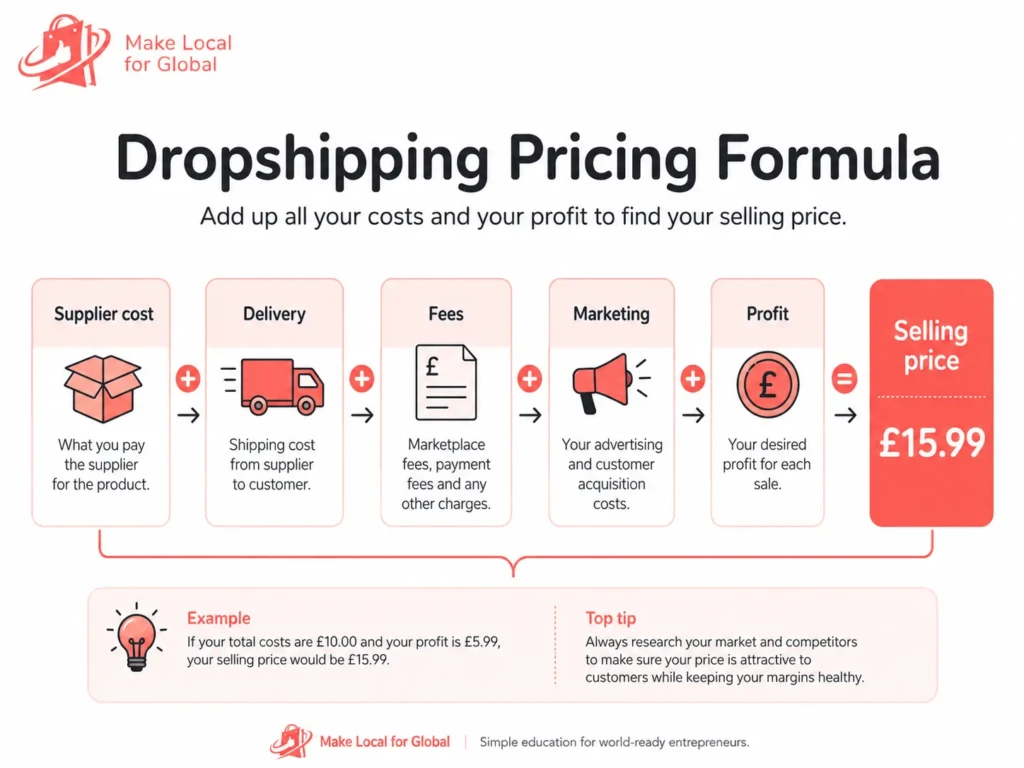
The supplier item cost is only one part of the price.
You should check the full cost before setting your selling price.
This can include:
For example, if your supplier shows a product cost of £6.00, that does not mean your total cost is only £6.00.
You may still need to add delivery, payment fees and marketing.
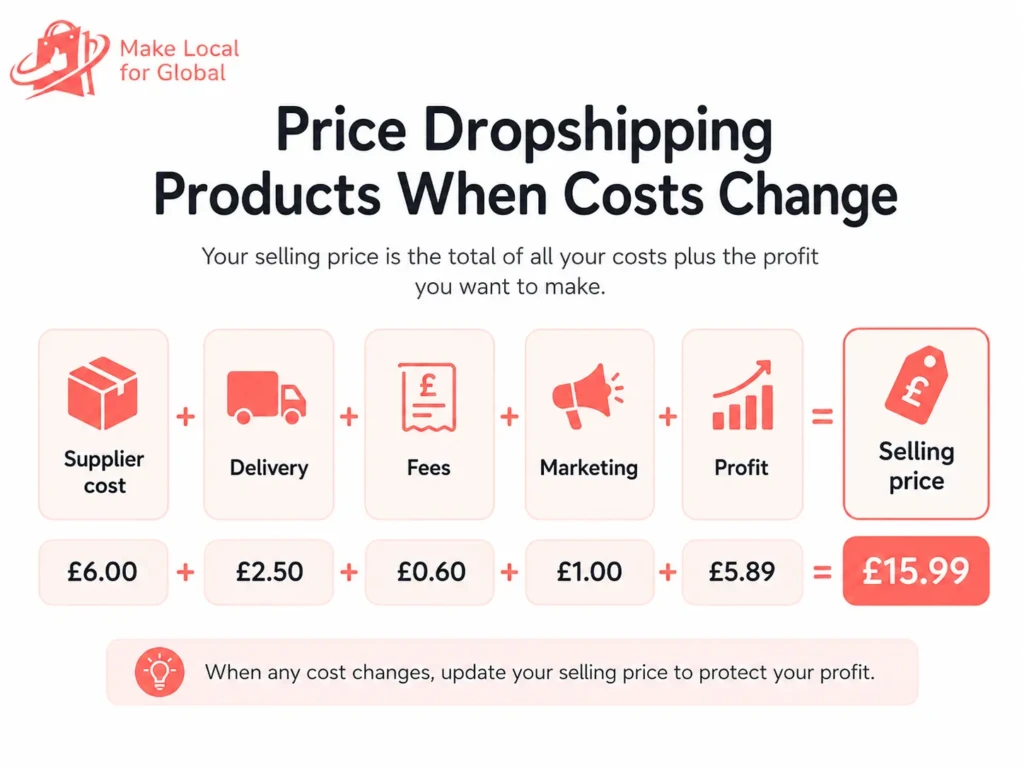
A simple formula is:
Supplier cost + Delivery + Fees + Marketing + Profit = Selling price
Example:
This gives the price a reason.
You are not copying a random competitor price or guessing.
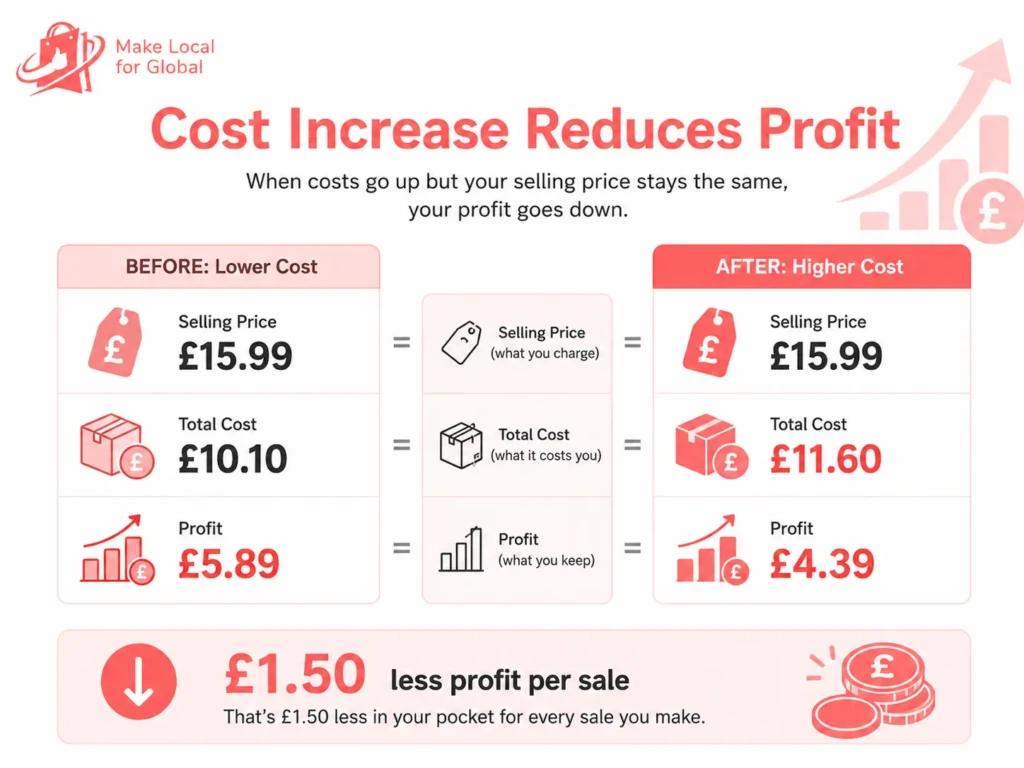
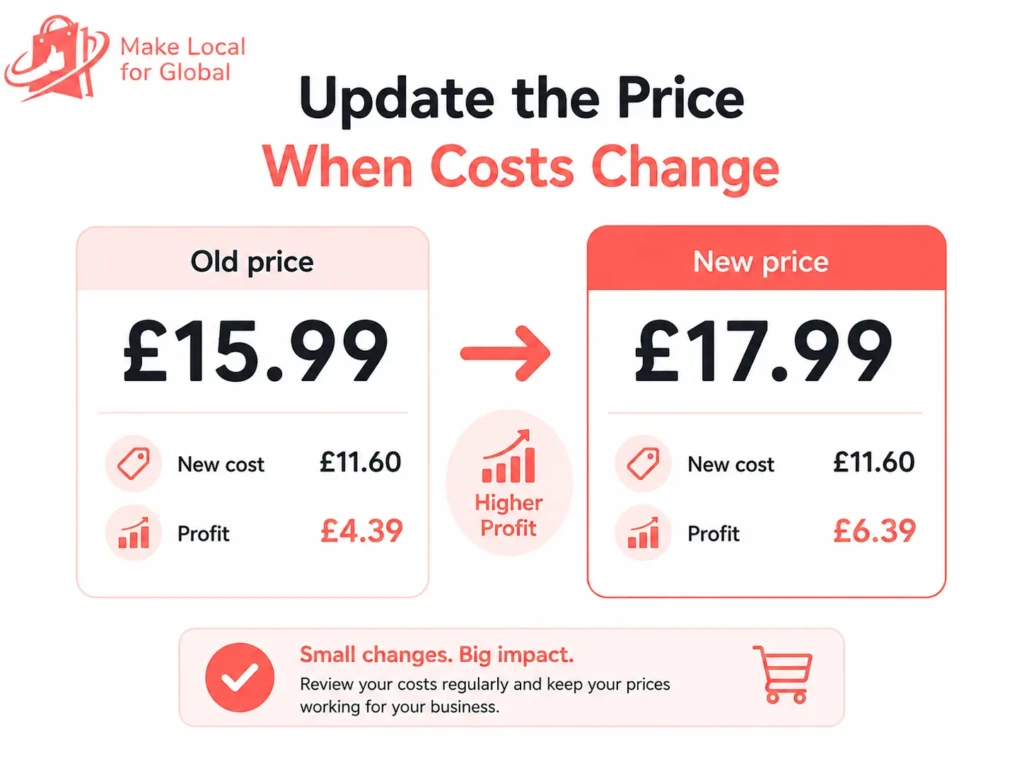
Let’s say you sell a dropshipping product for £15.99.
Your old cost looked like this:
Then the supplier raises the product cost from £6.00 to £7.50.
Your new cost becomes:
If your selling price stays at £15.99, your profit changes:
You now make £1.50 less per sale.
If you sell 50 units, that is £75.00 less profit.
You may need to change your selling price when your profit becomes too low.
Ask:
If the product still has demand and the price can be explained, raising the price may make sense.
If the cost has gone too high, you may need to find a better supplier or stop selling that product.
Using the same product, your new total cost is £11.60.
If you still want around £5.89 profit, the new price would be:
£11.60 + £5.89 = £17.49
You may choose to sell at:
£17.49 or £17.99
This helps protect your profit after the supplier price has changed.
Before changing the price, check that the product page is clear. A customer is more likely to accept the price if they understand what they are getting.
It is useful to check similar products, but copying a competitor’s price can be risky.
You may not know:
A competitor may sell the same type of product for £12.99, but their costs may be lower than yours.
If your costs are higher and you copy their price, you may lose money.
Use competitor prices as a guide, not as your full pricing plan.
Delivery can change the profit quickly.
Some dropshipping suppliers show very low product prices but higher delivery costs.
For example:
If you only looked at the £4.00 product cost, your pricing would be wrong.
Always check the full cost before choosing the price.
You may choose to show delivery separately, or include delivery in the product price.
Example 1:
Example 2:
Free delivery is not free for you. The delivery cost must still be covered somewhere.
Sometimes a supplier gives a temporary discount.
For example, a product may cost:
If you set your selling price based on the supplier sale price, your profit may drop when the sale ends.
Before using a supplier sale price, check whether it is temporary.
If the discount looks temporary, price using the normal supplier cost, not only the sale cost.

Some suppliers charge in a different currency.
If your store sells in pounds, you need to know what the supplier cost becomes in £.
Currency rates can move.
This means a supplier cost may not stay exactly the same in pounds.
For beginners, keep this simple:
If the product has a very small profit, even a small currency change can affect the sale.
Before selling a product, decide the minimum profit you are happy with.
For example:
These are examples only.
Your minimum profit should fit your product, time, marketing and customer support.
If a supplier cost increase pushes your profit below your minimum, review the price.
Sometimes the right answer is not to raise the price.
If the supplier cost goes too high, the product may no longer be worth selling.
Ask:
It is better to remove a product than keep selling it with almost no profit.
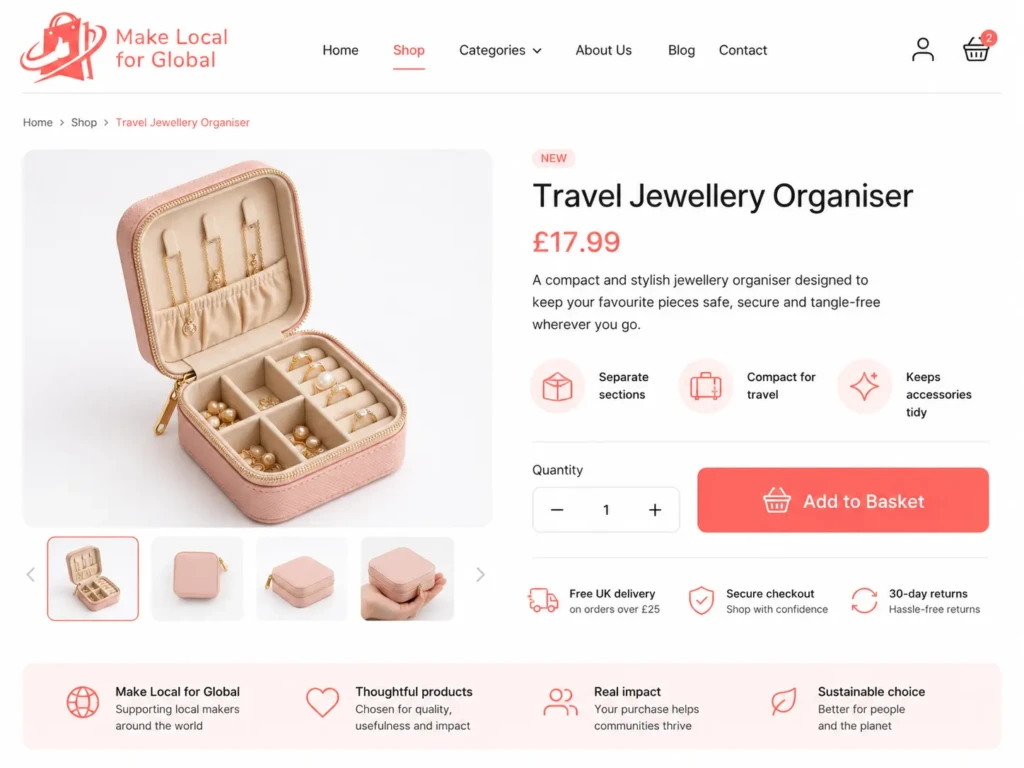
If you raise your price, your product page needs to explain the product clearly.
A weak page may say:
Nice item, good quality.
A clearer page may say:
This compact travel jewellery organiser has separate sections for rings, earrings and small necklaces, helping you keep accessories tidy when away from home.
The clearer description helps customers understand what they are buying.
Use clear images, size details, material notes and delivery information where you can.
You do not need to check every product every day.
But you should check prices regularly, especially for products that sell often.
A simple routine could be:
This helps you catch cost changes before they damage your profit.
Before keeping or changing a price, ask:
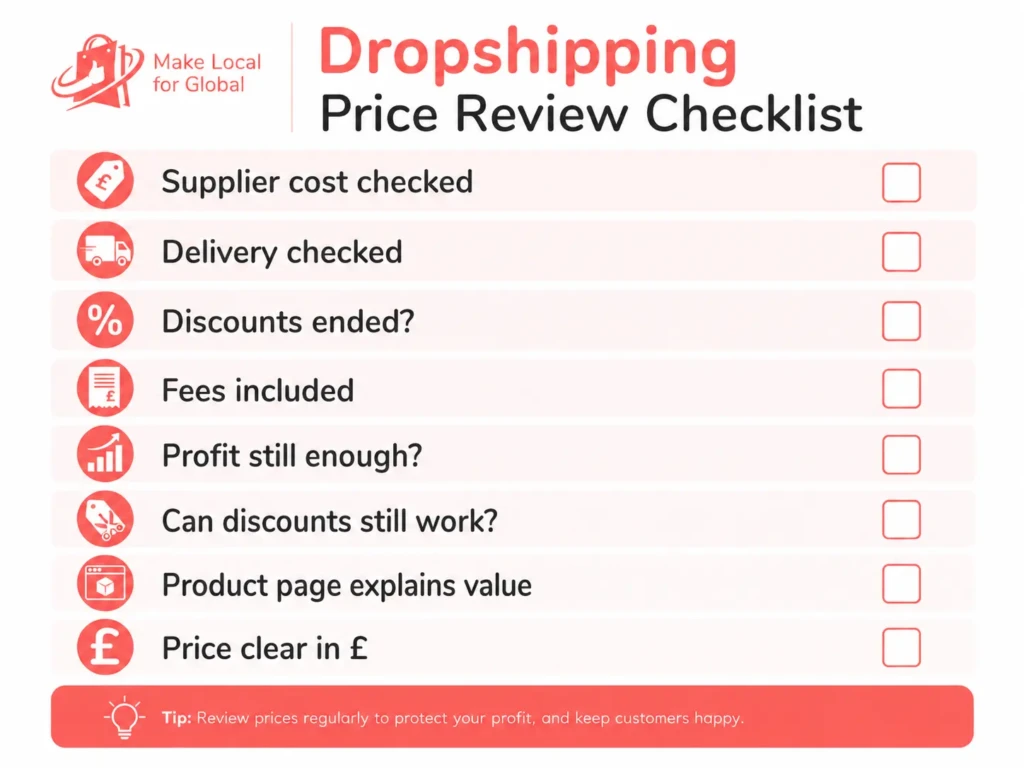
Use this template when reviewing a dropshipping product price.
Example:
Make Local for Global helps hobbyists, artists, startups and small businesses launch online stores without needing technical skills.
If you sell dropshipping products, your prices should be shown clearly in £ and reviewed when supplier costs change.
A clear product title, helpful description and good product images can help customers understand the price.
The main aim is simple: know your current cost before you sell.
Dropshipping prices should not be set once and forgotten.
Supplier costs can change. Delivery can change. Discounts can end. Currency rates can move.
If you do not check your costs, your profit may shrink without you realising.
Start with the full supplier cost. Add delivery, fees, marketing and profit. Review prices when costs change.
This helps you keep selling products that make sense for both your customer and your business.
PREFERRED SOURCE
Like what you’re reading? Add Make Local for Global as a preferred source on Google to see more of our articles when you search.
















Build your online presence without having to figure out everything yourself.