

Compare print on demand shipping costs in £, separate dispatch from transit and assess free-shipping thresholds with a practical route planner.

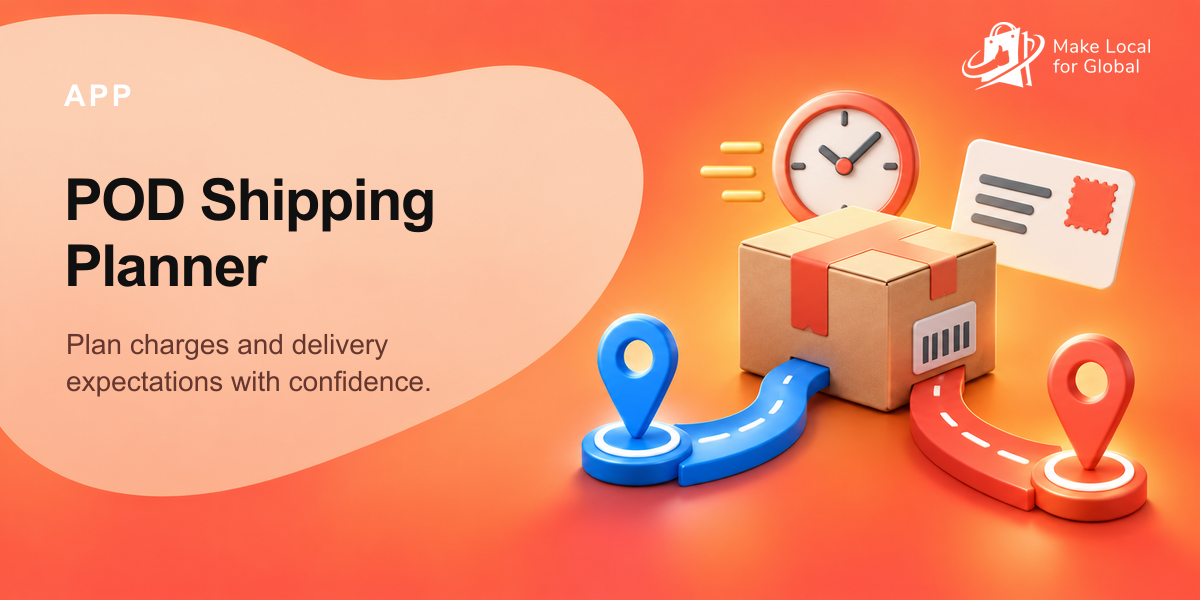
Print-on-demand shipping is easy to underestimate. A delivery charge that looks small at checkout can become a regular cost for your shop, while an optimistic delivery estimate can leave customers uncertain if production and transit are blended together. A better plan starts with current, like-for-like quotes, a clear delivery promise and a threshold that your contribution can support. The free POD Shipping Planner helps you compare two routes in pounds and review your free-shipping threshold.
The planner uses numbers you provide. It does not connect to a carrier, fetch live rates or predict an arrival date. Treat the result as a decision worksheet, then confirm current provider terms before you set a checkout charge or publish a delivery estimate.
Enter current costs and delivery timings for the same item and destination. See the amount left for your business to cover, check the gap to your free-shipping threshold and save a practical plan as a PDF.
A delivery quote is tied to the parcel and route, not just the word “shipping”. Product type, packed weight, parcel dimensions, destination, service level and fulfilment location can all matter. A supplier may also show production separately from postage. Confirm which charges are included, who purchases the label and whether the price applies to one item or a combined order.
Use the same product, size or variant, order quantity, destination and delivery service when you compare alternatives. Ask each supplier or carrier for a current quote based on those details. Save the date and source of every figure. If a quote is in another currency, convert it using a documented rate and date before entering it; the planner accepts £ amounts and does not perform currency conversion.

For a simple route comparison, record the delivery cost charged to your business and the amount you charge the buyer. The difference is the part of that entered delivery cost left for the shop to fund. If the buyer charge is higher than the delivery cost, that does not automatically mean the order is profitable: product cost, payment processing, platform fees, tax, discounts, support and returns still affect contribution.
| Illustrative route figures | Standard service | Tracked service |
|---|---|---|
| Delivery cost to the shop | £4.20 | £5.60 |
| Delivery charge to the buyer | £2.95 | £4.95 |
| Amount left for the shop to cover | £1.25 | £0.65 |
| Dispatch plus entered transit range | 5 to 7 days | 4 to 5 days |
These figures are invented examples for explaining the calculation, not current carrier or supplier rates. In this example the tracked option leaves a smaller delivery shortfall, but it has a higher total cost to the shop. Decide whether its service features are worth the additional amount for your customers and product. Compare your own current quotes before you choose.
Check the full rate conditions. For example, Shopify’s shipping strategy guidance explains that shipping options and free-shipping offers are choices the merchant needs to plan. The provider’s live checkout or quote remains the source to confirm the cost that applies to your parcel and destination.
Customers need to know when an order is expected to arrive, but a delivery range can involve more than one stage. Production is the time to make the product. Dispatch is the time to prepare and hand it to the carrier. Transit begins after the carrier receives the parcel. A provider may combine some of these stages, so check its definition before adding or comparing estimates.
When both estimates use compatible day types, you can add dispatch to the carrier’s transit range to make a planning window. In the table above, three dispatch days plus two to four transit days gives an entered range of five to seven days. That arithmetic is not an arrival guarantee. Weekends, capacity, customs, address issues, production variation and service disruption may change the actual experience.

Check the latest route details with the carrier. Royal Mail’s international services page describes its current services and route-specific delivery aims; a delivery aim is useful planning information, not a guaranteed arrival date for every parcel. Confirm the destination, size, weight, service restrictions and any surcharges before you promise a date to a buyer.
Separate the time needed to make and dispatch an order from the carrier’s transit estimate. The planner keeps those values visible while you compare the delivery cost.
A free-shipping offer removes a separate delivery charge from the buyer’s checkout, but the fulfilment cost does not disappear. Before setting a minimum basket value, estimate how much contribution remains after product costs, payment and platform fees, promotions and other variable costs. Ask whether that contribution can absorb the shipping cost and still leave an amount that makes sense for the business.
Then compare the threshold with real basket data if you have it. A planning example: if the average basket is £28 and the proposed threshold is £35, the average order is £7 below the threshold. That gap describes customer behaviour to investigate; it is not evidence that an offer will cause customers to add £7 more. Test the wording with a small, measurable experiment and check the result alongside margin and fulfilment cost.

Consider what a customer may add to qualify, whether products can ship together and whether the same offer works across destinations. A bulky item or international order may have a different cost profile. Avoid applying one threshold to every product and route until you have checked the underlying figures.
Keep copies of the quote, provider, date, parcel details, terms and your calculation. That record makes it easier to see why a shop’s delivery cost changed and whether a product or market still suits the offer. For the wider unit economics, use the POD Supplier Cost Planner to review supplier charges as well as delivery, then explore the POD Pricing Lab guide for the separate retail pricing decision.
No. Enter quotes you have checked with your provider. The planner compares the figures and timings you supply; it is not connected to a carrier rate feed.
No. A service aim is planning information, not a promise that every parcel will arrive on a particular day. Explain the estimate clearly and check the current carrier terms for the specific route.
Document the exchange-rate source and date, convert the quote to pounds, and account for any conversion charges separately. The planner does not convert currencies or refresh rates.
Start with contribution after variable costs, then compare the proposed threshold with real basket data and route costs. Test a small change and watch both conversion and order contribution. A threshold is not automatically profitable just because it raises the basket total.
Compare two current routes, review the delivery cost your shop must cover and save your assumptions for the next supplier conversation. All figures are in pounds and remain under your control.
PREFERRED SOURCE
Like what you’re reading? Add Make Local for Global as a preferred source on Google to see more of our articles when you search.





















Build your online presence without having to figure out everything yourself.