

Turn products you already sell into thoughtful Valentine’s gift ideas with clear recipient, occasion and price categories. Learn how to choose items that fit, create useful bundles and avoid putting every product into every collection.

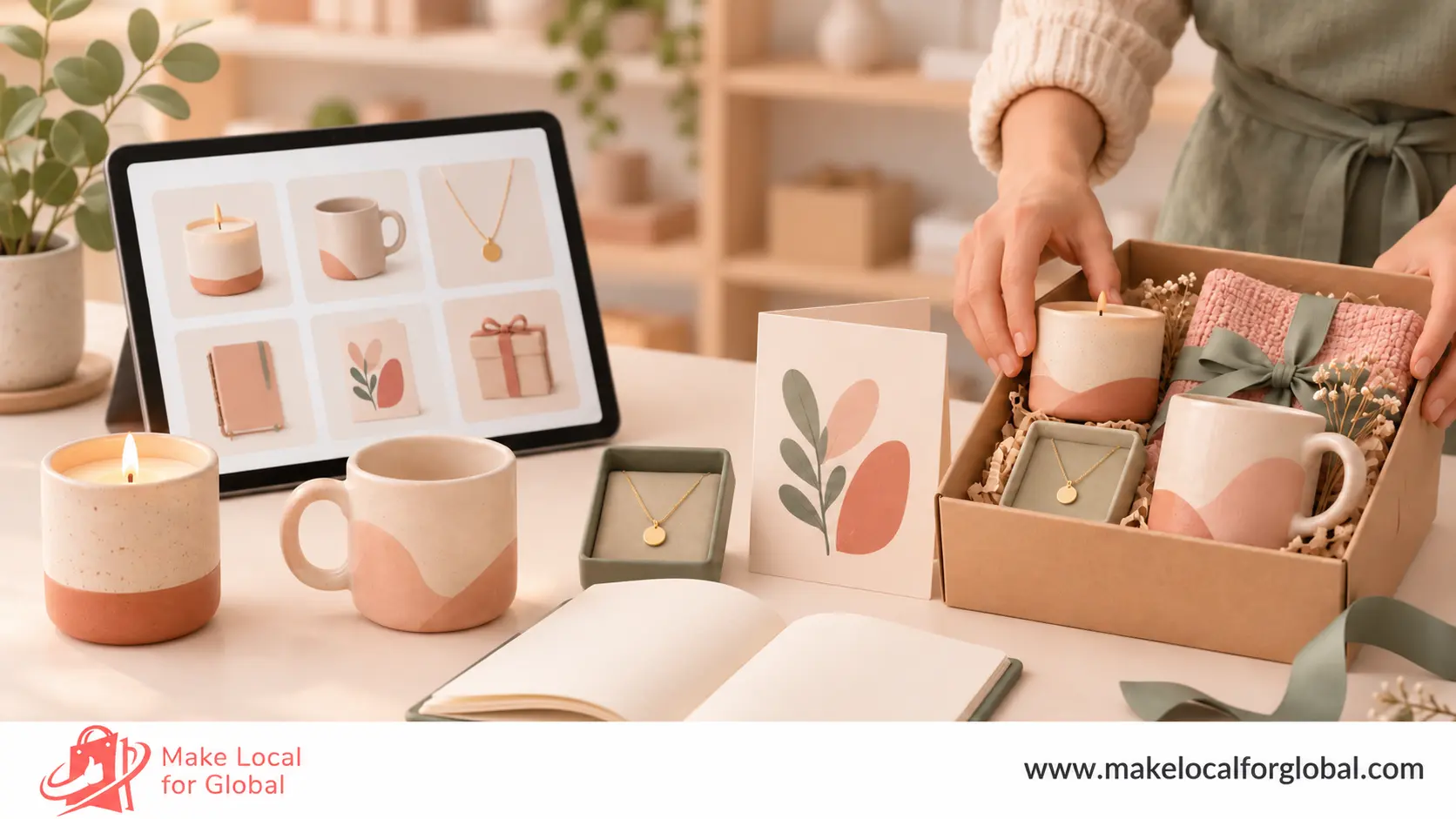
A Valentine’s gift guide can help customers find a product they already want to buy. It does not require a new catalogue or a pink version of every item. Start with the products you sell, then give suitable items a clear buying reason.
A candle could become “a relaxing Valentine’s gift”. A mug could sit in “small gifts under £20”. A personalised print might suit someone looking for a keepsake. The product stays the same; the product page and collection explain why it may suit a particular shopper.
Use this process to choose relevant products, create gift categories and make sure the guide is useful before you promote it. For the wider campaign plan, see How to Plan a Valentine’s Day Ecommerce Campaign.
Review your catalogue before ordering anything new. A good gift-guide candidate has a clear use, can be described honestly, is available in enough quantity for the campaign and can be packed or delivered within the time you can state.
Open each candidate product page and ask: What is it? Who might value it? What does the buyer need to know before ordering it as a gift? Can I prepare and send it on the dates shown? If one answer is unclear, fix the product information or leave the item out for now.

Positioning is the explanation around an item: who it could suit, what it is used for or why a shopper might choose it. It should help someone make a decision without claiming the product will create a particular feeling or result.
A ceramic mug can be “a small gift for a tea drinker” if its size and care details are clear. A notebook can be “a useful gift for someone who likes to plan” if it has enough pages and the listing shows its dimensions. A bath product can be “a self-care gift set” when the contents and use instructions support that description.
Do not turn an item into a “couples gift” just to use a seasonal label. A single everyday product may not be a convincing shared present. It could work as a personal treat or a small addition to a larger gift, if that is clear from the listing.
Check that each listing explains what the buyer receives, how it is packed and what choices need to be made before checkout.
A shopper may begin with a person, a budget, a product type or a feeling. The gift guide can offer more than one route, but each category should contain products that really match its label.
Begin with a small set of categories. A shop with ten suitable products might use “For a friend”, “Personalised gifts” and “Under £20”. A larger shop could add “For couples” or “Self-care gifts” if its products and pages support those choices.
| Category route | Possible product fit | What the listing should explain |
|---|---|---|
| For a partner | Personalised print, paired mugs or a considered gift set | Personalisation steps, size, set contents and making time. |
| For a friend | Greeting card, small treat or useful accessory | What arrives and whether the buyer can add a note. |
| Self-gifting | Book, candle, skincare item or hobby accessory | Size, ingredients or materials, care and intended use. |
| Under £20 | A card set, mini candle or small notebook | The final product price and any delivery charge before checkout. |
| Personalised gifts | Named print, engraved item or custom message card | Character limits, proofing, production time and order cut-off. |
| Gifts for couples | A two-person activity or paired products designed to be used together | How many people it suits and everything included. |
These are examples, not a required catalogue structure. Use a label only when the products under it support the promise.

Labels such as “gifts for her” or “gifts for him” may fit the words some customers use in search, but they can narrow the guide or suggest that only one type of person would like an item. Pair any recipient route with product-led routes such as “for readers”, “for gardeners” or “for someone who enjoys a quiet evening”, when those descriptions fit your range.
For example, a jewellery shop might keep “gifts for her” if customers ask for it, then give shoppers clear choices by material, style and price. A tool shop is unlikely to benefit from adding hearts to every drill listing. It could feature an item as a practical gift for a regular DIYer if the product and customer questions support that use.
“Gifts under £20” and “Gifts under £50” are simple ways to help shoppers manage a budget. Check the actual price of every product in the category. If delivery is extra, do not imply that the full delivered cost stays below the threshold.
A shop might group a £16 mug and a £19.50 card set under “Under £20”, then feature a £32 candle-and-matches set in “Under £50”. If a buyer adds gift wrapping for £3, the product price may still fit the category, but the page should show the added charge before the order is placed.
A gift guide that only speaks to romantic partners may leave out customers shopping for a friend or themselves. These alternatives should feel like real parts of the shop, not an afterthought added to a banner.
A tea business could feature a “tea break with a friend” box with two clearly listed servings and a message card. A stationery maker might show a notebook as a treat for a customer’s own desk. A florist could create a small seasonal arrangement for someone buying flowers for themselves, if the shop offers that product and can fulfil it.
Check that the tone still sounds like your business. “A small thing to show you care” can suit a card shop or chocolatier. A store selling practical bicycle parts might instead feature a useful item for a cycling enthusiast, without pretending every purchase is a romantic gesture.
Personalisation can make a product feel more specific to the recipient, but it adds choices and production steps. State what can change, where the customer enters the details, how many characters fit and what happens if a spelling needs correction.
For a named print, show a finished example, state the available colour choices and tell the customer whether a proof is sent. If you do not send a proof, say so before checkout. Set an order cut-off that leaves enough time to make and pack the item. A made-to-order product may need an earlier cut-off than one already on the shelf.
Do not place a personalised item in a “ready to post tomorrow” group unless that statement matches your real process. If buyers must type a message, check that the field is easy to find on mobile and that an empty field cannot silently produce an unwanted result.
A bundle combines related items into one purchase. It can save a shopper from choosing each part separately, though it only works if the items belong together and the price covers the extra stock, packaging and packing time.
For example, a small candle, a box of matches and a handwritten card could make a clear “quiet evening” gift set. The product page should show all three items together, name each one and state whether the card message is blank or personalised. Do not hide a smaller size or a substitution in the fine print.

Use an illustrative £32 gift box to see the steps. Suppose the included products cost £8 and £7, the box and filler cost £1.50, postage costs £3.80 and the payment fee is £0.85. The remaining contribution before other business costs is £10.85.
| Line | Calculation | Amount |
|---|---|---|
| Bundle price | Price paid for the gift box | £32.00 |
| Included products | £8.00 + £7.00 | −£15.00 |
| Gift box and filler | Materials used for this order | −£1.50 |
| Postage | Illustrative outbound cost | −£3.80 |
| Payment fee | Illustrative fee | −£0.85 |
| Remaining contribution | £32 − £15 − £1.50 − £3.80 − £0.85 | £10.85 |
Illustrative figures only, not a forecast. The remaining amount is before owner time, overheads, returns, advertising and the business’s own VAT and tax treatment. Replace each figure with your own records and payment-provider fee.
If the margin is too tight, change the bundle contents, packaging or price before publishing it. A bundle does not need a discount. Convenience, a gift note or ready-to-give packing may be the main reason to buy it, provided the extra work is reflected in the price.
Review the current MLFG plans if you need an ecommerce store for your products, product pages or seasonal collection.
A product should not appear in a seasonal guide just to increase the item count. Leave it out if it has little connection to the audience, unclear photos, unreliable stock, missing specifications or a delivery promise you cannot make.
A gardening shop might include a pair of quality snips as a present for someone who gardens, with size, care and use details. It would be harder to justify listing an unrelated replacement part as a romantic gift. Present a practical product honestly and let customers decide if it suits their recipient.
Give the guide a manageable selection. Choose a lead item, a few alternatives at different price points and any bundle you can fulfil. A customer looking for one useful idea should not have to scroll through the whole catalogue.
Use a descriptive heading, a short introduction and clear product cards. Let shoppers see the product name and price before opening each page. Keep filters limited to things that help a decision, such as price, product type or personalisation, if your store supports them and they work properly on mobile.
If a product belongs in more than one collection, give each collection a clear purpose. A £16 notebook could appear under both “For a friend” and “Under £20” if it genuinely suits both routes. Avoid creating many nearly identical pages with one item apiece.
Before sharing the guide, open it as a shopper on a phone and test the path from collection to checkout.
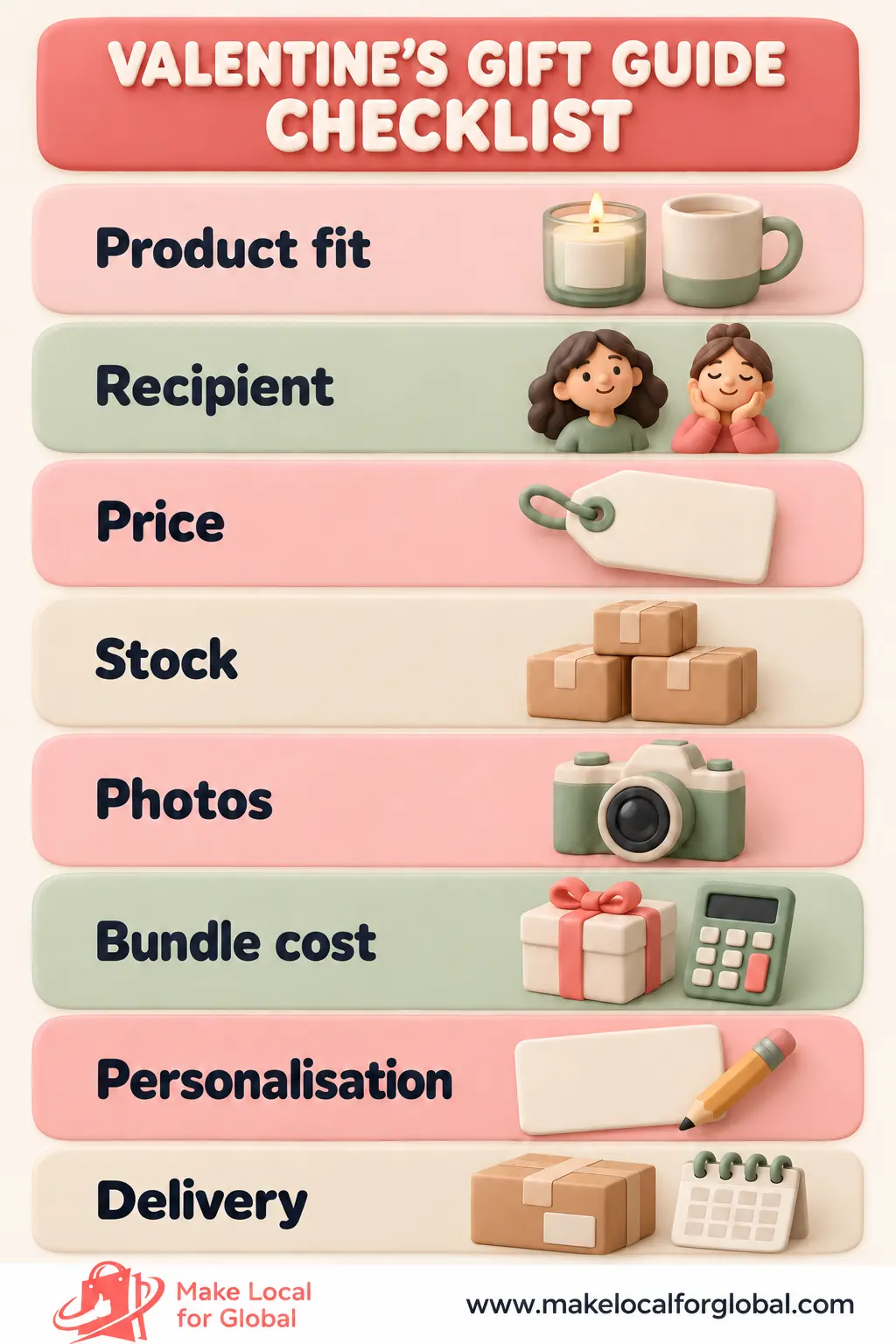
Review existing products for a suitable recipient, use or budget. Add a clear description, relevant photos and any gift options, then group only the items that support the category label. The product does not need to change for its presentation to become more useful.
Use recipient categories if they help your customers find suitable products, but do not make them the only routes through the guide. Add product-led, friendship, budget or self-gifting categories where the range supports them. Avoid labels that promise a fit the products cannot show.
Use the smallest selection that gives shoppers useful choices. A focused guide of a few well-described products can be easier to browse than a full catalogue. Include another item only when it adds a real choice in recipient, price, use or presentation.
Yes, if each category has a distinct reason and the item honestly fits both. A notebook could suit a friend and a lower-price collection. Repeating a product across many pages without a clear purpose makes the guide harder to use.
No. A bundle can be useful as a ready-made gift without being cheaper than its parts. Add up product, packaging, postage, fees and packing time before setting a price. If you add a discount, recalculate what remains.
A useful gift guide starts with the products, then gives shoppers clear ways to find something for a recipient, a budget or themselves. Keep every category honest, keep the selection manageable and give personalisation and delivery details room on the product page.
When the guide is ready, share it through the store, customer email and social posts that lead directly to the relevant page. If you need help with an ecommerce setup, review the current MLFG options and contact the team with your product range and campaign needs.
Write down the collection name, selected products and store-page changes you need, then review MLFG’s current plans or send the team a question.
PREFERRED SOURCE
Like what you’re reading? Add Make Local for Global as a preferred source on Google to see more of our articles when you search.










Build your online presence without having to figure out everything yourself.