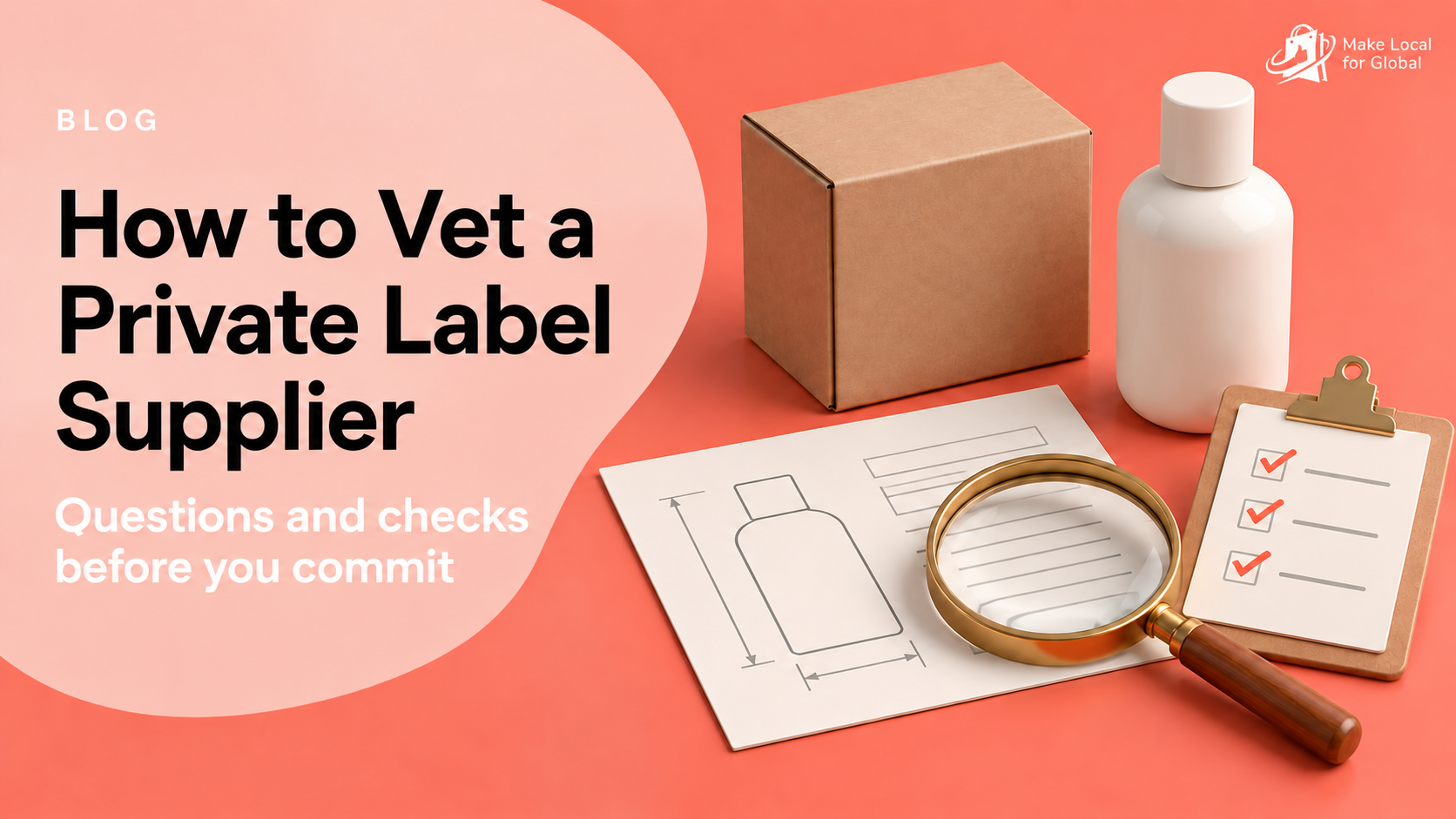
Choosing a private-label supplier is not just a search for the lowest unit price. Before you pay a deposit or approve production, you need enough evidence to understand who you are buying from, what the supplier will make, how problems will be handled and what the order is likely to cost once delivery is included.
A careful review cannot guarantee that an order will go smoothly. It can help you find unanswered questions while they are still easier to resolve. This guide sets out a practical, proportionate way to vet a private-label supplier, with checks to adapt to your product and the market where you plan to sell.
Build your supplier evidence map
Use the free assessment to record what you have verified, what remains uncertain and the next check to make before you commit.
1. Confirm the supplier’s identity and the contracting entity
Start by identifying the legal business that will take your order and receive payment. A trading name, sales representative, factory and payment beneficiary may be different entities. Ask the supplier to state clearly which company is responsible for the quotation, contract, invoice, production and after-sales support.
Check that the details agree across the documents you receive. Record the registered or legal name, business address, named contact, email domain, telephone number and payment beneficiary. If a third party will receive money, ask why and obtain written documentation that explains the relationship before proceeding.
For UK companies, you can use Companies House to check public company details, but a matching registration is only one piece of evidence. It does not prove that a particular person is authorised to act for the company or that an order will be fulfilled.

2. Ask for a sample and a written specification
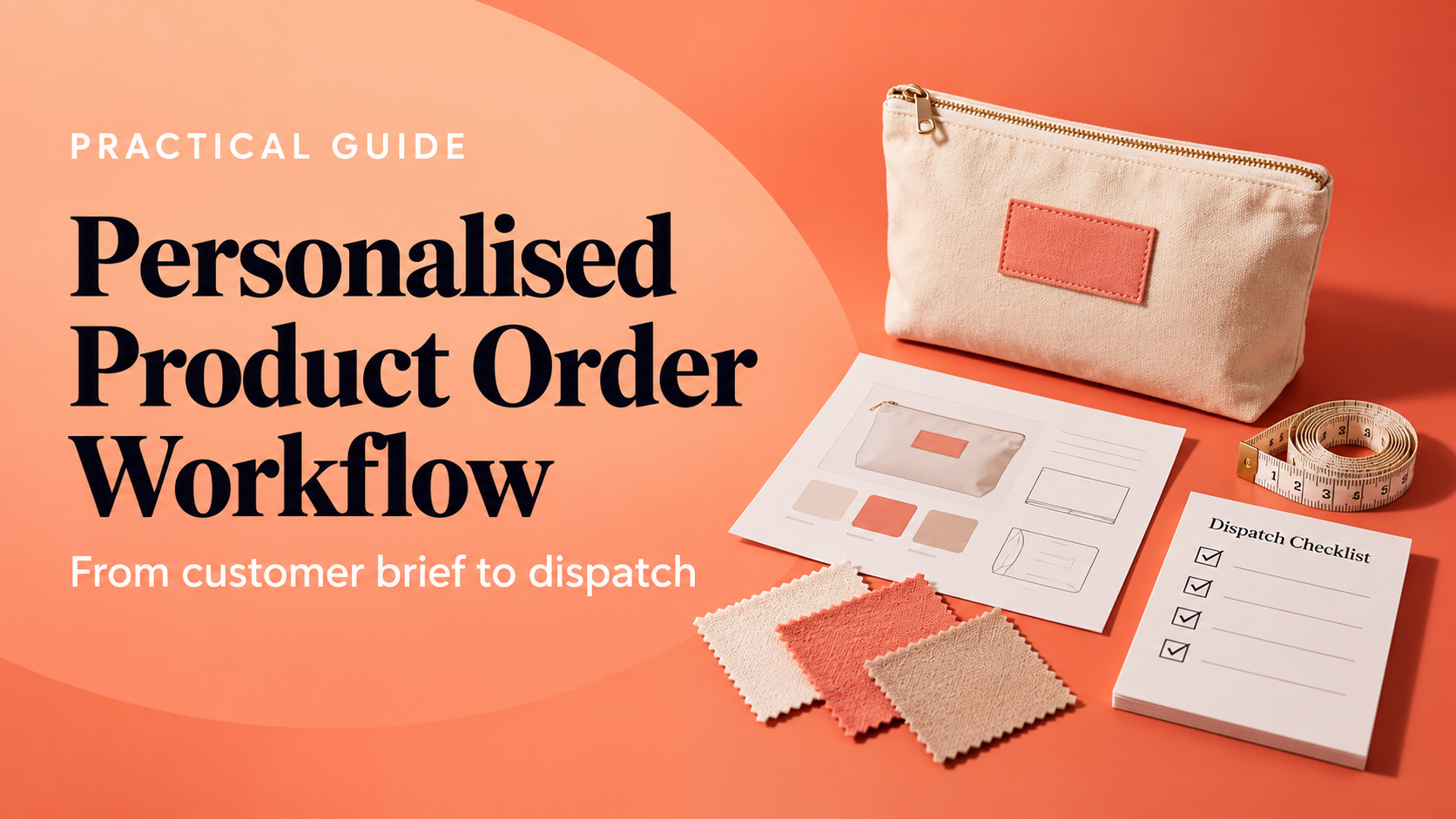
A sample gives you something tangible to inspect, but it is not proof that a full production run will match. Compare the sample with a written specification that describes the product, materials, dimensions, tolerances, colours, finish, packaging, labels and any customisation you expect.
Record which version of the specification the sample represents. If you request changes, ask for an updated document and a fresh confirmation before production. Photograph the approved sample from several angles and note any defects, measurements or differences. For products where performance or safety matters, identify suitable testing and independent technical advice for the specific product and destination market.
Do not rely on a vague statement such as “same as sample.” Agree how the production batch will be checked, what counts as a defect, how many units may be inspected and what remedy applies if the delivered goods do not meet the agreed requirements.

3. Check product documents for your exact product and market
Documentation needs depend on the product and where you sell it. Ask which documents are relevant, who prepared them, which product model or materials they cover, when they were issued and whether they apply to your intended market. A certificate or test report for a different model may not support the product you plan to sell.
For consumer products, UK government guidance explains that businesses in the supply chain have product-safety responsibilities and should keep records that support traceability. Manufacturers and importers may need to consider technical documentation, product labels, testing and product-specific conformity assessment. The details vary by product, so use the official guidance for your category and seek qualified advice where the rules are unclear. Read the product safety advice for businesses and the guidance for manufacturers and importers.
Keep copies of the documents supplied, the supplier’s explanation and any questions you sent. If the supplier cannot explain what a document covers, treat that as an open question rather than assuming the document is sufficient.
4. Understand quality checks and what happens when something goes wrong
Ask the supplier to describe its quality process from incoming materials through production and final inspection. Find out which checks are recorded, whether you can review a sample report and how defects are classified. If you plan an independent inspection, agree the timing, access and acceptance criteria in writing before the order is placed.
Discuss remedies before production begins. Your written terms should explain how the parties will handle missing units, damage, defects, late delivery, replacement goods, rework or a dispute over whether the specification was met. Confirm who pays for return freight, re-inspection or replacement shipment in each relevant situation.
5. Read the order terms and payment schedule carefully
Compare the quotation with the purchase order or contract. Check the product description, quantity, unit price, tooling or setup charges, packaging, currency, quote expiry, production lead time, delivery term, payment milestones and cancellation conditions. Ask what is excluded. Written terms make it easier to spot where two quotes are not directly comparable.
Verify payment instructions through a trusted contact channel, especially if bank details change. A new account number sent in an email should be confirmed independently using a contact method you already trust. Do not treat urgency or a discount deadline as a substitute for checking the beneficiary and the agreed terms.
6. Test capacity, lead times and communication
Ask how the supplier will schedule your order alongside other work, what could affect the delivery date and when you will receive progress updates. A quoted lead time is an estimate until the relevant steps, dependencies and consequences of delay are agreed.
Choose a named contact and a backup route for production changes, quality concerns and urgent issues. Note how quickly the supplier responds to specific questions, whether answers are consistent and whether requested documents arrive in a usable form. Communication quality is part of the practical evidence you are collecting.
7. Calculate the whole order cost, not just the unit quote
A lower unit price may come with a larger minimum order, higher setup charges or less favourable delivery terms. Build a like-for-like comparison in pounds (£), listing the product total, samples, tooling, packaging, inspection, freight, insurance, import costs where applicable, payment fees, storage and an allowance for defects or returns.
Make clear which figures are confirmed and which are estimates. If goods are imported into the UK, check the commodity code and applicable duty using the official UK import guidance and Trade Tariff. The classification and charges depend on the goods and circumstances. This guide is not customs, tax or financial advice.

8. Keep an evidence log and decide what would change your mind
A useful supplier review is more than a folder of files. Keep a simple evidence log with the question, evidence received, source, date checked, confidence level, remaining gap and next action. Separate direct observations, written documents and verbal assurances so that an unanswered question does not quietly become an assumed fact.
Before paying, write down the conditions that must be met for you to proceed. These might include receiving a corrected specification, confirming the payment beneficiary, reviewing product-specific documentation, agreeing inspection criteria or recalculating the total order cost. Decide who will verify each item and by when.
Supplier vetting checklist
- I know which legal entity will contract, invoice and receive payment.
- The sample and written specification describe the same product and version.
- I understand the quality checks, defect process and agreed remedies.
- Documents are relevant to the exact product and intended market, or gaps are recorded.
- The order terms state the quantity, timing, payment milestones and exclusions.
- I have checked capacity, delivery responsibilities and communication routes.
- I have compared the full order cost in £ and labelled uncertain figures.
- My next decision depends on evidence, not pressure or an unsupported promise.
Turn open questions into next steps
The free assessment helps you organise supplier identity, samples, product records, order terms, delivery and communication into a practical validation plan.
Use evidence to pace your commitment
No checklist can remove every risk from a new supplier relationship. The purpose is to make the important unknowns visible early enough to ask better questions, compare alternatives or pause a commitment until the evidence improves. Keep the review specific to your product and selling market, and use official or qualified guidance for legal, safety, customs and tax decisions.
Review one supplier before your next order
Work through the evidence areas, see where information is strong or incomplete, and download a personalised three-page supplier review after completing the form.