Packaging can look like a small line in a product budget until every order uses a box or mailer, protective material, a label and tape. To calculate product packaging cost per order, price the materials that actually go into one parcel, add a realistic allowance for waste, and keep postage and labour visible as separate costs. This guide shows the method with a worked £ example.
Packaging cost is only one part of fulfilment. A low-cost pack that lets products move around, arrives damaged or falls into a more expensive carrier size band may not be the economical choice. Measure a real packed sample and compare the full service you are buying, not only the unit price.
Estimate packaging cost using your own product and supplier figures
The free planner checks internal package fit, materials cost per order and a simple replenishment quantity from your inputs.
What counts as product packaging cost?
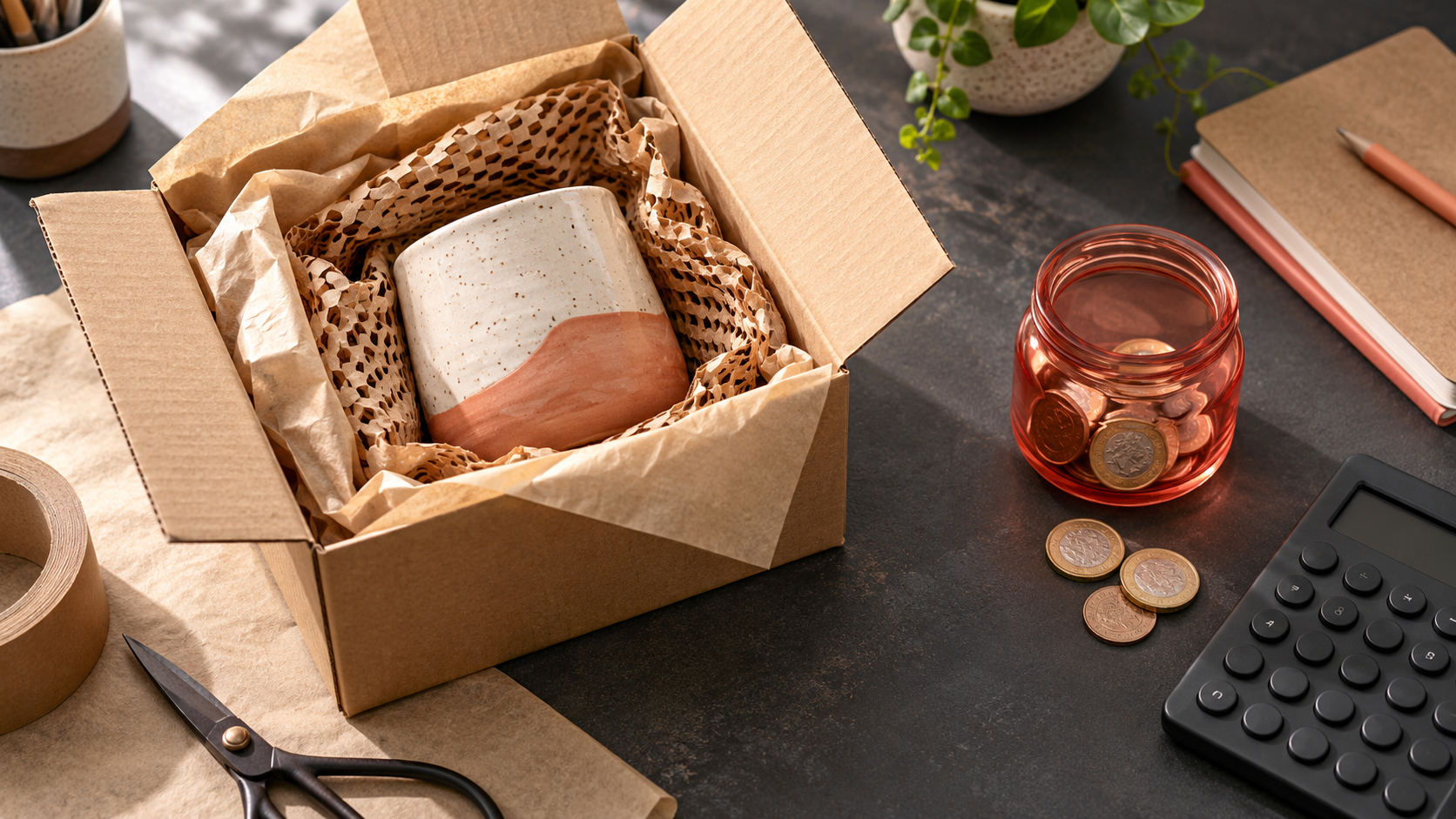
Start with the materials used to prepare one order for dispatch. Depending on the product and packing method, this may include:
- the box, mailer, tube or other outer pack
- protective wrap, paper, cushioning or a product sleeve
- tape, seals and packing labels
- an insert, instruction card or branded tissue
- a proportion of materials that are damaged, misprinted or wasted during packing
Decide what you mean by “per order” before comparing products. One order may contain several items, multiple parcels or gift packaging. For a first estimate, state whether you are costing one product in one parcel and keep any multi-item or gift pack as a separate scenario.
Measure the package that will carry the product
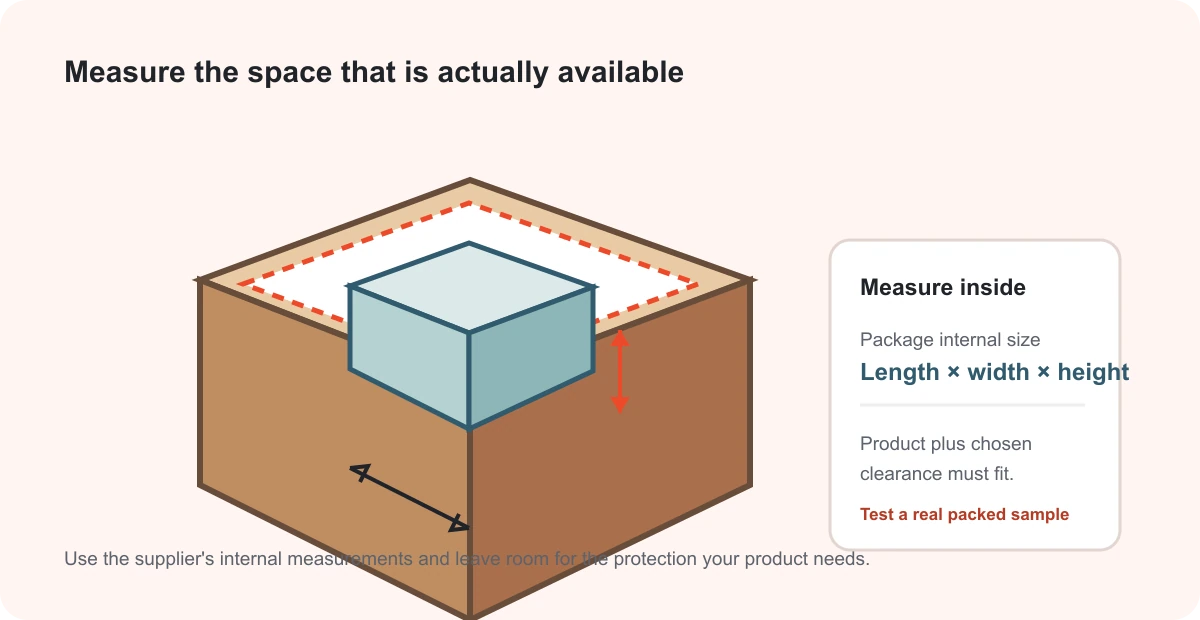
Use the package’s usable internal length, width and height rather than its external measurements. Record the product dimensions in the orientation you plan to use, then allow for the protection that is genuinely needed. A rigid box, padded mailer and paper wrap behave differently, so a calculator can help with rectangular fit but cannot replace a packed sample.
Check whether the product can rotate into another orientation. Then close the pack, inspect movement and pressure points, and weigh the finished parcel. Carrier limits can use dimensions, weight, service and destination together. Confirm the current rules with your carrier before setting a shipping price.
A practical formula for packaging cost per order
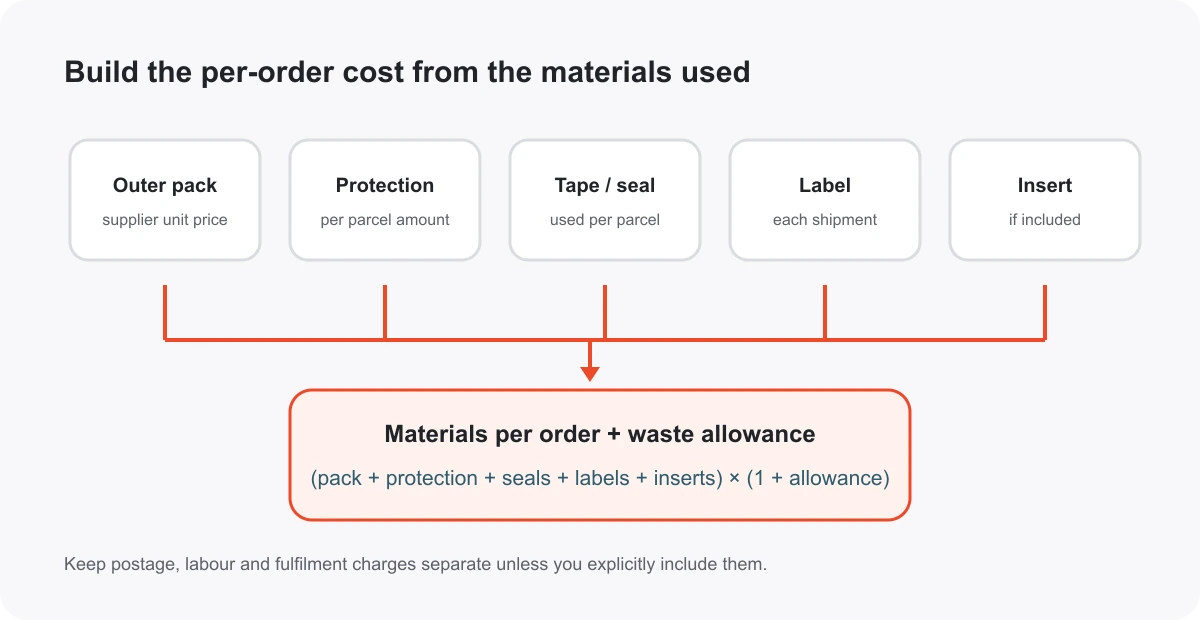
For a simple one-product parcel, add the materials consumed by one packed order and apply an allowance to the total:
Packaging cost per order = (outer pack + protection + tape and seal + label + inserts) × (1 + waste allowance)
Use the actual supplier price per piece where possible. If you buy a bundle, divide its delivered materials price by the number of usable pieces. Keep any delivery charge, VAT, import duty or other supplier fee separate in your notes, then decide whether it belongs in your landed unit cost. Do not quietly mix those costs into one supplier quote and another product’s calculation.
Worked example in pounds
Suppose one parcel uses a box costing £0.42, protective paper costing £0.14, tape costing £0.03, a label costing £0.04 and an insert costing £0.05. The materials subtotal is £0.68 per order.
If your early packing tests suggest a 5% allowance for damaged or wasted materials, calculate £0.68 × 1.05 = £0.714. Display the estimate as about £0.71 per order. At 120 orders per month, the unrounded estimate is £85.68 in packaging materials.
This is an illustrative example, not a supplier quote or recommended allowance. Use your own invoices and track actual usage. Keep the unrounded values for totals, rounding only when presenting the result. If you multiply the already rounded £0.71 by 120, you will get £85.20, which differs because of rounding.
Keep packaging separate from postage and packing labour
Packaging materials do not automatically include courier fees, pick-and-pack charges, storage, payment fees or the time spent preparing an order. Keep these lines separate so you can understand which part of the fulfilment cost changed. If you want a fully loaded cost per order, calculate each component first and then show the combined total with a clear label.
Also check how parcel dimensions affect your shipping service. The parcel should be measured after packing, because protective material and closure can change its final size and weight. Test more than one pack option if a small dimensional change might move the parcel into a different tariff.
Apply the cost method to your own packaging
Use the planner to check package fit, enter supplier prices and estimate your materials cost per order. Then compare the result with your wider landed costs.
Plan how many packages to keep in stock
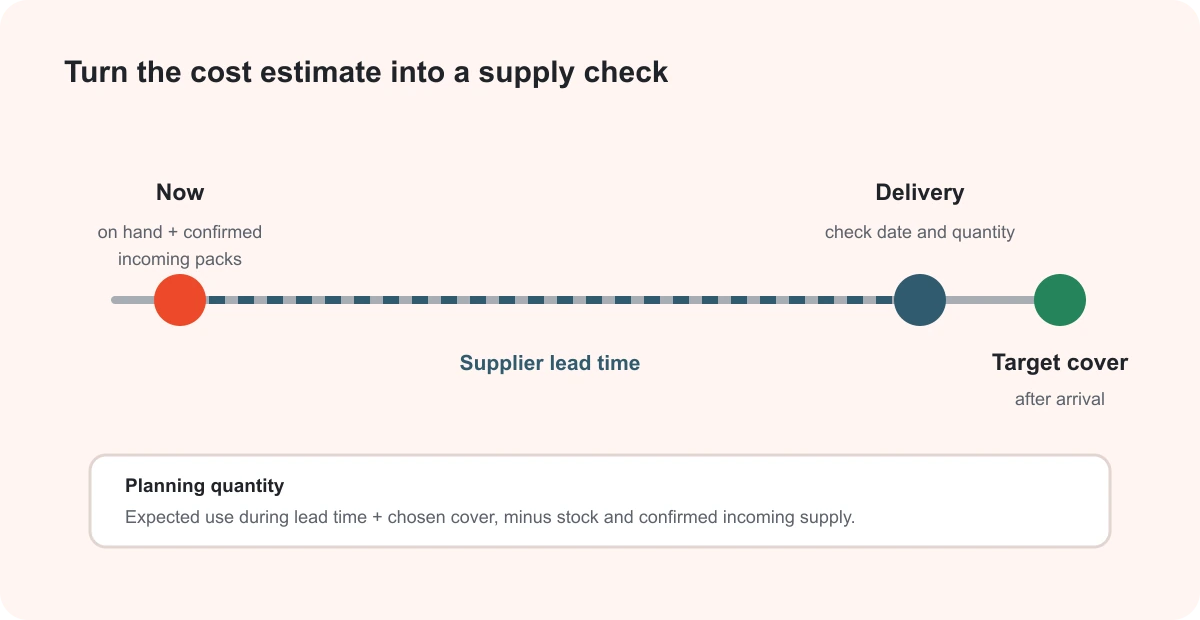
A cost per order can also help estimate how much material you may need. Start with a monthly order estimate, apply the waste allowance to expected package use, and compare that with packs on hand and confirmed incoming supply. Note the supplier’s lead time and the extra cover you want after a delivery arrives.
A simple planning estimate is:
Suggested packaging order = expected use during supplier lead time + target cover after delivery − usable stock − confirmed incoming packages
Round quantities up to whole packs and check the supplier’s minimum order, case pack, storage requirements and payment dates. This is a planning calculation, not an instruction to order. Revisit it when order volume, lead times or supplier terms change.
UK packaging responsibilities: check whether they apply to you
Packaging can also create reporting or other obligations, depending on what a business supplies, fills, imports or sells and the applicable thresholds. UK guidance says businesses should check whether they are a producer under extended producer responsibility for packaging. The current GOV.UK page explains the activity tests and producer thresholds, and is updated as rules change. Review the official UK packaging EPR guidance for your own circumstances.
Packaging and product labelling can also have requirements that depend on the product category. For example, food information rules differ from ordinary parcel packing. Check current official guidance that applies to the product you sell, and seek qualified advice where the requirements are unclear. This article and the planner are not a legal or regulatory assessment.
Use a short packaging cost review
- Save the dated supplier price, pack size and number of usable pieces.
- Write down the internal dimensions and use the same units each time.
- Pack and weigh a real sample using the protection you expect to ship.
- Record materials per parcel and a waste allowance based on observed packing.
- Keep postage, labour, storage and regulatory checks distinct.
- Compare actual cost, defects and delivery outcomes after a useful batch of orders.
For a broader view, connect the packaging estimate to your inventory and landed-cost planning, then revise assumptions when new supplier or order data arrives. A small, measured test is more useful than choosing a pack based only on its catalogue description.
Make a packaging plan from your real figures
Check internal fit, estimate cost per packed order and review replenishment timing with the free app. When you are ready to develop your store, compare the MLFG plan options.