

Learn how to choose complementary products for ecommerce using buyer fit, shared use, combined price, fulfilment and customer evidence, with a worked £32 example.

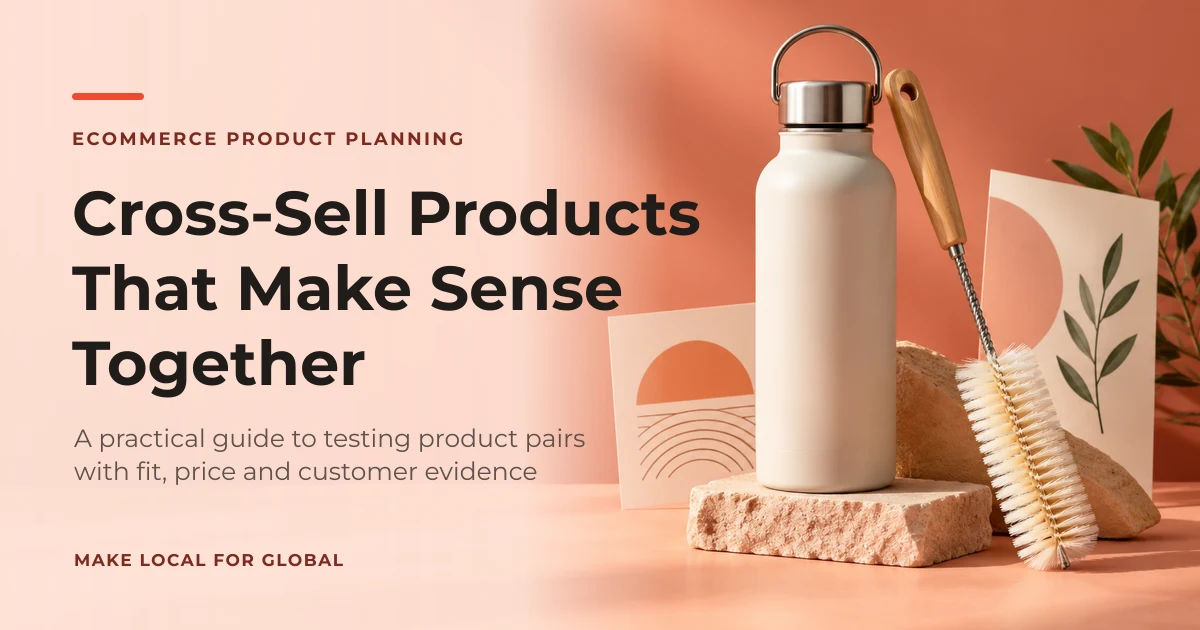
Products work well together when they help the same customer complete a task, solve a connected problem or prepare for the same occasion. That sounds simple, but a product that looks related in a catalogue may still feel like an awkward add-on when the buyer sees the combined price, delivery details or use case.
This guide shows how to choose complementary products for ecommerce without treating a cross-sell as a guaranteed way to increase sales. You will check customer fit, shared use, combined price, fulfilment and real buyer evidence, then run one small test. The examples are illustrative. Use your own verified costs, customer feedback and store data.
Use the free planner to compare up to four pairs, make evidence gaps visible and choose one practical next test.
A complementary product is useful alongside another product for a reason the buyer can understand. It may help care for the main item, make it easier to use, complete a routine or solve the next problem. A phone case and screen protector share a device and a protection need. A travel mug and tea infuser support one daily routine. A reusable bottle and cleaning brush make sense together when the brush is suitable for that bottle’s opening and material.
Similarity is not enough. Two products can share a colour, category or trend and still be a poor pair. Ask what the customer is trying to do, why the second product belongs in that decision and whether the combined offer stays clear. A cross-sell is different from an upsell: a cross-sell suggests a related item, while an upsell encourages a higher-value version or configuration of the item already being considered. A bundle packages items together, which creates its own pricing, stock and fulfilment decisions.

Review each pair against five questions. Give a low score when a relationship is weak, a high score when you have a strong reason and evidence, and use “not checked” when you do not know yet. Unknowns are useful information: they tell you what to investigate before making the recommendation more prominent.
| Check | Question to ask | Evidence to look for |
|---|---|---|
| Same buyer | Do the same customers buy or need both? | Order combinations, customer questions, interviews or relevant search behaviour. |
| Shared use | Do the products support the same task, occasion or problem? | A clear explanation of how the second item helps with the first. |
| Combined price | Would the full basket still feel appropriate for this buyer? | A comparison with alternatives, buyer feedback and the complete payable total. |
| Order fit | Can the products be picked, packed and delivered together reliably? | Compatible stock, packaging, supplier terms, delivery timings and returns handling. |
| Buyer evidence | What shows customers want these products together? | Observed orders, product questions, support themes or a small measured test. |
Write down who the pair is for and what they are trying to do. “People who like homeware” is too broad to guide a useful recommendation. “Someone buying a travel mug for a daily commute who wants to keep it clean” gives you a reason to examine a cleaning brush. The reason may still be wrong, but now it is testable.
Look for a shared task, not just shared demographics. A gift buyer and a regular user may value different add-ons. A customer comparing two related products may want help choosing one rather than a prompt to buy both. If the customer has to work hard to understand why the second item appears, the recommendation needs a clearer explanation or a different placement.
Describe the connection in one sentence. “Use the brush to clean inside this bottle” is concrete if the brush fits and is safe for the bottle. “These are both sustainable products” is not enough on its own. Check materials, sizes, compatibility, care instructions and any limitations before you make the claim.
If the pair creates a routine, describe the sequence: what the buyer uses first, what comes next and what outcome the two products support. Keep the wording modest. Explain the practical relationship without promising health, performance or environmental results you have not verified.
Suppose a reusable bottle is £24 and a suitable cleaning brush is £8. The two items create a £32 basket before any delivery charge that applies. That arithmetic is not a recommendation or a suggested price. Ask whether the buyer understands what each item costs, whether the combined total compares fairly with alternatives and whether the second product solves a real problem worth paying for.
Then check your own unit economics. For example, if the bottle and brush together cost £12 to source, protective packaging costs £1.20 and fulfilment costs £4.50, the remaining £14.30 is only a rough contribution before payment fees, discounts, returns, overheads, tax and your time. Do not call this profit. Use current supplier and order records rather than a broad estimate, and confirm whether combining the items changes postage, packaging or picking cost.
For UK consumer sales, price information needs careful review. Government guidance says online sellers should show the total price or how it will be calculated, along with delivery options and costs. The Competition and Markets Authority’s current price transparency guidance explains that unavoidable charges should be included in the total price shown to customers. Check the latest guidance for your specific offer and seek qualified advice if you are unsure: GOV.UK online selling guidance and CMA price transparency summary.
A recommendation can create operational friction even when the products make sense to the customer. Check whether both items are available at the same time, whether they come from different suppliers, whether they need separate parcels, and who handles a late or damaged item. Verify that the product information, stock rules and fulfilment promise remain accurate when both appear in one basket.

Useful evidence can come from existing order combinations, customer questions, product reviews, support messages, interviews or a measured on-site test. Record where it came from and when you checked it. A single customer comment can suggest a hypothesis, but it does not establish how common the need is. A recommendation shown on a page is not evidence that customers noticed or wanted it.
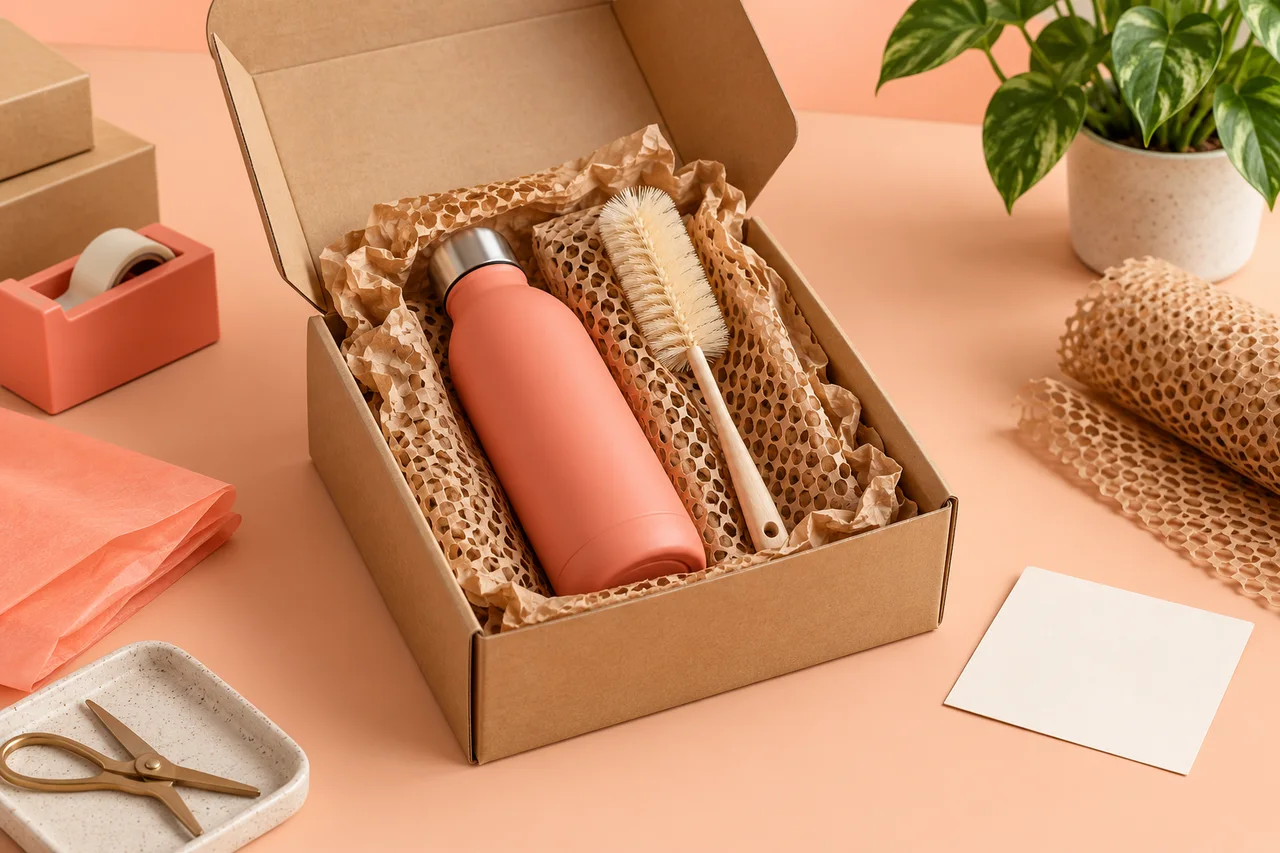
Imagine a small store selling a £24 reusable bottle and an £8 cleaning brush. The owner thinks the pair may help customers who use the bottle every day. Before adding a bundle or changing the entire product page, they rate the pair against the five checks. Their ratings are 4 for same buyer, 3 for shared use, 2 for combined-price fit, 3 for order fit and 2 for buyer evidence. The total is 14 out of 20.
In the planner, 14 falls into “Gather more evidence”. The score does not estimate sales. It shows that the owner sees a reasonable relationship but still has open questions about the total price and whether customers want the products together. A practical next step could be checking recent orders, asking a few suitable customers what would make the brush useful, or testing a clearly explained recommendation on one relevant page.
If the owner has not confirmed the brush’s fit or cleaning guidance, the next action should be to verify those product details, not to promote the pair. A high score cannot replace checking compatibility, stock, the complete price or the real customer experience.
Compare product pairs in the planner, then use the weakest check to decide what evidence to gather next.
The planner compares up to four pairs. Each pair has five ratings from 0 to 4, where 0 means “not checked”. The five ratings are added for a score from 0 to 20. Pairs are ordered by score, with the order you entered them used to break a tie. The result also highlights the lowest-rated check or checks so you can see where to investigate.
| Score | Planner band | Useful next move |
|---|---|---|
| 16 to 20 | First test candidate | Check the evidence behind your strongest ratings and run a small, observable test. |
| 10 to 15 | Gather more evidence | Investigate the lowest-rated check before making the recommendation more prominent. |
| 0 to 9 | Review the pairing | Reconsider the customer connection, or choose a different product pair. |
These are planning bands, not a forecast, benchmark or guarantee. Scores depend on your own ratings, and the app does not inspect orders, margins, stock or customer records. A high result means a pair may be worth testing based on your current assessment. It does not prove that buyers will add it to their basket.
Keep the test narrow enough to understand. Pick one customer group, one product pair and one placement, such as a related-products section on the main product page. Explain the connection honestly and show what is included. Avoid adding the second item to the basket automatically or presenting it as required unless the customer has clearly chosen it.
Compare like with like where possible. If you change the price, photography, page layout and recommendation at the same time, you may not know which change mattered. Small tests are not automatically conclusive, especially when traffic or order volume is limited. Record the dates, changes and limitations so the next decision has context.
Start with one buyer and a shared task or occasion. Check whether the total price makes sense, both products can be fulfilled together and there is evidence customers want the combination. Then test one clear recommendation and review the results.
A related-product recommendation lets the customer choose whether to add the second item. A bundle presents products as a combined offer and may require its own price, stock, delivery and returns checks. Use the simplest format that explains the value clearly and matches how customers want to buy.
No. The score summarises your five self-assessed checks. It does not read customer or store data and is not a sales forecast. Use it to identify a test or an evidence gap, then make decisions from verified business information.
Track whether the recommendation was seen, whether customers clicked or added the item, completed orders, the contribution after relevant costs, and any support or returns issues. Choose measures that fit the test and avoid drawing strong conclusions from a very small sample.
Good cross-selling starts with a useful relationship, not a bigger basket as an end in itself. Review the customer, use case, combined price, order process and evidence. If an important check is unknown, keep it visible and resolve it before you scale the recommendation.
For the broader catalogue, see how to organise a multi product ecommerce catalogue, or use the Multi Product Store Simulator to review a wider store scenario. The Multi Product Range Planner helps structure a range, while this Cross-Sell Planner focuses on the relationship between individual pairs.
Compare the relationship and the evidence with the free planner. If you are ready to build or improve your store, explore the £99/year plan or talk through your next step.
Want to discuss what you found? Talk with MLFG.
Related guides: How to plan an ecommerce product range · Multi product store planning: mix, margin and stock · MLFG pricing
PREFERRED SOURCE
Like what you’re reading? Add Make Local for Global as a preferred source on Google to see more of our articles when you search.















Build your online presence without having to figure out everything yourself.