

Check product details, supplier terms, complete order costs, checkout, delivery and customer support before launching.

A dropshipping store is not ready just because its product page looks finished. Before accepting orders, you need a supplier route you understand, a price that reflects the full order cost, a checkout that works, a delivery promise you can stand behind and a plan for customer questions. This practical dropshipping launch checklist helps you find gaps before they become a buyer’s problem.
Review your supplier, costs in £, checkout, delivery and first customer test. The free assessment turns your answers into a focused next-step plan.
Dropshipping changes how an order is fulfilled, but it does not remove your responsibility to communicate clearly and serve the customer. A launch review should test the chain from product details to supplier fulfilment and post-purchase support. It cannot guarantee demand or replace legal, tax or product-safety advice. Treat it as a way to surface assumptions and decide what to verify next.
The six checks below focus on go-live operations. If you are still choosing an idea or comparing possible products, start with the Dropshipping Product Planner. Once you have a product direction, use this checklist to assess whether the store is ready to take its first orders.
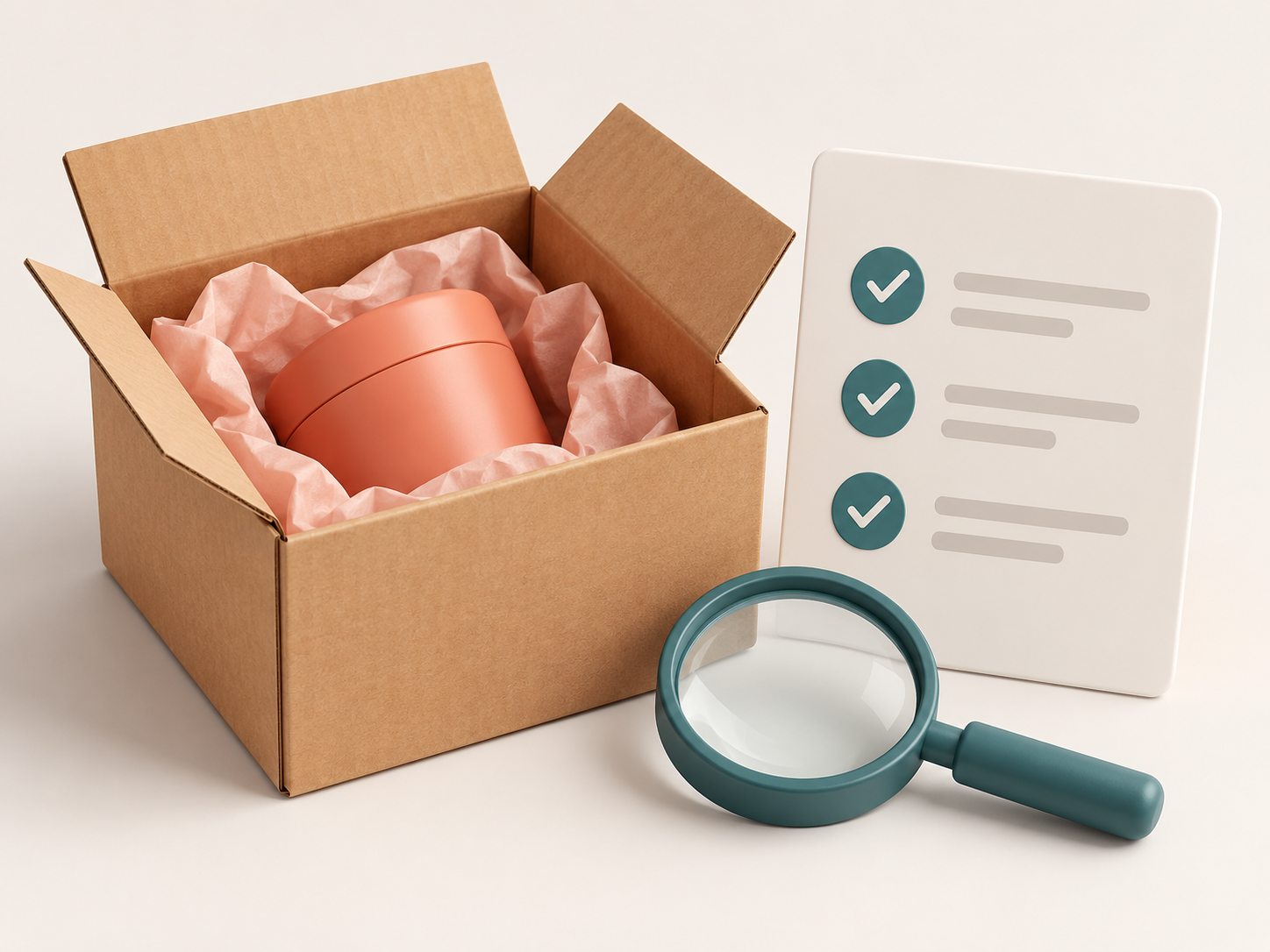
Compare the product page with current supplier information. Confirm the model, size, materials, included parts, compatibility, care instructions and any limitations that could affect the buyer. If your offer makes claims about performance, origin, safety or sustainability, make sure you have evidence for those claims. Remove or qualify anything you cannot support.
Where practical, order a sample and check it against a short written list. Look at finish, function, packaging and whether the item matches the photographs. Shopify’s supplier guidance recommends checking supplier terms and notes that a sample order can help you assess a product and its fulfilment experience. Keep the date and source of your checks so you know when they need repeating.
Product responsibilities can vary by item and destination. Shopify’s dropshipping compliance guidance highlights seller responsibilities around product safety and transparent delivery information. Check the requirements that apply to your product and markets before publishing.
Write down who fulfils the order, where it dispatches from, the current handling time, available tracking, total supplier charges and the best contact for urgent issues. Ask what happens when stock changes, a parcel is delayed, an item is damaged or a customer needs a replacement. If one supplier is your only route, decide what you will do if that route stops temporarily.
Do not rely on an estimated shipping time copied from an old listing. Check the route for the destinations you plan to serve and update the product page when supplier conditions change. If import or customs charges could apply, make sure you understand who pays and explain relevant charges before purchase. The customer-facing promise should describe the real route, not the best-case scenario.

Start with one realistic order and list the variable costs that follow it. Depending on your setup, these may include the supplier’s item charge, delivery, transaction or marketplace fees, a discount, a replacement allowance and the promotion cost you are testing. Use current quotes and platform rates. Keep the calculation in pounds if you are planning for a UK store, and note any exchange-rate assumptions for overseas suppliers.
| Example cost | Illustrative amount | Verify |
|---|---|---|
| Supplier item | £14.00 | Current item quote and currency |
| Delivery | £4.50 | Destination, tracking and handling |
| Payment and platform fees | £2.10 | Your current channel rates |
| Test promotion allowance | £5.00 | Your chosen test cap |
| Illustrative variable total | £25.60 | Replace with your actual figures |
These figures are examples, not quotes or a recommended retail price. A difference between selling price and variable cost is not guaranteed profit: tax, overhead, refunds and the value of your time still matter. Test several realistic scenarios and set a cash guardrail before promotion. The Dropshipping Pricing Lab can help you compare price and cost assumptions in £.
Review the product page as a customer would. Is the item described accurately? Are the total price, payment methods and delivery details easy to find? Does the page work on a phone, and can someone reach support without hunting? Then test the checkout end to end using your platform’s safe test mode where available. Check shipping choices, a valid address, payment success, failed payment handling and the confirmation message.
Shopify’s launch checklist recommends testing the customer journey and fulfilment settings before opening. Repeat your own test after changing payment, shipping, discounts or theme settings. Keep a small log with the date, device and result so fixes can be checked rather than assumed.
Answer six practical questions about your offer, supplier, costs, checkout, customer care and first acquisition test. You will get a clear result and a personalised PDF plan.
Before a UK customer orders, your information should make the business identity and contact route, product description, total price, payment method, delivery arrangements and relevant cancellation terms clear. GOV.UK’s distance-selling guidance explains the information businesses must provide and that customers generally must be told about the right to cancel within 14 days after delivery. Requirements can vary by product and situation, so read the current official guidance for your circumstances.
Plan who handles a late, damaged or unwanted order, how a customer contacts you, and how the supplier is involved without making the customer chase them. GOV.UK’s returns and refunds guidance describes consumer rights for online purchases and exceptions. This article is general business education, not legal advice. Check the current rules for where you sell and get qualified advice if you are unsure.

Choose one audience and one channel for the first test. Write the message you will show, the action that counts as a useful signal and the maximum amount of time or money you will spend. A small test can help you learn whether people understand the offer, click through, ask a relevant question or begin checkout. Decide in advance what result would lead you to improve, repeat or stop.
A handful of clicks is not proof of a viable business, and a quiet test is not always proof that the product has no potential. Look at the whole path and the quality of the evidence. The Dropshipping Simulator can help you think through decisions and their trade-offs before making a larger commitment.
Readiness is not about eliminating every uncertainty. It is about knowing which risks remain, being honest with customers and learning in a controlled way. If you find gaps, handle the most important one first and repeat the relevant check before launch.
Use the free Dropshipping Launch Assessment to review your store and download a personalised readiness plan. It takes about three minutes and keeps your answers in your browser.
Need to talk through your launch plan? Contact the MLFG team.
PREFERRED SOURCE
Like what you’re reading? Add Make Local for Global as a preferred source on Google to see more of our articles when you search.












Build your online presence without having to figure out everything yourself.