

Estimate a private-label minimum order, landed cost, product setup and selling expenses in £. Use a clear batch cash plan before approving production.

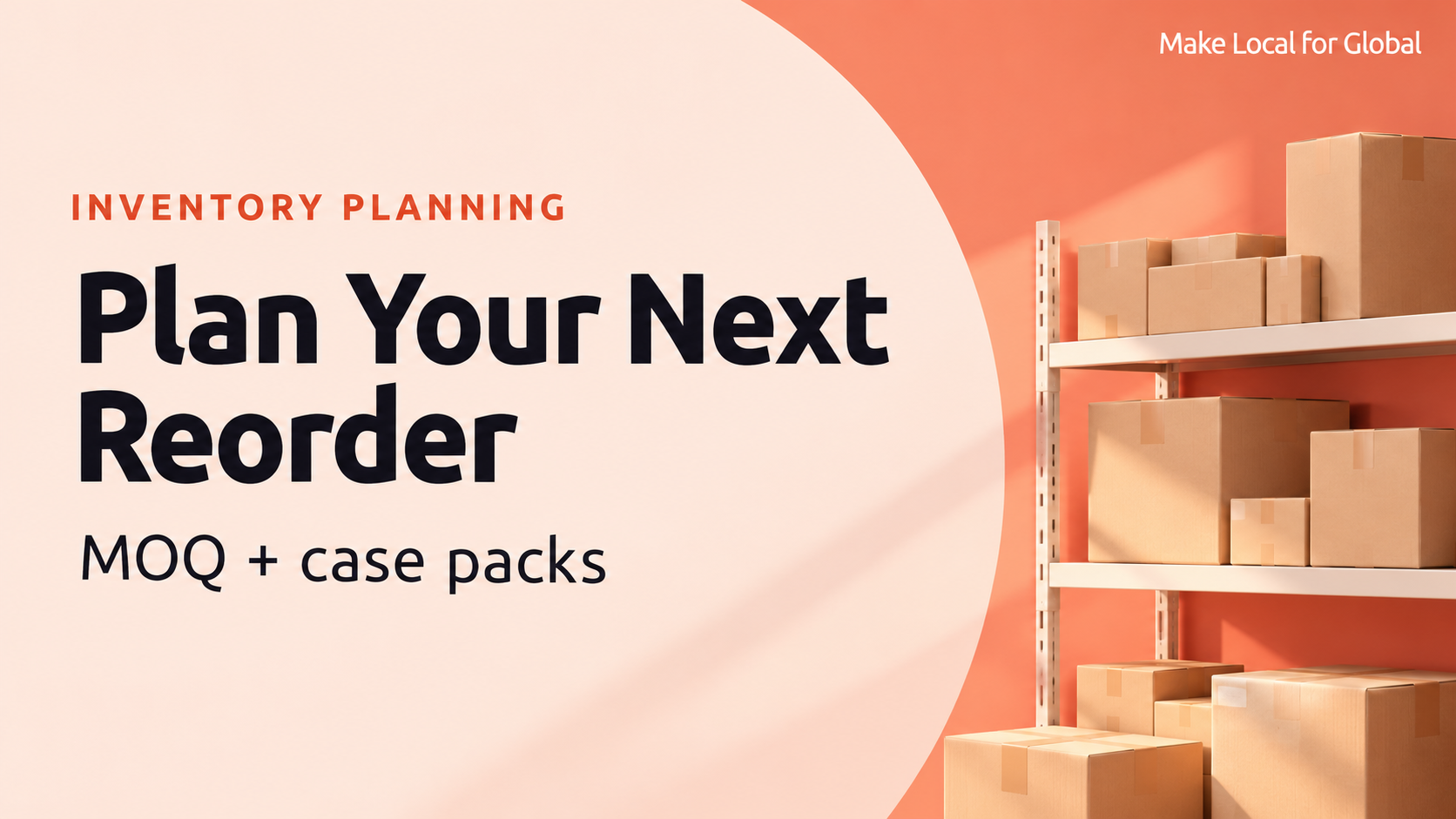
A private-label product can involve much more cash than the unit price in a supplier quote suggests. A minimum order ties money up in stock, while samples, packaging, freight, inspection, storage and launch work create further commitments. Before placing an order, build a simple scenario that separates the full batch cost from the costs that happen each time a unit sells.
This guide explains a practical way to estimate those commitments in pounds, check what remains uncertain and compare a few sales scenarios without treating them as a forecast. The free Private Label Simulator lets you adjust minimum order quantity, landed unit cost, selling price and one-off launch costs.
Enter a supplier batch, setup costs and a sales scenario in £. Compare the cash committed with the contribution from each unit.
Private label means selling a product made by another supplier under your own brand or specification. The exact arrangement varies. One supplier quote might cover only the product at the factory. Another may include branded packaging or delivery to a warehouse. Ask what the quote includes before comparing options.
For planning, split costs into three groups: stock cash paid to make or buy the batch, one-off costs to prepare the product and brand, and variable selling costs that apply to each order. Include a separate allowance for recurring overheads if they are relevant to your business. Keep quotes and estimates clearly labelled and dated.

Start with the minimum order quantity (MOQ), then multiply it by the complete landed cost per unit. “Landed” should reflect the cost of getting the finished unit to the place where you can sell it, based on the assumptions you choose to include. Confirm whether the quote covers packaging, freight, insurance, customs duty, import VAT, inspection, delivery and any other charges. Their treatment can depend on the product, route, terms and your business circumstances.
| Planning line | Example in £ | What to confirm |
|---|---|---|
| 300 units at £8.50 landed | £2,550 | What is included in the delivered-unit quote? |
| Product development and samples | £650 | Is sample approval and revision charged separately? |
| Brand, packaging and setup | £900 | Does this include artwork, tooling or packaging plates? |
| Launch and initial marketing | £500 | What can be postponed until after sample checks? |
In this illustrative example, the starting commitment is £4,600 before any recurring overheads or sales. Those amounts are not typical prices or a recommendation. Replace them with current written quotes for your own product. If importing, check current HMRC guidance on manufacturer and importer product-safety responsibilities and the applicable tax and duty rules. Product-specific requirements can differ, so get qualified advice where needed.
A simple unit contribution is selling price less landed cost and the variable cost to complete one sale. Variable costs could include payment charges, fulfilment, outbound postage, marketplace fees, discounts, expected replacements or other order-linked expenses. For example, at a £29 price, £8.50 landed cost and £5 variable selling cost, the arithmetic contribution is £15.50 per unit before fixed overhead, tax and the one-off development or launch costs.
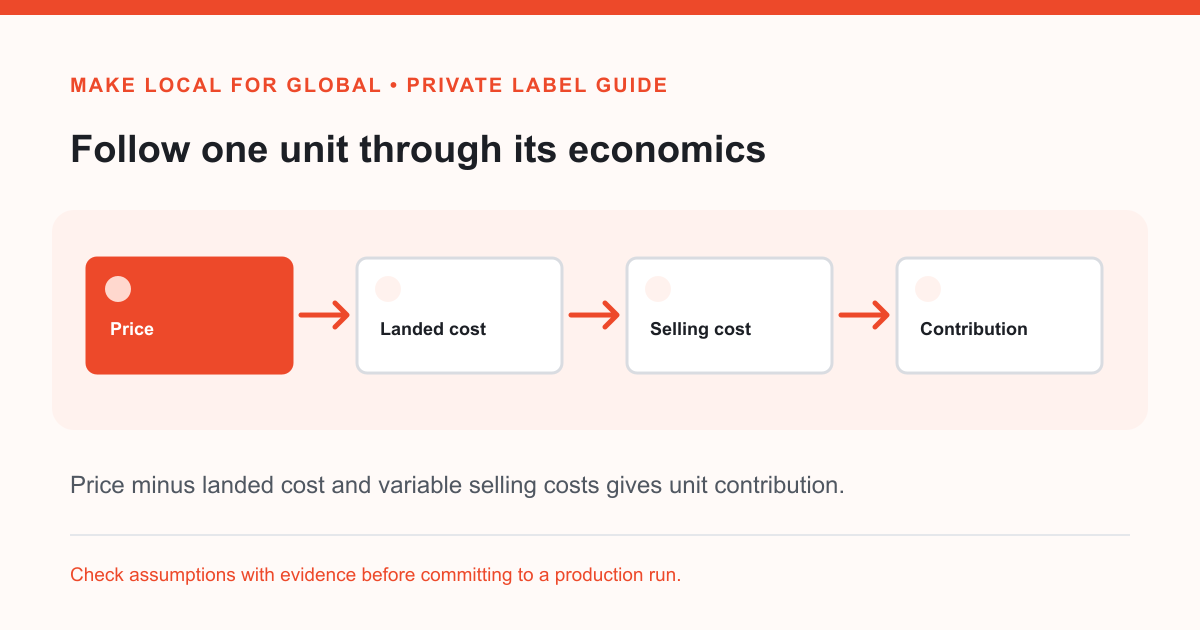
The distinction matters because the full MOQ may be paid before your first sale, while a sales margin is earned gradually. Track the total stock payment separately from variable costs per order. Cash received from sales can improve the cash position, but any unsold units are still inventory rather than cash available for other bills.
Use the simulator to see unit contribution, batch cash and remaining stock together. Change one assumption at a time and see which supplier quote or selling cost matters most.
A spreadsheet cannot tell you whether a sample matches the agreed specification or whether a supplier can deliver on time. Write down the materials, dimensions, performance, packaging, labelling and quality checks you expect. Request a sample and record any revisions before approving mass production. Agree in writing how defects, delays and changes will be handled.

If you sell a product under your own brand or import it, understand the responsibilities that apply to your product and market. The UK Office for Product Safety and Standards explains that manufacturers and importers need to ensure goods meet the relevant rules and remain responsible for product safety after placing products on the market. Read the current official product-safety guidance; do not rely on a supplier’s general claim as proof that your specific product is compliant.
Try a cautious scenario, a middle scenario and a stretch scenario for the number of units sold. These are planning cases, not estimates of what customers will buy. Ask what evidence supports each one: conversations with likely buyers, relevant search behaviour, a small pre-production test or orders you can fulfil honestly. Avoid advertising stock or delivery dates that are not confirmed.
Notice how slowly a large batch may sell through and what storage, customer support and cash needs continue during that period. If the cash recovery point sits beyond the first batch, consider whether a lower MOQ, a different specification, a sample-led test or more buyer evidence is possible. Do not assume every remaining unit will sell at the planned price.
There is no single reliable amount. It depends on the MOQ, product, specification, supplier, delivery route, setup work and selling model. Use written quotes and calculate the whole batch and launch commitment before deciding.
It is a planning measure for the cost of getting a unit to your intended selling location. State exactly which charges you included, and check them against supplier and logistics documents. Import duty and VAT treatment can vary, so confirm the current rules for your circumstances.
No. A simplified contribution omits factors such as demand, fixed overheads, tax, returns, defects, storage, timing and the cash tied up in unsold stock. It is one planning input, not proof of viability or a forecast.
Ask for a quote covering your exact specification, the MOQ, sample and revision charges, packaging, payment schedule, lead time, delivery terms, quality checks and the process for defects or delays. For regulated or safety-sensitive goods, seek product-specific guidance before production.
Private label can give you control over a product and brand, but a batch order concentrates risk in cash, stock and supplier delivery. A clear cost breakdown, an approved sample and a small evidence-led sales plan make the decision easier to examine. Keep every unconfirmed amount visible rather than hiding it in a single “product cost”.
Save your assumptions, check the batch cash and choose one supplier or buyer question to verify next. If you want help building the wider ecommerce plan, see our service options.
For current UK product-safety and import requirements, consult the relevant government product-safety guidance and HMRC tax and duty guidance. This article is general education, not legal, tax, customs or financial advice.
PREFERRED SOURCE
Like what you’re reading? Add Make Local for Global as a preferred source on Google to see more of our articles when you search.

















Build your online presence without having to figure out everything yourself.