

Create practical Christmas product bundles from your existing range. Compare bundle formats, calculate costs and make contents, stock and delivery details clear.


A Christmas bundle puts a small group of related products into one clear buying choice. A candle with matches and a gift sleeve can feel easier to buy as a set than as three separate items, but the bundle only works if the products belong together, the price covers the costs and the customer can see exactly what will arrive.
You do not need to invent a new product range for December. Start with items you already sell, look for a shared use or recipient, then test one or two simple combinations before building a large Christmas collection.
Make a short list of the products, gift buyers and store changes you have in mind. Make Local for Global can talk through the next steps with you.
A good bundle gives the customer a reason to buy the items together. They might be used for the same activity, suit one recipient, solve a small problem or make a gift feel ready to give.
Think about the person receiving the gift. A set for a first-time baker might include a recipe notebook, a measuring spoon set and a tea towel. The products share a use, fit a recognisable recipient and can be shown together in one photo.
If the tea towel is made to order and takes longer to dispatch, the delivery estimate for the whole set needs to reflect that.

Use these examples as starting points. Substitute products from your own catalogue and check that each one suits your customers, price range and fulfilment method.
A candle, a box of matches and a reusable candle snuffer could make a host gift set. A mug, hot chocolate spoon and coaster could become a cosy-evening set. Make sure the mug capacity, candle size and materials are clear, and show the items together beside a familiar object for scale.
A body wash, moisturiser and wash bag can work as a travel or gift set. Check that the products are suitable for the same buyer and that the ingredients, volume and usage instructions remain visible. Do not imply medical or skin benefits that the product information does not support.
A lead, collar and waste-bag holder may suit a dog owner, but the buyer needs size details and safe-use information.
If the set includes a toy, state its dimensions and any age or supervision guidance supplied by the maker.
Offer size choices only if your stock system can keep the right combinations accurate.
A notebook, two pens and a page-marker set could be a study gift.
A beginner craft bundle might include a small project, the materials needed and a printed instruction sheet.
State what is not included, such as scissors or glue, so the customer does not discover a missing item after opening the parcel.
A mug and tote bag with the same illustration can make a matching gift set.
A scarf and accessory may work if the colours and materials coordinate.
Check that the supplier can fulfil each item together, give separate production times where needed and explain that products may arrive in separate parcels if that is how the service works.
There is no need to offer every possible combination. Pick a format that matches how your products are stocked and how customers choose.
If customers can choose colours or scents, limit the options to combinations you can pack correctly.
A spreadsheet can record the bundle name, included products, component stock and order count.
If the same candle sells alone and inside three bundles, reduce its available quantity across all routes when it sells.
For a simple buy-two-and-save offer, you could let customers choose any two selected £12 notebooks and save 10%. The pair would cost £21.60 instead of £24, a £2.40 saving before delivery. These figures are illustrative; check product, packaging, payment and fulfilment costs before enabling the offer.
A visible saving is not enough to show that a bundle is affordable for the seller. Work out the product cost, packaging, delivery paid by the business, payment fees and any other cost that changes with the order. Then compare the result with the money left from the sale.
| Item | Illustrative amount |
|---|---|
| Product A selling price | £18.00 |
| Product B selling price | £12.00 |
| Separate-price total | £30.00 |
| Bundle price | £27.00 |
| Customer saving | £3.00, or 10% |
Illustrative figures only. They are not a recommended price or a profit forecast.
Now check what remains at £27. Suppose the products cost £7.20 and £4.80, the box and protective packing cost £1.10, postage paid by the shop is £3.35, and the payment fee is 2% plus 20p. The fee is £0.74, so these listed costs total £17.19. £27 minus £17.19 leaves £9.81 as a contribution towards costs not listed here.

This is not net profit.
The example leaves out marketing, staff time, software, returns, damaged parcels, tax and general overheads. It assumes a non-VAT-registered seller, so VAT has not been removed from the sale price or input costs.
A VAT-registered seller should calculate using the appropriate VAT-exclusive figures and confirm the treatment with an accountant or official guidance.
Compare the bundle calculation with selling the products separately.
A £3 discount may be acceptable if the set saves packing time or brings together products that are often bought in one order. It may not be acceptable if it removes the amount needed to pay other costs. Try a second price, such as £28, and see whether the smaller saving still makes the set easy to understand.
Clear product details, a tested offer and accurate delivery wording give customers a better path from the bundle page to checkout.
The bundle page should make the buying decision easier, not hide information inside a Christmas graphic. Someone shopping for a gift may be less familiar with the products than a returning customer.
For example, “Winter desk gift set” does not tell a shopper whether the desk mat is included. A clearer opening could say: “Includes one A5 lined notebook, two black gel pens and three page markers. Choose a navy or cream cover above.” Add a photo of the real items and state whether the set arrives in a gift box or standard mailing carton.
Bundles can create more stock combinations than a single product page.
Before launch, pack one complete set and record how long the task takes.
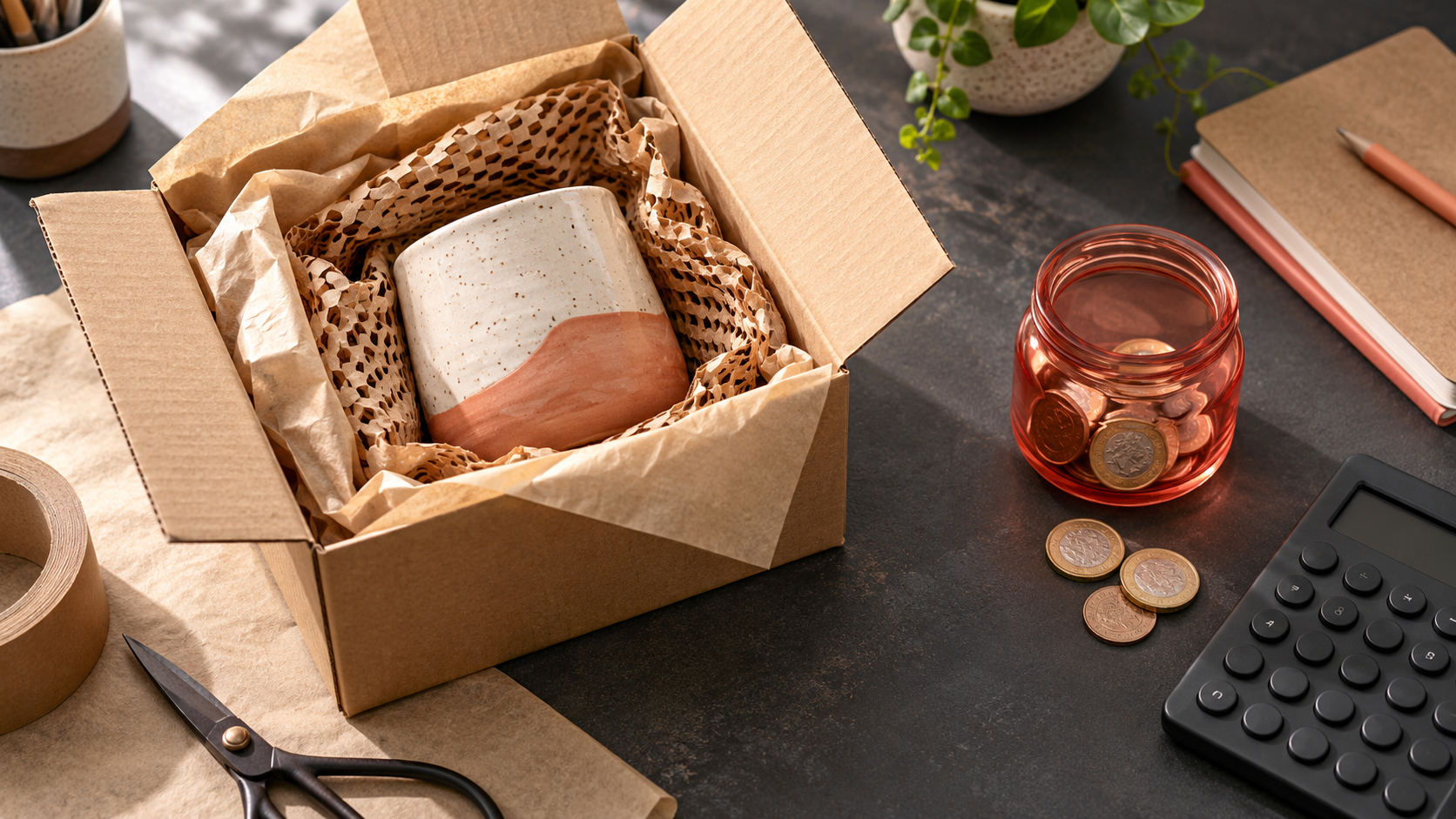
Check the components fit without damage, the packaging protects fragile pieces and the parcel size matches the postage service you plan to use.

If one item is made to order, use its production estimate when setting the bundle dispatch message.
If the parts come from different suppliers, confirm whether they will arrive together. Do not promise one parcel or a Christmas arrival date without checking the fulfilment route for every component.
Set a stock rule for the bundle.
If there are 20 boxes but only 12 candles, the ready-to-ship quantity is no more than 12. Keep a simple record of reserved orders, damaged stock and sales from in-person events. Pause the bundle listing or replace the unavailable item only after updating the photo, description and price.
For UK online sales, give shoppers clear information about the goods, total price, delivery arrangements and cancellation rights before they place an order. Read the GOV.UK guidance for online and distance selling and check that your store terms match the products and fulfilment method you use.
A first Christmas collection might include one entry-price set, one core gift set and one larger option.
A candle shop could offer matches with a single candle, a two-scent set and a larger gift box with a snuffer. The buyer can compare the choices without facing a long list of nearly identical combinations.
Choose a manageable number based on the stock you can track and the photos you can prepare.
Five clear bundles are often easier to maintain than 30 combinations with separate images, prices and delivery notes.
Start with the products you know are available, then add another set only when you can fulfil and describe it properly.
Gift categories can help people find the right set. A bundle might fit “Gifts under £25”, “For coffee lovers” and “Secret Santa” if the price, product and use match each category. See How to Create a Christmas Gift Guide for Your Ecommerce Store for ways to group products by recipient, price and interest.
If you are choosing an offer for a bundle, compare discounts with other options such as free delivery or a small gift. The related article Christmas Promotion Ideas for Ecommerce Stores covers those formats and the cost checks to run before launch.
Record the questions people ask, such as whether the gift box is included or if they can choose a colour. Those questions show what the page still needs to explain. Once the set is clear, add it to the Christmas collection and link to the relevant product page in your social and email promotion.
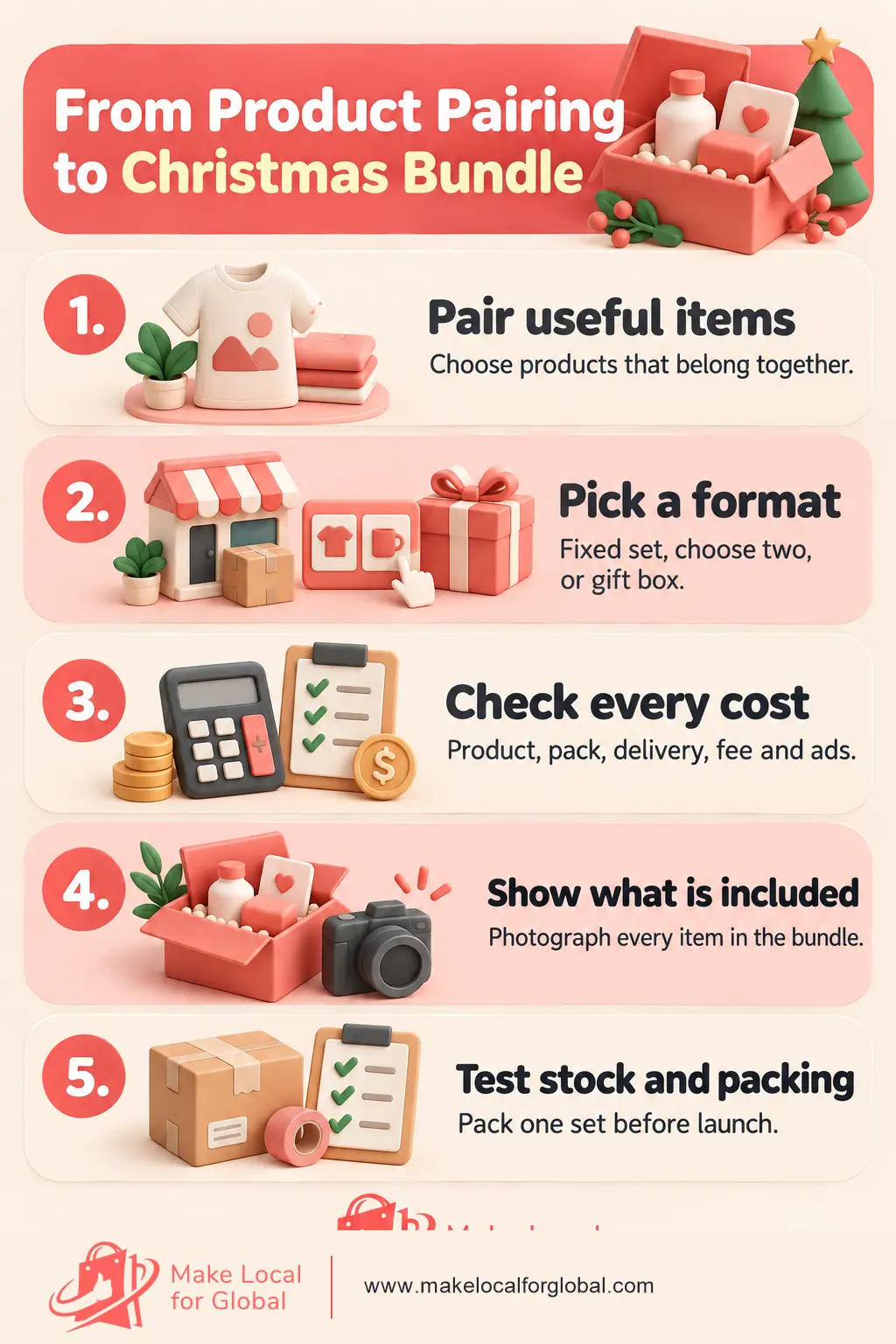
There is no fixed number. Two or three well-matched items can be easier to explain and pack than a large box of unrelated products. Choose a count you can stock, photograph and deliver reliably.
No. A bundle can offer convenience, gift packaging or a ready-made combination without a discount. If you show a saving, calculate it from the actual separate prices and check that the discounted sale still contributes towards your other costs.
Possibly, if you can manage the stock, delivery timing, customer service and returns. Check whether items arrive together or in separate parcels, and make that clear before checkout.
Stop using Christmas-arrival wording when the production and delivery estimates no longer support it. You can keep a bundle available for later gifting if the products still suit, but change the campaign message and delivery information.
Plan the bundle, set out what is included and make your delivery terms easy to find. Make Local for Global can help you discuss your online store requirements.
PREFERRED SOURCE
Like what you’re reading? Add Make Local for Global as a preferred source on Google to see more of our articles when you search.











Build your online presence without having to figure out everything yourself.