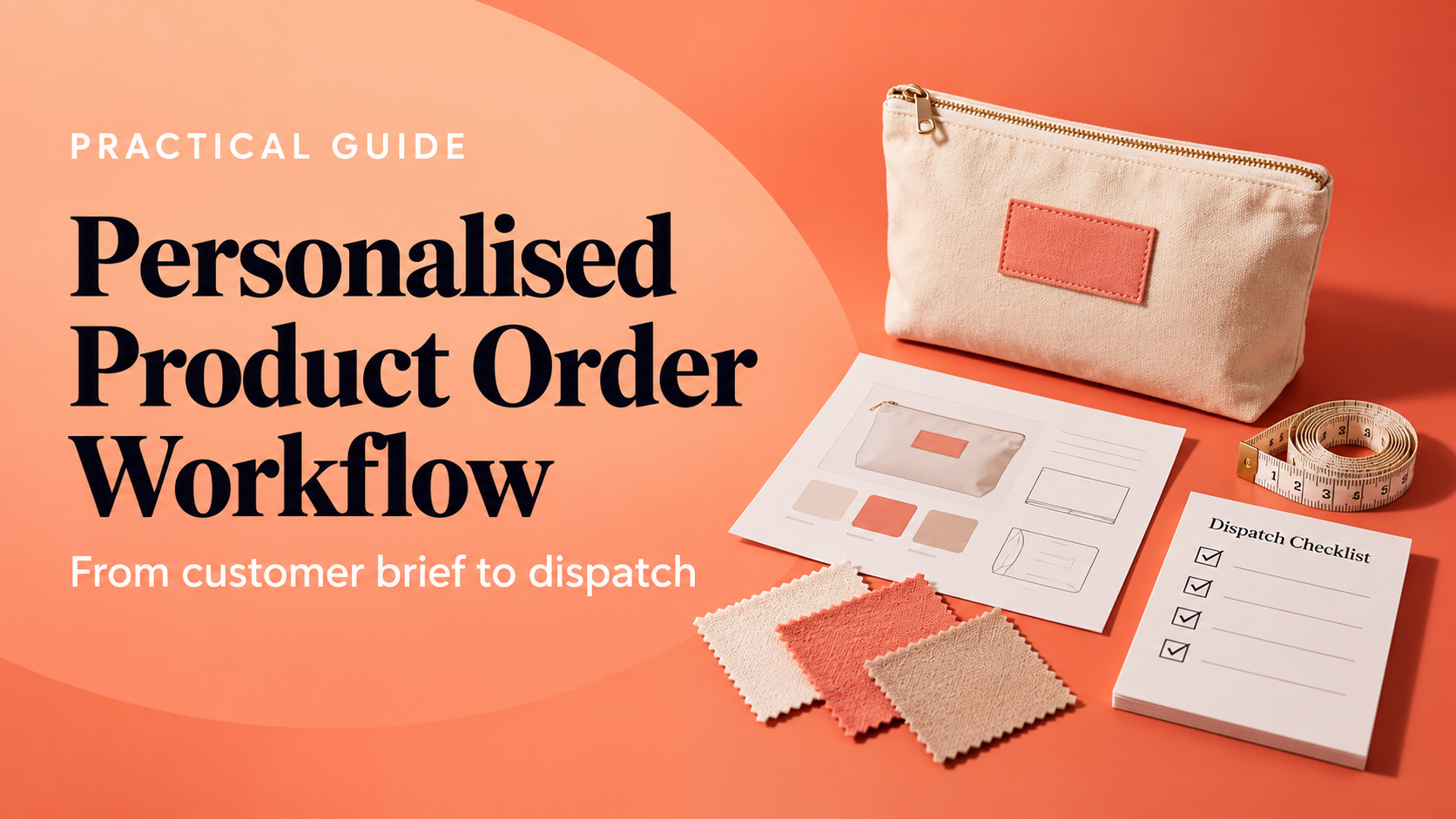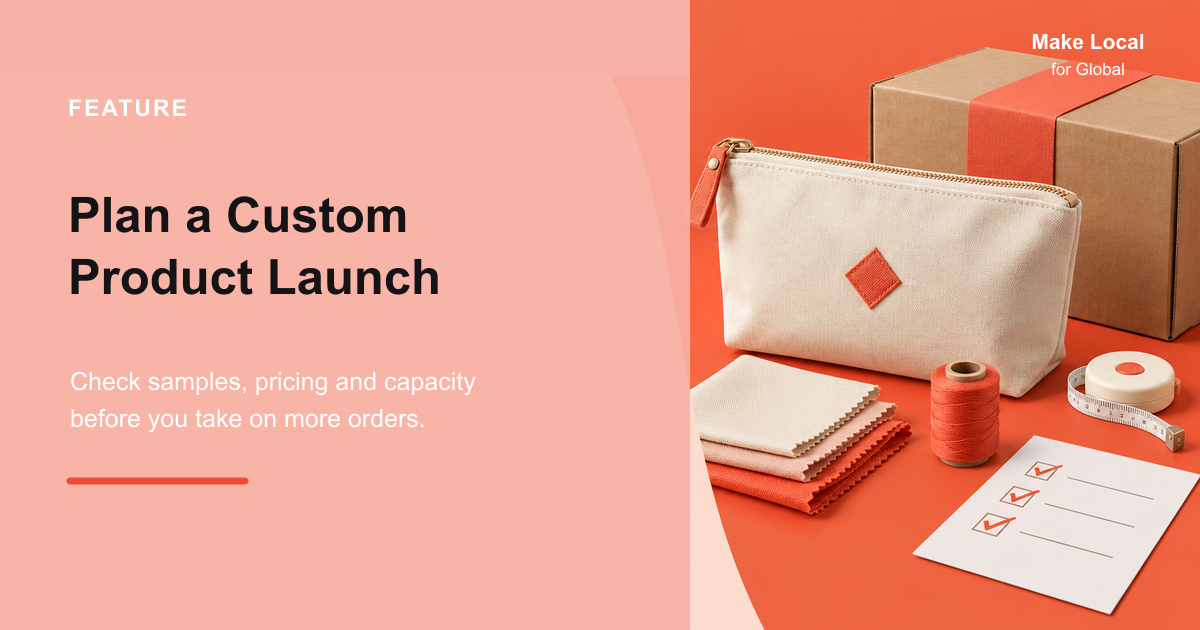
A personalised product can make a small shop memorable, but every custom option creates a promise to fulfil. Before offering names, colours, sizes or made-to-order details, test whether a specific buyer wants the product, whether you can produce it consistently, and whether the full order still makes sense at the price you plan to charge.
This practical UK checklist takes you from the first buyer hypothesis to a capped production test. It is designed for makers and small ecommerce sellers who want evidence before investing in a large catalogue, specialist equipment or a broad advertising campaign.
Turn your idea into a launch plan
Answer six focused questions about your buyer, options, sample, costs, capacity and first test. The free assessment organises your evidence and creates a downloadable plan.
1. Choose one buyer and one reason to customise
Start with a buyer and an occasion, not with a list of possible products. “Personalised gifts” is broad. A more testable starting point might be a new homeowner looking for a housewarming gift that includes a family name, or a local club ordering matching kit bags with a short team identifier.
Write the buyer, situation and problem in one sentence. Then ask what the custom detail changes for that person. Does it help identify ownership, mark an occasion, fit a particular use, or make a gift feel more considered? If personalisation is only decorative, you still need evidence that buyers value it enough to cover the extra work.
- Describe one likely buyer in observable terms, such as their role, use or buying occasion.
- Collect real questions, reviews, search language or conversations that reveal what they need.
- Separate what people said from what you infer. A compliment is not the same as a purchase commitment.
- Record the source and date so you can revisit evidence rather than rely on memory.
Look for repeated language and trade-offs. A buyer may care more about a reliable delivery date than a large choice of fonts. A corporate customer may need an invoice and consistent branding, while an individual gift buyer may value a proof before production. Those details affect the offer and the workflow.
2. Make the offer small enough to produce well
Every extra variant increases the number of decisions, materials and possible mistakes. It can also make it harder to learn which part of the offer attracted a buyer. For a first test, choose one base product and a short menu of options you can explain clearly.
| Offer decision | Useful first-test limit |
|---|---|
| Base product | One product family and a clearly specified material or model |
| Personalisation | A few choices you can fulfil repeatedly, such as one name field and a small colour range |
| Artwork or wording | One proof and one defined correction round before approval |
| First production run | A batch cap based on real time, materials and available cash |
A bounded offer is not a permanent restriction. It is a way to learn. Once orders show which options buyers actually choose and which steps create delays, you can add a variant with a reason instead of guessing.
3. Test a sample and define the approval point
Make or order a sample using the same process you intend to use for customer orders. Check the finish, material, colour, legibility, durability and packaging. If production depends on a supplier, ask about minimum quantities, lead times, colour variation, quality tolerances and how defects are handled. Keep the answers with the supplier quote.

Write down exactly what the buyer approves: wording, spelling, placement, dimensions, colour and any other feature that matters. Make clear when production begins and what happens if the buyer requests a change after approval. Use a versioned proof or order record so the person producing the item is not working from an old message.
Do not treat a prototype as proof of demand. A sample helps you assess quality and workflow; a buyer action, such as a paid order or a clearly defined preorder, is stronger evidence of willingness to buy. Be transparent about lead times and any conditions attached to an early test.
4. Calculate the complete cost of one order in £
List the costs that change when one more order is accepted. Include the blank item, custom materials, consumables, packaging, payment or marketplace fees, delivery you subsidise, and the labour needed to check details, prepare, produce, inspect and pack the item. If rework happens, record it or label the allowance as an assumption.
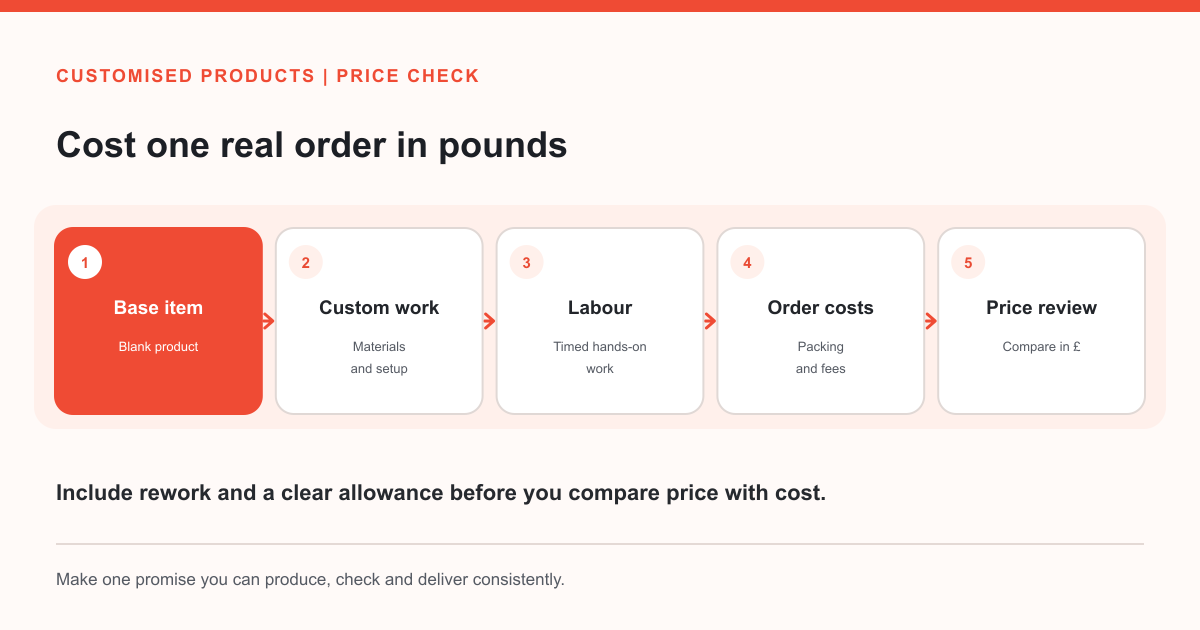
For example, suppose a test order has a £12 base item, £3 of custom materials, 30 minutes of hands-on work valued at a planning rate of £14 an hour, £2.50 packaging and a £4 delivery subsidy. The labour allowance is £7, so these listed variable costs total £28.50 before payment fees, rework, tax treatment or fixed overheads. This is an illustration, not a recommended selling price.
If a payment fee is percentage-based, calculate it from the actual selling price and check the provider’s current fee terms. Keep one-off equipment and design setup separate from per-order costs. A contribution after variable costs may help recover fixed costs, but it is not the same as profit or take-home pay. NI Business Info explains the distinction between fixed and variable costs in its guide to covering business costs.
Use supplier quotes and observed timings wherever possible. If you do not yet know a cost, write “estimate” beside it and identify how you will check it. The UK government’s business guidance also recommends reviewing price alongside the effect on sales, cash and profit, rather than considering the price in isolation: see Increase sales to existing customers.
5. Check production capacity before promising a date
Custom work often includes time that is easy to miss: reading order notes, asking a follow-up question, making a proof, waiting for approval, preparing a machine, cleaning between jobs, correcting an error and arranging dispatch. Measure the whole path, while distinguishing hands-on time from waiting time.
Make a simple capacity estimate:
- Track how many minutes each stage takes for a real sample or small batch.
- Add the active work across the order, including messages and quality checks.
- Compare expected orders with the hours you can genuinely allocate after other work.
- Include supplier lead times and approval delays when setting the customer-facing delivery window.
- Set a maximum number of orders for the first test, then pause sales if the limit is reached.

Capacity is not just the maximum number of items a tool can make. It includes inspection, customer communication and the time needed to correct exceptions. A conservative first delivery promise protects trust while you learn how long the full workflow takes.
6. Make the order and returns information clear
Before checkout, explain what is customised, what the buyer must provide, when they will receive a proof, the approval deadline, the estimated production time and how delivery is handled. Make the total price and any delivery charge clear before the buyer commits. Keep a record of the accepted specification and confirmation.
Some personalised or made-to-specification goods may fall within an exception to the usual online cancellation right. The precise rule depends on the circumstances and does not remove a customer’s rights when goods are faulty or not as described. Check the wording of the Consumer Contracts Regulations 2013 and current UK International Consumer Centre guidance on online shopping. This article is general information, not legal advice; seek qualified advice for your specific product, policy and selling arrangement.
A practical policy should describe how you handle a spelling error, a production defect, a damaged parcel and a buyer-requested change. Do not present a custom-made exception as a blanket “no returns” rule. Use plain language and check that the policy does not suggest customers have fewer statutory rights than they do.
7. Run one small test and set a decision rule
Decide what evidence would justify repeating, revising or stopping the test before it begins. For example, you might require a minimum number of paid orders from the intended buyer group, a maximum average production time, no unresolved quality issue and a contribution that covers the costs you included. Choose thresholds that suit your own situation; there is no universal number of orders that proves a product will scale.
Track a short set of measures for every order: source of enquiry, selected option, price, materials, fees, active minutes, delivery date, approval changes, defects, rework and customer feedback. Protect customer information and keep records only as long as needed for your business and legal obligations.
Change one important assumption at a time. If you alter the product, price, artwork, promotion and delivery promise together, you will have difficulty identifying what changed the result. A modest, well-recorded test can teach you more than a large launch with unclear evidence.
Check your next practical test
Use your real buyer evidence, product choices, £ costs and available time to create a focused launch plan before opening the offer more widely.
Custom product launch checklist
- I can name one buyer, one occasion and the reason the custom detail matters.
- I have evidence from real questions, behaviour or paid demand, not only compliments.
- I have limited the first offer to choices I can produce consistently.
- I have checked a sample and saved the buyer’s approved specification.
- I have listed the complete per-order costs in £ and marked unknowns as estimates.
- I have timed the whole workflow and set a safe initial order cap.
- I have explained proof approval, production timing, delivery and customer rights clearly.
- I know what evidence will make me repeat, revise or stop the test.
A custom product launch is a sequence of decisions, not a single announcement. Start with one buyer and a bounded promise, make the order process visible, and let observed costs, time and customer behaviour guide the next step.
Ready to plan your first test?
The free assessment turns your answers into a practical next step and a three-page downloadable plan. If you are ready to build a store, compare the plan and included support before deciding.
For more detail, see the guides to pricing custom products, setting clear product options and calculating custom-order labour. If you want help deciding whether MLFG suits your store, talk with the team.