

READY TO SELL Fabric by the metre ONLINE?
Get a store built for you in 5 days, plus training and support to help you start, run, and grow your Alternative business.

Learn how to sell fabric online with a focused range, accurate fibre and width details, repeatable sample tests, full order costs and careful fulfilment.

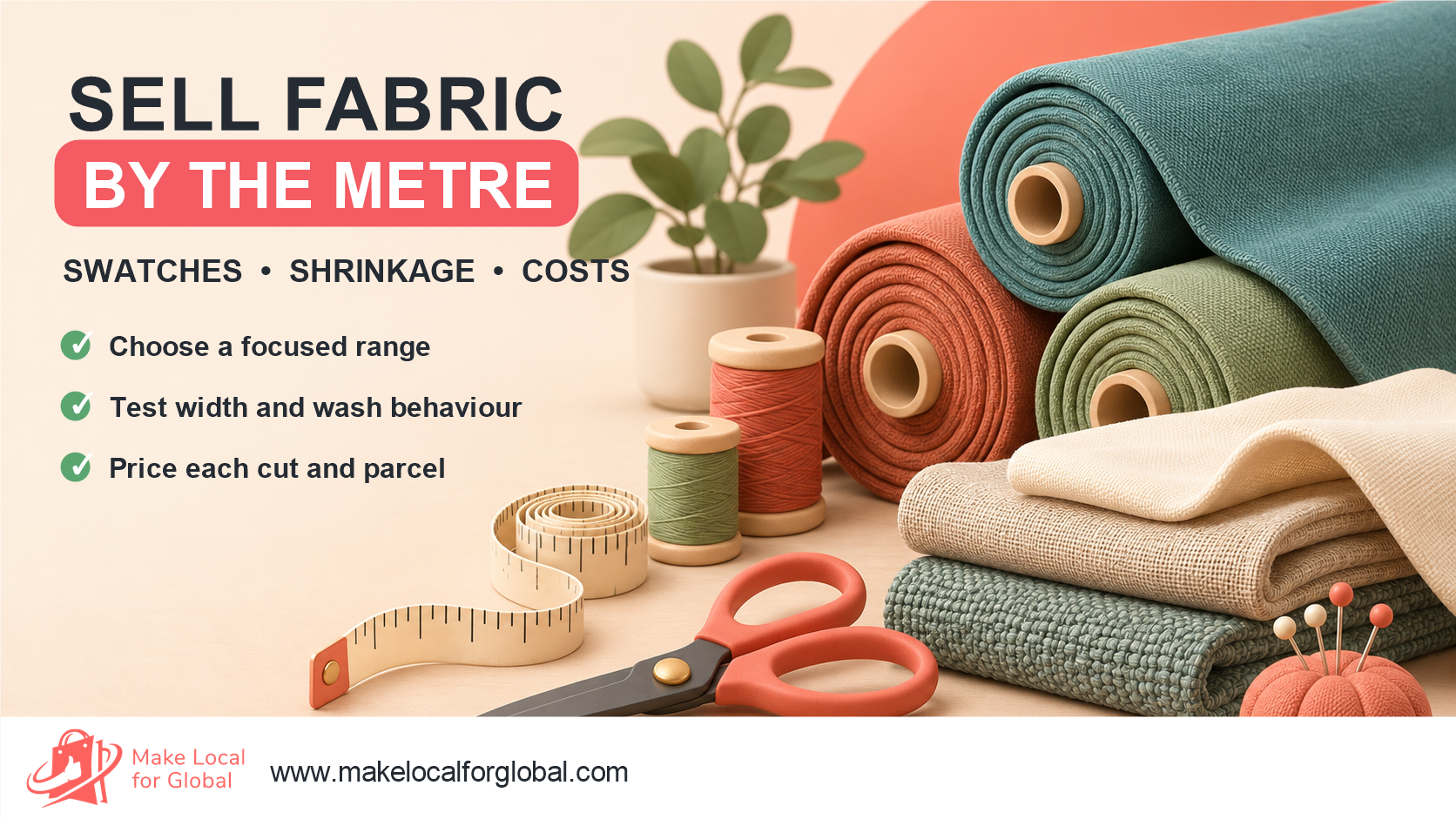
Fabric looks simple on a product grid: a colour, a pattern and a price. A buyer needs more before choosing a length. They need to know how the cloth feels, how wide it is, what fibres it contains, whether the print repeats, how it behaves after washing and how much usable material a cut will provide.
Selling fabric online can suit a new shop that is prepared to test the actual stock and describe it accurately. Start with one customer group, a small number of fabrics and a sample from the roll you expect to sell. Measure, photograph and cost each item before buying depth. A clear listing helps a maker decide whether the cloth fits a project; a vague one can lead to disappointing colours, short cuts, avoidable returns and stranded stock.
Use a focused buyer profile and verified product range to decide which fabrics belong in the first collection.
Fabric customers are buying material for a project, so the project is a useful starting point. A dressmaker may need drape, opacity, width and care details. A quilter may care about a coordinated palette, stable weave and consistent repeat. A maker sewing tote bags may look for a firm canvas that holds shape. A person making curtains may need enough width, a known pattern repeat and a fabric suitable for the intended use.
These buyers should not be grouped into one generic “fabric lover” profile. Their questions, order quantities, delivery expectations and likely repeat purchases can differ. Choose the first group you can reach and learn from.
Talk to five to ten people who have recently bought fabric for the kind of project you want to serve. Ask them to show you what they made, which material they bought, how they estimated the amount and what surprised them when the parcel arrived. Ask how they judged colour online, whether the width matched their pattern and what information was missing from the listing.
Use recent behaviour, not a hypothetical question such as “Would you buy this?” Someone who has bought two metres of viscose for a blouse can explain what they compared, how they chose the amount and what they would change next time. Record phrases people use, such as “lightweight summer dress fabric” or “firm enough for a bag”, then compare those phrases with the actual product properties. Do not promise a result the fabric has not been tested to deliver.
Invite potential buyers to compare three sample cards under daylight and indoor light. Ask which texture, colour family and project use they would choose, then ask what would stop them placing an order. A comment is not a sale forecast. It is a prompt for the next check, such as measuring width, showing the reverse side or explaining a print repeat.
Prepare a simple range page with accurate sample images, a provisional price and a short note that stock is being evaluated. Collect email sign-ups only with clear consent and explain what the person will receive. Do not take payment or imply immediate dispatch for stock you do not hold or cannot fulfil on the stated terms.
Track actions that show product intent: a request for a sample, a question about fibre content, a saved range, a request for a larger cut or a buyer asking when a colour returns. Separate those from likes and broad compliments. If people repeatedly ask for a width, fibre mix or care instruction, confirm it with the supplier before adding the statement to a listing.
Compare a few small sample cards before committing to a roll. A paid sample pack can test whether people are willing to pay for colour and texture selection, though the pack must be cut consistently and labelled with the right product codes. Keep the pack and full-length fabric from the same lot where possible. A sample from a later dye lot may not match the roll a customer receives.

A focused range makes it easier to explain the shop and keep product records. One approach is to begin with six to twelve fabrics in a clear use group, such as stable cottons for everyday sewing or medium-weight cloth for bags and home projects. The number is a planning choice, not a proven sales formula. A smaller range is easier to photograph and test, but it still needs enough choice to serve the selected buyer.
Set up a simple entry, core and higher-priced offer only when the cloths differ in a way the customer can understand. An entry fabric might be a plain cotton in a limited palette. A core offer could add prints or a heavier weave. A higher-priced fabric may use a verified fibre blend, wider usable width or a documented design feature. Avoid calling a fabric “premium” if the price is the only evidence for the label.
Bundles can help a maker match colours for a project, but test the combination in person and show the full contents. A bundle of three half-metre cuts has a different use from three continuous metres. State whether cuts are continuous, how selvedges are treated and whether a print runs in the same direction. Keep a bundle code that records each fabric and lot.
Fibre content, construction and finishing all affect how a fabric feels and performs. The fibre name alone does not tell a buyer how a cloth will drape, stretch, crease or wear. Suppliers may use broad names such as “cotton” or “linen blend” for products with different weights, finishes and constructions. Ask for the exact composition and inspect the physical sample.
| Fabric group | Possible first buyer | Checks before listing |
|---|---|---|
| Quilting cotton and poplin | Quilters, garment makers, craft sellers | Fibre composition, usable width, weight, print repeat, opacity and wash response |
| Lawn and voile | Dressmakers and makers of light layers | Sheerness, drape, stability, care instructions and whether lining is needed |
| Jersey and interlock knit | T-shirt, babywear and casualwear makers | Stretch and recovery, width, direction, weight, roll edges and cutting behaviour |
| Canvas and denim | Bag makers, costume makers and home projects | Weight, thickness, needle suitability stated by the supplier, colour transfer and fold or roll handling |
| Linen and linen blends | Garment, craft and home-sewing customers | Exact blend, slub variation, width, care, creasing and lot-to-lot appearance |
| Upholstery-weight cloth | Makers of cushions and furniture projects | Intended use, abrasion or performance evidence where claimed, repeat, width and any relevant product-specific requirements |
| Deadstock or reclaimed cloth | Makers looking for limited-run material | Provenance records, usable amount, defects, shade variation and clear limits on restocking |
Treat these as broad buying groups, not performance guarantees. The product page should describe the exact bolt you tested. “Medium weight” is less helpful than a measured weight with its method, the usable width and a photograph showing how the cloth hangs. If a supplier provides a specification, keep the document with the item record and check that the sample matches it.
Give every colour, print and lot a code that can be read on the roll, shelf label, invoice and order record. For example, `CTN-POP-031-NAVY-L2` might identify a cotton poplin, a particular print, colour and lot. The format is yours to choose. Make it short enough for packing staff to use and detailed enough to tell two similar fabrics apart.
Record the supplier name, purchase date, fibre composition, stated width, roll length, colour or print reference, lot number, care information and any limits on the claim. Link the product photos and test notes to the same code. If a new delivery has a visible shade shift or a different width, do not silently mix it with the previous lot in one listing.
For limited stock, state what happens when a roll sells out. Offer a waitlist or a substitute only with the buyer’s agreement. A similar colour is not an interchangeable product when a maker is matching a garment, quilt or room scheme.
Possible supply routes include UK wholesalers, mills, importers, print studios, manufacturers, deadstock dealers and reclaimed textile businesses. Each route changes minimum order size, lead time, documentation, payment terms and the chance of reordering the same lot. Ask a supplier what happens if a roll arrives damaged, the usable width differs from the sample or a repeat order comes from another dye lot.
Request a current specification for the exact product and lot. Ask for fibre composition, nominal and usable width, weight and the method used to measure it, finish, care instructions, print repeat, colour reference and any test or certification documents behind a claim. If the fabric is sold for a named use such as upholstery, baby products or protective clothing, ask what evidence supports that intended use. Do not treat a generic certificate or logo as proof for every roll.
Clarify whether the supplier sells full rolls, half rolls or cut lengths; whether cuts can be continuous; how selvedges and faults are handled; whether the price includes VAT; and what the minimum order quantity applies to. Ask for payment terms, dispatch dates, delivery charges, returns for defective stock and a contact for quality issues. If importing, record who is the importer of record, what duties or handling charges may arise and which party holds the supporting product information.
Order a sample from the same specification as the intended stock. Photograph the label, packaging, colour and reverse. Compare the sample with its description. If the supplier has changed the finish, print placement or composition, request an updated record. Keep email confirmation for agreed facts rather than relying on a sales call.
Textile lots can look different under different lighting or between deliveries. Advertise “colourfast”, “pre-shrunk” or “colour matched” only with evidence for the fabric and process involved. Test a retained swatch using the care method that will appear on the product page. Record the water temperature, detergent, drying method and any visible change. A home test can help you describe what happened to that sample; it does not replace a recognised test where a regulated or technical claim needs one.
When a roll arrives, check the first and last metres for shade variation, flaws, skew, print misalignment and damage. Measure the usable width between selvedges and inspect more than one point along the roll. Mark defects and decide how they will be handled before accepting the stock as saleable. If a fault repeats, contact the supplier before cutting the length into smaller units.
Set a clear rule for remnant stock. Some customers value remnants for small projects; others need a continuous cut. Store remnant length, width and lot separately and show each size accurately. Do not list a remnant as a standard one-metre length if it is shorter after excluding a flaw.
Use the same tools and method for each sample. A dressmaker’s tape, a flat table, a scale, a camera and a written test sheet are enough for an initial comparison. Record who tested it, the date, supplier lot and the conditions. If you change the wash process or measuring method, note that change so that the results are not compared as if they were identical.
For every sample, record:
Do not claim a fabric has a particular stretch percentage or recovery performance based on pulling it by hand. If stretch matters, use a repeatable marked distance and describe the method. For a technical claim, use test evidence suitable for that claim and keep the document linked to the exact fabric reference.

If you intend to publish a shrinkage figure, mark and measure a sample before and after the stated care process. Use a representative piece, follow the supplier instructions and measure both length and width. Calculate change as the difference divided by the original measurement, multiplied by 100. Write down the actual readings and method, not just the percentage.
For example, if a test swatch measured 50 centimetres before washing and 48.5 centimetres after drying flat, the length change is 1.5 centimetres. That is 3% of the original length. The statement would apply to that tested sample and process. It does not guarantee every customer's result, so describe the method and make clear that care, handling and batch variation can affect outcomes.
Do not wash a fabric against instructions to create a marketing claim. Some cloth is dry-clean only, has a special finish or is not intended for washing before sewing. Ask the supplier if the care information is unclear. A customer may need to pre-wash fabric before cutting; the listing can tell them to follow the maker’s stated care instructions without inventing a new care label.
Photograph the fabric in even daylight and include a close view of the weave, the reverse and a scale reference. Keep colour balance consistent across a collection. Avoid heavy filters, warm overlays and editing that changes the apparent hue. Add a brief note that screens and room lighting may affect perceived colour, but do not use that note to excuse a misleading image.
For a print, measure the repeat in both directions and show enough of the design for a buyer to understand its scale. State whether the print is directional, whether the pattern is centred on a cut and whether the order will arrive as one continuous length. A small swatch photo alone may hide the repeat and make it hard to estimate a project.
Use a title that identifies the fabric and its useful attributes without stacking keywords. For example: “Navy cotton poplin, 150 cm usable width, sold by the metre” is clearer than “Beautiful top quality fabric for all crafts”. Only use the example if the sample and supplier record support the details.
Put specifications near the purchase controls. Include the fibre composition, usable width, unit of sale, minimum order, whether multiple units are cut continuously, print repeat, fabric weight and its basis, care information, colour or lot reference, dispatch timing and sample availability. If a specification comes from a supplier, use a reliable current record and keep it on file. If you measured it, give a short method and the observed value.
Show a useful set of photos: the whole design, close-up weave, reverse, drape over a hand or table edge, scale comparison and a full-width view. Use a neutral background and the same lighting for all colour options. Place any ruler carefully so the scale shown is accurate. A short video can show drape and movement, but it should not replace written specifications.
Explain how the amount is calculated. If a listing is sold per metre, say whether the buyer chooses whole-metre increments or a minimum cut. Tell them if 1 in the quantity box means one metre. If the product can be ordered in fractional increments, show the actual increment and how the price is calculated. For customers searching in yards, provide a clear conversion note. One yard is 0.9144 metres; do not let the unit label or quantity control imply a different length.
Use a sample listing to answer a maker’s questions. A navy cotton poplin listing might show:
The sample is a structure, not a claim about a real product. Replace each description with facts from the roll being sold. Avoid unsupported terms such as “organic”, “non-toxic”, “zero waste”, “colourfast”, “fireproof”, “waterproof” or “sustainable”. Where you use an environmental claim, keep evidence for its scope and disclose material limits. The Competition and Markets Authority’s Green Claims Code explains that the overall impression, visual presentation and omitted information can affect whether a claim misleads.
The roll price is only one part of an order. Add the supplier invoice, inbound transport, import charges where relevant, inspection time, cut time, unusable sections, packaging, payment or marketplace fees, postage, customer service and an allowance for faults or returns. Include your own labour as a business cost. A low-cost cloth can be unprofitable if it takes too long to inspect, photograph, cut and pack.
Here is an illustrative order for two metres of fabric. It is a worked example, not a current supplier quote or a recommended retail price. Assume the seller is not VAT registered and the figures shown are the amounts used in the seller’s cost sheet. A VAT-registered seller should model VAT consistently and get accounting advice for their situation.
| Order line | Illustrative amount |
|---|---|
| Fabric: 2 metres at £8.00 | £16.00 |
| Inbound delivery allocated to this order | £1.40 |
| Inspection and cutting labour | £2.50 |
| Wastage and remnant allowance | £1.50 |
| Protective wrap and mailing carton | £1.10 |
| Payment fee allowance | £0.90 |
| Outbound postage | £3.40 |
| Fault, damage and returns allowance | £1.50 |
| Customer acquisition allowance | £2.50 |
| Illustrative variable cost | £30.80 |
If the fabric price is £34.00 and the customer pays £3.95 for delivery, order revenue is £37.95. Subtracting the £30.80 variable cost gives £7.15 contribution before fixed overhead, tax and any owner drawings. It is not net profit. The seller should replace each allowance with their own supplier invoice, payment fee, carrier quote and actual time.
This example highlights why the cutting and delivery rules matter. If a three-metre order is always cut and sent as one length, the labour and packaging cost may not rise in a straight line with quantity. If the buyer asks for three separate one-metre cuts, there may be more handling and labels. Model those options as separate order types rather than assuming every additional metre has the same cost.
Estimate saleable metres only after removing known flaws, damaged ends and any allowance you use for testing. If a supplier sells a 20-metre roll but the first metre has a fault and you reserve another metre for samples and photography, your sellable stock is not 20 metres. Record the usable length on receipt, then update it after every cut.
Calculate contribution for a small, medium and larger order. Include multiple cuts if the buyer can choose more than one length. Check a downside case with a carrier surcharge, a higher return rate, a sale discount and slower stock turnover. If the margin only works when the roll sells quickly at full price, begin with a smaller commitment or a different supplier route.
Keep enough cash for the next roll, packaging, postage, refunds and supplier deposits. Fabric shades and print repeats can vary by lot, so cash tied up in a colour that cannot be reordered exactly may be harder to recover than cash in a plain repeatable fabric. Set a reorder point based on actual sales and lead time, not a guess that every colour will sell at the same speed.
Store fabric away from direct sunlight, damp, smoke, dust, pets and strong odours. Follow supplier storage advice for specialist finishes. Use shelves or roll supports that prevent creasing or distortion for the construction involved. Keep codes and lot references visible without sticking labels on a saleable face of the cloth.
Set up a clean cutting surface and check the measuring tool before each session. Use a sharp, suitable cutting tool and keep the fabric square to the measured line. Record the cut length after allowing for the method you use at the selvedge. If a buyer ordered one continuous length, do not split the order into separate pieces without their agreement.
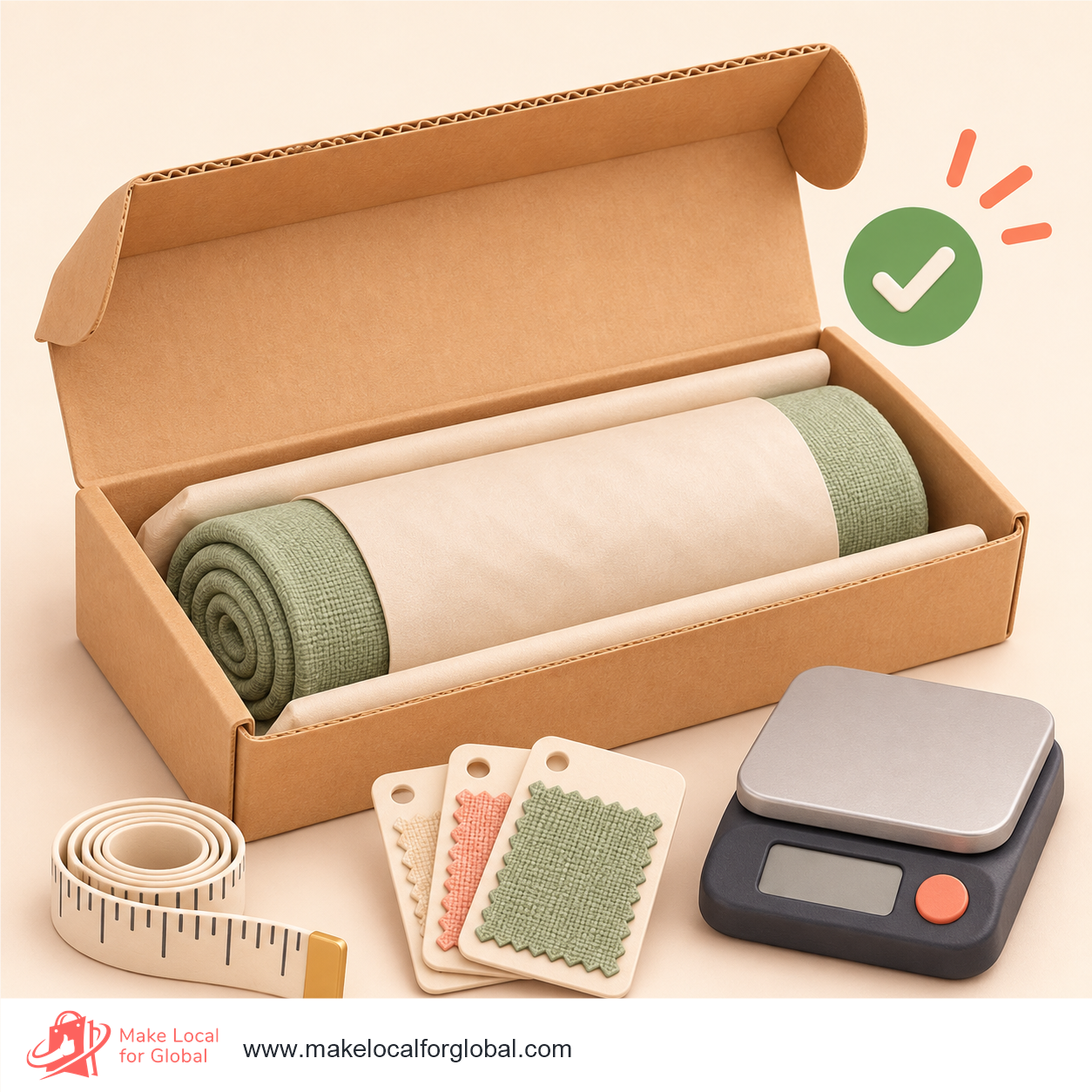
Pack short cuts flat only if the fabric can be folded without damage or a poor crease. For longer lengths, a roll can protect the fabric from repeated folds, though it may increase parcel dimensions and postage. Wrap the cloth in clean protective paper or a suitable bag, protect it from moisture and keep the order label outside. Test one packed parcel through the chosen carrier before setting a delivery promise for the whole range.
Weigh and measure the final parcel, not the bare fabric. Obtain carrier prices for the actual parcel sizes and common destinations. Note tracking, compensation limits, collection, delivery estimates and the process for a damaged parcel. Photograph the packed order and keep a simple record of what was included. For international sales, check the destination’s import, tax and product-description requirements before displaying the option.
Write an order process for missing lengths, visible faults, wrong colour or transit damage. Ask a customer for photos of the fabric and packaging, check the roll code and respond using a documented route. If the fabric does not match its listing or is faulty, handle that separately from a buyer changing their mind. Do not write a blanket “cut fabric cannot be returned” rule before checking the law and the exact order terms.
This section is a practical signpost, not legal advice. Rules can depend on the product, seller’s role and destination. In England, Scotland and Wales, official textile labelling guidance says textile labels must show fibre content and that manufacturers and retailers have responsibilities. Check the current rules for the product and market, including Northern Ireland or overseas destinations. Display accurate fibre information on the product and order documentation in the required form, and make sure it matches the supplied fabric.
Do not translate a supplier’s shorthand into a regulated fibre name or percentage without checking it. Keep the original specification, lot identification and any updated document. If a product contains multiple components or non-textile parts of animal origin, check how the applicable rules treat those details rather than copying the label from a similar item.
Online buyers need clear pre-purchase information. The GOV.UK distance-selling guidance sets out information businesses must provide before a distance order, including goods, price, delivery, business contact details and cancellation information. The GOV.UK returns guidance explains the normal cancellation period for many online orders. An exception can apply to goods made to a customer’s specification or clearly personalised, but the scope depends on the facts. Do not assume every length cut from a standard roll is exempt. Get specific advice before changing a policy or refusing a cancellation.
If you import or sell under your own brand, product-safety obligations may apply. Read the latest Office for Product Safety and Standards business guidance and identify the applicable requirements for the product’s intended use. Keep supplier and batch records. If you market cloth for children’s items, upholstery, costumes or another use with additional requirements, confirm the evidence and wording before listing it.
Use environmental descriptions with care. “Recycled”, “organic”, “deadstock”, “locally made” and “lower impact” each mean something specific to a buyer. Keep the source document, certification scope, chain of custody and product reference behind the claim. Do not imply that a whole fabric or business has a benefit when the evidence only covers one fibre or one processing stage. The CMA’s current guidance on environmental claims was updated in 2026 and explains how wording and presentation affect the impression a customer receives.
Fabric benefits from product pages that are easy to compare. Group by project or fibre, add filters for verified width, fibre, weight, colour family and intended use, and use the same order for specifications on every page. Filters should only use values that are present in the product records. State the fibre percentage rule for a filter such as “linen” rather than including blends without explanation.
An own ecommerce shop gives space for detailed product photography, sample packs, swatch comparisons, stock quantity and cutting instructions. A marketplace can put products in front of existing shoppers but may charge listing or transaction fees and limit how technical details are shown. A craft fair or maker market lets buyers touch the cloth, though it brings stall, travel and stock costs. Compare channels using completed orders and contribution, not views alone.
Search content can answer project questions: how to estimate curtain fabric, how to compare cotton poplin and lawn, what usable width means, or how to test a fabric sample before sewing. Keep each page focused on the question and link to the relevant product group. Search phrases could include “buy cotton fabric by the metre”, “fabric by the yard”, “fabric for tote bags” or “how to measure fabric width” when the destination page truly answers that query. Use metre as the main unit for UK buyers and explain yard conversions for overseas customers. Do not create duplicate pages for each colour when only the image changes.
Use the first customer questions to improve the listings. If buyers ask how much fabric a pattern needs, explain that project requirements depend on pattern size, layout and repeat. Do not provide a fixed amount as suitable for every maker. If buyers cannot judge drape, add a short sample video or offer a paid swatch set. If they ask how the colour looks in daylight, use consistent photographs and a note about screen variation.
For related product planning, compare the approach in our fleece jacket selling guide and furniture cover guide. Those products use textiles in different ways, so each requires a separate fit, use and care test. A seller moving into coordinated home projects can review decorative curtains and decorative pillows as adjacent categories. For a craft product that consumes fabric, see our canvas bags guide.
Give customers the product details, measurements and support information they need to choose the right fabric.
Write a one-sentence buyer description based on a real group you can contact. Speak with five to ten likely customers about recent purchases and the information they needed. Shortlist three suppliers and request current fabric specifications, sample costs, minimum quantities, lead times and lot rules. Set a maximum first-order budget before choosing a roll.
Prepare a comparison sheet with fibre composition, width, weight, price, sample result, reorder prospects, delivery and documentation. Record which facts are verified and which questions remain. Remove a fabric from the shortlist if the supplier cannot identify the product or answer basic questions about its composition and intended use.
Order representative samples. Record the roll or lot reference, inspect both sides and measure usable width. Photograph the material in natural and indoor light. Test the care response only in line with supplier instructions. Compare your observation with the specification and ask about any mismatch.
Build an order-cost model for each product. Include product, inbound delivery, test loss, inspection, cutting, packaging, payment fees, outbound delivery, expected damage or returns and customer acquisition. Add a second calculation for a multiple-cut bundle. Decide what parcel type the order needs, then request a carrier price for its measured size and weight.
Create the product codes, shelf labels and lot records. Write the title, specifications, order increments, continuous-cut rule, care information, dispatch estimate and returns information. Check the exact fibre names and percentages against the supplier record. Photograph the full print repeat, reverse, weave and a scale reference.
Pack one sample parcel, weigh it, measure it and inspect the cloth after a delivery simulation that does not damage sale stock. Draft a support response for colour mismatch, faults, short cuts and delayed delivery. Check that your cancellation information and product claims match the current guidance and your actual sales model.
Publish a small range only when the stock record, photos, delivery price and customer information are ready. Invite the people who asked for updates to view the listings. If you take orders, use the actual stock quantity and dispatch estimate. Do not promote a fabric that has not passed your incoming checks.
Review product views, sample requests, questions, orders, contribution, cut errors, colour comments and returns. Ask what stopped a buyer from ordering. If people cannot distinguish two fabrics, improve the comparison photos or descriptions. If cutting time consumes the margin, adjust the process or price before ordering more. At day 30, decide which fabric to reorder, which to test further and which to stop carrying.

It can suit a seller who can identify a maker group, source traceable stock, measure the actual cloth and handle accurate cutting. The business needs a plan for colour questions, lot variation, remnants and parcel costs. Start with samples and a small range, then use buyer questions and order results to decide what to hold.
Choose the fabric that matches a buyer you can reach and a supplier you can verify. Compare composition, usable width, weight, care, sample appearance, order minimum and reorder prospects. Avoid choosing purely from a trend image or a low roll price.
Use even light and show the whole design, weave, reverse, drape and scale. Keep the colour treatment consistent across products and avoid filters that shift the hue. State the width, fibre composition and print repeat in text, since a photograph cannot supply those facts reliably.
Choose the unit that matches your main buyer and location, then make the quantity control unambiguous. UK listings commonly use metres. If you sell to customers who search in yards, show the conversion clearly and make sure the amount charged matches the displayed length. One yard equals 0.9144 metres.
Measure between selvedges at several points on the current lot and state the method. Do not present a nominal supplier width as your own measurement. If the fabric is not perfectly even, explain how the saleable width is handled and keep the supplier specification with your records.
Only use those terms when the evidence supports them for that fabric and the wording is clear. A small home swatch test can describe what happened under its stated conditions; it does not establish a universal performance claim. Ask the supplier for relevant test evidence when a technical claim matters.
Do not assume every cut length is exempt from online cancellation rights. The rules can depend on whether goods are genuinely made to a consumer’s specification or clearly personalised. Check the current regulations and get advice for the exact cutting and ordering model before writing a no-cancellation policy. Faulty or misdescribed goods are a separate matter.
Base the quantity on the supplier’s minimum, your test budget, likely usable yield, storage and buyer evidence. Work out how many sample cuts, photographs and initial orders the roll can support. A smaller order can reduce cash at risk, but confirm the unit cost and reorder lead time before deciding.
Photograph with consistent light, show a larger area and close weave detail, and identify the lot. Keep a sample from the same roll where possible. Tell customers screens and room lighting can affect perception, but keep the listing images representative and handle any mismatch fairly.
Include verified fibre content, usable width, unit and cut increments, continuous-length terms, print repeat, weight and measurement basis, care instructions, stock or lot reference, dispatch time and sample options. Use clear images of the front, reverse, drape and scale.
Keep the first range grounded in facts: the maker you serve, the fabric you tested, the length you can sell, the cost to cut and ship it, and the information the buyer needs. If the supplier, lot or intended use remains unclear, resolve that before placing a larger order. If the sample and numbers support the offer, launch a small selection, review customer questions and let measured demand guide the next roll.
Bring the buyer evidence, sample results, product records and full order costs together before you commit to more stock.
PREFERRED SOURCE
Like what you’re reading? Add Make Local for Global as a preferred source on Google to see more of our articles when you search.

Build your online presence without having to figure out everything yourself.